A Taste of Sri Lanka, Poured in Hangzhou
Chethaka
A country's culinary identity is rarely contained within its kitchens. It travels through ingredients, techniques, rituals and the things people learn to associate with a particular place. Sometimes it is a spice recognized immediately; sometimes it is a flavour that requires a little explanation. And sometimes, it arrives in a glass. For three days in November, a small part of Sri Lanka's drinking culture made its way to Hangzhou, China, where Zephyr Ceylon introduced an international audience to cocktails shaped by the island's ingredients and culinary traditions.
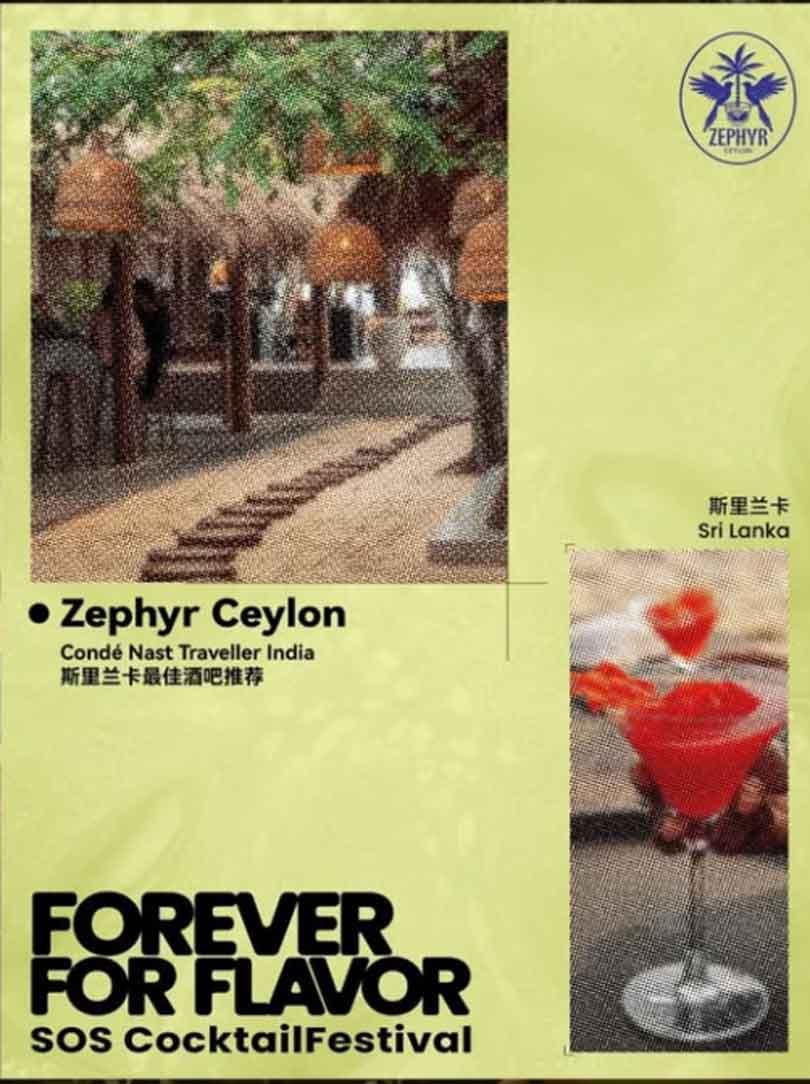
Invited by the BAR SOS team, Zephyr was among 32 bars participating in the Hangzhou Tianmuli Cocktail Festival, held from 13th to 15th November. The gathering brought together bars from cities across China, alongside international participants from Hong Kong, South Korea, Myanmar, Vietnam and Thailand. Each brought its own interpretation of contemporary cocktail culture, creating a meeting point for different approaches to ingredients, flavour and the craft of hospitality. Representing Sri Lanka, Zephyr arrived with a menu that drew on the country's distinctive produce and drinking traditions.
For the team, the festival presented an opportunity to do more than introduce a selection of cocktails. It offered a chance to put Sri Lankan flavours into a conversation that extended beyond the island, in a setting where visitors could encounter drinks and ingredients from across the region. The distinction matters. There is a difference between presenting a cocktail as an individual creation and using it to communicate something about the place from which its ingredients originate.
Zephyr's menu featured three signature cocktails, including an arrack-based creation that brought a particularly Sri Lankan character to the offering. Arrack is among the island's most recognizable traditional spirits, distilled from fermented coconut flower sap. Its association with Sri Lanka runs deep, although its place in contemporary drinking culture has evolved considerably. Long familiar in local homes, bars and social gatherings, the spirit is increasingly being reconsidered by bartenders interested in its character, versatility and potential beyond conventional preparations.
Mahen
That renewed interest is part of a wider movement in contemporary mixology, where local spirits and indigenous ingredients are finding new applications. Rather than relying exclusively on internationally established spirits, bartenders are increasingly looking to the ingredients and traditions of their own regions. The result can be drinks that are technically contemporary without losing their connection to a particular geography. For Sri Lanka, arrack offers an especially interesting starting point. It carries an identity that is difficult to separate from the island's landscape, agricultural traditions and social history.
Its presence at an international festival therefore offered something beyond novelty. Visitors encountering an arrack-based cocktail were also encountering a spirit whose origins and production are closely tied to Sri Lanka.
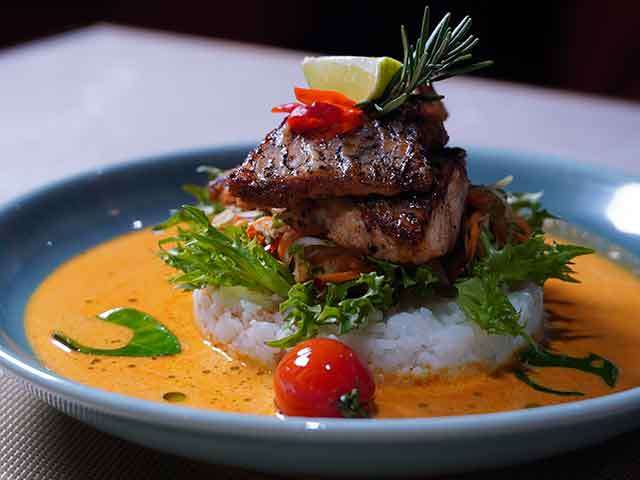
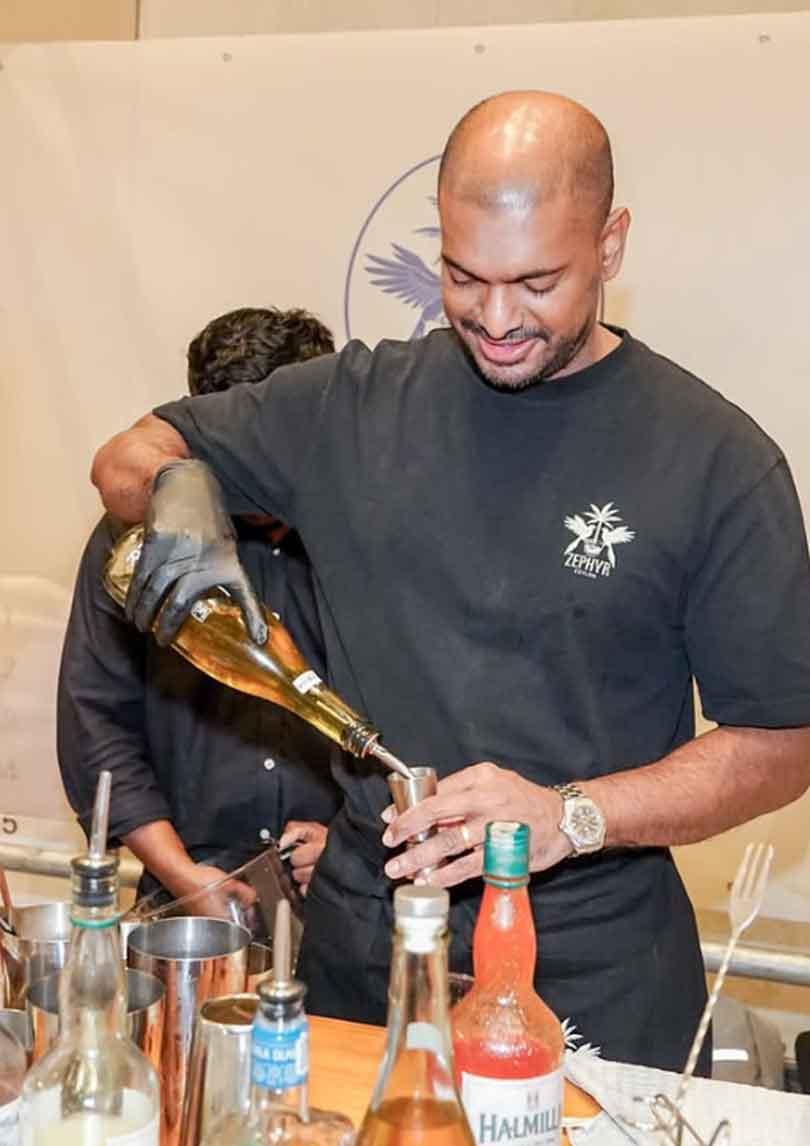
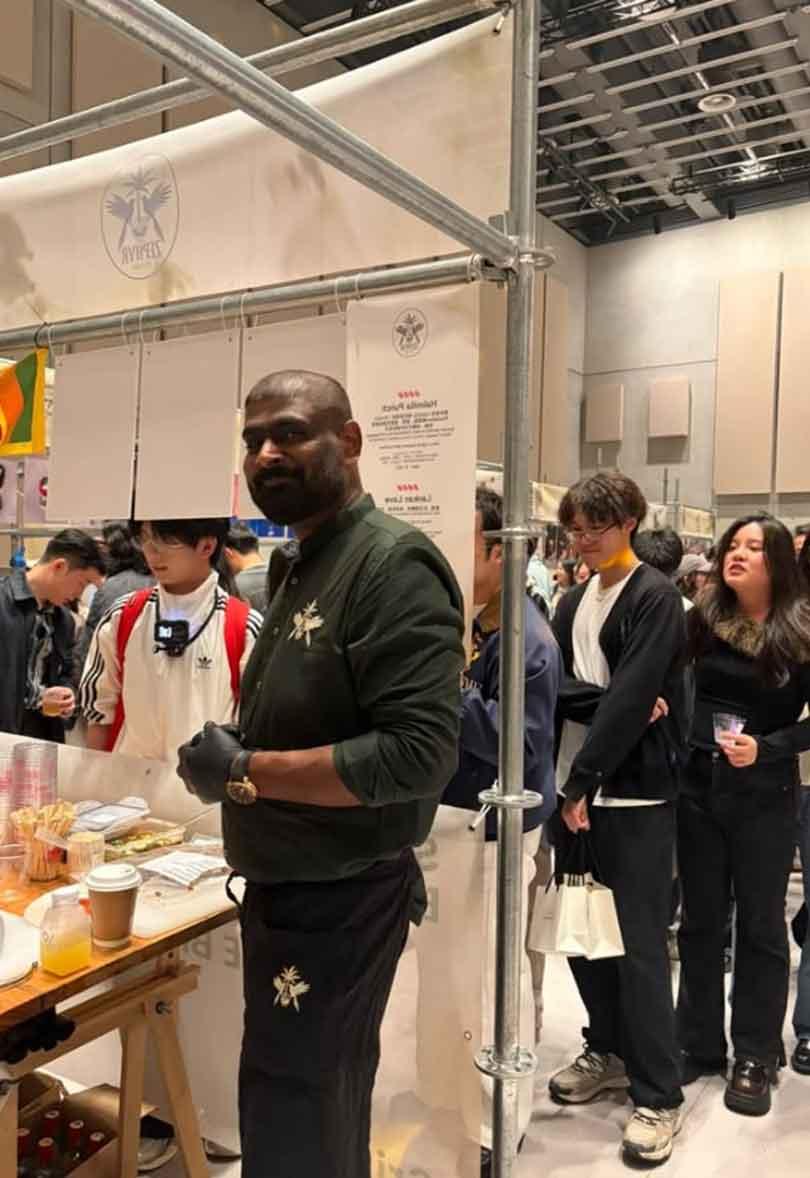
The opportunity lay in allowing the drink to introduce itself through flavour, while giving curious visitors a reason to ask questions about what they were tasting. The food menu extended that introduction. Mahen Wijesekera and Dinesh, affectionately known as Podi Malli, took charge of the pairings, preparing traditional Sri Lankan bites and sweets to accompany the cocktails. Behind the bar, Chethaka Wijesekera and Danushka, known as Ran Malli, served the three signature creations throughout the festival. Together, the two teams brought food and drink into the same experience, recognising that Sri Lankan culinary identity cannot be understood through individual ingredients alone.
Food pairing is an important part of the contemporary cocktail experience. A drink's acidity, sweetness, bitterness and aromatic qualities can change the way a dish is perceived, just as food can reveal characteristics in a drink that might otherwise go unnoticed. In Sri Lanka, where food traditions are built around layers of spice, texture and contrasting flavours, the possibilities are considerable. A familiar sweet or savoury preparation can take on a different dimension when considered alongside a carefully constructed cocktail.
At Hangzhou, these pairings gave visitors another way to encounter the island's food culture. Instead of presenting Sri Lankan cuisine as a separate attraction, Zephyr placed its traditional bites alongside contemporary drinks, creating an experience in which both could be appreciated together. It was an approach that allowed the food to be part of the conversation rather than simply an accompaniment. Across the three days, the festival ran from 2pm to 11pm, drawing visitors keen to explore the participating bars. By its conclusion, Zephyr had served more than 1,200 cocktails. It was a considerable response for a visiting bar representing a relatively small island in a gathering of 32 establishments. Yet the figure, while impressive, was not necessarily what the team remembered most.
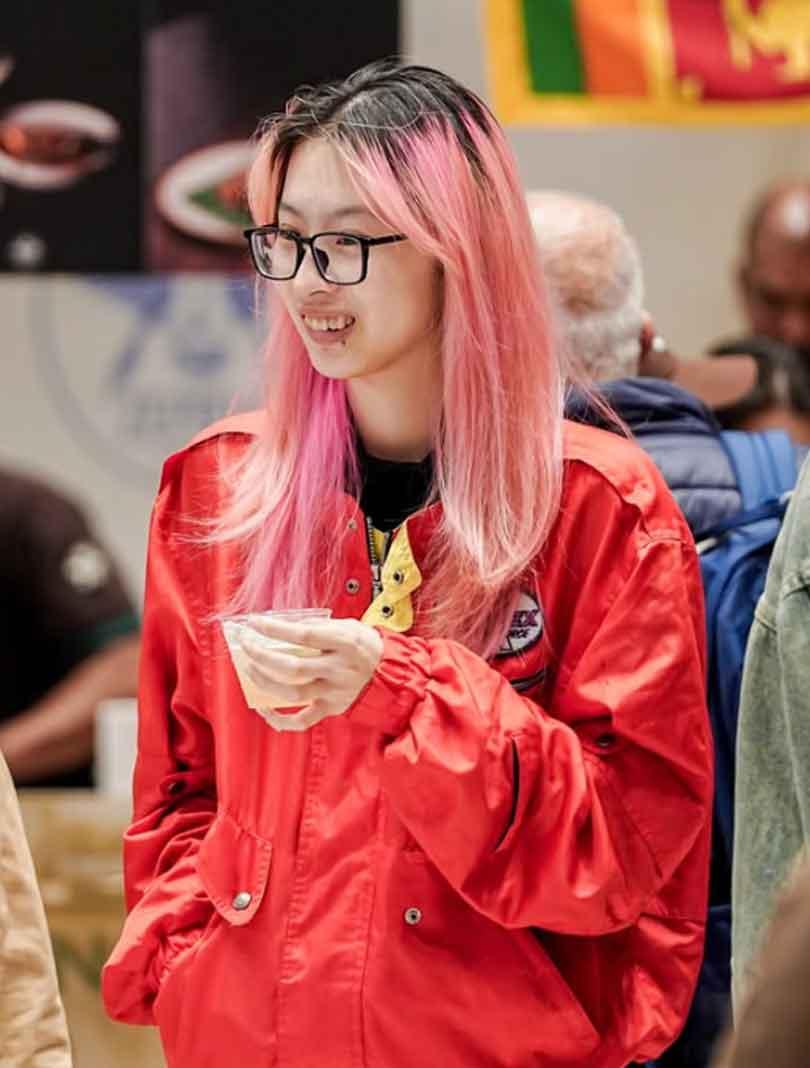
It was the curiosity. Visitors wanted to know more about the spices, local spirits and ingredients behind the drinks. The arrack-based cocktail offered an opportunity to introduce a spirit that many may not have encountered before, while the food pairings gave them a taste of the culinary traditions surrounding it. The queues that formed around the bar were another indication of the interest. As the team recalled, the demand was overwhelming, with visitors eager to try what Zephyr had brought to the festival.
There was also something particularly encouraging about the wider atmosphere. The enthusiasm was not confined to one bar or one country's offering. Visitors moved between the participating establishments, exploring different menus and approaches with a willingness to try unfamiliar combinations. In a festival of this scale, that openness is part of what makes the experience valuable. It creates an environment in which a drink is not simply purchased and consumed, but discovered. For the participating bars, the festival also offered an opportunity to exchange ideas with people working in different hospitality environments. Behind each counter was a team with its own understanding of ingredients, techniques and the expectations of its audience. Meeting them created possibilities for conversations that might not otherwise have taken place.
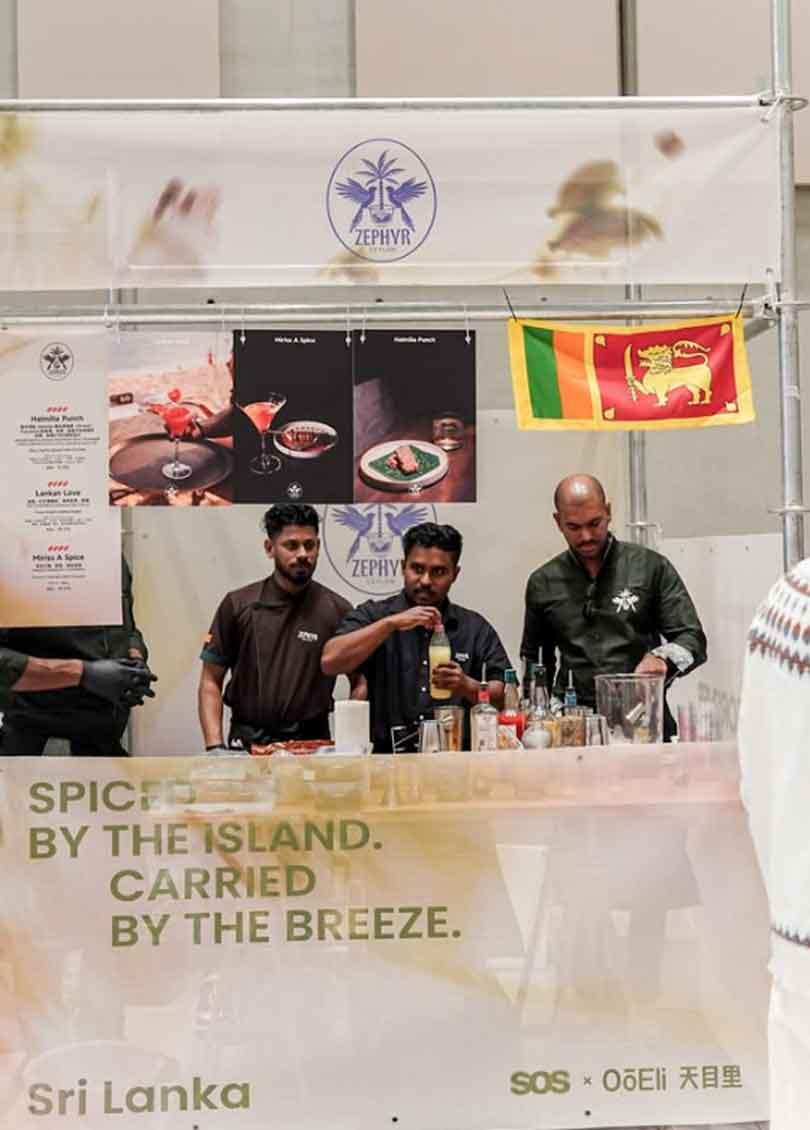
For Zephyr, time spent with fellow vendors became one of the most rewarding parts of the trip, with the team returning home having made new friends and professional connections.
International gatherings of this kind are valuable not only because they provide visibility, but because they allow local approaches to be tested in unfamiliar settings. A drink that feels familiar to its creators can be entirely new to someone encountering its ingredients for the first time. The questions that follow can be as revealing as the response itself. They show what people recognise, what surprises them and which elements of a culture invite further exploration.
For Sri Lankan hospitality, there is an opportunity in these exchanges. The island has a rich range of ingredients, spirits and culinary traditions that can be interpreted in contemporary ways without being stripped of their origins. Arrack is one example, but it is hardly the only one. Cinnamon, tea, coconut, tropical fruits and other local produce offer possibilities for bartenders interested in building menus that have a stronger relationship with their surroundings. The challenge is to approach these ingredients with an understanding of their histories and characteristics, rather than treating them as decorative markers of national identity.
This is where the distinction between borrowing a flavour and telling a story through it becomes important. A cocktail containing a local ingredient is not automatically representative of the culture from which that ingredient comes. What gives it meaning is the thought behind its use, the way it is prepared and the context in which it is presented. When food, drink and hospitality come together with that intention, they can offer visitors a more considered encounter with a place.
For Zephyr, the Hangzhou festival was an opportunity to take that approach beyond Sri Lanka. Three cocktails, traditional food pairings and three days behind the bar brought the team into contact with an audience that was curious about the island's flavours and willing to explore them. The experience also placed the bar alongside establishments from across Asia, offering a glimpse into the different directions in which contemporary cocktail culture is moving.
There is, of course, more to representing a country's food and drink culture than taking its ingredients abroad. The more interesting work happens when those ingredients are understood, developed and presented in ways that respect where they come from while allowing them to evolve. In that sense, the value of the Hangzhou experience cannot be measured entirely by the number of drinks sold, however encouraging that figure may be.
More than 1,200 cocktails were poured over three days. There were queues, conversations about spices and spirits, traditional Sri Lankan bites shared with unfamiliar audiences, and friendships formed between people brought together by a common interest in hospitality. What travelled home with the team was not simply the memory of a successful festival, but the experience of seeing familiar flavours find a place in an international setting. For three days in Hangzhou, Sri Lanka had a place at the counter. And sometimes, a good introduction to a country begins with something as simple as asking what is in the glass.