Daayra and the Price of Justice in a Country Where a Rape Case Is Registered Every Seven Minutes.
A young woman disappears. Her family goes to the police, desperate for help, but their concerns are brushed aside. Days later, her burnt body is found. She has been raped and murdered. The public is furious, the police are under pressure, and everyone wants the killers caught. Four men are arrested. Before they can stand trial, the police shoot them dead. Crowds celebrate, convinced that justice has been served. But what if the police got it wrong? This is the question at the centre of Meghna Gulzar's Daayra, now streaming on Netflix. Starring Kareena Kapoor Khan and Prithviraj Sukumaran, the film examines a disturbing aspect of India's criminal justice system, where frustration with lengthy trials can turn police officers who kill suspects into public heroes. The story is fictional, but the circumstances are painfully familiar. In a country where tens of thousands of women and children report sexual assault every year, the anger that drives Daayra is not difficult to understand.
A MURDER THAT DIVIDES THE POLICE
The film begins with the disappearance of Ragini Poojari. Her mother and brother approach the police, but their pleas are not taken seriously. When Ragini's body is eventually discovered near a toll plaza, the brutality of the crime causes widespread outrage. DCP Raman Kumar, played by Prithviraj Sukumaran, takes charge of the investigation. Four suspects are arrested, but before the case reaches court, they are killed in what the police describe as an encounter. The official account claims the men attempted to escape and attacked the officers, who fired in self-defence. The public welcomes the news. After all, why wait years for a verdict when the police have apparently dealt with the men responsible? Kareena Kapoor Khan plays DCP Ajooni Kohli, who is brought in to investigate the killings. Unlike those celebrating the encounter, she wants to know exactly what happened. Were the officers genuinely threatened, or were the suspects deliberately executed? Prithviraj is convincing as a police officer who believes he is doing what the system cannot. Kareena plays Ajooni with restraint, refusing to be intimidated by either her colleagues or public opinion. Their opposing views give the film much of its tension. Yet the investigation occasionally moves too slowly, and Ragini's family, whose suffering should be central to the story, receives surprisingly little attention. The film becomes more concerned with the officers' moral conflict than with the young woman whose death brought them together.
WHEN KILLINGS ARE CELEBRATED
Daayra bears a striking resemblance to the 2019 Hyderabad rape and murder case, when four suspects were shot dead by police during an alleged reconstruction of the crime. The reaction was extraordinary. Crowds cheered, flowers were showered on police officers, and many people praised the killings as an act of justice. A Supreme Court-appointed commission later concluded that the encounter had been staged and recommended prosecution of the officers involved. The case revealed how little faith many people had in the courts. Rather than waiting for evidence to be tested and guilt established, they welcomed the deaths of men who had never been convicted. Daayra explores that public anger without entirely endorsing it. The frustration is understandable. But if the police are allowed to decide who is guilty and who deserves to die, what protection does an innocent person have? And if suspects are killed before trial, how can a victim's family ever know whether the real perpetrators were caught?

A RAPE CASE EVERY SEVEN MINUTES
The statistics behind sexual violence in India are difficult to comprehend. According to the National Crime Records Bureau, 29,536 rape cases were registered in 2024, roughly one every 18 minutes. But that figure leaves out thousands of children. Another 43,313 cases involving penetrative sexual assault against girls were recorded separately under the Protection of Children from Sexual Offences Act, known as POCSO. Together, the two categories account for 72,849 registered cases in one year. That is almost 200 a day, or approximately one every seven minutes. These figures cover specific categories of rape and child sexual assault, not every form of sexual abuse. They also count only cases registered with the police. How many women and children never report what happened to them is impossible to know. Some fear retaliation from the accused. Others face pressure from relatives who worry about the family's reputation. There are women who remain silent because they know that reporting rape could mean years of police questioning, court hearings and public scrutiny. India's National Family Health Survey, conducted between 2019 and 2021, found that 76.5% of women who had experienced physical or sexual violence had never sought help or told anyone. The survey covered different forms of violence, not rape alone, but it gives some indication of how much abuse remains hidden. For a woman who decides to report rape, the decision may be only the beginning of another ordeal. She may have to recount intimate details to strangers, undergo medical examinations and repeatedly appear in court, sometimes while facing hostility from people she knows.
WHAT HAPPENS WHEN A CASE REACHES COURT?
The court figures are hardly reassuring. Of the 20,587 rape trials completed in India during 2024, only 5,032 ended in conviction. That is 24.4%, meaning roughly three out of four completed trials ended without a conviction. For children, the figures are not much better. Of the 26,349 completed trials involving penetrative sexual assault under POCSO, 7,916 resulted in convictions, a rate of approximately 30%. Between these two categories, 12,948 cases ended in conviction during the year. Most involved complaints registered in earlier years, so these figures cannot tell us what eventually happened to the people who reported assaults in 2024. An acquittal does not mean the complainant lied. It means the prosecution failed to prove guilt beyond reasonable doubt, an essential safeguard in any fair criminal justice system. Nevertheless, the conviction figures invite questions about the quality of police investigations, the collection of forensic evidence and the protection offered to witnesses. Then there is the waiting. By the end of 2024, 185,785 rape cases under the principal rape provisions remained pending before India's courts. The country has introduced fast-track special courts, but even these can be painfully slow. Government figures reported in 2026 showed that cases handled by Delhi's fast-track special courts in 2024 took an average of 1,639 days to conclude, almost four and a half years. The figure includes child sexual abuse cases and is not a national average for rape trials. Four and a half years is a long time to live with an unresolved criminal case. During that period, survivors may be trying to complete their education, find employment, raise children or rebuild relationships. Yet they remain tied to court dates, legal expenses and the possibility of having to describe the assault all over again.
DELHI'S TROUBLING REPUTATION
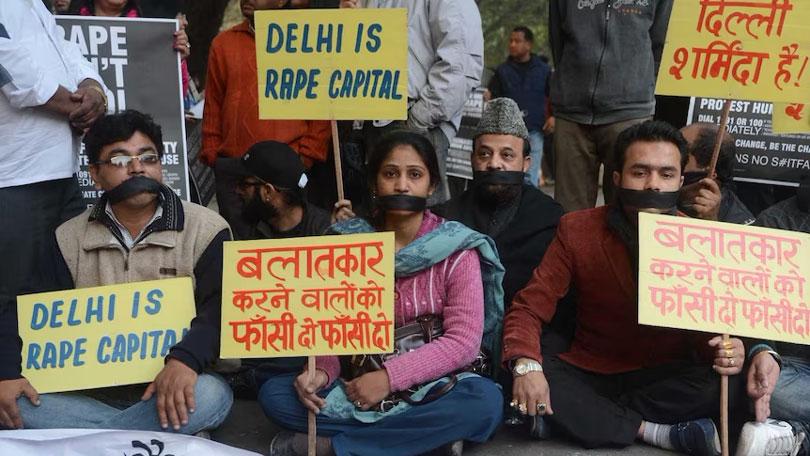
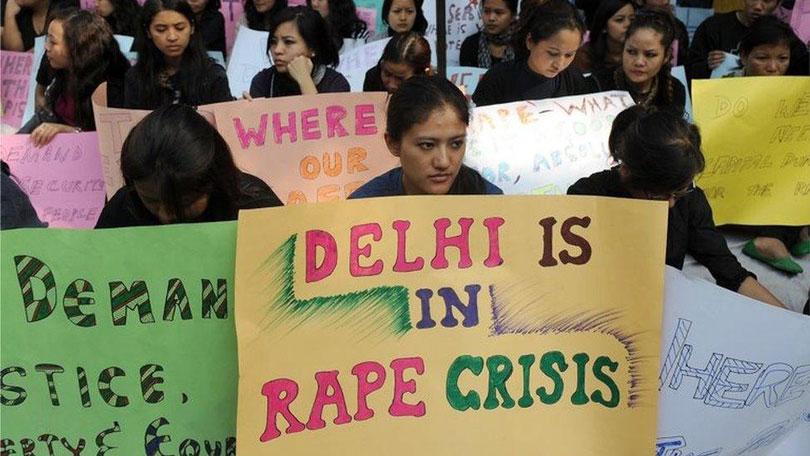
Delhi has carried the label of India's rape capital for years, but the horrific gang rape of a 23-year-old student in December 2012 brought the city's reputation to international attention. The young woman, who became known as Nirbhaya, was assaulted on a moving bus and later died from her injuries. Her death brought thousands onto the streets, demanding better protection for women, tougher laws and accountability from the authorities. More than a decade later, Delhi continues to record a high number of rape complaints. In 2024, the city registered 1,058 cases, compared with 497 in Jaipur and 411 in Mumbai. Calling Delhi, the rape capital of the world, however, is misleading. There is no reliable international ranking to support such a claim. Countries differ considerably in how sexual violence is defined, recorded and reported. Perhaps the most revealing statistic concerns the relationship between victims and accused offenders. In approximately 96.8% of rape cases registered in India in 2024, the accused was known to the survivor. For generations, women have been warned against travelling alone at night, walking through deserted streets or trusting strangers. Yet the figures show that the accused is far more often someone already known to the woman. It may be a neighbour, a relative, a colleague, a friend or someone with whom she has a relationship. When the accused is known to the family, reporting the assault can become even more complicated. Relatives may urge silence, fearing scandal or social embarrassment. The victim may be asked to consider the consequences for everyone else before anyone considers what has happened to her. Such cases rarely receive the same attention as the brutal stranger attacks that dominate national headlines.
WHAT DAAYRA LEAVES US THINKING ABOUT
Daayra is not a perfect film. Its pacing falters, the investigation sometimes feels stretched and the victim's family deserved a more substantial place in the story. But its central dilemma is worth confronting. When people cheer the killing of suspects who have not faced trial, it reveals something about their faith in the institutions meant to protect them. The answer, however, cannot be to give the police the power to investigate, judge and execute. An encounter may satisfy public anger, but it cannot replace a proper trial or guarantee that the guilty have been punished. India needs investigations that begin promptly, evidence that can withstand scrutiny and courts that do not leave survivors waiting for years. Women and children must also be able to report abuse without fearing that their families, communities or the authorities will turn against them. Daayra asks whether the public's desire for immediate punishment has become stronger than its commitment to justice. With 72,849 registered rape and child penetrative sexual assault cases in a single year, that is a question India cannot afford to ignore. The real test is not how quickly the police can produce suspects or how loudly crowds celebrate their deaths. It is whether a woman who reports rape can trust the system to investigate her complaint properly, protect her dignity and reach a fair decision within a reasonable time. For far too many, that remains a distant hope.