Two Decades On, The Questions of Humanity and Nature Remain
By Noeli Jesudas
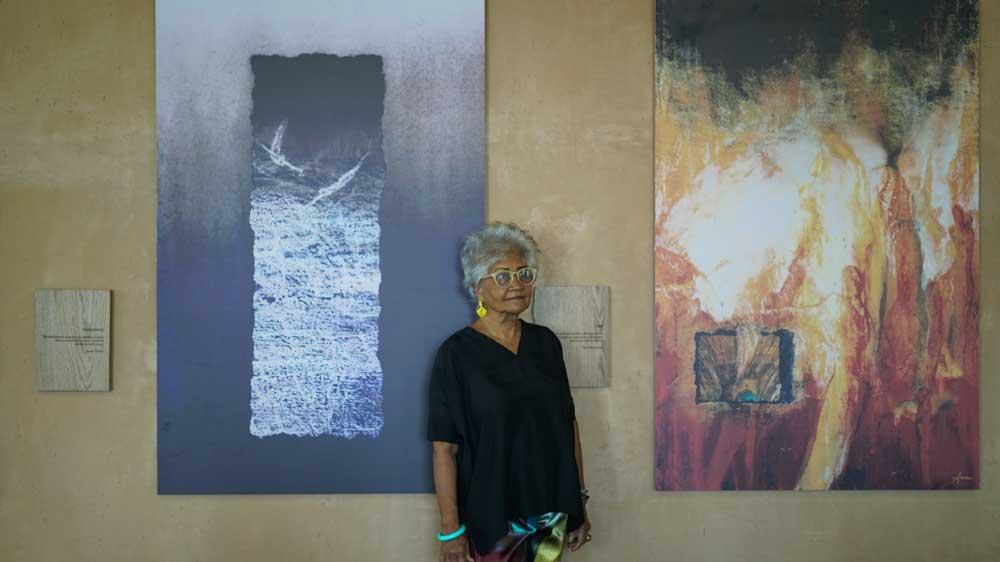
There is something particularly unsettling about encountering a work of art that seems to understand the world we are living in, even when it was created years before the present circumstances came into being. It makes one wonder whether the world has changed as much as we imagine, or whether we have simply become more aware of the questions that were always there. Anoma Wijewardene's In Search of Horizon brings precisely this thought to the surface. Bringing together two landmark collections, Quest and Deliverance, the collections revisit two decades of artistic inquiry into war, reconciliation, climate change, natural disasters and humanity's complicated relationship with the world it inhabits. Yet, beyond the visual experience, there is another element that makes this collection particularly compelling. It is the writing, the voices and the ideas that accompany the images, asking us to engage with the work long after our eyes have moved away from it.
Anoma's engagement with these subjects is neither a recent artistic response nor an attempt to follow a contemporary conversation. Her first solo exhibition exploring unity and the fractured human condition was held in Delhi in 2002, while her first solo exhibition addressing climate change followed in Sydney in 2005. These were concerns she had already begun examining when they were far less prominent in mainstream cultural conversations. Over the years, they developed into two significant bodies of work, each shaped by different experiences but connected by an underlying interest in the fragility of existence and the possibility of living differently.
It is this continuity that makes the return of Quest and Deliverance particularly meaningful. They are not simply collections being brought out of the past for another viewing. They are works whose questions have followed us into the present, perhaps becoming even more difficult to ignore with time.
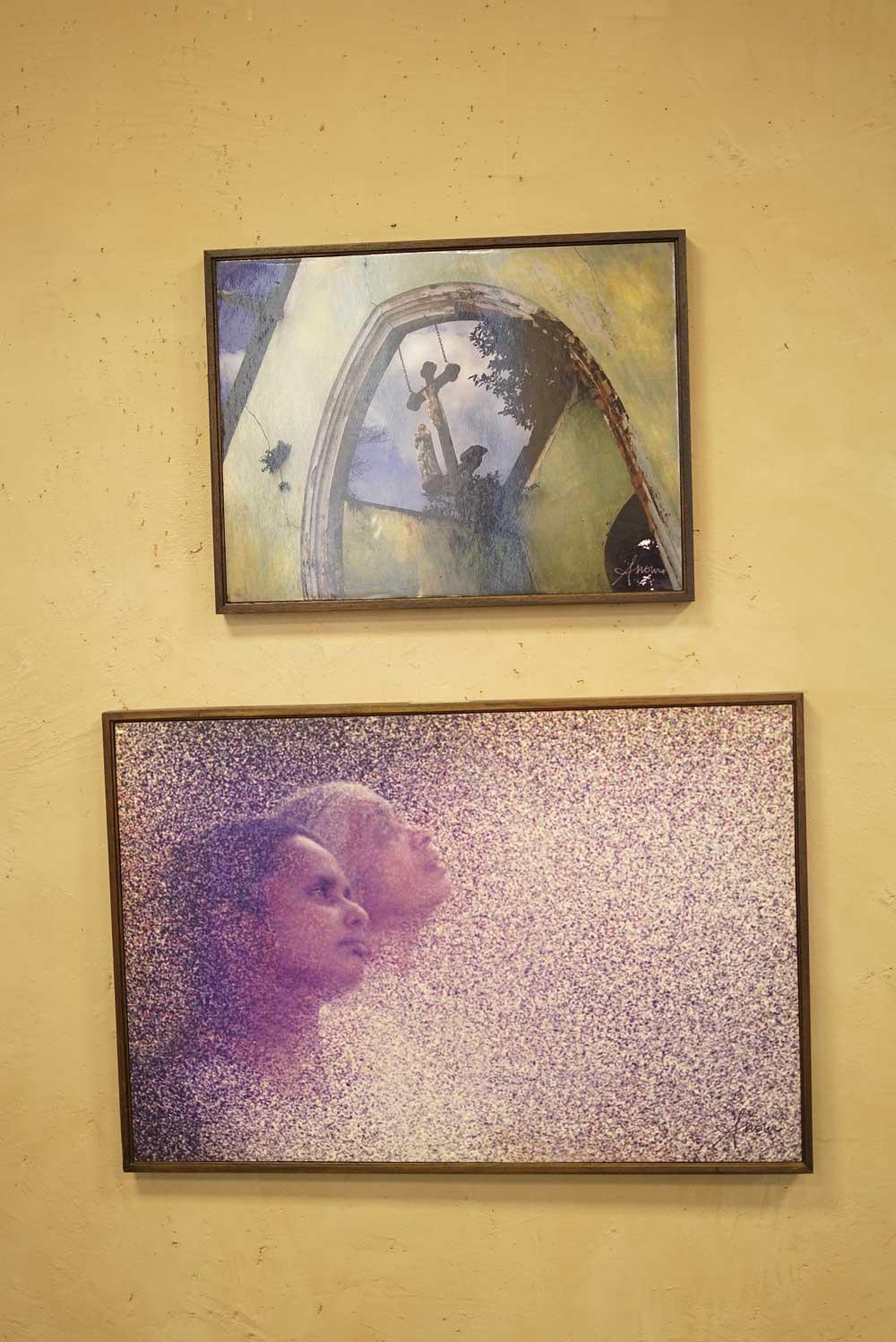
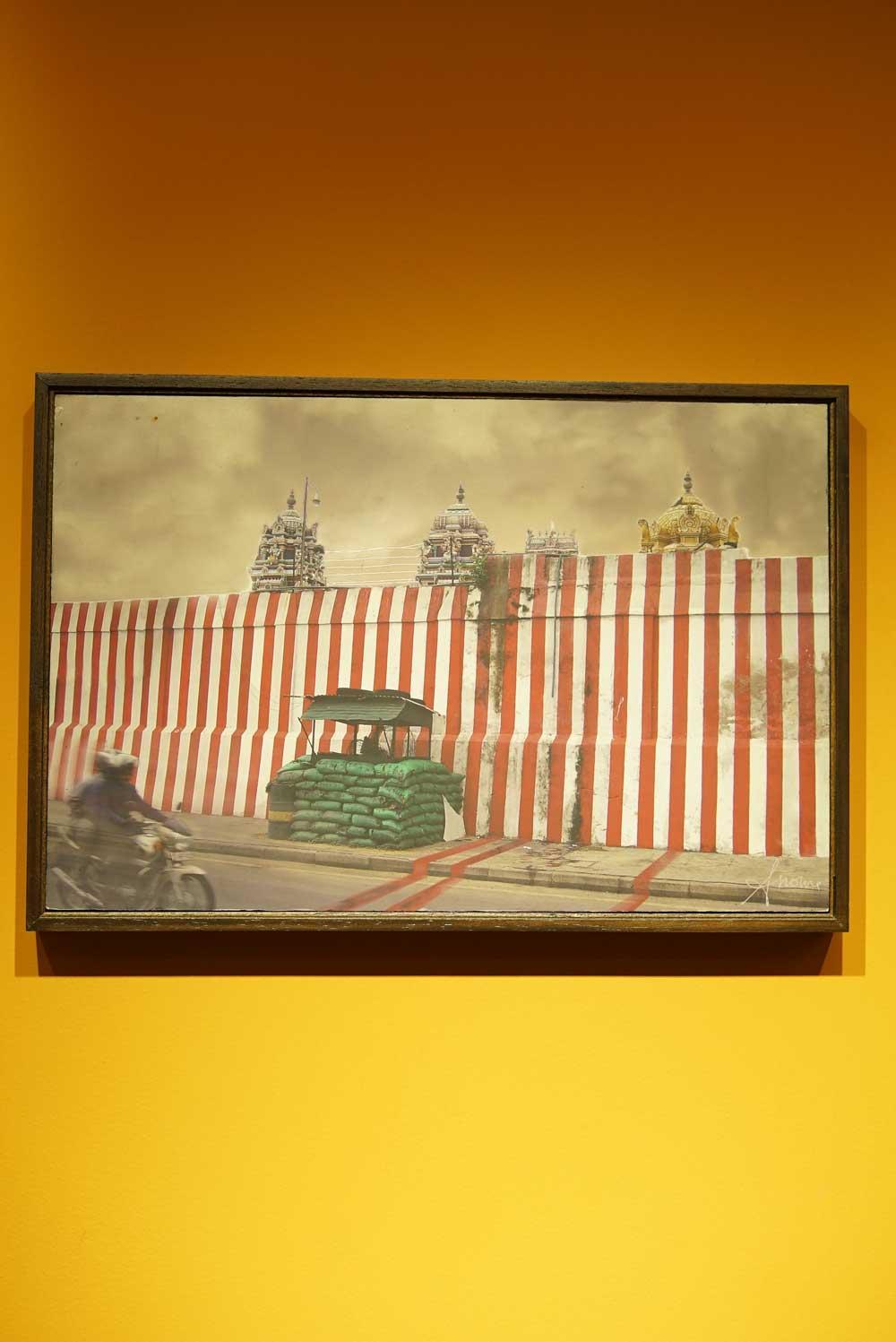
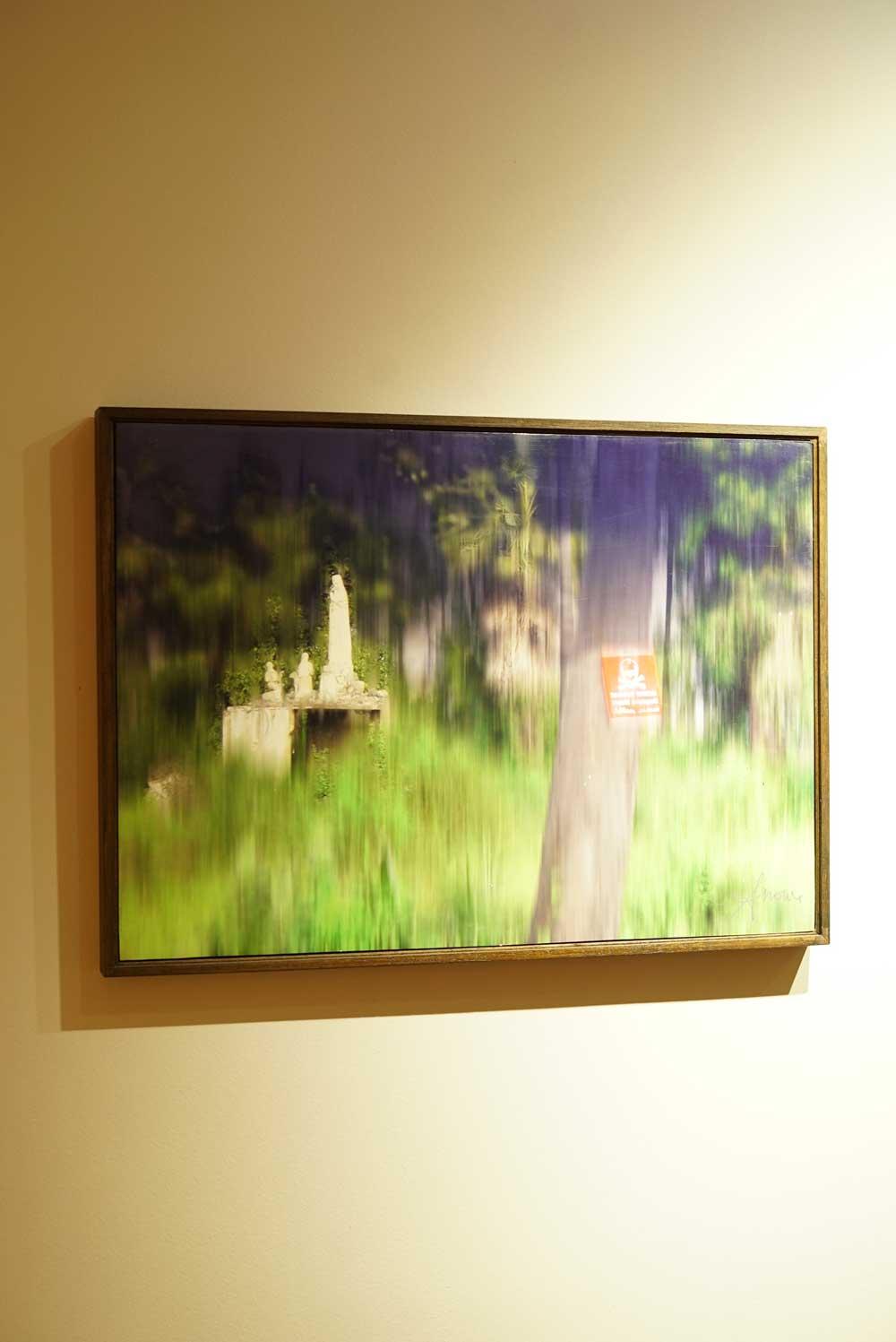
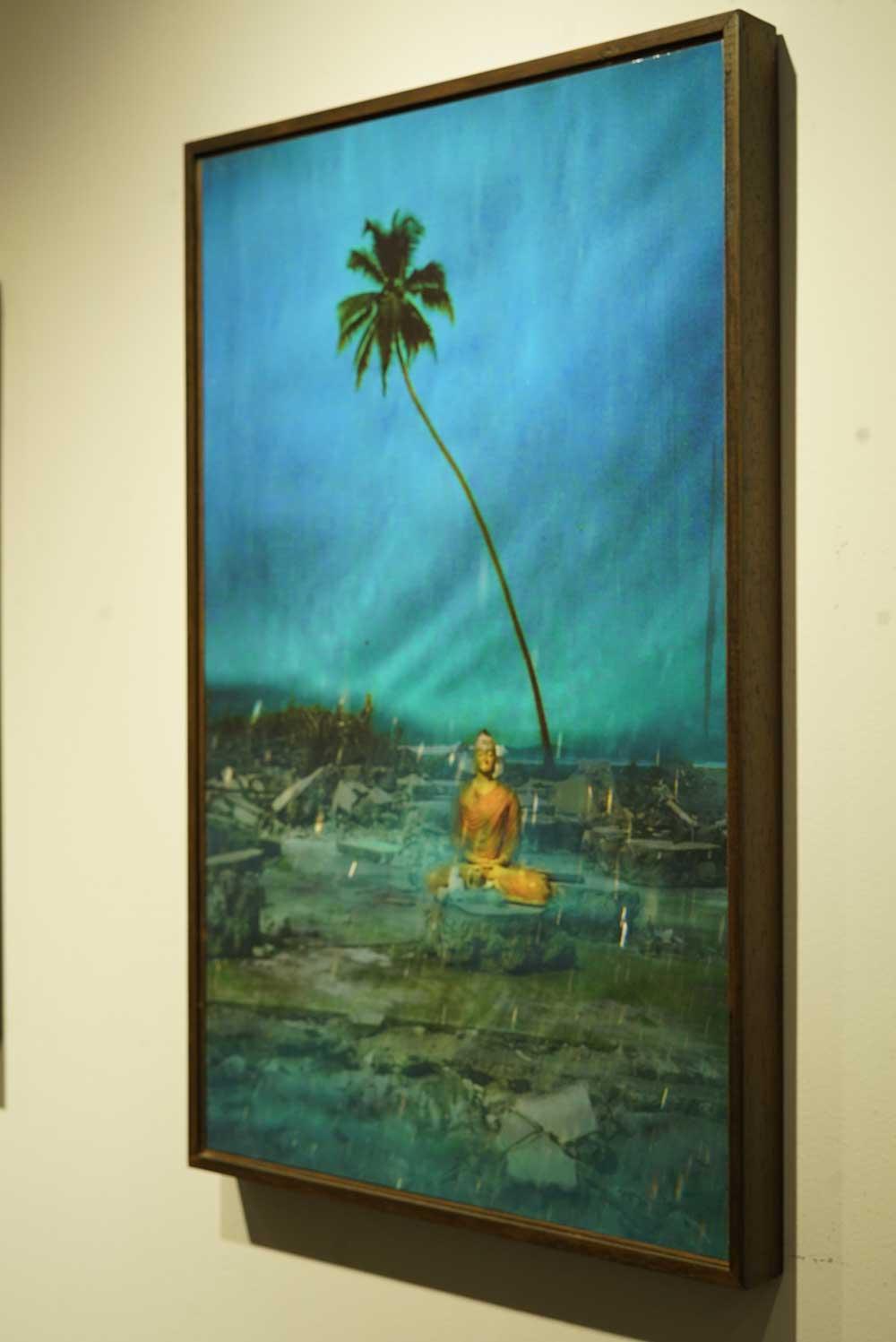
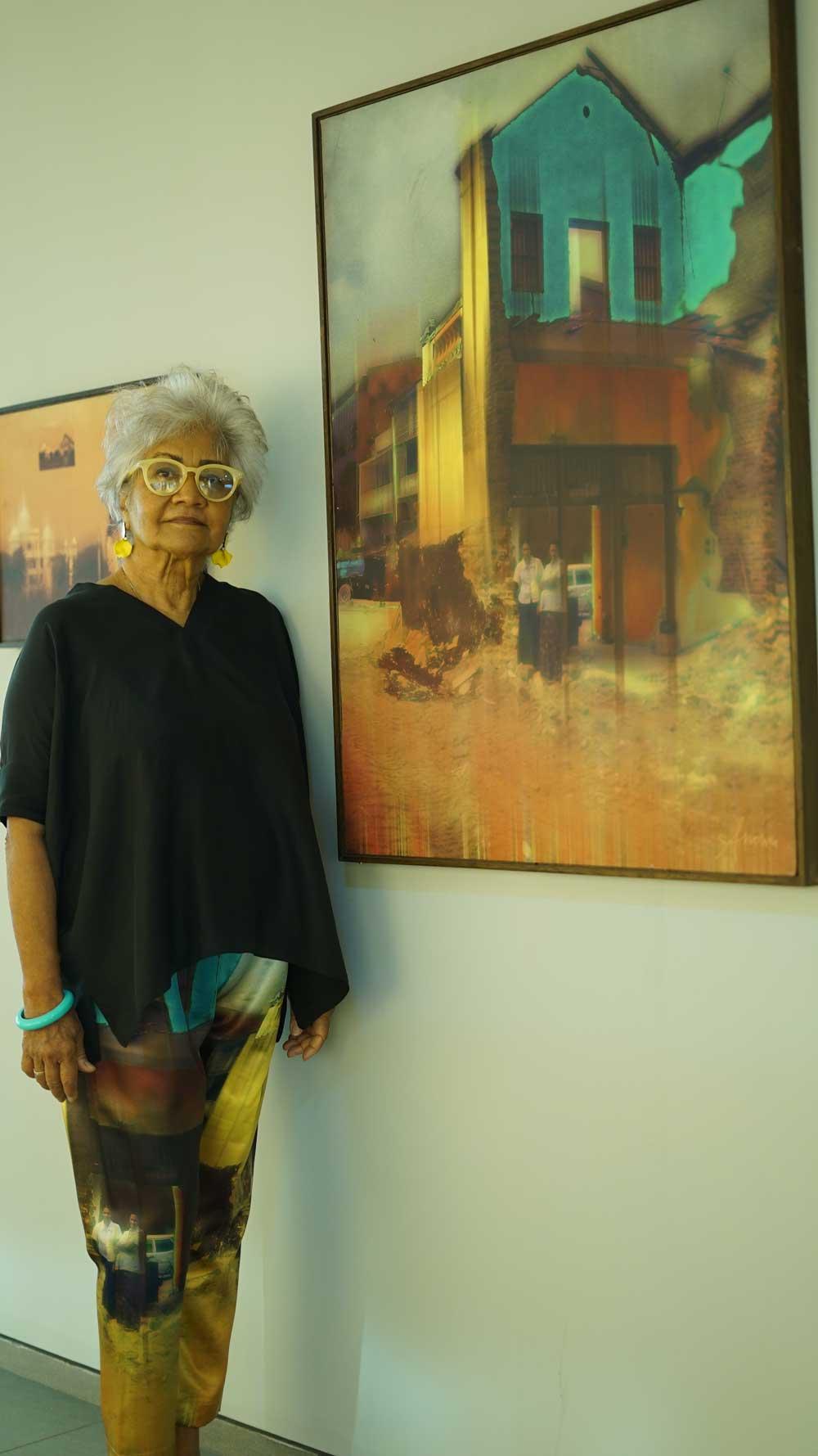
Quest, conceived in the context of Sri Lanka's civil war and the devastation of the 2004 tsunami, approaches conflict through a deeply human lens. Anoma's visit to the North during the 2002 ceasefire brought her face to face with landscapes and communities carrying the consequences of prolonged violence. What followed was not an attempt to produce a conventional photographic record of events, but an artistic exploration of what remains when violence becomes part of a country's collective memory.
The photographs form the starting point of a more layered process. Through digital intervention, manipulation, fragmented imagery and the juxtaposition of seemingly unrelated elements, Anoma moves beyond the documentation of physical destruction towards the emotional and psychological aftermath of conflict. Her images do not always offer an immediate explanation. Some are unsettling, others almost dreamlike, but they share an ability to make the viewer pause and reconsider what is being seen.
Perhaps one of the most important questions emerging from Quest is one that should not require a war or a national tragedy to make us contemplate it.
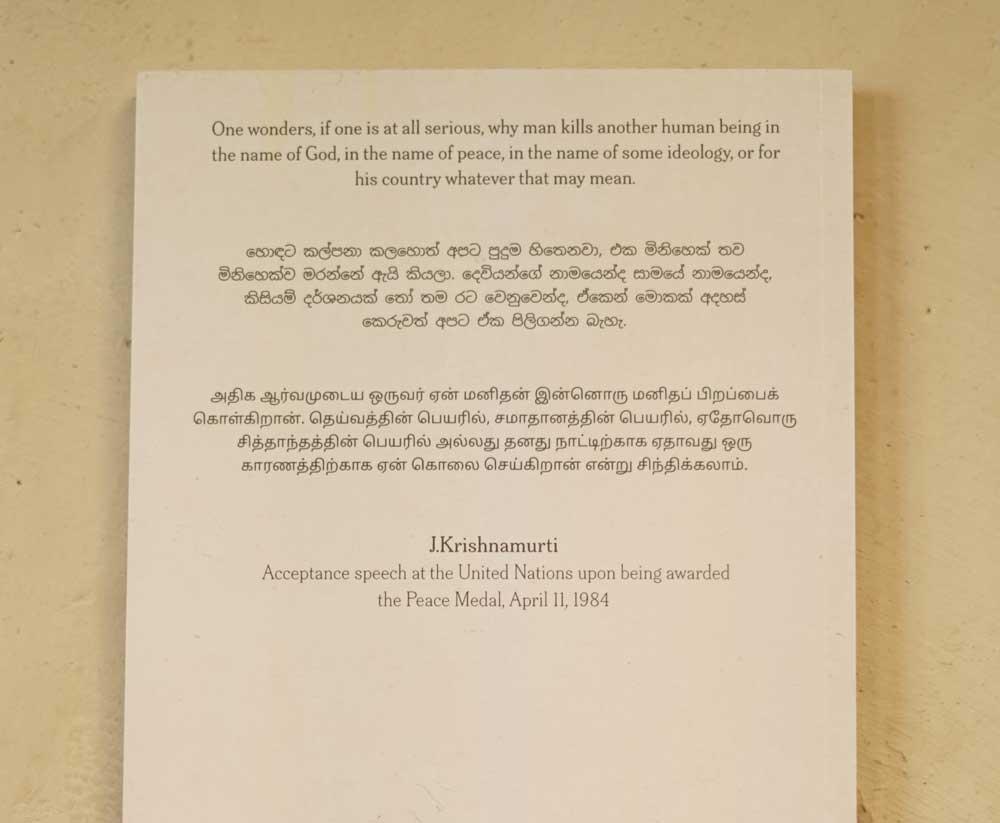
“One wonders, if one is at all serious, why man kills another human being, in the name of God, in the name of peace, in the name of some ideology, or for his country, whatever that may mean.” - Jiddu Krishnamurthi
The question is as uncomfortable as it is necessary. It draws attention to the contradictions of a species capable of creating extraordinary things while repeatedly finding reasons to destroy one another. It also makes the accompanying writing particularly important. The words are not there to tell us what to think about an image. They introduce another perspective, sometimes challenging the very assumptions through which we approach it.
Across the collection, quotations from activists, philosophers, scientists, civil and religious leaders, poets and ordinary citizens create an extraordinary meeting of voices. These are people who may never have occupied the same room, shared the same experiences or approached the world from the same intellectual or cultural position. However, their words find common ground in the questions being explored. A philosopher might offer a way of understanding human behaviour, a scientist might challenge our perception of the natural world, while an ordinary citizen might express something through lived experience that no academic explanation could quite capture.
The result is a conversation that extends beyond the artist and the viewer. The writing gives the work another dimension, allowing the images to be encountered through multiple ways of thinking and feeling. It also reminds us that important questions do not belong exclusively to experts, institutions or those with the loudest platforms. Sometimes the most profound observations come from people whose experiences rarely make it into the official record.
This is perhaps best captured by curator Natasha Ginwala, who describes Anoma's projects as "root systems indexing experiential knowledge and encouraging collective remembrance rather than foreclosed conclusions." It is a particularly fitting observation. The works do not attempt to close conversations or offer convenient conclusions to complicated histories. Instead, they bring together fragments of knowledge and experience, allowing different voices to coexist without necessarily agreeing with one another. In a world that increasingly seems to demand an immediate opinion on everything, there is something valuable about an exhibition that makes room for uncertainty and reflection.
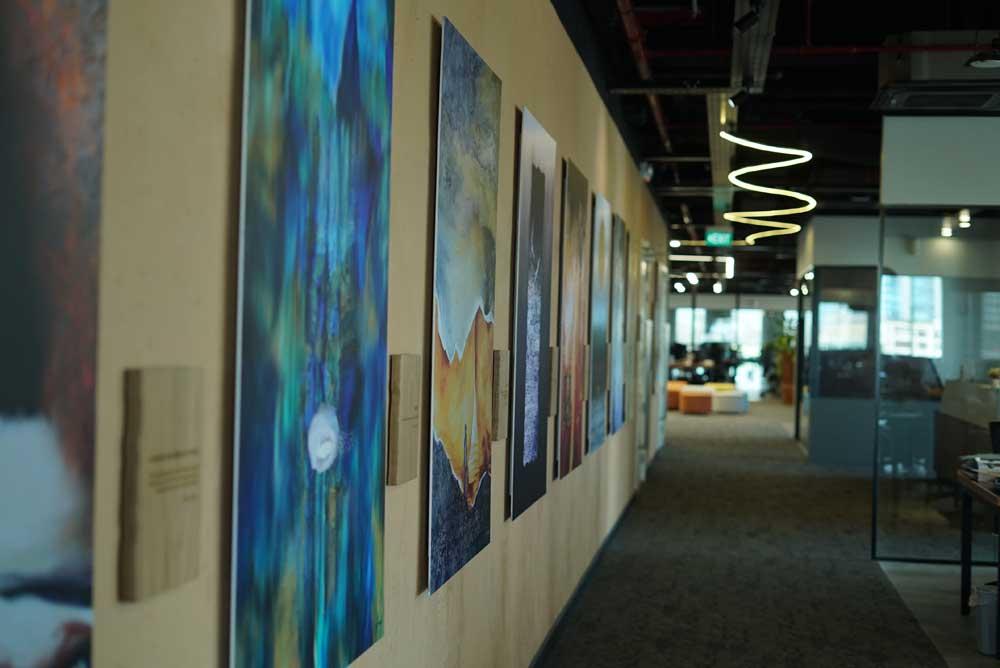
If Quest turns towards the human consequences of conflict, Deliverance expands the inquiry to the planetary world that sustains us. Developed in 2012, the collection examines climate change, environmental degradation and the relationship between human activity and natural systems. Its landscapes move between oceans, valleys, glaciers, lagoons and shifting horizons, often using abstract textures, gradients and layered surfaces to evoke the scale and movement of the natural world.
Here, the Earth becomes more than a setting against which human life unfolds. It becomes the central presence. The human figures that appear in Anoma's compositions are often deliberately miniature, placed against landscapes that seem almost immeasurable. This difference in scale is significant. We spend much of our lives organising the world around our own experiences, ambitions and timelines, rarely considering how brief our existence is when measured against geological time. Anoma quietly disrupts that familiar perspective.
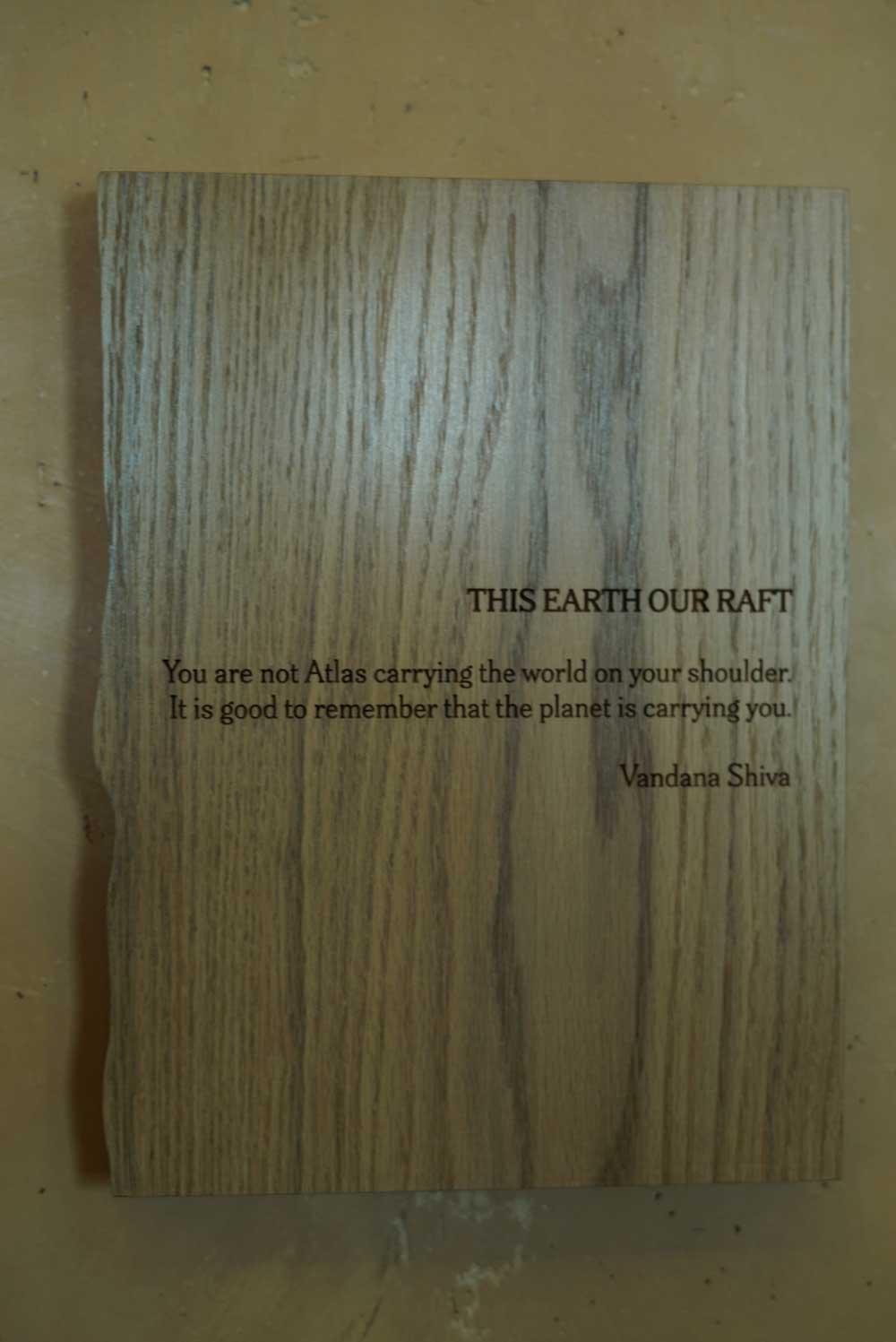
One of the most striking ideas associated with this collection is expressed through the words of environmental activist Vandana Shiva: “You are not Atlas carrying the world on your shoulder. It is good to remember that the planet is carrying you.”
It is a simple reversal of perspective, but one that changes quite a lot. We speak of saving the planet as though it were an act of generosity on our part, something we might choose to do if circumstances allow. Yet, the planet is not waiting for humanity to rescue it. We are the ones dependent on the systems that sustain life. The air we breathe, the water we depend on and the ecosystems that make our existence possible are not external resources. They are part of the very conditions of being alive.
In The Earth Is Our Raft, this relationship becomes particularly tangible. A raft is not an immovable foundation. It is a vessel, vulnerable to the conditions around it, carrying everyone aboard. To imagine the Earth in this way is to recognise that its fragility is inseparable from our own. A passenger who damages the raft ultimately endangers everyone travelling on it. Environmental destruction, therefore, cannot be treated as somebody else's problem or something that happens at a comfortable distance from our everyday lives.
Water, too, takes on a significance beyond its physical presence throughout Deliverance. It suggests movement, impermanence, renewal and vulnerability. It can sustain life, but it can also overwhelm it. In works such as Coexistence, the idea of floating becomes an interesting metaphor for surrendering the illusion of complete independence. To float is to trust the medium that holds us, even when we cannot entirely control where it takes us. There is freedom in that surrender, but also uncertainty. Anoma leaves room for both.
The collection is particularly relevant today because the environmental concerns it explores have become increasingly difficult to separate from ordinary life. Climate disruption, rising temperatures, changing weather patterns, species loss and the pressure placed on natural resources are no longer distant scientific conversations. They are increasingly visible realities. Deliverance does not rely on spectacle or alarm to communicate its concerns. It asks something more fundamental of us: to reconsider the position we believe we occupy within nature.
An important influence behind this philosophy is Anoma's father, Ray Wijewardene, whose advocacy for sustainable energy and agricultural innovation continues to inform her thinking. His call for a "fresh paradigm towards a permanent truce with Nature in concurrence with her pace and in sync with her rhythm" finds an echo throughout the collection. It is an approach that moves away from the idea of controlling nature and towards understanding how human life might exist in greater harmony with it. Perhaps that is where the idea of deliverance becomes most meaningful. It is not necessarily about escaping a damaged world, but learning to participate in its repair.
What makes the relationship between Quest and Deliverance particularly interesting is that their concerns are not as separate as they might initially appear. One examines the consequences of violence between human beings, while the other considers the consequences of humanity's relationship with the natural world. In essence, both ask what happens when the relationships that sustain life become fractured. Both are concerned with memory, responsibility and the possibility of renewal. Both also resist the temptation to offer easy answers.
The scale changes, from the individual and the nation to the planet itself, but the underlying question remains remarkably consistent. How do we learn to coexist without continually creating the conditions for our own destruction?
It is also worth considering the importance of the collaborative process behind these works. Anoma's practice extends beyond the conventional boundaries of painting, bringing together installation, photography, digital processes, video, performance and writing. Poets, scientists, anthropologists, designers, analysts, translators, actors and composers have contributed to the wider creative landscape surrounding these projects. This is not simply an exhibition of artworks produced in isolation. It reflects an understanding that the questions being explored are too complex to belong to one discipline or one individual.
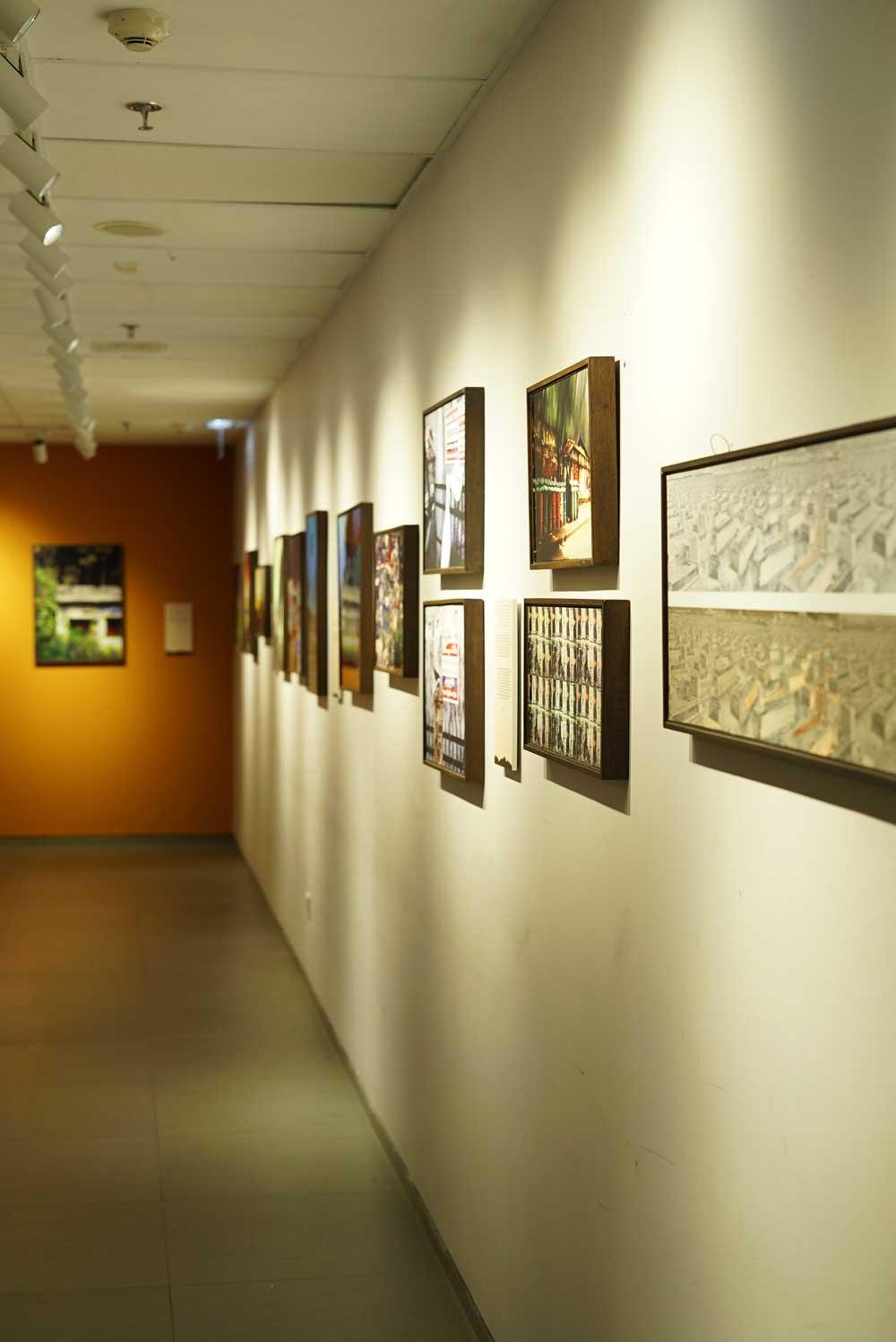
That openness is reflected in the experience of the exhibition itself. With more than fifty works brought together, In Search of Horizon offers an opportunity to encounter these two significant collections in relation to one another, while also considering how their ideas have travelled across time. There is something particularly valuable about seeing works conceived in different historical circumstances occupy the same space. The dialogue between them makes visible the connections that might otherwise remain less apparent.
Presented as part of the Sri Lanka Design Festival 2026, the private collection will be open to the public for one day only, on Sunday, 29 November, at M2M Verandah, Colombo 2, courtesy of the Sri Lanka Design Festival. Curated by Natasha Ginwala, the exhibition will also feature a walkthrough with Anoma herself from 11.30 am to 12.00 noon, offering visitors an opportunity to gain a closer understanding of the stories, ideas and creative processes behind the works.
Perhaps the most interesting thing about returning to a body of work after two decades is discovering that it is not necessarily the work that has changed. Sometimes, it is the world around it that has finally begun to understand the questions being asked.
In Search of Horizon does not promise that every wound can be repaired, every conflict resolved or every ecological crisis reversed. Nor does it attempt to make the future appear more certain than it is. Instead, it asks us to look beyond the immediate image, to consider the histories we carry, the relationships we have neglected and the responsibilities we share. A horizon, after all, is never quite within reach. It moves as we move towards it. Perhaps the point is not to arrive at a final answer, but to recognise that the way forward depends on how we choose to travel.
Because sometimes, the first step towards finding a different horizon is simply learning to look at the world, and our place within it, a little differently.