Light, Shadow and the Women Behind the Stitches: An Inside Look with Yasanthi Soysa Kandasamy
By Enaya Wickramage
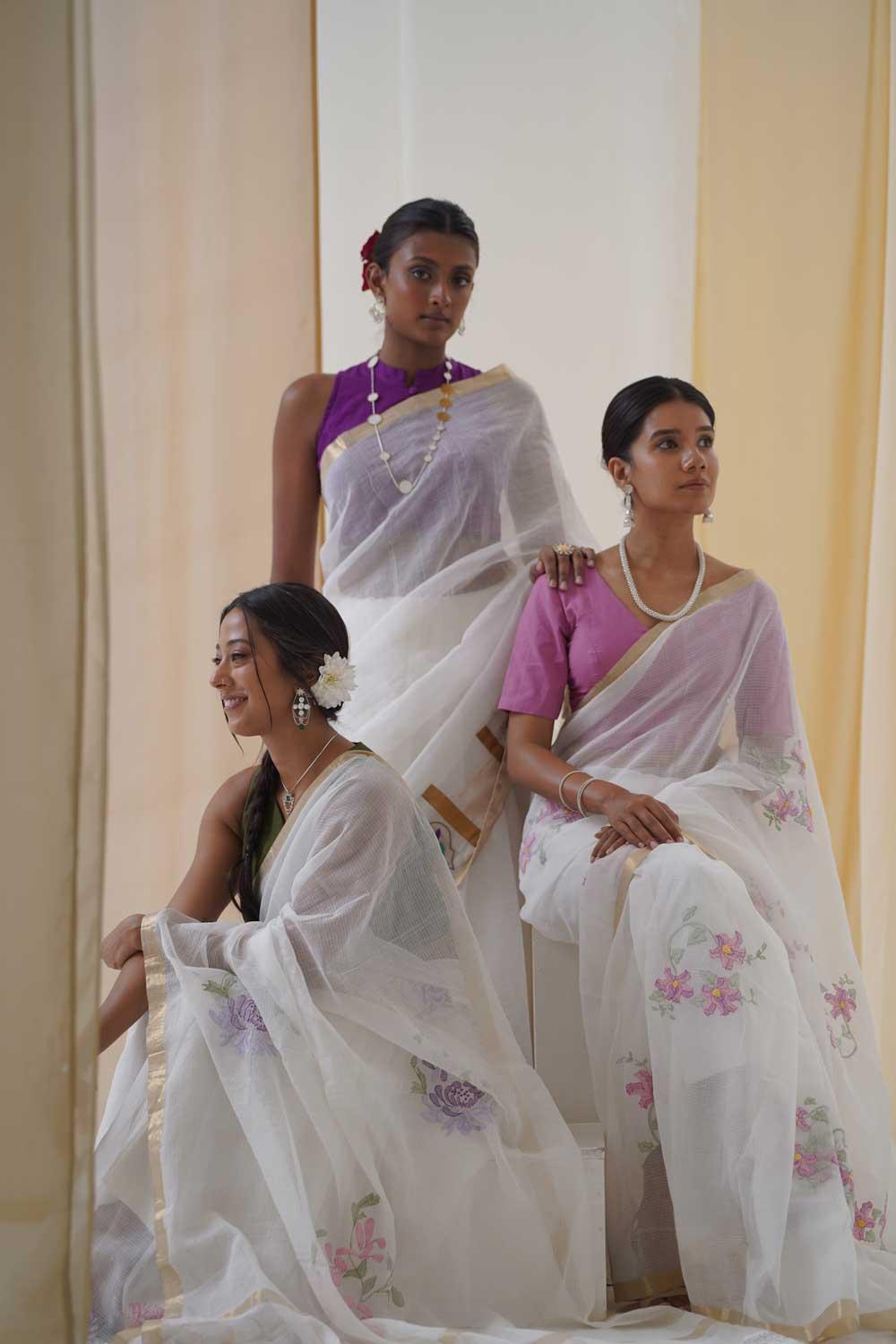
Some work asks to be noticed, and some work simply deserves to be. In Chaya, Allure's silver collection, light settles on the raised surfaces while shadow gathers in the hollows. Alongside it are saris, stitched by hand, one careful stitch at a time. This is craft handed down and refined over generations.
Behind it all is Mrs Yasanthi Soysa Kandasamy, who has been a trustee of Sudhaar for decades and Allure's lead designer since its inception. She works alongside the other remarkable women behind the Sudhaar Foundation. Here, she speaks about the skills and lives she has watched develop over the decades, an exciting, colour-filled chapter already taking shape for 2027, and the quiet pride of earning something that is truly your own.
1. You've been a Sudhaar trustee for decades and Allure's lead designer since the start. When did you first start to imagine bringing these two parts of your life together?
For a long time, really. I always wanted a platform where the women's work could be seen for what it is: fine craft, elevated and within reach of people who appreciate it, rather than something bought as charity.
I am proud of how Allure has grown over the last few years, and it was a very touching moment to realise that the brand had reached a point where it could also support Sudhaar and the efforts of everyone behind it. That is when it all came together.
2. How do you balance the two roles? Do you ever find the commercial demands of a brand pulling against the foundation's long-term mission?
Every now and then, yes! Two hats can get a little heavy some days. But I have been fortunate to build both around good people. At Sudhaar, I am one of several trustees, and we have a wonderful team, each looking after specific areas. That shared effort is a big part of why the programme has grown, and it means neither side has to lose out for the other. Managing my time is always the challenge, but I seem to do my best work under a little pressure!
3. What does your workspace look like on an ordinary morning, and what's the first thing you do when you walk in?
Very calm and tidy, mostly because I am usually one of the first to arrive! I open my book and my iPad, refresh my mind on where things stand, and plan the day so both Allure and Sudhaar get their share of attention. Then Samitha, our project coordinator, comes rushing in to get her work sorted before the Allure meeting begins. From there, it is one long day until late evening.
4. Allure and Sudhaar have worked together before on pouches and bags. What made now the right time for a collaboration at this scale?
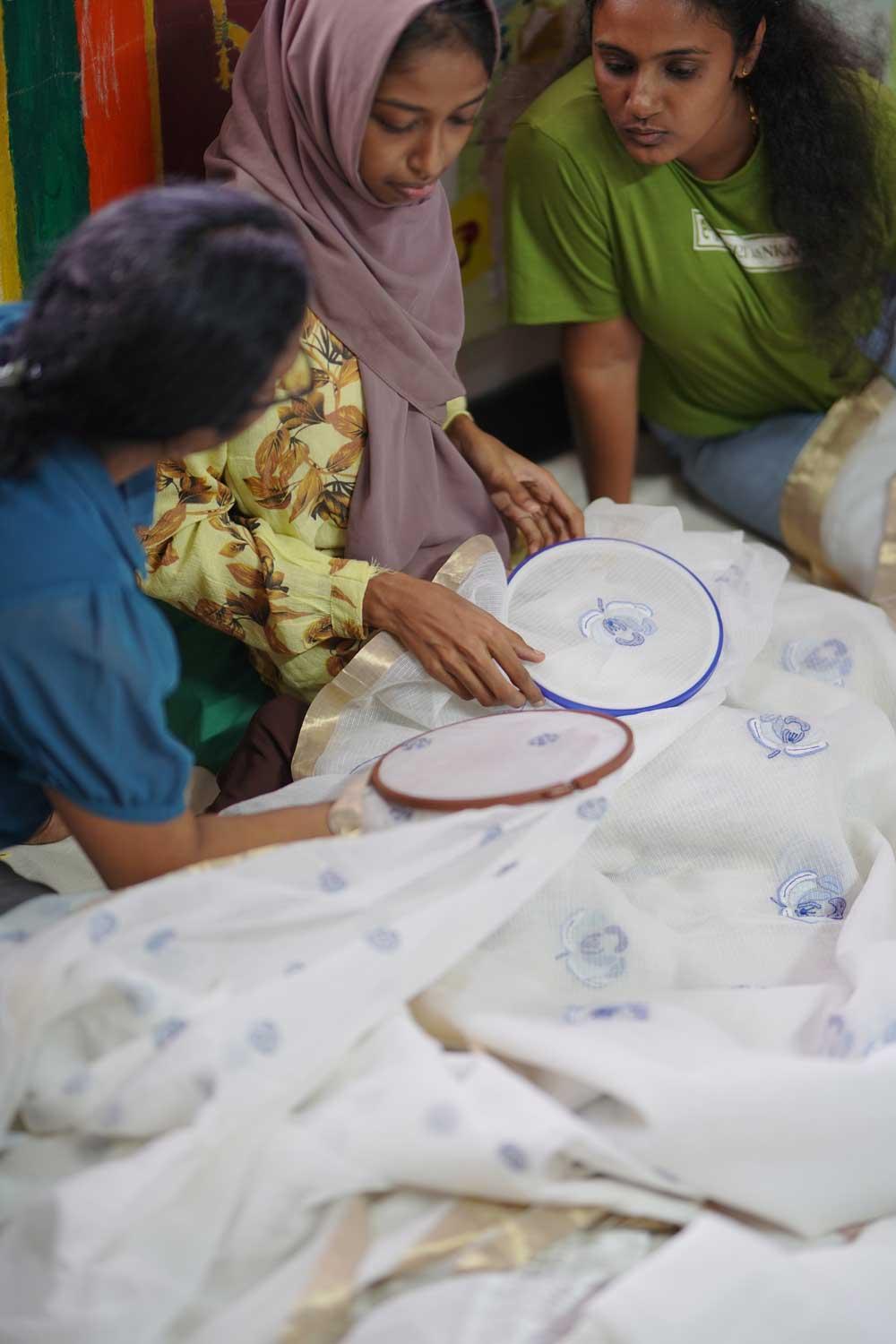
Sudhaar has made Allure's packaging for some time, and while that gives a few of the women a steady income, it still means making something for someone else. We wanted to give them the chance to stand on their own two feet: not just by earning an income, but by creating and building something that is truly theirs.
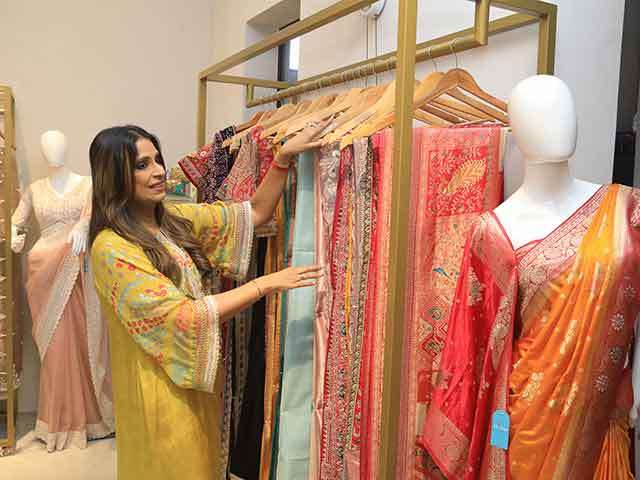
Their skills had developed from weaving table runners to producing fine embroidery, so we started the hand-embroidered sari project. Once the work reached that level, it deserved a proper stage, and I am proud that Allure could give it one.
5. The collection is named 'Chaya'. What inspired this name?
Chaya is the name of the Allure collection we launched alongside the saris. At Allure, we have always loved playing with texture, and we wanted to bring more of the expression of handcrafted work into silver, the kind you can see and feel in every piece.
Chaya means shadow in Sanskrit. When silver is worked by hand, the raised surfaces catch the light while the recesses hold the shadow, and that play of light and shade is what brings texture to life. The collection is our way of honouring craft skills that run deep in Sri Lanka and across Asia. The women's hand embroidery does the same for the sari, where every raised stitch casts its own small shadow, too. That is why it felt so right to have the two crafts side by side that evening.
6. When you start a new design, does it begin with a shape, a feeling, or a story?
A feeling, almost always. The shape follows, and the story usually reveals itself along the way.
7. Why do you think fashion, specifically, has become the way you work with these women, rather than another industry?
Fashion is actually just one part of it. Our main aim is to give the women the knowledge to make a product and market it. They also make bags, boxes and stationery from paper, and right now we are working on grocery bags made from waste material. The saris are simply where their skill shows most.
8. The collaboration was designed so that the saris would be judged on craft, rather than framed as a cause. Why was that so important to you, and how did you avoid the charity narrative in the event and marketing?
Because the work stands on its own, and I truly believe that. If someone buys a sari only to show their support, the women are not really being empowered, and they are not growing. If someone buys it because they love it, they come back and tell their friends. Having their work judged on its merits is another form of empowerment, and it lets them stand on their own two feet.
So, we were very deliberate about how we shaped the evening. We did speak about the Foundation and the work it does, but the saris were draped and shown alongside Allure's silver as part of one story of craft, never as a cause. Every choice we made was about letting people fall in love with the work first.

9. You said that Sudhaar describes its mission as going beyond charity. How does it aim to do this?
Charity helps for a day. We would rather remove the things that hold people back, so that change lasts for generations. For children, that means spoken English, yoga, and building confidence through plays and performances. Young people finishing school receive career guidance, help preparing for interviews, and introductions to job opportunities as they step into the working world. For women, it is about skills and an income of their own. All of this runs from a community centre that the trustees renovated and continue to look after.
10. Can you share a story of how the programme has changed the lives of some of the women involved?
I feel very grateful that there are so many, both from the women's programme and from our spoken English classes for children and adults. Some of the women I first worked with thirty years ago are now far ahead of me in many ways. Their confidence, independence and the way they get things done are remarkable.
Many now pay for their children's tuition and extra classes themselves. And it is so touching when they share with us how they have spent what they earned: the joy of buying a pair of shoes for a husband, or the young woman embroidering the saris who is quietly saving for her wedding.
11. You describe this as the beginning of a longer body of work. What would a second collection look like, and what would you want the women to lead on?
We are planning a second collection for March 2027. The first featured embroidery on white cotton saris. This time, we are bringing in colour and different fabric textures, while drawing on some of the traditional stitches used in Sri Lanka and India. I would love the women to take the lead in more aspects of the design, choosing the colours and combinations themselves.
12. What is one piece of advice you would give to someone wanting to empower those in need through different expressions of art?
Think long term. This kind of work takes time, far more than you expect, and I would be fibbing if I said there were no discouraging days. There have been plenty! But keep going and keep showing up for the people you work with. Once you pass a certain point, the results are unbelievable. The talent is already there; it always has been. What is usually missing is the opportunity, and being part of giving that has been one of the most rewarding things in my life.