Four Years After the MV X-Press Pearl Disaster: A Fight for Justice That’s Not Over
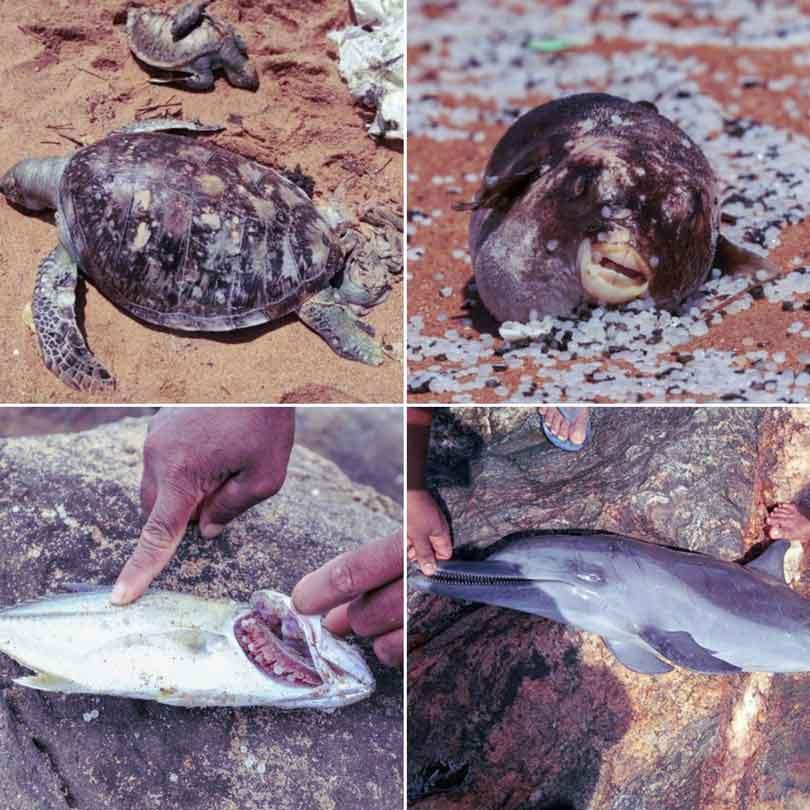
Many dead animals washed ashore showed a possible impact from the MV Express Perl disaster
By Rukmi Peiris
It has been over 04 years, since “The Worst Marine Chemical Catastrophe in the recorded history of the Indian Ocean” as experts called it, had happened in May 2021. The MV X-Press Pearl ship, that was carrying 25 tonnes of nitric acid, approximately 70 billion plastic nurdles, and other hazardous chemicals, caught on fire leaving a trail of destruction that continues to haunt Sri Lanka’s west coast till now. Even today, the fight for justice is not over. Even though the Supreme Court of Sri Lanka delivered a judgement in July 2025 with a compensation of $1 billion, the money is still largely unpaid, and the legal institutional responses are deeply unresolved.
The Disaster That Changed Everything
We must go back to the beginning first, to understand the current situation. On 20th May 2021, while waiting to enter the Colombo harbour, the Singapore-flagged container vessel MV X-Press Pearl ship caught on fire. This fire was believed to have started in a container carrying nitric acid and the crew had the knowledge about a leak in this certain container since days earlier, but at previous ports in Hamad and Hazira, the ship was refused entry. For 13 days, MV X-Press Pearl burned and destroyed much of the cargo, eventually releasing an enormous number of pollutants such as plastic nurdles, and tiny pellets used as raw material in the packaging industry, which washed up on Sri Lanka’s beaches in thick layers covering the sand. On the other hand, the impact on marine life was devastating. Dead turtles, whales, and dolphins washed ashore, while the fisheries sector faced income loss, reduced fish stocks, damaged gear, and widespread public mistrust in seafood safety and the tourism industry was burdened with beach contamination, which drove visitors away.
The Supreme Court’s Landmark Judgement
The fight for the judgement was taken to the Supreme Court by the fishing community. In July 2025, a judgement ordering the shipping companies and their agents to pay $1 billion compensation was delivered by a five-judge bench. According to the court’s 361-page judgement, an attempt to gain entry to the Colombo port with intentionally suppressed and withheld truthful, timely, comprehensive, and accurate information regarding the situation, from the Harbour Master of the Colombo Port was found. Also, the court ruled that the shipping companies had violated International Law by failing to inform Sri Lanka about the extent of the problem with the cargo vessel. The court also found that the Attorney General’s Department had acted irrationally, arbitrarily and unilaterally by failing to take action under Environmental Law. The judgement set a payment scheduled to be deposited in court-administered funds for compensation to affected fishing communities and environmental restoration as $250 million due by September 2025, $500 million due six months later, and $250 million due within a year of the ruling.
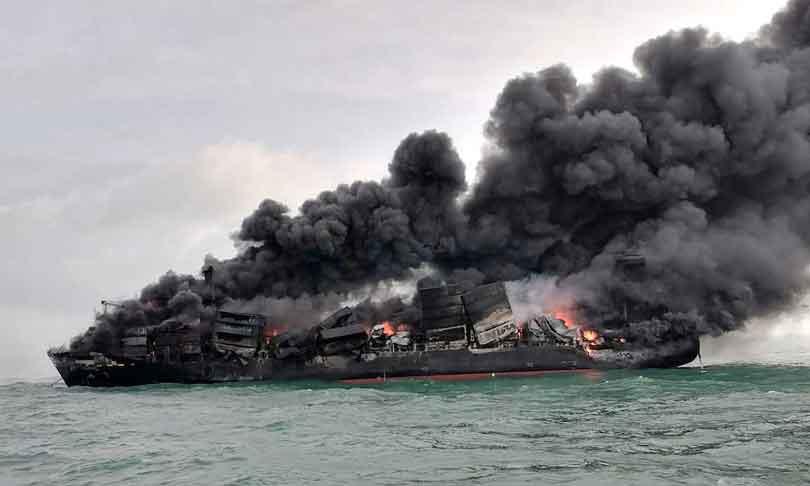
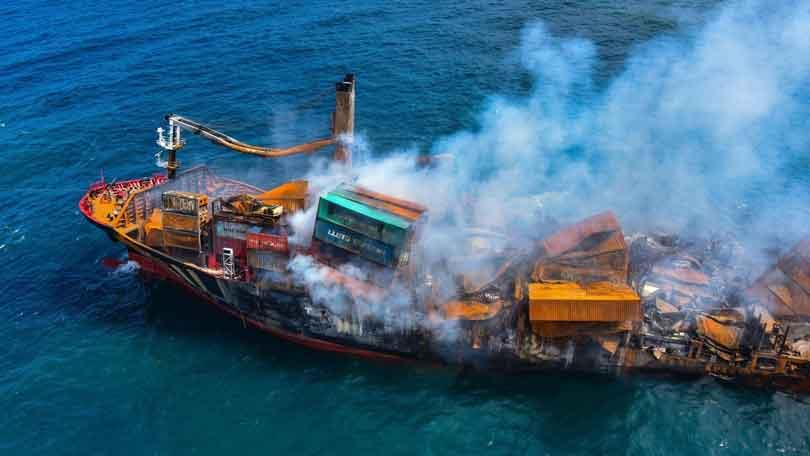
Loaded with nearly 1,500 containers, the X-Press Pearl caught fire off the coast of Colombo, Sri Lanka.
Where is the Money?
In January 2026, the Supreme Court concluded the hearing of the Fundamental Rights petitions, effectively terminating direct judicial supervision and the Attorney General confirmed that the domestic case has formally closed. With this, the court shifted the responsibility to the Executive branch for implementation and recovery. However, the Attorney General’s Department has emphasized diplomatic engagement and negotiated settlement, in relation to ongoing proceedings in foreign jurisdictions.
This strategy has been controversial. Environmental activists argue that domestic enforcement should take priority and call for actions against non-compliant parties. Also, as of February 2026, the initial compensation payable under the judgement has not been credited to the treasury and the compensation process has entered a period of uncertainty, institutional delays, competing legal strategies and unresolved enforcement mechanisms.
The Local Agent’s Limited Payment
Up until now, there has been only one payment of Rs. 300 million (approximately USD 1 million) received from the local shipping agent, Sea Consortium Lanka Ltd. No payment has been received from any other parties. Fourteen directors from the same company have been under a travel ban and their assets are being investigated through the Criminal Investigation Department. However, the main shipping companies and their insurers have yet to pay the compensation that was ordered by the Sri Lankan Supreme Court. “The compensation claim in question was pursued by private parties. It is not within the purview of MEPA”, explained MEPA Chairman Samantha Gunasekara. The Marine Environment Protection Authority (MEPA) played a vital role in the initial response to the disaster, but now they have a more limited position in the compensation process, while their own cases against the responsible parties have not yet concluded.
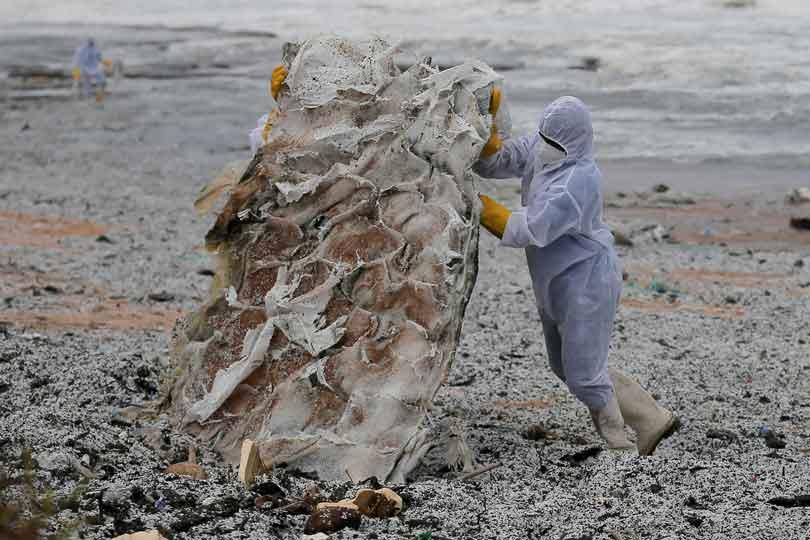
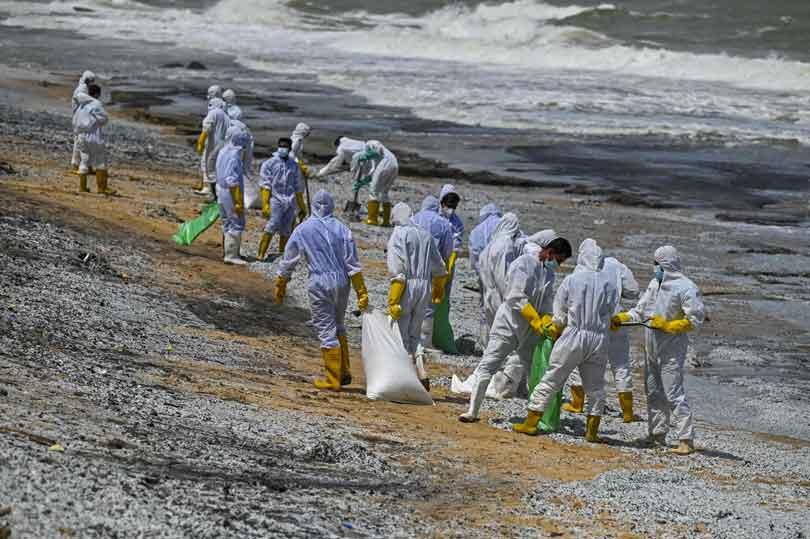
Sri Lankan Navy soldiers work to remove debris washed ashore
The Compensation Commission That Has Not Started
The Supreme Court directed the establishment of a Compensation Commission chaired by retired Supreme Court Justice Gamini Amarasekara, to oversee the distribution of compensation. According to the most recent reports, the commission has yet to commence operations. “We submitted the Terms of Reference to the SC and are still waiting for a response. We cannot authorize the release of compensation without first determining the quantum. Even then, the power to enforce such orders resides with the court. The commission is not a court of law empowered to issue writs”, Justice Amarasekara said. He confirmed that the Terms of Reference of the commission defining its authority and procedures, have not yet been approved.
Compensation for the Dried Fish Industry
Under the 4th phase of the MV X-Press Pearl damage compensation scheme, in June 2026, Fisheries Minister Douglas Devananda announced that the measures would be taken to provide compensation to fishermen who work in the dried fish industry. Fishermen in the Negombo area had already approached the Minister with their concerns. They explained how they had to stop drying fish on the coastline for a while to avoid contamination from the disaster, which heavily affected their livelihood. The Minister assured them that necessary steps would be taken.
The Ongoing Environmental Impact
The impact of this disaster is not only financial but also continues to harm the environment. The plastic nurdles, that were released by the MV X-Press Pearl still remain in the ocean, causing ecological stress. Recent studies show that the fisheries sector has suffered from major disruptions such as reduction of fish stocks and damaged gear. With continued presence of nurdles in the marine environment, it is leading to ecological stress, potentially affecting biodiversity, while disrupting fish breeding activities. According to affected communities, there are unequal and delayed compensation, lack of disaster preparedness, and communication gaps. This disaster revealed that small-scale coastal economies are vulnerable to maritime pollution.
The Case for Accountability
Most of the compensation ordered by the Supreme Court is still unpaid even after 04 years have passed. The Attorney General favours international negotiation, while the environmental groups warn that extended diplomacy can lead to weakening domestic court orders. The government and the court have been aware of these matters and even have pushed for accountability. However, the implementation of the international compensation process is complex, and many are watching what will be Sri Lanka’s next step. The MV X-Press Pearl incident compensation process is now attention-grabbing across domestic courts, pending cases in London and Singapore, and unresolved justifiable mechanisms in Sri Lanka, while this complexity makes implementation difficult and even delays recovery.
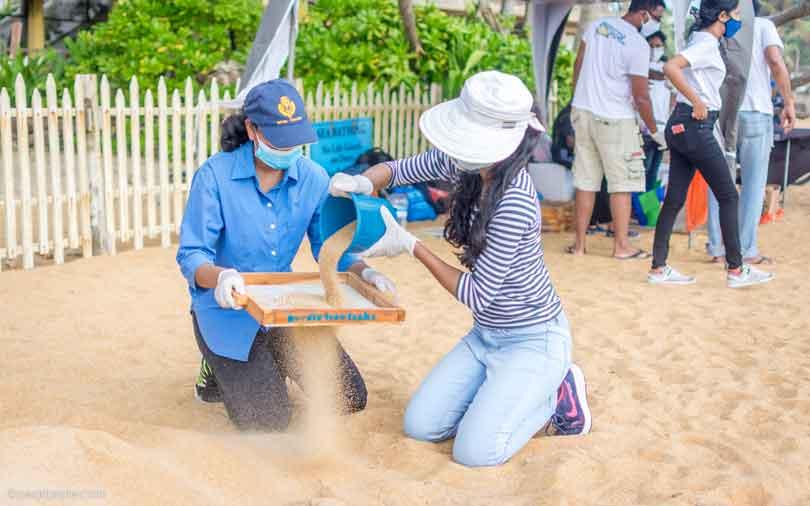
Nurdle Free Lanka Campaign by The Pearl Protectors to remove all plastic pellets that have polluted the shorelines of Sri Lanka due to the MV X-Press Pearl Disaster.
A Call for Action
The MV X-Press Pearl disaster, both before and ongoing situations show the devastating consequences of environmental negligence and the importance of holding polluters accountable, while it also reflects the limitations in the legal system. Without an effort between the judiciary, the executive and international partners, justice can remain elusive. The marine life that perished, the ocean water and beaches that were polluted and the fishing communities that lost their livelihood deserve justice, just more than promises. The fight for compensation of the MV X-Press Pearl disaster is far from over. And while this fight goes on, we should work on protecting our ocean as well. We never know. Maybe the next disaster is just around the corner.