Fluent in Sarcasm: Lost in Translation
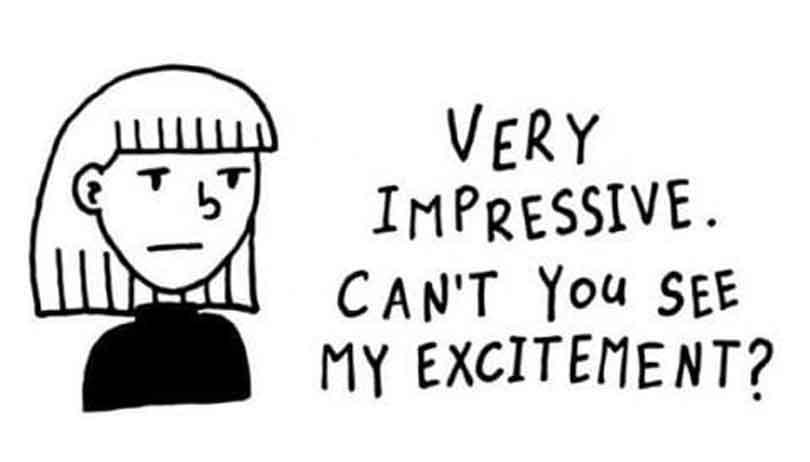
Having to say “No, I was kidding” every time I say something is kind of exhausting, especially with people who take everything dead seriously. Then it takes another ten minutes to explain how what I said was not exactly reality. Dear reader, today we explore the art of being fluent in sarcasm.
Because, quite frankly, it feels like I’ve been speaking an entirely different language my whole life, one that comes with no translation guide, and certainly no patience for those who insist on taking everything at face value. Ironically, though, my face seems to come with subtitles of its own. The kind that flashes across my expressions before my mouth even gets the chance to form the words. A raised eyebrow, a half-smirk, a look that very clearly says, this is not to be taken seriously and yet, somehow, it still is.
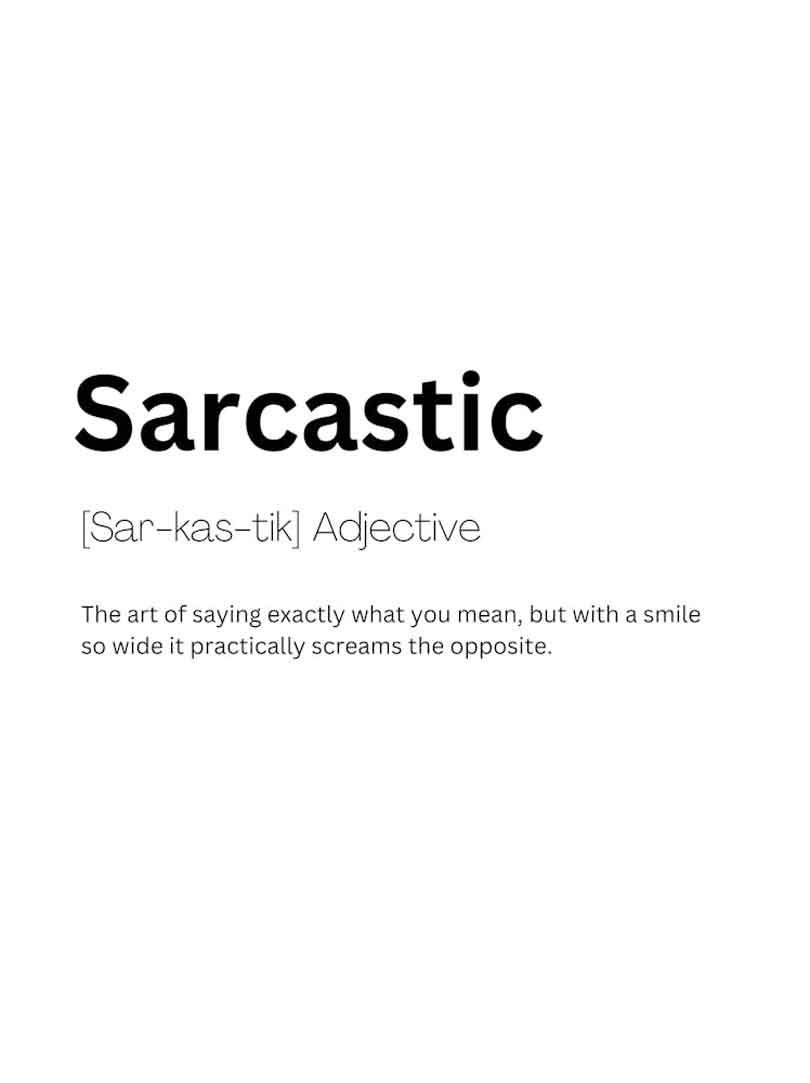
Sarcasm, for those unfamiliar, is not just humour. It is timing. It is tone. It is a carefully crafted dance between what is said and what is meant. It lives in the pause before a sentence ends, in the slight raise of an eyebrow, in the deliberate exaggeration of something so obviously untrue that it becomes truth in disguise. And yet, somehow, it continues to be misunderstood. There is a particular kind of fatigue that comes with being sarcastic in a world that demands literalism. It’s the kind where you throw a perfectly timed remark into the air, expecting it to land gracefully, only for it to crash and burn in a pit of confusion. Suddenly, you are no longer the witty narrator of your own story, you are a full-time translator of your own personality.
- “No, I didn’t actually mean I was going to drop out and move to a remote island.”
- “No, I’m not genuinely offended that you took my seat.”
- “No, I don’t believe the world is ending because my coffee was slightly too bitter.”
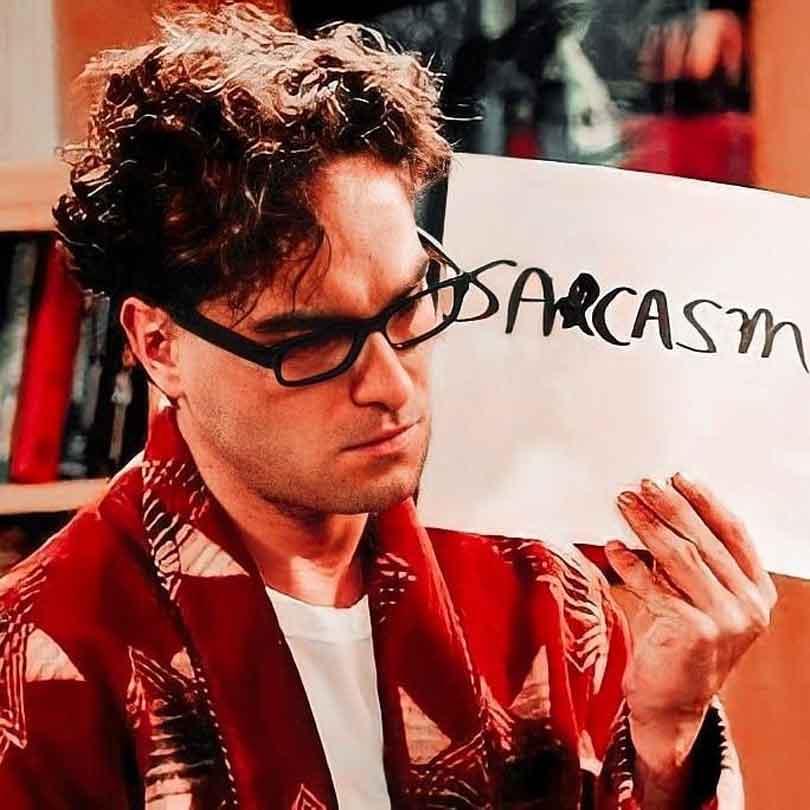
And just like that, the joke dies. Not with a bang, but with a painfully long explanation.
But let’s be honest, sarcasm is not for everyone. And maybe that’s where the problem begins. Because sarcasm demands a certain level of awareness, a shared understanding of context, and, most importantly, the ability to read between the lines. It asks the listener to participate, to recognize that communication is not always about the words themselves, but about what exists beneath them. In many ways, sarcasm is a test. Not of intelligence, necessarily, but of perception. It separates those who listen from those who merely hear. Of course, this is not to say that those who don’t “get it” are at fault. Communication, after all, is a two-way street. And sarcasm, as beautiful as it can be, is also inherently risky. It relies on assumption, the assumption that the other person will understand, that they will catch the tone, that they will see the invisible quotation marks wrapped around your words. And when they don’t, the responsibility falls back on you. Which brings me to the inevitable question: is sarcasm worth it? The short answer is yes. The long answer is… still yes, but with consequences.
Because sarcasm, when it lands, is unmatched. It creates moments of connection that are almost electric. That brief second when someone catches your drift, when their eyes light up in recognition, when a shared understanding passes between you without the need for explanation, that is the reward. It is the conversational equivalent of an inside joke, even when it isn’t one. But when it doesn’t land, it can do the exact opposite. It can create distance, confusion, even unintended offence. What was meant to be light-hearted becomes heavy. What was meant to be clever becomes complicated. And so, the sarcastic individual learns. Not necessarily to stop, but to adapt. We learn to read the room before we speak. To choose our audience carefully.
To recognize when sarcasm will be appreciated and when it will be dissected under a microscope until all humour is lost. We become, in a sense, strategic with our wit. And yet, even with all this awareness, the exhaustion remains. Because at its core, sarcasm is not just a way of speaking, it is a way of thinking. It is the instinct to respond to absurdity with exaggeration, to meet seriousness with irony, to soften reality with a layer of humour that is both protective and revealing. It is, perhaps, a defense mechanism. A way of saying what we mean without saying it directly. A way of maintaining distance while still engaging. A way of making the unbearable just a little more bearable. Or maybe it’s simply a habit. One that forms over time, shaped by personality, environment, and the countless small interactions that teach us how to communicate with the world. Either way, it becomes part of you. Which is why being misunderstood feels so personal.
Because when someone doesn’t understand your sarcasm, it’s not just the joke that’s lost, it’s the intention behind it. It’s the subtlety, the nuance, the effort that went into crafting something that was never meant to be taken at face value. And in those moments, you are left with a choice. Do you explain yourself, knowing that the explanation will never quite capture the original intent? Or do you let it go, allowing the misunderstanding to exist, unresolved and slightly uncomfortable?
More often than not, we choose to explain. Not because we want to, but because silence can be misinterpreted even more.
- And so, the cycle continues.
- A sarcastic remark.
- A confused response.
- A long-winded clarification.
- Repeat.
But perhaps there is something oddly beautiful about this chaos. Because despite everything, the misunderstandings, the explanations, the occasional social misfires, we continue to be sarcastic. We continue to speak in this layered, complicated, slightly impractical way. Why? Because it feels real. Because in a world that often demands simplicity, sarcasm allows for complexity. It allows us to say two things at once, to hold contradiction in a single sentence, to acknowledge the absurdity of life without fully surrendering to it. It is humour, yes, but it is also honesty, just dressed differently. So, maybe the goal is not to be understood all the time.
Maybe the goal is simply to find the people who do understand. The ones who don’t need the extra ten-minute explanation. The ones who catch the tone, the pause, the invisible shift between what is said and what is meant. The ones who laugh at the right moment. Because with them, sarcasm is not exhausting. It is effortless. And until then, dear reader, we will continue to say, “No, I was kidding,” with a tired smile and a silent hope that one day, we won’t have to.