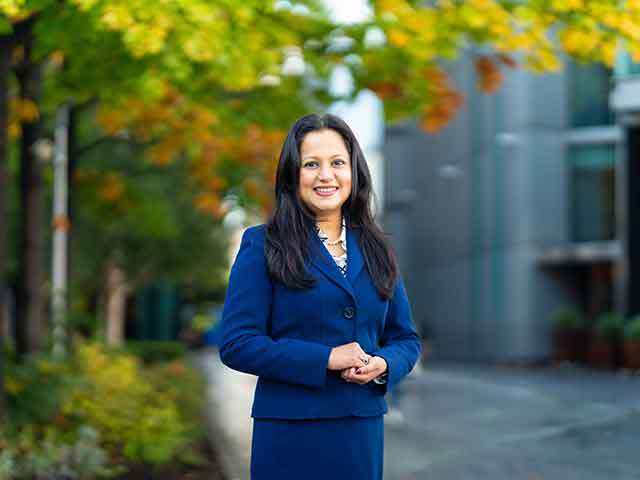
Tania Abeysinghe: A Portrait of Work in Motion
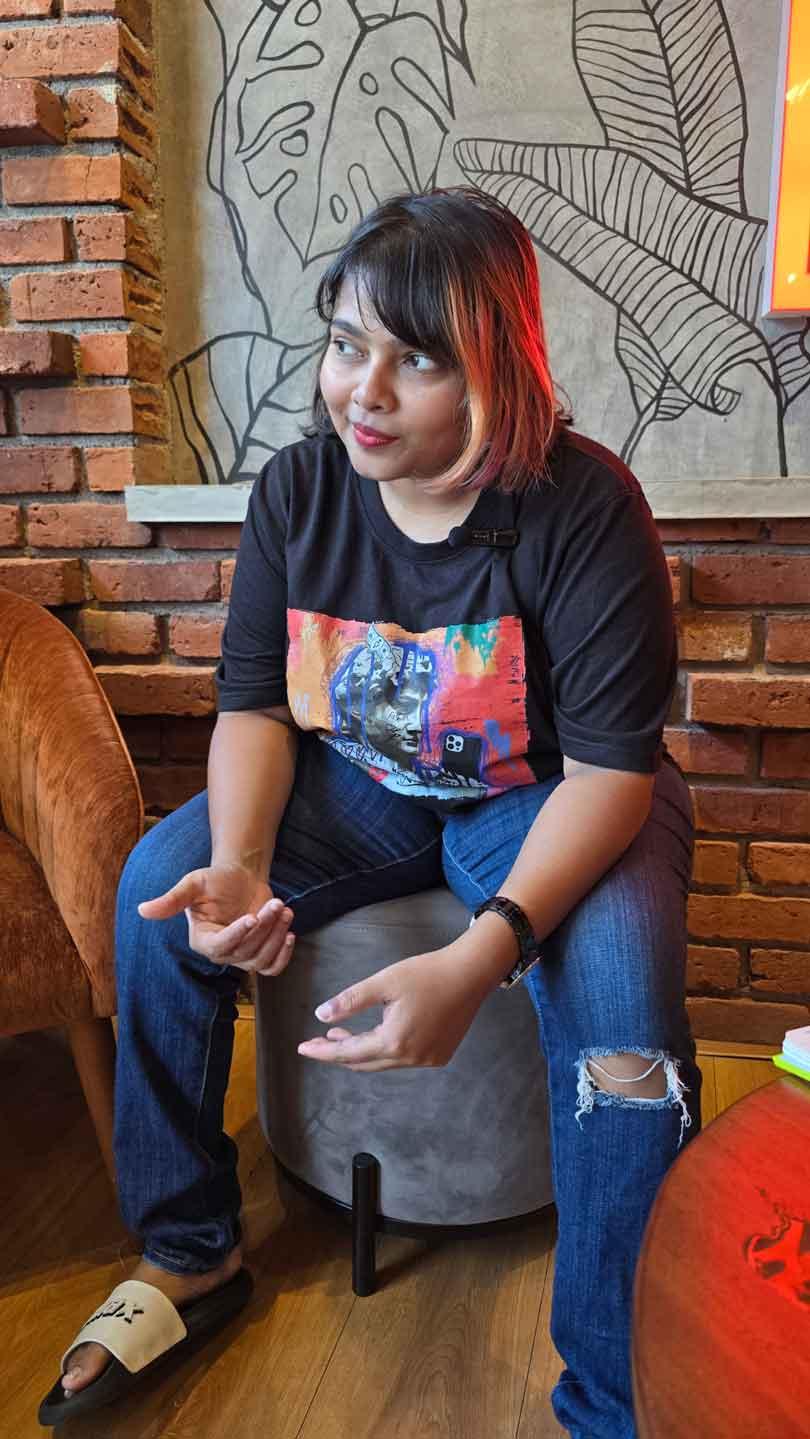
Tania is difficult to place on a conventional career map, though she has spent enough time inside enough systems to know exactly how those maps are usually drawn. Her work moves between customer experience strategy, entrepreneurship, comedy, content creation, food ventures, and social media consultancy. Each of these roles might, in isolation, suggest a different professional identity. Taken together, they point to something more consistent: a sustained interest in how people are seen, and how that visibility is shaped, rewarded, or denied. Across these shifts, there is a quiet continuity in the way she describes her work: less as a sequence of industries than as repeated encounters with human behavior, what people want, what they tolerate, and what they notice when no one is explicitly asking them to pay attention.
1. Tania, your career moves between customer experience strategy, entrepreneurship, comedy, content creation, and cooking. Have you always been comfortable being multifaceted, or did you have to unlearn the idea of sticking to one identity?
I have always been ambitious about many goals that were different from one another, which added up to a full life rather than mere financial success. My biggest goal is to become a culture shaper as a woman, so all my career moves speak to that one big goal. I always wanted to become an entrepreneur since I started commerce as a subject in 10th grade. Back then, I did not even know that there was a word to refer to women in business, so I was telling everyone I wanted to become a business “man” one day. I started my first business when I was a university student with less than Rs. 1000 and reinvested my profit to keep growing, and I ran it as a profitable business until I graduated. I was exposed to the topic of CX when I was studying marketing at SLIM after O Levels, and I immediately knew that was what I would be good at, even though it was not a popular topic in Sri Lanka back then. Fortunately, I was able to start my CX career while I was a university student, and as a freelancing mystery shopper. Over eight years, I was able to create and manage multiple mystery shopping projects for many chain companies and franchises in Sri Lanka, and I have trained a few hundred mystery shoppers.
Meanwhile, I was able to start a cloud café called Backstage Barista, since I have been a “nerd” about tea and coffee for a few years. Backstage Barista started as a hobby during the economic crisis in 2022 but unexpectedly started thriving from its first month, and it is still going strong. In 2025, when I was turning 30, I realized I had more dreams that were important to me that I had yet to pursue. Then I started to unlearn the idea that we are supposed to do only one thing for life and participated in MasterChef Sri Lanka Season 1 to gain experience in cooking and reality TV. After my journey there ended, I started to pursue my biggest dream, which was becoming a stand-up comedian, to use my voice and humor to shed light on important issues. Now I have started a social media marketing and CX strategy company, Resonance Lab (Private) Limited, to help businesses and individuals achieve their goals faster and smarter.
3. In your opinion, what is the difference between a brand that merely sells a product and a brand that genuinely understands people emotionally?
Understanding this difference is what led me to start my own company, Resonance Lab. It is about helping brands resonate with customers in the long run. Most businesses exert a lot of energy and money on marketing, promoting, and “pushing” their products more than understanding the importance of a long-term relationship with customers and how loyalty plays a huge role in a brand’s success. Most businesses forget the human side of the entire business process. In most cases, customers feel dissatisfied not solely because the product or service let them down, but rather because their frustrations or needs were not heard. Customers value being seen and acknowledged for what they need from a business. To some extent, all customers understand that any business is hard and that it is tough to maintain perfection every day. But a brand that spends more energy making customers feel heard and seen, while removing customer pain points, can go a long way in building loyalty in such a competitive time. As I have personally conducted thousands of mystery shopping visits, both in-store and online over eight years, I have observed repeatedly what many businesses miss when it comes to CX: it is not about evaluating whether the customer “liked” the experience. It is about whether the experience was executed correctly in a way that increases sales and satisfaction. For example, you can have a satisfied customer who never knew that the cashier forgot the upsell or that the loyalty programme was never mentioned. A CX professional knows what needs to happen and evaluates whether it actually happened. While evaluating customer experience is not a revolutionary concept, it rarely gets priority. And that is the change in retail culture that I am trying to bring to Sri Lanka.
5. Humor is still viewed differently when it comes from women. Why do you think society celebrates loud, funny men but often becomes uncomfortable with outspoken humorous women?
I asked this very question from my closest female friends, who are also naturally funny and outspoken, and their answers shocked and surprised me. One friend said she was asked by her male peers to get her testosterone levels checked because she is too outspoken. Another friend said what we all experience since childhood, which is that Sri Lanka is still very much a male-dominated country where men view women as domestic workers and believe women need to be soft-spoken and careful about how they walk, sit, and dress. So, it is still uneasy for people to see a woman going against these “rules” and having her own voice, and on top of that, being humorous. Because humor has a power that other forms of speech do not have. It has the power to reach many people from all walks of life through laughter. It carries storytelling, relatability, and shareability, while also delivering powerful messages that make you think. And real comedy comes from years of life experiences, tragedy, trauma, failures, pain, and attempts to find light in all that darkness. And women have plenty of those experiences that men will never experience.
6. Your content feels very observational and rooted in everyday life. What are the small hypocrisies or behaviors in Sri Lankan culture that fascinate you most?
What fascinates me most is the double standard we have when it comes to women. Up until a certain age, we are encouraged to pursue the highest level of education and achievement without getting “distracted” by relationships and men. Then suddenly, our value becomes rooted in whether we get married and have children. All the incredible achievements take second place to being married and becoming a mother. At the same time, we have terrible childcare and healthcare for women, widespread domestic violence, and day-to-day discrimination and harassment within these roles that are enforced on us. It is, however, incredible to see how women are pushing back harder than ever and creating their own lives while also creating a better world for other women through various movements and campaigns focusing on safety, equality, human rights, and community building. In fact, I am proud to be a volunteer for one such movement called “I See You,” started by Infinite Grace Foundation. And I hope to empower more and more women through my company with my professional abilities and also with stand-up comedy.
7. You balance corporate professionalism with stand-up comedy and content creation. Have you ever struggled with people not taking one side of you seriously because of the other?
Yes! It is incredibly tough to be taken seriously when people see me being humorous and even whimsical on social media and in real life, because we have this idea that to be a competent professional you must have a certain mannerism in the way you present yourself. That discourages authenticity and our own uniqueness and humanness in corporate settings. But I am glad to see many people moving away from these dated ideas and evolving into accepting and celebrating people who are themselves everywhere. This creates more trust, since we are not putting up a made-up image or a censored version of ourselves to please others. Even in real life, I operate with whimsy, humor, and playfulness that make us all human and create genuine friendships, because there is no point building businesses and a big bank account if you miss out on the beautiful experience of being a human capable of connecting deeply with others.
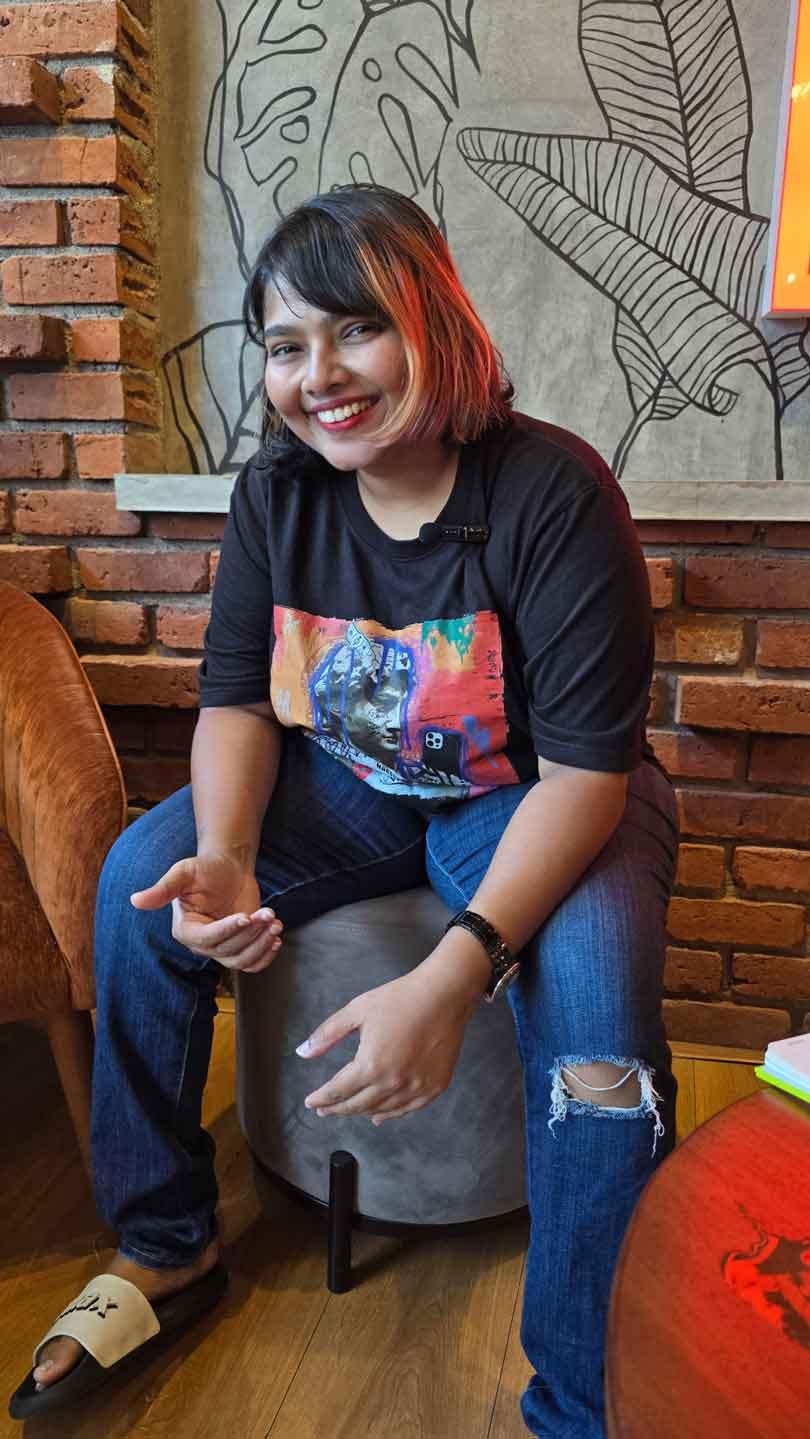
8. Competing on MasterChef introduced audiences to another side of you. What did that experience teach you about pressure, vulnerability, and self-confidence?
As a fan of the MasterChef franchise, I was very grateful to be a participant in MasterChef Sri Lanka Season 1, and it opened me up to a world of experiences. Most importantly, I met amazing people and gained beautiful friendships. Not only did it push me to self-train myself in cooking multiple cuisines, it taught me not to break under pressure and time constraints. Even though my journey ended before I got into the top 20, I learned how tough reality TV is. The cooking is only a small part of the process. Being part of such a huge franchise requires many sacrifices and hard work, and showing up every day with my best self to set an example for other women I wanted to inspire.
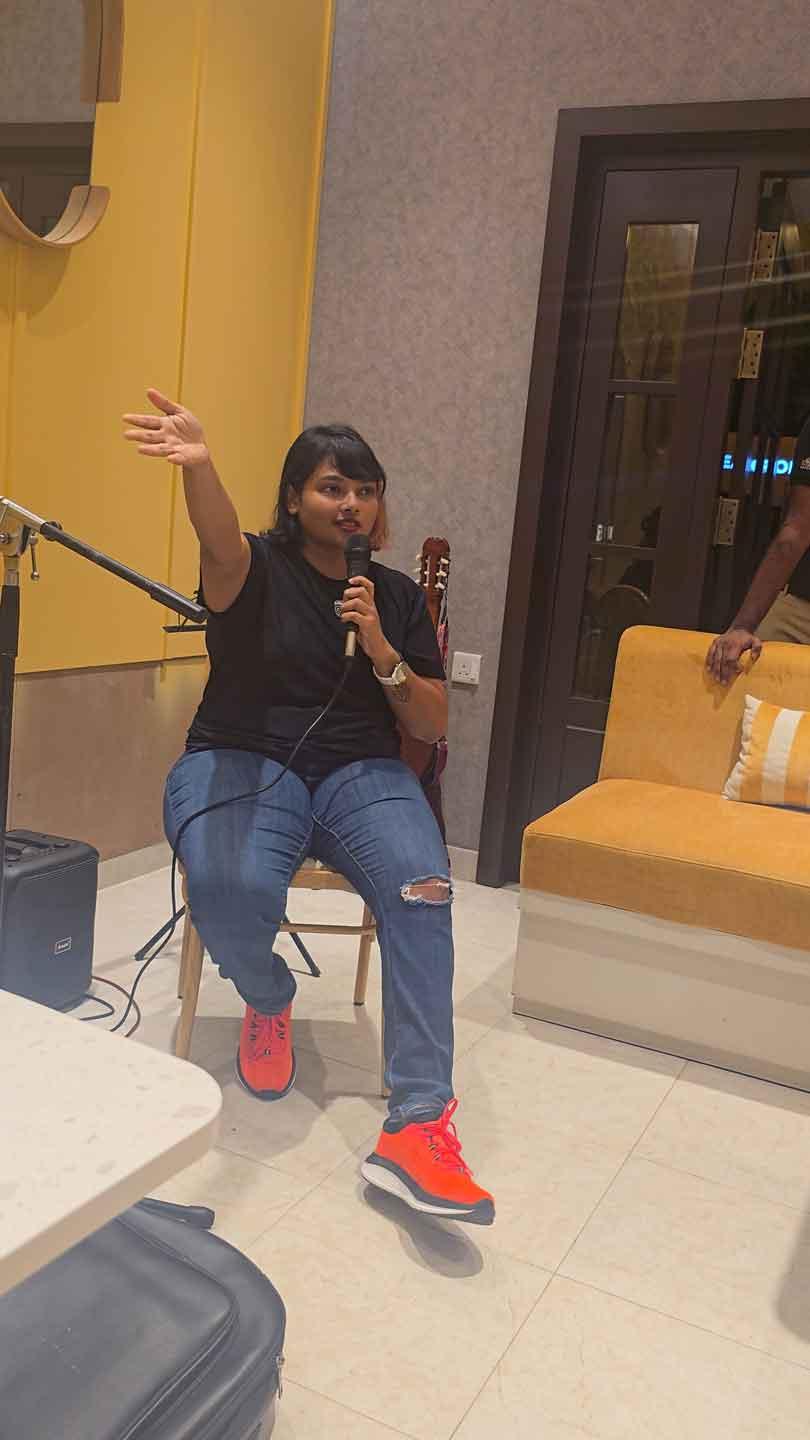
The biggest gift I gained from the experience was becoming confident in front of a camera and having more self-confidence and less self-consciousness. And that paved the way for me to be confident in being visible on social media and performing comedy in front of a crowd. So, it all worked out.
10. Social media rewards visibility but can also punish authenticity. How do you personally navigate being visible online without losing yourself to performance?
That is a tough question. I have struggled with trying to please the algorithm gods while being myself, and I have failed miserably. I have also tried performing just for visibility. As a social media strategist, I always encourage businesses and individuals to pursue authenticity rather than going after clout. In practice, it is a very fine line to navigate. But fortunately for us, social media is starting to change. In 2026, major algorithm changes happened that give more importance to real-life, in-the-moment, unpolished content rather than highly performative and curated content. So many of us will have the upper hand if we choose to be ourselves rather than relying on heavily edited versions of ourselves. I believe authenticity always wins in real life, no matter what our social media analytics say.
12. If someone looked at your journey only through your achievements, what part of your story do you think they would completely miss?
They would completely miss that I was homeless when I was only 19 years old, with no family, no money, and no friends even before I finished school. So, I am a 100% self-made woman who started not only with nothing but at rock bottom. I think that is bound to inspire other women or shock them. They would also miss that I built my career and life while battling depression and anxiety, but thanks to therapy I now get to live a happier life. And in the quest to become hyper-independent and believing that hard work would eventually be rewarded while working for others, I was diagnosed with an autoimmune condition that led to loss of my vision. So, the best I gained from going out on my own and pursuing my dreams is that it made me healthier and happier, and now I am getting back to living a normal and happy life that I deserved all along. I say this because many women I speak to tell me the same story I lived, about how their jobs affected their mental and physical health in irreversible ways while not getting appreciated for the work they do. So, let me be a cautionary tale to anyone reading and debating whether they are living their best life. I hope to keep being honest, open, and vocal until I am known for being an inspiration, especially to Sri Lankans and women all around the world.