STITCHING A LEGACY: IN CONVERSATION WITH KAMIL HEWAVITHARANA
BY THALIBA CADER
Fashion has always suffered from being misunderstood. It is too often dismissed as ornament, mistaken for vanity, or reduced to the business of trends and seasonal reinvention. Yet the history of clothing tells another story entirely. Before architecture announces a civilization, before literature records its anxieties, people first declare themselves through what they choose to wear. Fabric becomes autobiography. A silhouette becomes aspiration. A garment, when imagined well, can reveal more about a society than any economic report ever could. To speak with Kamil is to discover that his story is not merely about fashion. It is about observation, persistence, and the curious relationship between beauty and ambition. The conversation drifts from childhood memories of watching his mother recreate dresses from catalogues to the challenges of building a creative career in a country that has not always recognized fashion as a cultural force. It is equally a conversation about mentorship, artistic integrity, and the responsibilities that accompany success.
1. You often speak about your mother designing dresses for your sisters from catalogues. When you think back to those moments, what do you remember first: the conversations around the clothes, or the feeling of being invited into a creative process as a child?
The first thing I remember is the creative process. My mother had an incredible eye for design. She would look through fashion catalogues and recreate those dresses beautifully for my sisters. As a child, I was fascinated watching her choose fabrics, discuss ideas, and carefully bring each design to life. Those moments sparked my imagination and made me realize that fashion is more than just clothing; it’s creativity, craftsmanship, and a way of expressing yourself. Looking back, that’s where my journey as a designer truly began.
2. Many designers describe fashion as a form of self-expression. Reading about you, it also sounds like a way of observing people. What do you learn about a person from the way they dress?
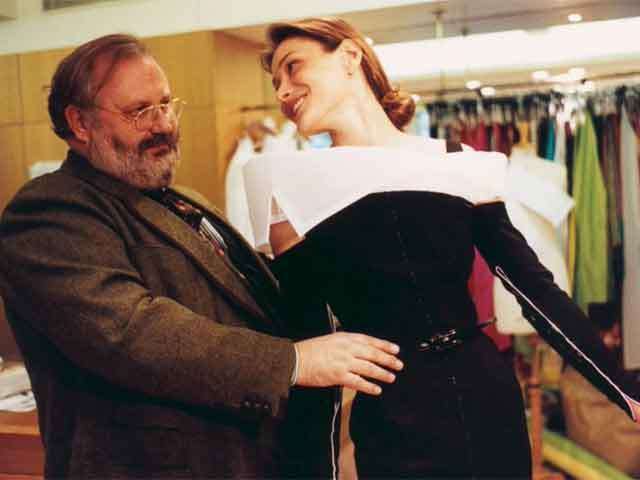
I believe the way a person dresses tells you a lot about their personality, confidence, lifestyle, and even their mood. Before becoming a full-time designer, I worked as a merchandising manager for a department store. I travelled extensively to source garments and accessories, and that experience taught me to observe everything around me, how people dressed, the colours they chose, different cultures, and changing fashion trends. Those observations shaped my eye for detail and helped me understand that fashion is not just about clothing; it’s about understanding people. Today, I design with that same mindset, creating pieces that allow individuals to express who they are while feeling confident and comfortable.
3. You’ve said that when you see a garment, you instinctively imagine how it could become more elegant or more dramatic. Is that impulse a gift, or can it make it difficult to simply look at something without redesigning it in your mind?
I think it’s both a gift and a habit I’ve developed over many years. When I worked as a merchandising manager, I travelled extensively, handpicking garments and accessories for different department stores. Every decision I made was based on understanding the customer; what they would love, what suited them, and what would add value to their wardrobe. That role taught me to observe every detail, from fabrics and craftsmanship to colours, trends, and customer preferences. Today, I still can’t look at a garment without imagining how it could be refined, made more elegant, or given a dramatic touch. It’s not because I find fault with it, but because creativity is always at work in my mind. I believe there’s always an opportunity to make something even more beautiful. More than anything, whatever I do, I give 200% of myself. I never stop learning, observing, and pushing myself to create something better.
4. Your collections often draw from architecture, churches, and cathedrals. What does a building offer you that a fashion reference cannot?
I don’t limit myself to one source of inspiration. Every collection I create has its own identity and tells a different story. My first collection was inspired by churches and cathedrals—their architecture, intricate details, symmetry, and timeless elegance, which I translated into my designs. Since then, every collection has been different. I believe a designer should keep evolving, drawing inspiration from travel, culture, nature, art, and everyday life. I never want to repeat myself; each collection is a new creative journey.
5. The word ‘glamour’ appears frequently when people describe your work. What does glamour mean to you?
To me, glamour is confidence. I love seeing people dressed beautifully, walking into a room with confidence, and naturally turning heads. When someone feels amazing in what they’re wearing, it shows. That’s what I aim to create through my designs: beauty, confidence, and presence.
6. You’ve spoken candidly about the lack of institutional support for designers in Sri Lanka. Do you think the country fully understands fashion as a cultural export, or is it still seen primarily as commerce?
Sri Lanka has incredible creative talent, but I believe fashion should be recognised not only as a business, but also as a cultural export. With more support and opportunities, our designers can proudly represent Sri Lanka on the global stage.
7. Sustainability has become a fashionable word worldwide. What does responsible fashion look like in the context of Sri Lanka?
For me, responsible fashion means creating timeless designs that people will treasure for years, while supporting local craftsmanship and skilled artisans. Sri Lanka has incredible talent, and by valuing quality over quantity, we can build a more sustainable and meaningful fashion industry.
8. VUQE Colombo seems to come from a recognition that talent alone is not enough. What do emerging designers in Sri Lanka lack most today?
Sri Lanka has many talented emerging designers. What many of them lack is financial support and opportunities to develop their creativity. I believe with more backing from the government and the private sector, they could build successful careers and showcase Sri Lankan fashion to the world.
9. You’ve said that designers must help one another rather than compete only for individual recognition. Was there a moment when another designer’s generosity changed your perspective on what this industry could be?
Yes, I’ll never forget my first international show in Alicante, Spain. I didn’t receive the correct model measurements, so I had to make many last-minute adjustments. A designer from Armenia saw me struggling and simply said, ‘Don’t worry,’ then helped me with all the alterations. I was truly touched by that kindness. It showed me that fashion isn’t only about competition; it can also be about supporting one another. I’ve never forgotten that experience.
10. Is there a collection you created that felt less like a professional project and more like a personal confession?
For me, every collection is a balance of both. It has to be professionally executed, but it also needs to reflect something personal. Every collection tells a story, carries an emotion, or represents a part of my journey. That’s what makes each one meaningful to me.
11. When young designers look at your international showcases, they see success. What part of the journey do they usually not see?
People often see the finished collection, but they don’t see the challenges behind it; finding the right fabrics, sourcing the perfect accessories, and bringing an idea to life exactly as I imagined it. I’m very particular about every detail and always strive for a perfect finish. It takes a lot of hard work, patience, and determination before a collection reaches the runway.
12. Out of curiosity, the name LIMAK is your own name reflected backward in a mirror. When you look in a literal mirror, do you see Kamil the humble boy from Ginigathhena, or do you see LIMAK the dramatic, global designer?
When I look in the mirror, I still see Kamil from Ginigathhena. I’ve never forgotten where I came from or the struggles I faced to build my career.
Those experiences keep me grounded and remind me to work even harder. LIMAK is my brand, but Kamil is who I am, and I’m still chasing my dreams with the same passion and determination.
13. You spent years as a professional model before shifting behind the scenes. Models are paid to embody someone else’s vision; designers have to enforce their own. What was the hardest part about breaking out of the mindset of being the 'canvas' to become the 'painter'?
I actually think my experience as a model made the transition easier. As a model, you learn how much work goes into creating a unique design and how important it is to present that garment in the best possible way. You understand the fit, the cut, the movement, and the designer’s vision. That experience gave me a deeper appreciation for fashion and helped me become a better designer.
14. You’ve noted that menswear in Sri Lanka is incredibly rigid and men are terrified of experimenting with shapes and fabrics. Why do you think the Sri Lankan man is so structurally afraid of fashion?
To be honest, I think that’s changing. Sri Lankan men, especially the younger generation, are dressing better than ever. They’re more confident, willing to experiment, and they genuinely enjoy looking good. It’s exciting to see this shift, and it inspires me to create even more distinctive and contemporary menswear for them.
15. You have openly called out the industry for favoring a 'selected crowd' or prominent designers over hard-working fresh talent. Has speaking out against this elitism cost you friendships or closed doors for you in Colombo’s high-society fashion circles?
To be honest, this doesn’t happen only in the fashion industry; it happens everywhere. I believe everyone works hard to achieve their dreams and deserves an equal opportunity, not just those with the right connections. I focus on working hard, staying humble, and treating everyone with respect. If someone doesn’t like me because I speak honestly, that’s their choice, but I won’t change my values.
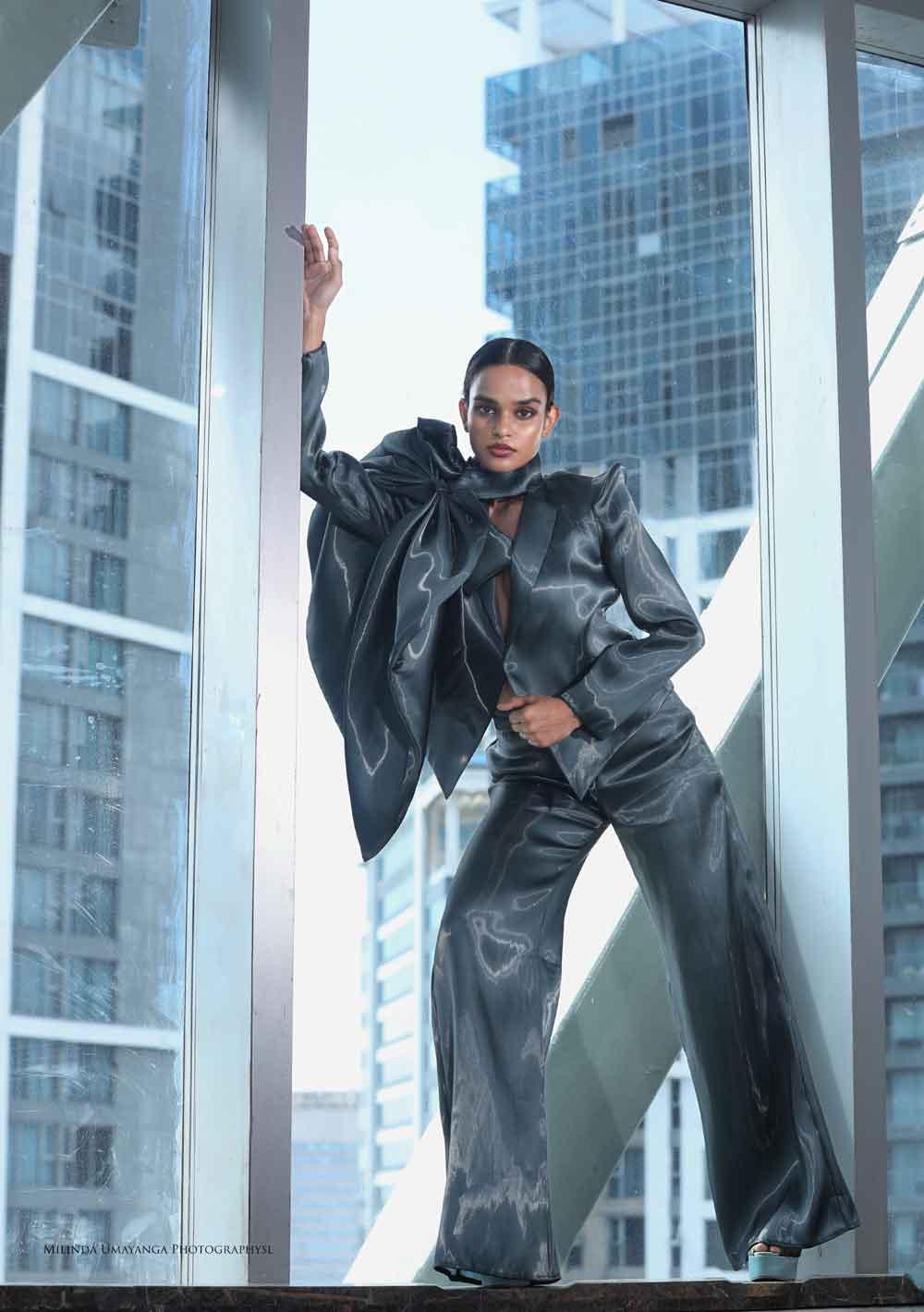
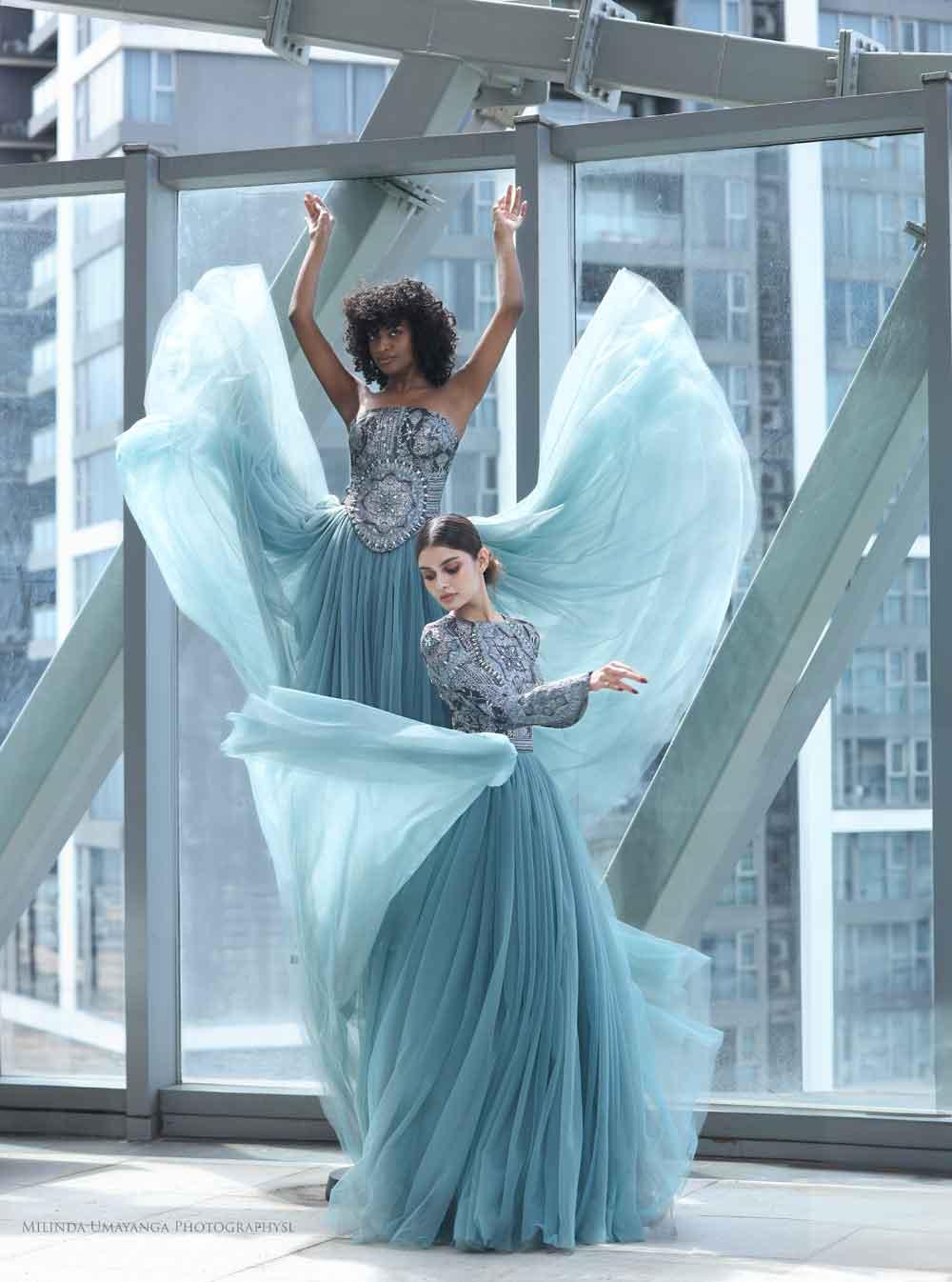
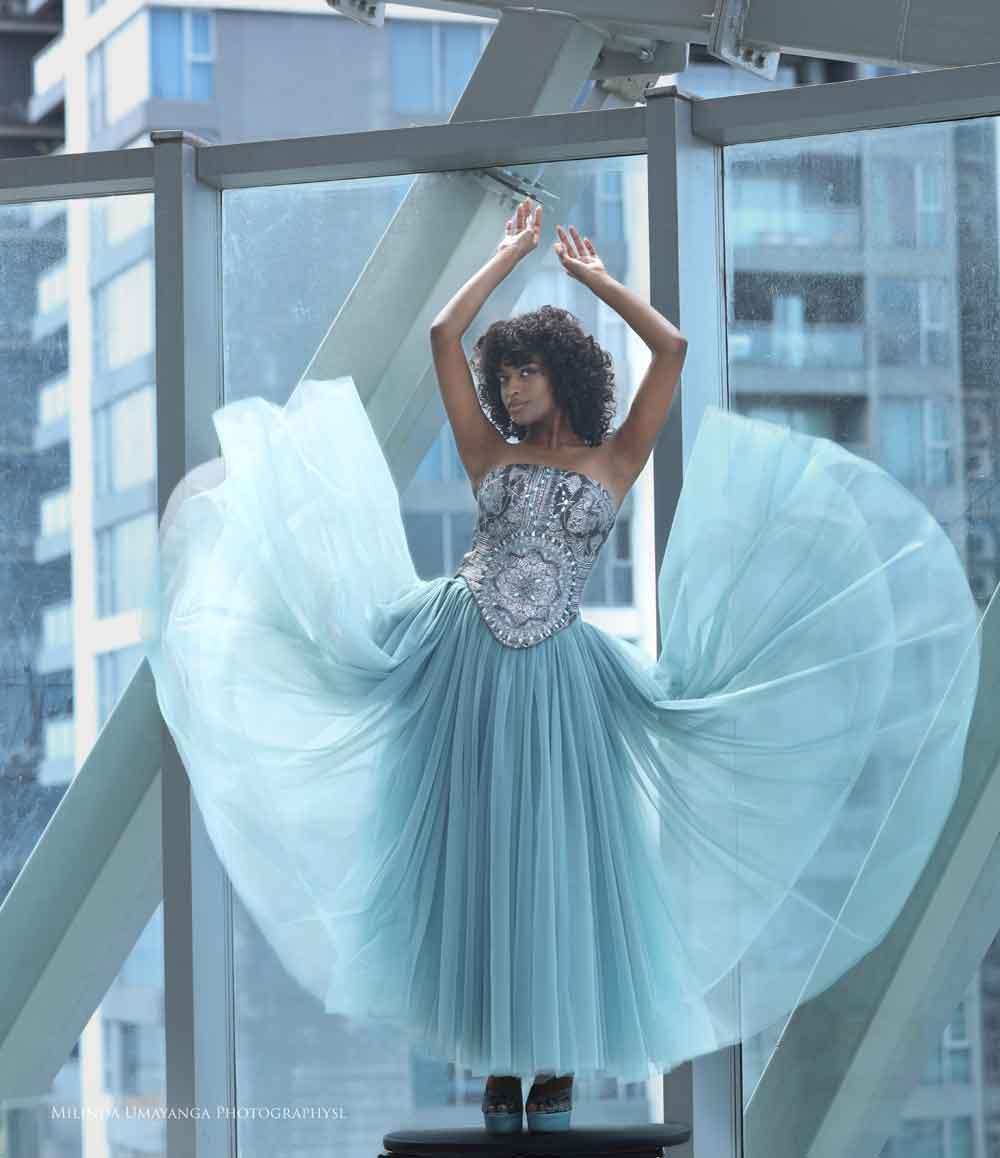
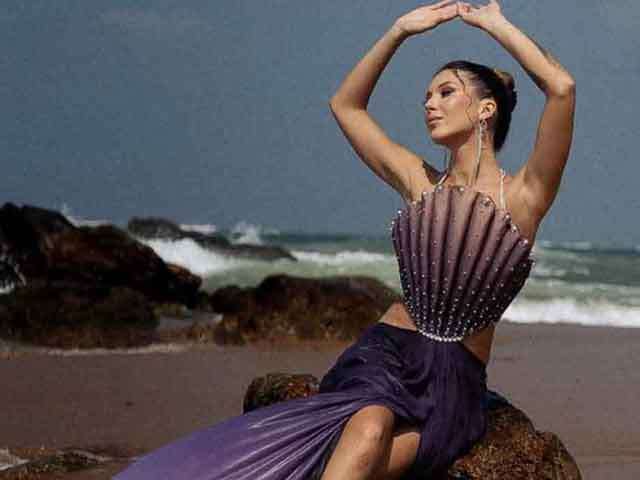
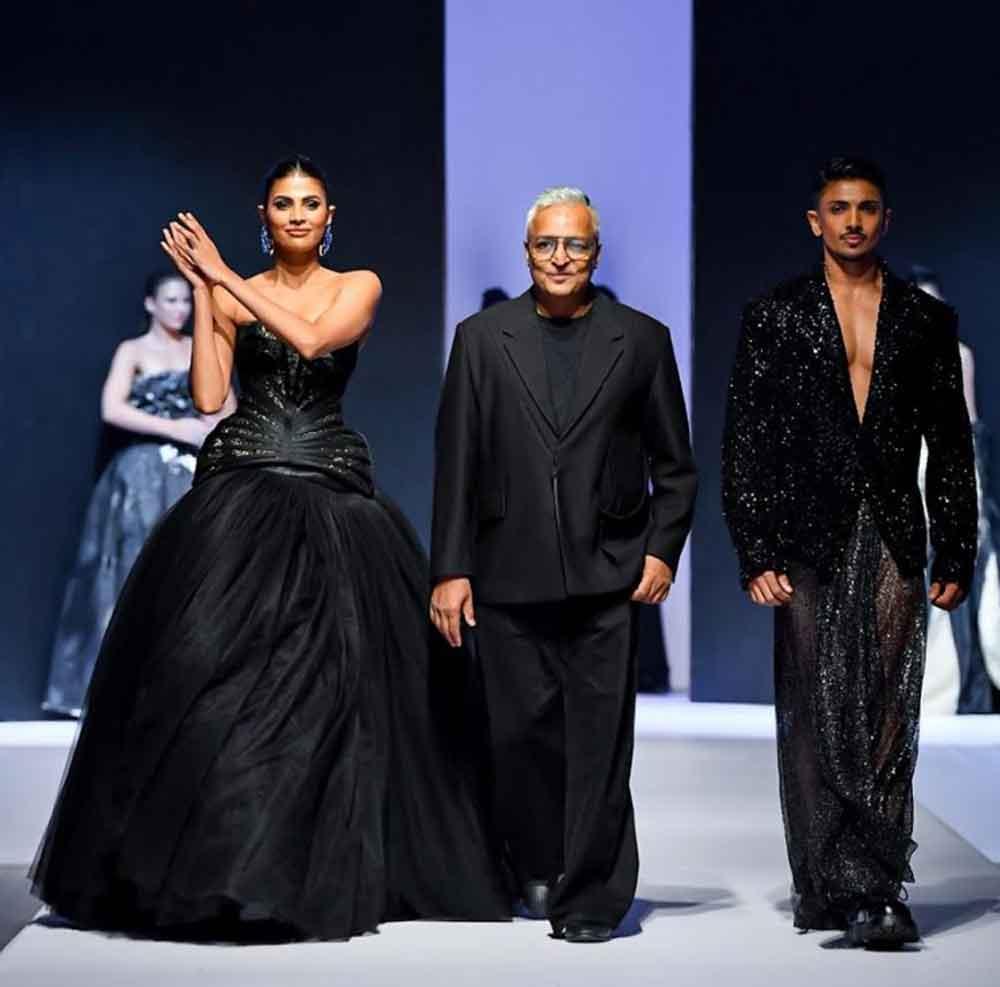
16. Pageant fashion (like your designs for Miss Universe contestants) has a reputation for being overly theatrical and sometimes crossing into 'kitsch.' How do you create a gown loud enough for a global stadium stage without losing the refined elegance of your brand?
Designing for pageants requires the perfect balance between impact and elegance. Over the years, I’ve studied international pageants and learned what works on a global stage. My goal is to create gowns that are memorable and eye-catching while maintaining sophistication, because true elegance never goes out of style.
17. When it’s all said and done, do you want history to remember you as the designer who made Sri Lankans look glamorous, or the disruptor who forced the Sri Lankan fashion industry to finally grow up?
More than anything, I want to make Sri Lanka proud. Every time I showcase my collections internationally and hear ‘Sri Lankan designer,’ it means so much to me. I hope my journey inspires others and helps show the world what Sri Lankan designers are capable of. If one day people remember me for my work, my passion, and my contribution to our fashion industry, that would be my greatest achievement.