IN CONVERSATION WITH RAFFEALLA FERNANDO
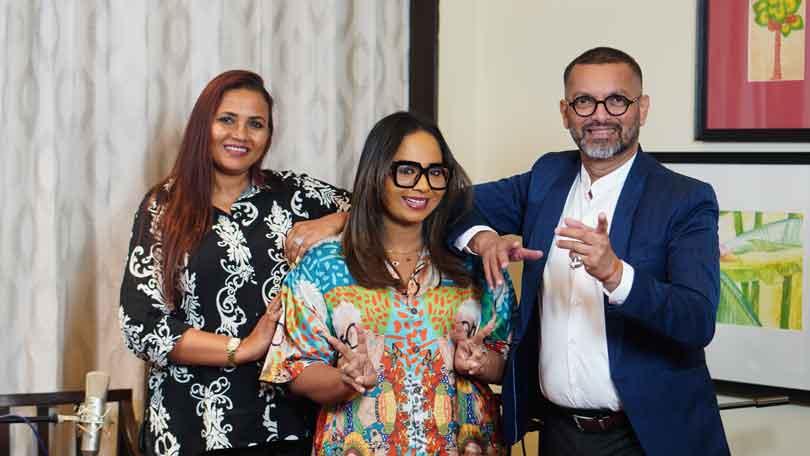
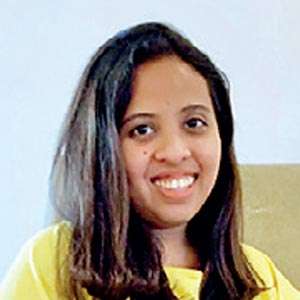
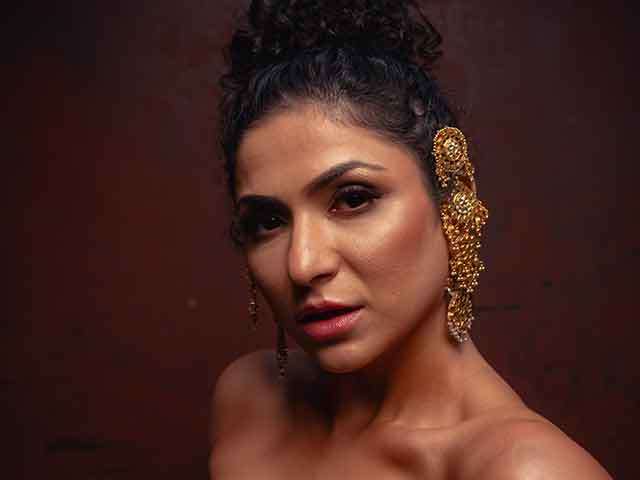
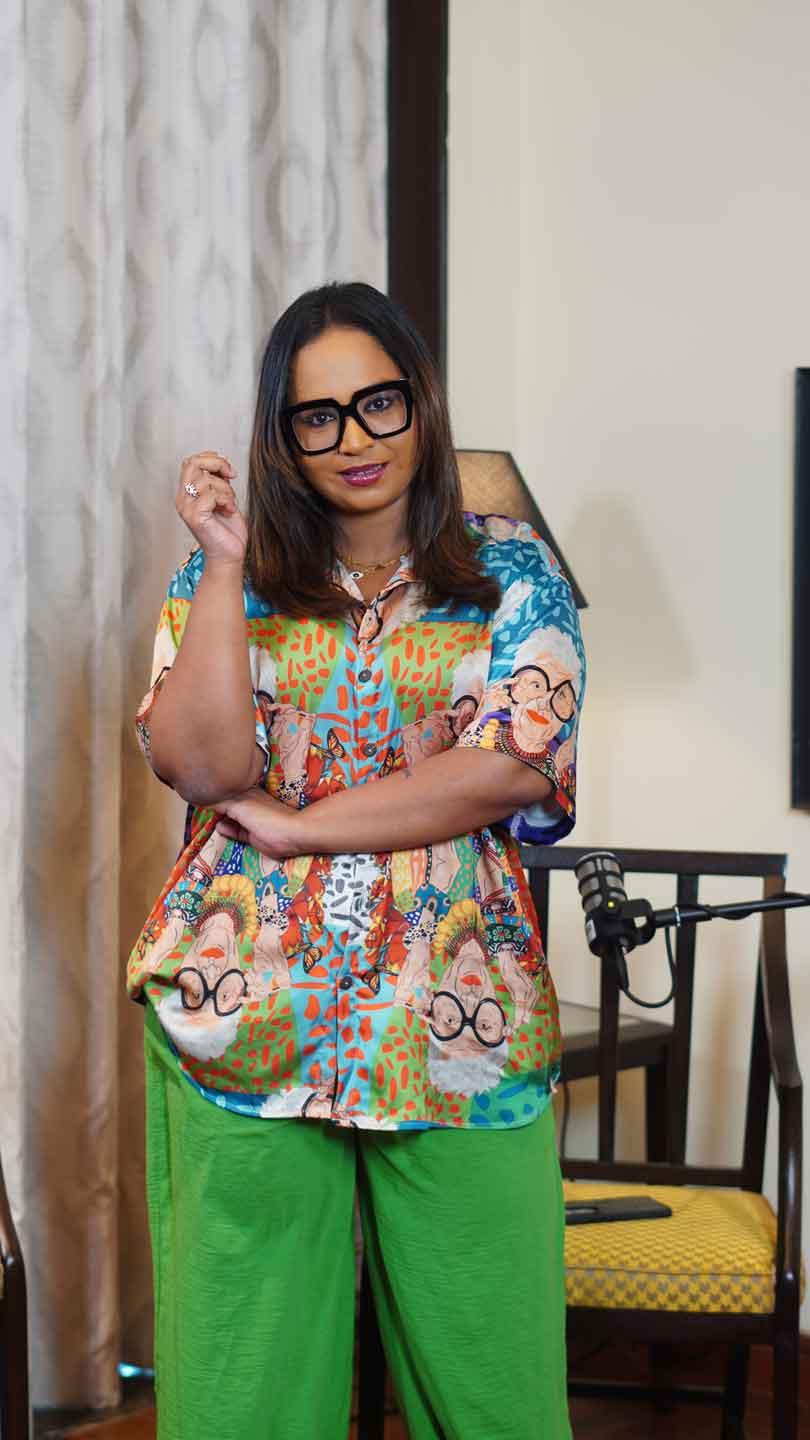
Sri Lankan creative powerhouse Raffealla Fernando has built a name for herself through fearless storytelling, photography and her widely celebrated RFCC celebrity calendar. Appearing on the programme Fame Game, hosted by Kumar de Silva and Rozanne Diasz, Raffealla opened up about her journey from a young designer to an internationally recognized photographer, editor and lecturer. During the conversation, she spoke about creativity, criticism, the challenges of working in a male dominated industry.
Q: Your celebrity calendar has become one of the most talked about creative projects in Sri Lanka. How did it all begin?
A: The calendar began purely out of love and passion. At the time I started, I did not see anything similar happening locally, and I wanted to create something bold and artistic. My regular clients were not always willing to experiment with the kind of concepts I wanted to explore, so I decided to create my own platform. Initially, it was a very small-scale project, and I never imagined it would grow into what it is today. Over the years, it has evolved tremendously, both creatively and professionally. For me, the calendar has always been more about artistic expression than commercial gain. I do not even sell the calendar because it is not about profit. It is about art and storytelling.
Q: Do people now approach you asking to be featured on the calendar?
A: All the time. That started happening right from the very first issue. People naturally became interested because the concepts were different and visually striking. Of course, saying no directly is not easy. But honestly, the selection depends entirely on whether a person fits the story and the creative direction for that particular year.
Q: Your calendars are known for their strong storytelling concepts. How do you develop these ideas?
A: The process begins very early. In fact, while one calendar is being launched, I am already brainstorming ideas for the next edition. I spend a great deal of time working on mood boards, notes and research because I see photography as a form of storytelling. Every image carries meaning. One concept that people still speak about was inspired by the Easter Sunday attacks. The image carried the message, “Justice delayed is justice denied.” I wanted to create a silent protest through art. Art reflects life. It gives us the opportunity to express difficult emotions and social realities without aggressively speaking about them. Sometimes an image can communicate pain, frustration and hope more powerfully than words. That particular concept resonated deeply with many people because it was emotional and thought provoking.
Q: This year’s calendar featured several international collaborations. Was that always part of your vision?
A: Not initially. Earlier editions mostly focused on local artists, with perhaps one or two international names. But over time, opportunities began expanding internationally. Last year we had three international artists, and this year we increased that number further. It happened very naturally. International PR agencies and artists appreciated the concepts and visual style of the calendar, and those collaborations started opening doors into markets like India. However, despite the international recognition, I still believe RFCC should remain fundamentally Sri Lankan. The goal of including international artists is not to overshadow local talent but to create exposure and opportunities for Sri Lankan artists who may not otherwise receive them.
Q: Some people have noticed that certain celebrities appear repeatedly in your calendars. Why is that?
A: There is actually a very personal reason behind that. Many of the people I repeatedly feature supported me when nobody knew who I was. For example, actor Saranga Disasekara was one of the first celebrities who truly believed in my work. When I was just eighteen years old and trying to promote a digital version of the calendar, he travelled all the way from Galle simply to support me during a television feature. He did not have to do that. At that time, I was still unknown and struggling to establish myself. His support meant a great deal to me, and I have never forgotten it. Including him repeatedly is my way of showing gratitude to someone who genuinely stood by me during the early years of my journey.
Q: Away from the glamour and creativity, who is the real Raffealla Fernando?
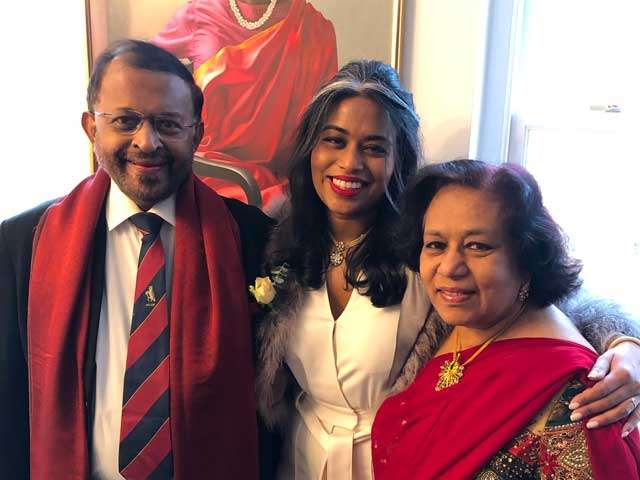
A: I am honestly a very relaxed and easygoing person. My home life is simple and peaceful. My husband is a huge source of stability in my life. We have been together for fifteen years, and he has always encouraged me to be myself. He is extremely grounded and calm, which balances my personality because I am naturally energetic and creatively restless. He gives me the freedom and support I need to pursue my ideas. I often say he reminds me a lot of my father, who was also incredibly supportive of my ambitions. Having people who believe in you makes a huge difference, especially in creative industries where uncertainty is constant.
Q: You once worked heavily in fashion design and bridal wear. Why did you step away from that side of the industry?
A: I worked in bridal design, runway collections and even wedding photography for a period of time. Financially, it was rewarding, but emotionally it did not fulfil me. For me, art is not just about earning money. I need to feel happiness and satisfaction through the work I create. Eventually, I realised that my heart belonged more to conceptual photography and storytelling than commercial bridal work. That was when I decided to focus more on projects that truly inspired me creatively.
Q: One of your recent initiatives is South Asia’s first all-female photography crew. What inspired that idea?
A: Photography should ideally be gender neutral because art itself has no gender. But when I entered the industry, I often felt excluded because it was heavily male dominated. Even today, I sometimes feel that exclusion. There is still an assumption in certain spaces that men dominate photography professionally. I wanted to challenge that by creating a platform specifically for talented women photographers and reative. The all-female crew was about empowerment and visibility. I wanted women entering the field to feel seen and supported in a way that I did not experience when I first began.
Q: Have you faced negativity or criticism because of your success?
A: Absolutely. Unfortunately, that comes with visibility. Some people spread rumours suggesting that I receive work for unethical reasons rather than through talent and hard work. I remember one photographer asking me how I managed to get more work than many male photographers who had been in the industry longer than I had. It was quite insulting because it ignored the years of hard work, planning and dedication behind my career. There have also been comments claiming that my images are heavily AI generated or manipulated. But the people I work with know exactly how I shoot. Most concepts are executed within minutes, especially with international artists who do not allow excessive editing. At the end of the day, criticism no longer affects me the way it once did. I have learned that people will always talk, especially when they do not fully understand the work behind success.
Q: Your concepts often draw inspiration from mythology, history and folklore. Where does that inspiration come from?
A: I have always been deeply interested in history and storytelling. Whenever I come across an idea, I immediately write it down in a notebook. Some concepts take years to fully develop. For example, one concept inspired by Draupadi from the Mahabharata stayed with me for nearly two years before I finally brought it to life. Most people focus only on the famous saree scene from her story, but I wanted to portray her strength rather than her victimhood. I wanted to show her as powerful and resilient, someone who faced humiliation and challenges but still remained strong. Even elements like the red saree and elephants were carefully chosen to support that symbolism. That is how I work. Every image begins with research, writing and emotional connection before it becomes visual art.
Q: Do the models and actors fully understand the concepts before the shoot?
A: Yes, definitely. Before every shoot, I explain the entire storyline to them in detail. I tell them who their character is, what emotions they need to portray and even how their expressions should communicate the story. That preparation is important because most of the people I work with are actors and performers. Once they understand the emotional depth of the concept, they completely immerse themselves in the role. That collaboration is what truly brings the final image to life.
Q: What advice would you give young photographers, designers and reative hoping to build successful international careers?
A: The first thing I would say is to focus seriously on your portfolio because that becomes your identity internationally. Every international opportunity I received came through the strength of my portfolio and digital presence. Secondly, do not pursue a creative career simply because it appears glamorous or successful. You must genuinely love the work. Too many people are trying to imitate others instead of discovering their own artistic voice. When you constantly imitate, you become trapped in what I call a hamster wheel, endlessly running without truly moving forward. Creativity requires originality and honesty. If you are truly passionate and authentic in your art, opportunities will eventually come. You do not need constant validation from others when you know you are creating something meaningful. Hard work, consistency and sincerity towards your craft will always speak louder than temporary trends or public opinion.
-------------------------
Raffealla Fernando’s journey reflects the determination of an artist who refused to limit herself to conventional boundaries. From fashion and styling to conceptual photography and international collaborations, she continues to redefine creative storytelling in Sri Lanka while inspiring a younger generation of artists to pursue authenticity over imitation.