
Turtle Hatchery Tourist Attractions in Sri Lanka: Conservation Effort or Exploitation for Profit?
By Moira Alfred
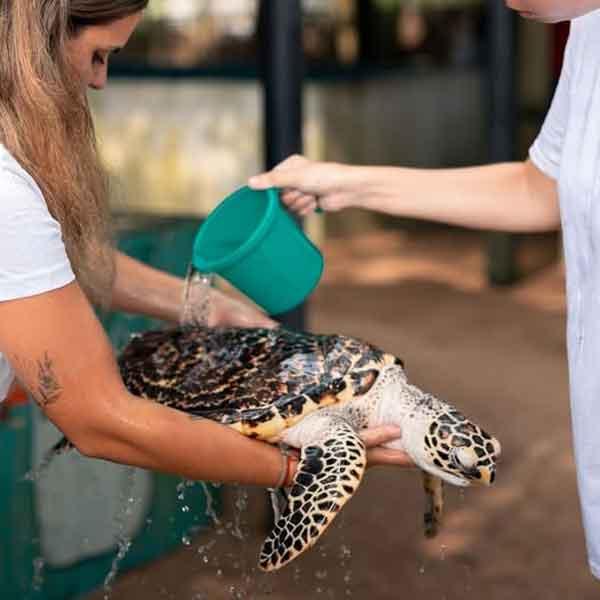
Sri Lanka is an internationally prominent nesting ecosystem for sea turtles. Five of the world’s seven sea turtle species, namely the Green, Leatherback, Loggerhead, Hawksbill, and Olive Ridley, reside within the warm waters of Sri Lanka. Although all 05 species are legally preserved, egg poaching and consumption have repeatedly devastated existing nesting populations along the island’s southwestern and southern coastal regions. Turtle hatcheries materialized as the leading solution to this hazard, although later progressed into something more commercially problematic than basic preservation. Scientific literature mirrors profound opacity regarding whether hatchery commerce genuinely protects turtles or selfishly profits from these miraculous creatures.
The hatchery models consist of a vast institutional history. The first hatchery was established in the year 1956 as a conservation measure to mitigate the impacts of sea turtle meat and egg exploitation, and the second establishment followed in the year 1969. Despite the ban on the collection of sea turtle eggs in 1972, existing hatcheries continued to operate, leading new hatcheries to open illegally. The constant instability in the count of hatchery establishments throughout the years indicates that the conservation sector is driven more by commercial purposes than by actual conservation logic.
The profit motive is evidently not incidental. Its intentions are evident in a 2013 survey conducted across the seven hatcheries operating on the southwestern coast, published in the Indian Ocean Turtle Newsletter. It presents its findings that all the hatcheries were privately owned and that the primary motive was profiting from ecotourism mechanisms. During the 1990s, hatcheries only operated during the tourism season, but a growing trend depicts their operations throughout the year. The most common practice was to purchase turtle eggs from consistent collectors for 25.00 – 50.00 rupees (0.07 to 0.12 USD), even during off seasons. This may have been beneficial for the magnificent species, since purchasing eggs from collectors has directly lowered the level of turtle egg consumption. However, purchasing eggs directly from suppliers has established a market value for the eggs, creating an economic incentive that stimulated poaching activities rather than suppressing them.
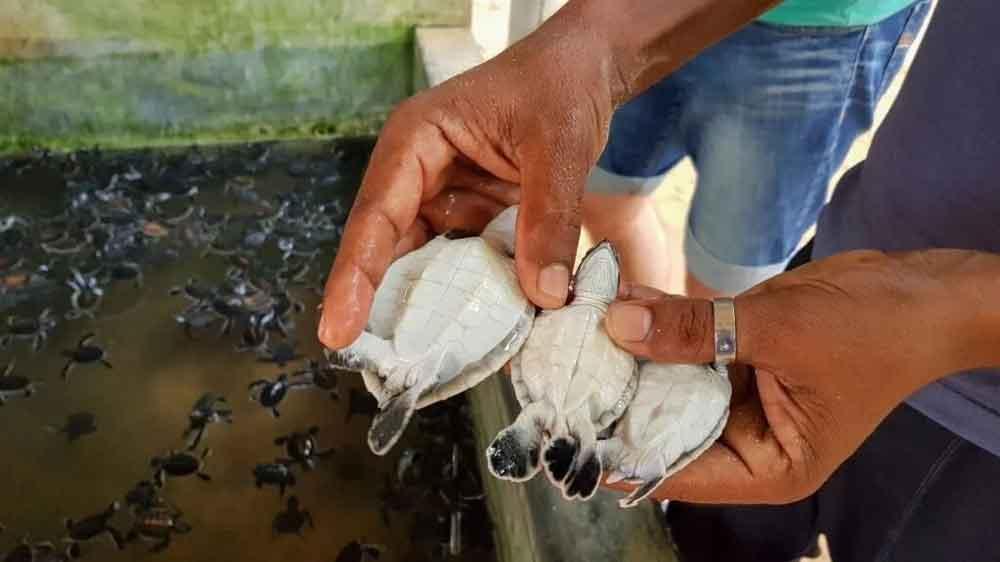
The scale of egg collection has grown to be a vastly substantial activity. An estimate of 300,000 eggs are relocated annually within the district of Galle alone. A survey conducted in 2013 presents findings that none of the existing hatcheries follow best practice guidelines, which require at least 90% of the hatchlings to have immediate crawling access to the sea to promote natural imprinting and that hatchlings must not be contained to tanks prior to their release. Instead, all seven existing hatcheries engaged in “head-starting”, restricting hatchlings in tanks for tourist interactions. This is a practice with no demonstrated conservation benefits and documented welfare costs.
A follow-up survey of 11 hatcheries, also published in “The Indian Ocean Turtle Newsletter (IOTN)” written by Andrea D. Phillott, Santhushya Hewapathiranage, and Rupika S. Rajakaruna, established that these problems persisted and, in some respects, even worsened. Concerns included unregulated nest density of up to three nests per square meter, with only one hatchery maintaining the recommended spacing between nests, and the uncertainty in self-reported hatching success figures that made it difficult to assess resource management practices and their actual impact on hatchling production.
Scientific criticism of the hatchery industry extends beyond operational practices. The gender of sea turtles is determined by incubation temperatures. Hatcheries that fail to provide these expected conditions result in skewed gender ratios among the species. Nests located closer than regulated conditions generate sufficient metabolic heat, raising the overall temperature of the habitats and potentially producing unnatural proportions of females, which is fatally detrimental to the existing numbers of the species. The consequences of any demographic distortion will not be visually evident until at least a decade. Furthermore, moving eggs reduces hatching success rates from 90% in natural nests to rates between 50% to 70% in artificial hatcheries.
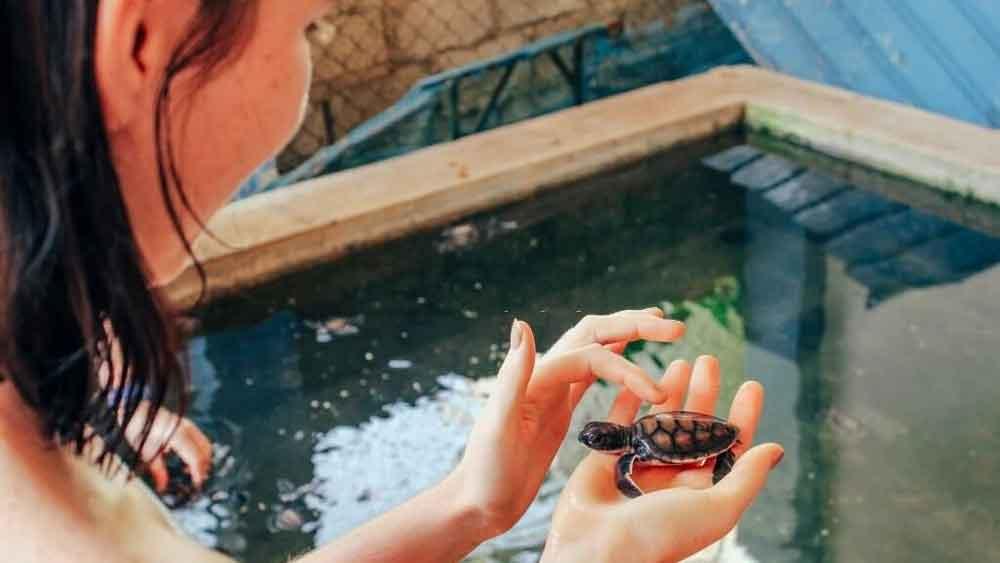
The survey carried out in 2013 stressed the fact that none of the hatcheries were involved in collaborative research, nor did they provide visitor education contributing to sea turtle conservation. This sense of research disengagement is damaging to any claim of conservation, as hatcheries could, in principle, contribute profoundly to monitoring population data if overseen with scientific and ethical intent.
Sri Lanka’s turtle hatchery industry does contain a few genuine conservation operations alongside commercially driven enterprises that use conservation as a manipulation tactic to attract tourists. Without mandatory licensing, independent inspection, enforced adherence to regulations, and requirements for scientific data collection, this sector will continue to perish and exploit the remaining numbers of these magnificent creatures. The window for meaningful action is narrowing, and inaction is not a negligible responsibility. It is a choice to let extinction proceed.