Meryl, Anna, and the Return of Fashion’s Most Delicious Myth.
By: Giselle Gunewardene
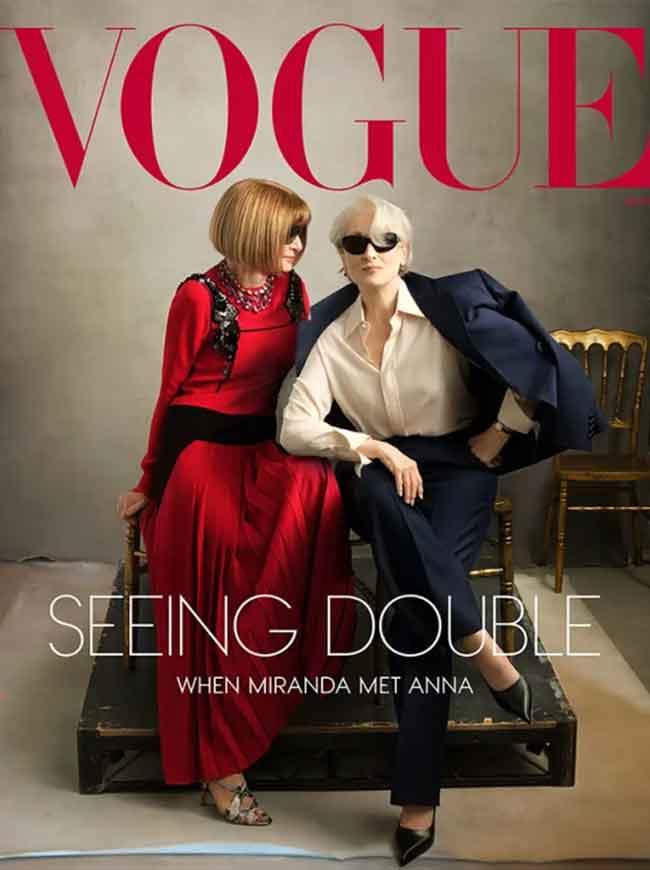
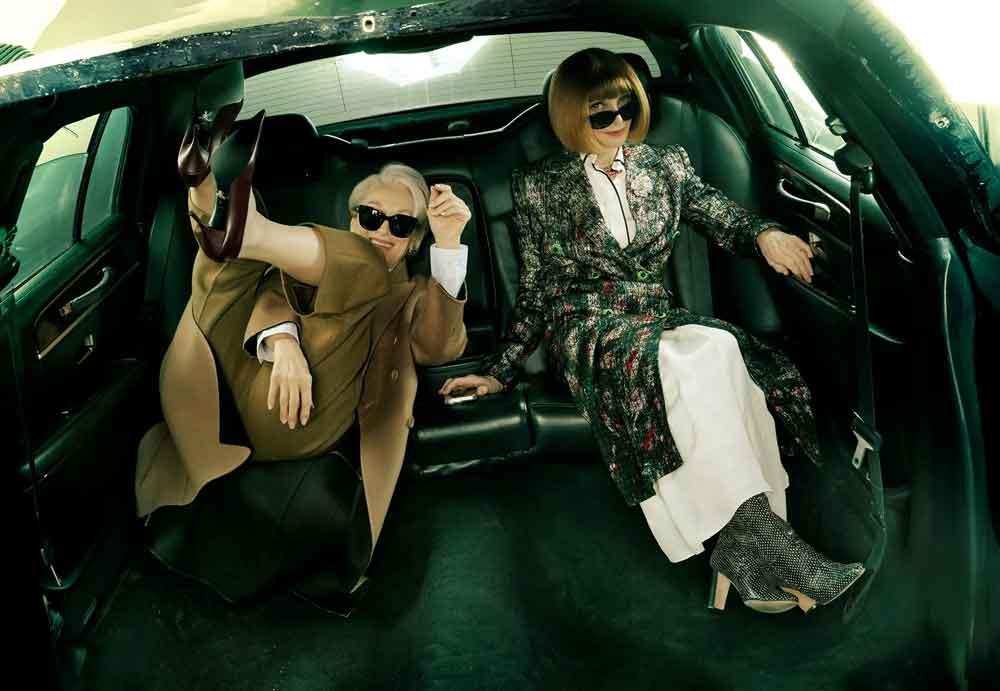
Some covers arrive as images. Others arrive as events. The new Vogue cover starring Anna Wintour and Meryl Streep belongs firmly to the second category. It is not merely a photograph of two famously controlled women in expensive clothes. It is a cultural wink, a cinematic echo, and a deliciously self-aware moment in which fashion, film, and myth collapse into one exquisitely polished frame. On Vogue’s May 2026 cover, Wintour and Streep appear together in Prada, photographed by Annie Leibovitz and styled by Grace Coddington, creating an image that is at once stately, sly, and perfectly timed.
The timing, of course, is everything. This reunion of sorts arrives as The Devil Wears Prada 2 prepares to land in cinemas on the 1st of May, with Greta Gerwig joining the Vogue conversation as moderator and ringmaster, guiding a meeting between the real queen of fashion publishing and the actress who immortalised her fictional double. Vogue itself frames the meeting with irresistible theatricality, asking what happens when “two Mirandas” are placed in one room. It is a premise so sharp it barely needs embellishment. Fashion adores a mirror. This cover gives us a hall of them.
What makes the image so compelling is not simply the novelty of seeing Anna Wintour on the cover of her own magazine alongside the woman long linked to her most famous cinematic shadow. It is the confidence of the gesture. There is no attempt to dodge the cultural reference, no nervousness about the comparison, no stiff corporate denial that Miranda Priestly ever had anything to do with Anna Wintour at all. Instead, the cover leans into the legend with the ease of someone who understands that true power does not panic when it is imitated. It smiles, adjusts its sunglasses, and turns the whole thing into a cover story.
The styling sharpens that message. On the cover, both women wear Prada. Wintour is further accessorised with Manolo Blahnik shoes, S.J. Phillips necklaces, and Chanel sunglasses, while Streep wears Prada sunglasses and a Cartier watch. Even in the credits, the image reads like a fashion sonnet. It is severe and sumptuous, controlled and knowing. Prada is the obvious choice and therefore the perfect one. It gestures to the original film mythology while also underlining the fact that fashion’s great houses remain fluent in narrative. Clothes here are not decoration. They are dialogue.
The editorial surrounding the cover only deepens the intrigue. Chloe Malle’s piece describes the two women arriving in yellow scarves “like a pair of generals in matching epaulets,” a line so visually precise it feels like a camera movement. Inside the Crosby Street Hotel suite, Wintour and Streep speak not as rivals in some tired fantasy of female power, but as grown women with experience, humour, and perspective. They discuss coats, parenting, politics, grandparenting, and the mechanics of image. The atmosphere, Vogue suggests, is less duel than duet.
That may be the most interesting thing about this moment. For years, popular culture has treated the Wintour-Streep connection as a sort of glamorous accusation. Was Miranda really Anna. How much was parody. How much was truth. How icy was the real editor. Yet this cover shifts the register completely. It transforms an old rumour into a modern collaboration.
Wintour told Vogue it was, “such an honour to be played by Meryl,” while also describing the character as “distant” from who she really is. That distinction matters. It lets her claim the compliment without surrendering to the caricature. The result is elegant rather than defensive.
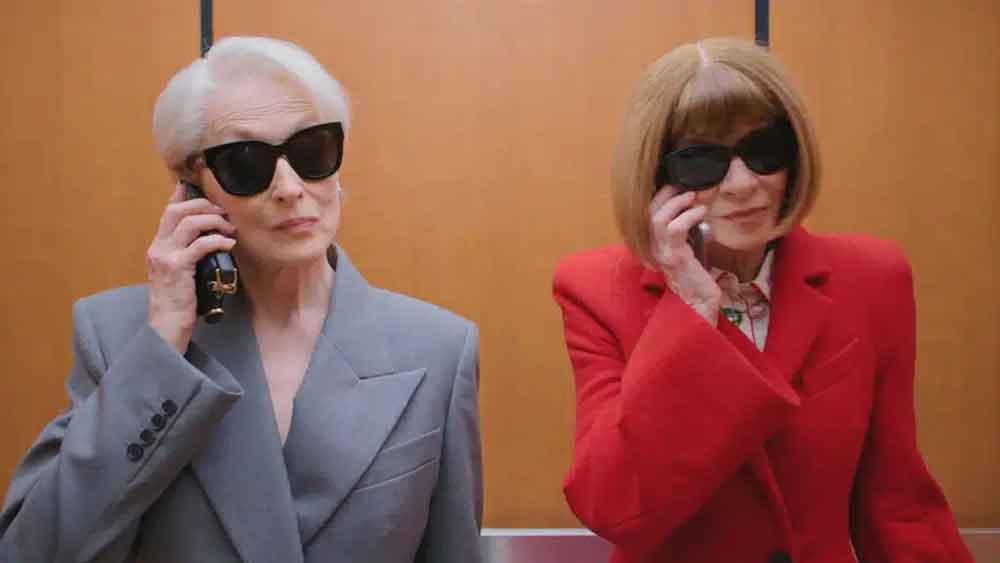
There is also something unusually chic about the age of this cover. Not because age is being “celebrated” in the dutiful, patronising way magazines sometimes perform reverence for older women, but because neither Wintour nor Streep is presented as an exception to glamour. They are glamour. Wintour says in the Guardian (UK) that she likes her age, that she feels, “as alive, excited and aware as ever,” and that age is, “actually an advantage.” It is a striking line, not least because it lands without sentimentality. Experience here is not softened into wisdom for decorative purposes. It is presented as force, proportion, and command.
Streep has long possessed a similarly unforced authority. She does not chase fashion. She absorbs it into her own language. That is why her presence on this cover feels so right. She can wear a coat by Dolce and Gabbana, trousers by Loro Piana, and Prada shoes and sunglasses, and still remain unmistakably Meryl. Nothing about her disappears into the clothes. Instead, the clothes become more articulate in her presence. This is the difference between being styled and being substantiated. Vogue, at its best, understands that distinction instinctively.
The spectre of The Devil Wears Prada gives the feature its sparkle, but the story’s real subject is power itself. Not crude power. Not loud power. Certainly not male power in a prettier coat. This is power as poise. Power as continuity. Power as the ability to remain legible across decades while the industries around you mutate. Wintour speaks in the piece about fashion as “a true economic force globally” and insists that the industry is evolving rather than disintegrating. It is a notably clear-eyed defence of a world that is constantly declared dead and yet somehow keeps finding new stages on which to perform.
That idea of evolution hangs over the entire cover story. The first Devil Wears Prada film became iconic because it translated the codes of fashion into mainstream entertainment with just enough bite to feel revelatory. Nearly twenty years later, the sequel arrives in a different media ecosystem, one shaped by digital speed, multiple platforms, and a new kind of celebrity. Wintour’s observation that the industry now reaches far more people is less a boast than a recognition that exclusivity no longer works the way it once did. Fashion has had to become more fluent, more porous, more conversational. This cover reflects that shift. It knows the reference, shares the joke, and still maintains hauteur.
And then there is the image making dream team behind it all. Annie Leibovitz photographing. Grace Coddington styling. Wintour and Streep in the frame. Greta Gerwig in the room. It is almost absurdly rich in female authorship and authority. Vogue itself describes it as a “power quartet,” and for once the phrase does not feel inflated. Every layer of the feature is built by women who understand image as both art and instrument. That is what gives the package its charge. It is not nostalgia alone. It is mastery meeting mastery.
Perhaps that is why the cover has travelled so quickly beyond the fashion world. It offers more than celebrity, more than couture, more than a clever nod to a beloved film. It offers a fantasy of continuity in an age that worships churn. Wintour remains Wintour. Streep remains Streep. Neither has been flattened by time, internet noise, or cultural overexposure. Instead, both women appear more distilled, more exact, and somehow more modern because they refuse to behave like they are auditioning for modernity.
In the end, the brilliance of this Vogue cover lies in its refusal to choose between seriousness and spectacle. It is intelligent and glossy, arch and sincere, culturally literate and irresistibly photogenic. It understands that fashion is never just about hemlines or labels. It is about theatre, identity, control, and the stories powerful women tell about themselves before anyone else can tell those stories for them. Anna Wintour and Meryl Streep on the cover of Vogue is therefore not simply a reunion between inspiration and interpretation. It is a reclamation. The myth returns, but this time the women who built it are in charge of the lighting.