MAKING A CHILD PREGNANT IS NOT HEROISM

BEHIND CLOSED DOORS BY NUHA FAIZ
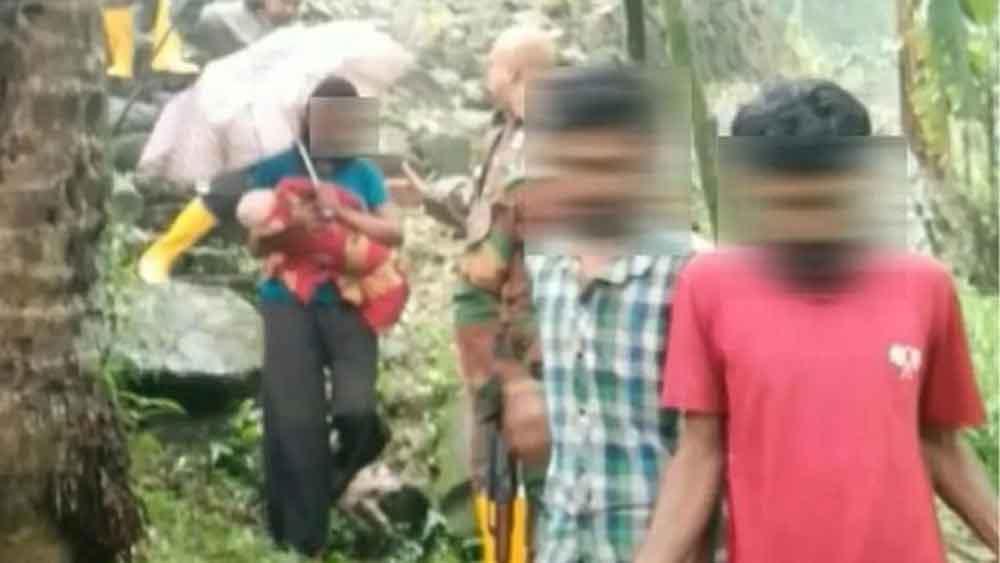
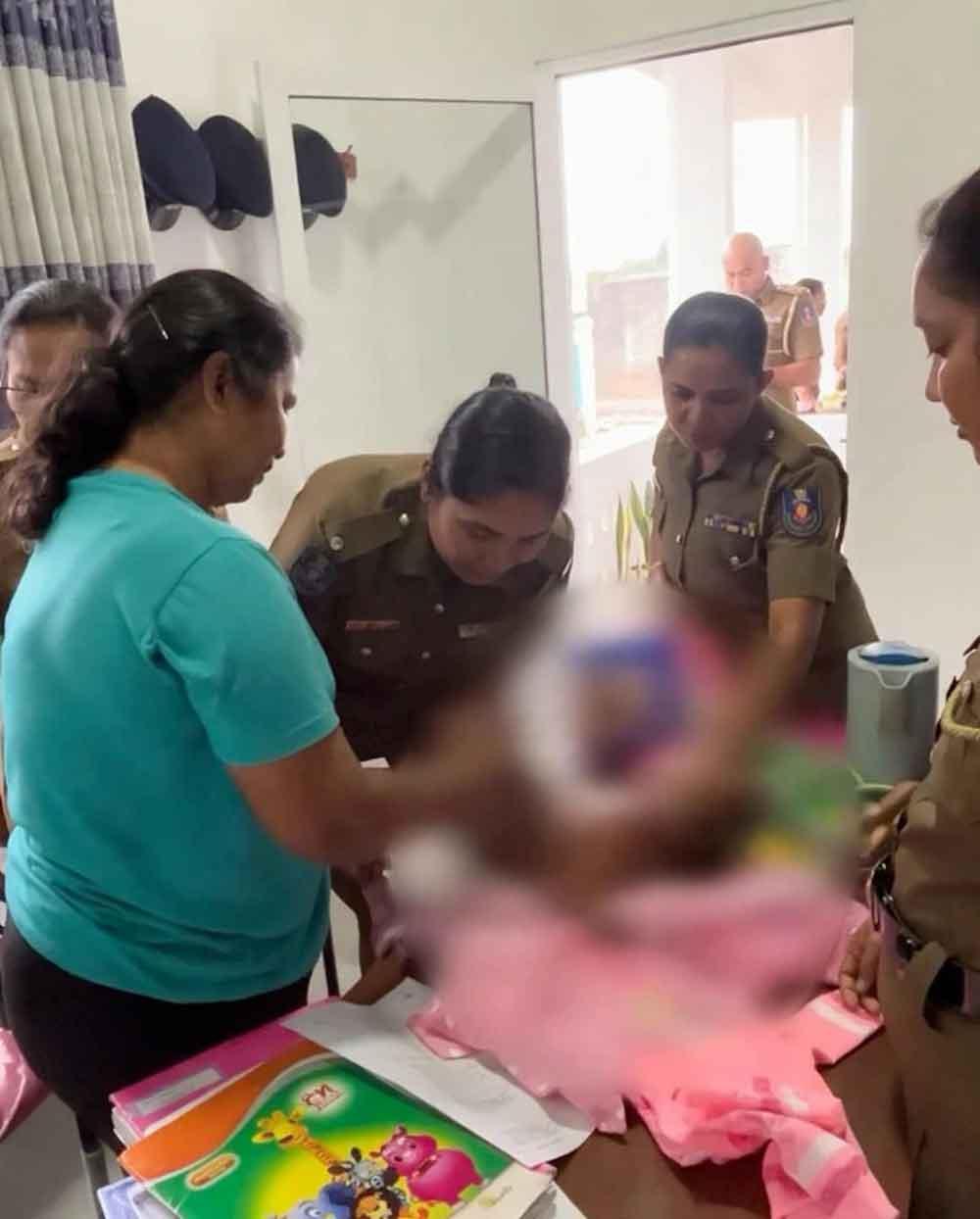
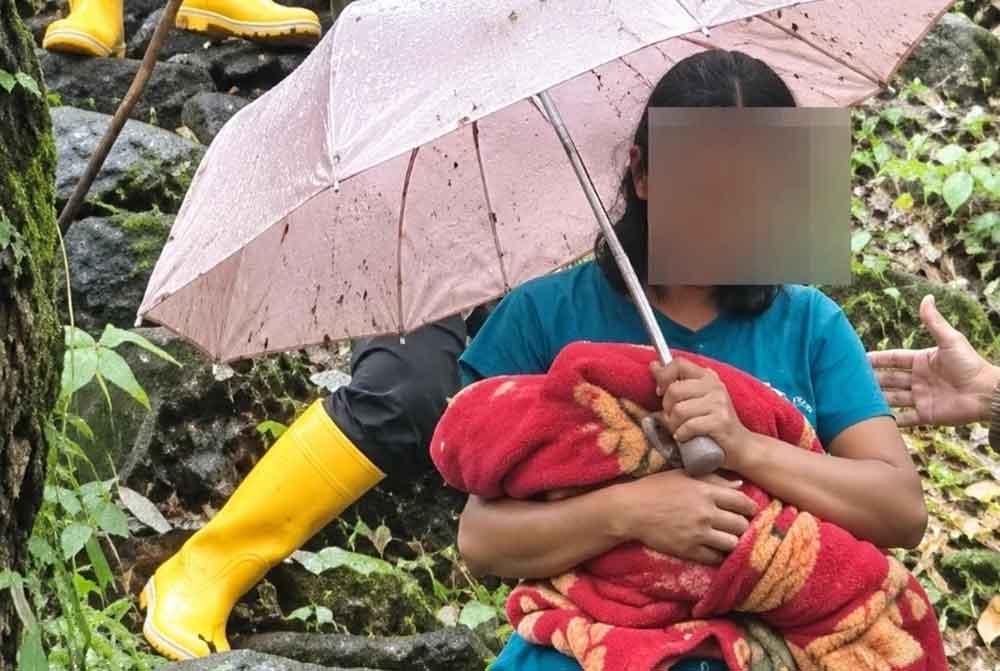
For five months, a family in the Kandy hills did not know whether their 15-year-old daughter was alive. She had disappeared in July. When police finally found her this week, she was inside a cave in the Knuckles range, near Meemure, its mouth covered with polythene sheets. With her was a two-month-old baby girl she had delivered on the cave floor, with no doctor, no midwife and no hospital. The umbilical cord had reportedly been cut with a tool used for kithul tapping. The newborn had been bathed in a pan used to boil treacle. Mother and child had been "treated" with herbs gathered from the forest. Police traced them because a young man kept buying far more rice at a local shop than one person could eat. They followed him into the forest. He is 23. He is believed to be the baby's father. He and a 36-year-old relative who allegedly helped him have been arrested and remanded until 20 November by the Teldeniya Magistrate's Court. The girl and her baby were taken to the National Hospital in Kandy.
THE COMMENT SECTION WROTE A LOVE STORY
When you scroll through the shares you will find people calling him a hero. He didn't run away. He fed them. He stayed. Look how he took care of her and the baby. Some have gone further: She went with him willingly. She knew what she was doing. If she didn't want to be there, why didn't she leave? An adult man is accused of having a sexual relationship with a child, getting her pregnant, removing her from her family, and keeping her hidden in a forest cave for five months while her parents filed a missing-person complaint and waited. A child went through labour in the dark, in the dirt, at the age of 15, with no medical care. Childbirth complications are among the leading causes of death for girls aged 15 to 19 worldwide, and the risks climb the younger the mother. That she and the baby survived is luck, not care. Buying rice is not heroism. Not abandoning a child, you are responsible for is not heroism. It is the bare minimum expected of any functioning human being. If our bar for a "good man" has sunk so low that feeding the girl he hid in a cave earns applause, the problem is not just this man. It is us.
WHAT THE LAW ACTUALLY SAYS, AND WHY
Under Section 363(e) of Sri Lanka's Penal Code, sexual intercourse with a girl under 16 is rape, whether or not she consented. That is not a technicality. It is the entire point of the law. The age was not always 16. Until 1995 it was 12. It was raised to 16 after years of advocacy by women's rights groups who understood something the comment sections still do not: a child cannot meaningfully consent to sex with an adult, because the power between them is not equal. In 2024, when a government bill tried to effectively lower the threshold to 14 and soften sentences for young adult men, the National Child Protection Authority, the Human Rights Commission, a parliamentary committee and civil society pushed back hard, and the bill was withdrawn.
So, when someone writes "she knew what she was doing," they are not offering a fresh insight. They are repeating an argument this country has already debated, legislated against, and rejected again as recently as two years ago. And consider the timeline. A two-month-old baby in mid-November means the pregnancy began many months before she vanished in July. Whatever this relationship was, it started when she was even younger, a schoolgirl living at home under her parents' roof. The man is entitled to a fair trial, and a court will decide what he did. But public opinion does not get to rewrite the law in the meantime. The question of "consent" is not a mitigating detail here. Legally, it does not exist.
"THEN WHY DIDN'T SHE ESCAPE?"
This is the question that exposes how little we understand about how children get drawn into abuse. It assumes that a 15-year-old is simply a small adult making free, informed choices. She is not.
Her brain is still under construction. The part of the brain responsible for weighing long-term consequences, controlling impulses and recognising manipulation, the prefrontal cortex, keeps developing well into the mid-twenties. Meanwhile, the emotional and reward systems are running at full volume. A teenager feels attention, affection and belonging intensely, and she has far fewer tools to step back and ask why is a grown man focusing on me? That is not a flaw in this girl. It is what being 15 is. It is exactly why the law draws the line where it does, and why UNICEF and the UN Convention on the Rights of the Child define a child as anyone under 18. If 15-year-olds could be held to adult judgment, we would have no reason for that category at all. We might as well say childhood ends at 14.
Grooming does not look like force. It looks like kindness. It usually follows a recognisable pattern: special attention that makes the child feel chosen and understood; gifts, rides or help; slowly creating secrets; positioning himself as the only one who "really" cares; and gradually pulling her away from parents, friends and school. By the time anything sexual happens, the child often believes it is a relationship she wanted. That belief is not evidence of consent. It is evidence the grooming worked.
Then add the cave. Ask what "escape" actually meant for this girl. She was pregnant, then caring for a newborn. She was deep in a forest, far from any settlement, with no phone we know of, no money, no transport. Every bite of food came through one person. She likely feared her family's anger and her community's judgment more than she feared staying. She may have been told, or may have believed, that the police would take her baby, or that he would go to prison because of her. Isolation, total dependence, shame and fear are not side details. They are the walls of the trap, and they work far better than locks.
A child staying is not proof that she was free. Very often, it is proof that she wasn't.
THE PERSPECTIVES NOBODY IS TALKING ABOUT
The girl herself. In all the arguments about him, she has almost disappeared. She lost five months of schooling and possibly her education altogether. She gave birth without pain relief or medical help. She will now carry physical recovery, possible trauma and adolescent postpartum depression, which research shows is significantly more common in teen mothers. She is now a mother at 15, in a society that will be quick to label her. Whatever she says publicly, she deserves care, privacy and protection, not to be dissected online as either a fool or a willing partner.
The baby. A two-month-old girl whose first weeks were spent in a cave. She needs proper medical assessment, vaccinations and a stable future. Her welfare must be decided by child-protection professionals, not by sympathy for her father.
The family that searched. Her parents reported her missing and waited five months. In the hero narrative, their fear has been erased. They were not obstacles to a love story. They were a family whose child was taken out of their reach.
The second adult. A 36-year-old relative has also been arrested for allegedly helping. That matters. This was not one confused young man acting alone. At least one more grown adult appears to have known a missing child was being kept in a forest and chose not to bring her home. How many others suspected and stayed silent?
The community. A girl went missing in a small area, and it took an unusual rice purchase to find her. Credit to the officers who noticed. But we should ask how a pregnancy in a schoolgirl went unnoticed or unreported for months, and what school, health and village systems missed along the way.
What happens to her next. Sri Lanka has a troubling record here. Girls pregnant through statutory rape have often been placed in institutions for long periods while cases crawl through the courts, cut off from family, school and community. Doctors writing in Sri Lankan media have described child mothers in residential care struggling to bond with babies they never chose to have, waiting months for legal processes to move. A child who has already been isolated once should not be isolated again by the very system meant to protect her.
The "marry them off" reflex. Some will quietly suggest the "solution" is for the families to agree to a marriage once she is older. That does not undo a crime. It rewards it, and it tells every man watching that the way around the law is to get a girl pregnant and wait.
Why this narrative is dangerous
Every time a case like this is framed as romance, three things happen.
First, it teaches men that if they are "nice enough" to the girl afterwards, the public will forgive what came before. Second, it teaches girls that being taken from home and hidden is what love looks like, and that a man who "provides" is a man to be grateful for. Third, it teaches victims and their families that if they speak up, the village will side with him. This is not a one-off. Sri Lanka's newspapers regularly carry near-identical stories: a 15-year-old, a man in his twenties, a "love affair," a pregnancy discovered at the hospital. The National Child Protection Authority has warned that teenage pregnancies are rising. Each of those stories is a child, not a plot twist. The pride-and-prejudice fantasy, the poor young man and his devoted girl hiding in the wilderness against the world, is a story adults tell themselves to avoid an uncomfortable truth. In real life, the person who loves a child does not take her from her family, keep her in a cave, and let her give birth on a rock floor. Real care would have looked like keeping her in school, keeping her safe at home, and keeping his distance until she was an adult who could choose for herself.
The silence we call "protecting our children"
Every time sex education comes up in Sri Lanka, a familiar chorus rises. Some religious leaders warn it will corrupt young minds. Some politicians, sensing a crowd, promise to defend our culture from it. Teaching children about their own bodies, we are told, is what will expose them to harm. It is a remarkable theory. By this logic, the safest child is the one who knows nothing. She doesn't know the correct names for her body parts. She doesn't know that an adult who asks her to keep secrets is a warning sign. She doesn't know that the law says she cannot consent. She doesn't even know how pregnancy happens until a nurse tells her she is seven months along. Our culture has certainly been protected. Our children, apparently, have not. The evidence points the other way. International reviews, including UNESCO's, have found that good sexuality education does not make teenagers start having sex earlier. If anything, it delays it, and it makes children more likely to recognise abuse and report it. Ignorance has never stopped a predator. It only stops a child from understanding what is happening to her, and from finding the words to tell someone. And make no mistake: it is not sex education that grooms a 15-year-old. It is an adult. The silence simply makes his job easier. A child raised to believe that these topics are shameful is a child who will hide the very thing she most needs to say out loud.
This education cannot wait for the classroom. It has to start at home. Parents do not need a degree to begin. They need to stop flinching.
-
Start young and use real words. A four-year-old can learn the correct names for her body and that some parts are private. That is not corruption. It is the first layer of protection.
-
Teach the difference between safe and unsafe secrets. A surprise party is a safe secret. Anything an adult says "don't tell your parents" about is not.
-
Make it normal to talk. If a child can ask about her body without being scolded, she is far more likely to tell you when something is wrong.
-
Explain consent and the law as she grows. By her early teens, she should know that no adult has the right to a relationship with her, however kind, generous or "in love" he seems.
-
Watch the adults, not just the child. Be alert to any grown man who gives her gifts, rides, phone credit or private attention, and who seems to want her away from the family.
Taboos do not protect children. They protect the people who harm them. If we are genuinely serious about protecting our daughters, the conversation has to begin at the dinner table, long before a police officer has to find a child in a cave.
WHAT WE SHOULD BE SAYING INSTEAD
-
Call it what it is. Under Sri Lankan law, this is alleged statutory rape and the removal of a child from her family. Not an elopement. Not a romance.
-
Protect her identity. Do not share photos, village names beyond what is reported, or speculation about who she is. Online exposure can follow her for life.
-
Centre the child's recovery. Medical care, counselling, a route back to education and, wherever safe, family-based care rather than long-term institutions.
-
Demand speed from the courts. Delays punish victims more than accused men.
-
Hold every adult accountable, including those who helped or knew and said nothing.
-
Teach the warning signs. Parents, teachers and older siblings should know what grooming looks like: an adult giving a child special attention, gifts and secrets, and pulling her away from the people around her.
THE BOTTOM LINE
A 15-year-old girl is not a woman who made a bad choice. She is a child the adults around her failed to protect. The man in this story did not rescue her from anything. The police did. If we want fewer girls in caves, we have to stop clapping for the men who put them there.
If you are concerned about a child's safety in Sri Lanka, contact the National Child Protection Authority's 1929 child helpline or the police emergency line, 119.