RECORDING THE EVERYDAY HISTORY OF THE MALDIVES
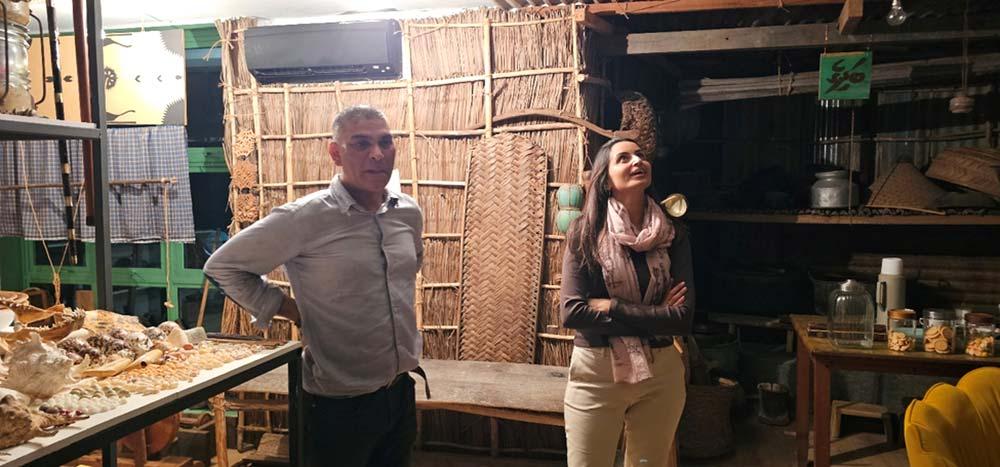
Miru and Farzana
The way we document history shapes what future generations will know about us. Photographs record people and places, while the objects we preserve reveal details of how they lived. Showing those objects in the settings where they were used helps tell their stories. At Baiskoafu Museum in Malé, a reconstructed kitchen offers a view of an earlier period of Maldivian domestic life.
Cooking pots stand over a hearth, kettles line a shelf and woven baskets hang against the walls. Together, they make it possible to picture a working household. The man behind the collection is Mohamed Mirusan, known as Miru, an entrepreneur with interests in music, film, art and Maldivian heritage. He has devoted part of Baiskoafu’s premises to preserving objects used by earlier generations. The photographer and author Ismail Abdulla took me to meet him during my visit to the Maldives. Ismail had also introduced me to the artists Afzal Shaafiu and Mary Halym, whose work I explored in my previous article. Meeting Miru continued that conversation about how Maldivians record their country, this time through the possessions of their families and communities.
A Collector’s Eye
Baiskoafu’s offices, studios and museum occupy space in a residential building in the capital. Within it, Miru has assembled household utensils, tools and equipment representing more than half a century of Maldivian daily life. His wider collection includes objects of personal and cultural significance from overseas, gathered since his student days.
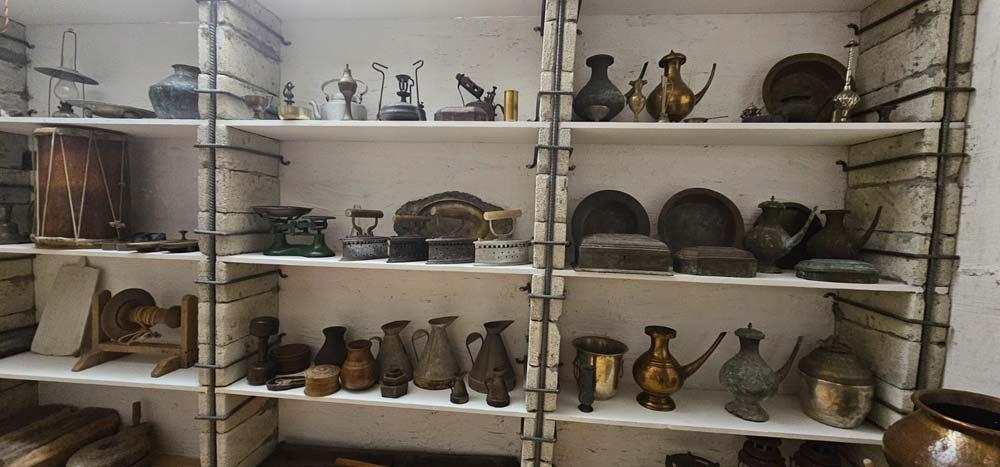
Household utensils, weighing scales and irons from Miru’s collection at Baiskoafu Museum.
He is an energetic, unassuming host, and the space reflects the breadth of his interests. Shelves hold weighing scales, metal vessels, trays and several different irons. Larger displays recreate parts of a traditional home, allowing visitors to see how individual pieces belonged within a domestic setting. The kitchen is particularly effective. Its hearth, cooking vessels and woven storage baskets make it possible to picture a room in use. The walls and roof are part of the display too, showing the construction of the space around the objects.
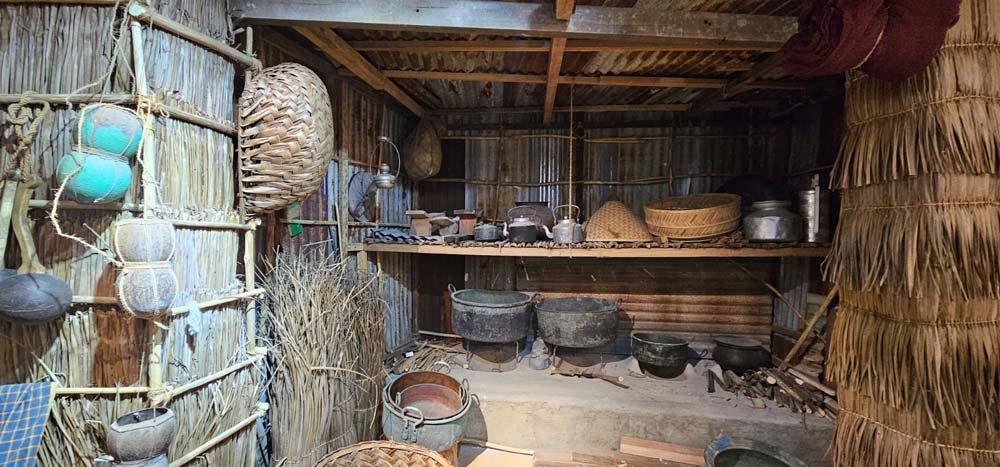
A reconstructed traditional Maldivian kitchen, with cooking vessels, woven baskets and a wood-fired hearth.
These reconstructions give the collection an immediate educational purpose. A younger visitor can see the equipment previous generations used to prepare meals and manage a household. Someone who remembers those objects may be able to explain details that would otherwise be missed. The same display can introduce one visitor to an unfamiliar way of life and prompt another to recall their own childhood.
Recording the Stories Behind the Objects
Miru wants schoolchildren and other visitors to have access to the stories behind the collection. His plans include codes that can be scanned beside the exhibits to provide information about what is on display. An object may survive long after knowledge of its use has faded. Recording its name, purpose and history helps people understand it without depending on someone being there to explain. The model of a traditional bahtheli introduces another aspect of Maldivian life. These sailing vessels carried goods and passengers between the islands and the capital. The wooden hull, mast and furled sail give visitors a close view of the boats on which those journeys depended.
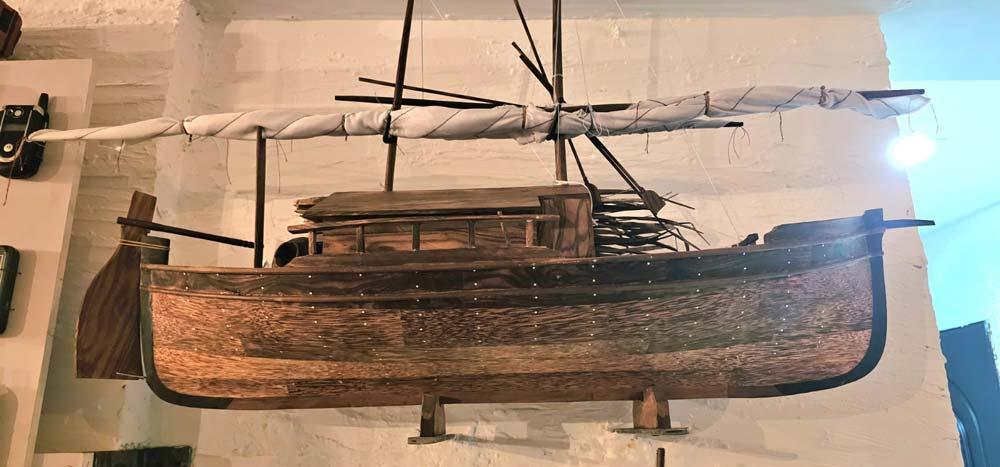
A model of a traditional bahtheli, a sailing vessel used to carry goods and passengers between the Maldivian islands and the capital, Malé.
Its inclusion takes the collection beyond the household to the movement of people and supplies between island communities. For a visitor from overseas, it offers a specific introduction to the country’s transport history. For a Maldivian child, it may help explain journeys that older family members remember. The domestic displays offer a similarly accessible starting point. Cooking and washing are familiar activities, even when the equipment used to carry them out has changed. A child can begin with something they recognise and learn how it was done before their own lifetime.
A Place for Maldivian Stories
Miru is also the founder of Baiskoafu’s streaming platform, which brings Maldivian music, films and other screen productions to audiences at home and overseas. A 2021 profile in Maldives Financial Review traces its beginnings to an idea he developed with friends working in music, production, design and technology. His father’s encouragement, along with support from family and friends, helped him pursue it. The platform launched in November 2018. Built around Dhivehi-language content, Baiskoafu gave audiences a way to find local productions on demand and helped Maldivian talent reach listeners and viewers internationally. Artist biographies also introduced audiences to the people behind the work. Visiting the museum alongside the offices and studios brought the range of Miru’s interests into focus. He is supporting contemporary creative work while making room for objects that have passed out of everyday use. Both deserve to be documented, and he has committed time and space to doing so.
Room to Share the Collection
Miru would like adequate space for a fuller museum display. Having seen how much he has gathered within the current premises, I could understand the need. More room would allow visitors to examine individual pieces closely and give the reconstructed domestic settings greater scope. It would also provide space for the information that makes an unfamiliar object understandable. The collection has grown from a personal interest into a resource with value for schools, families and visitors to the country. Its development will depend on the work of recording what each object is, where it came from and how it was used. Miru has already given over part of his working premises to this effort. He now wants to give the collection a more suitable home, where it can be displayed properly and shared with more people.