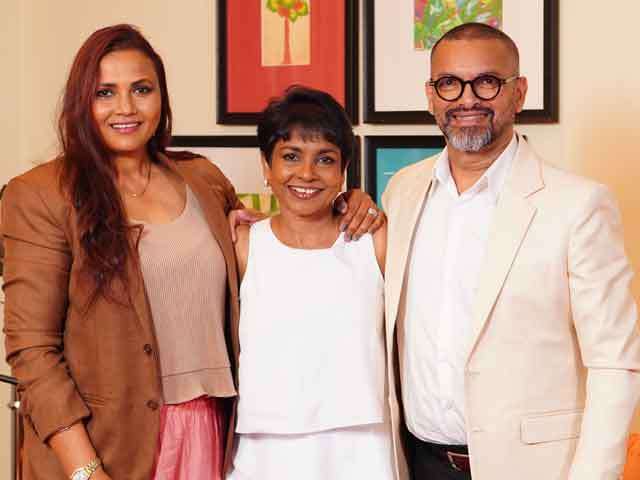
In Conversation with Seneesa Goonawardene, Sri Lanka’s Young Space Ambassador
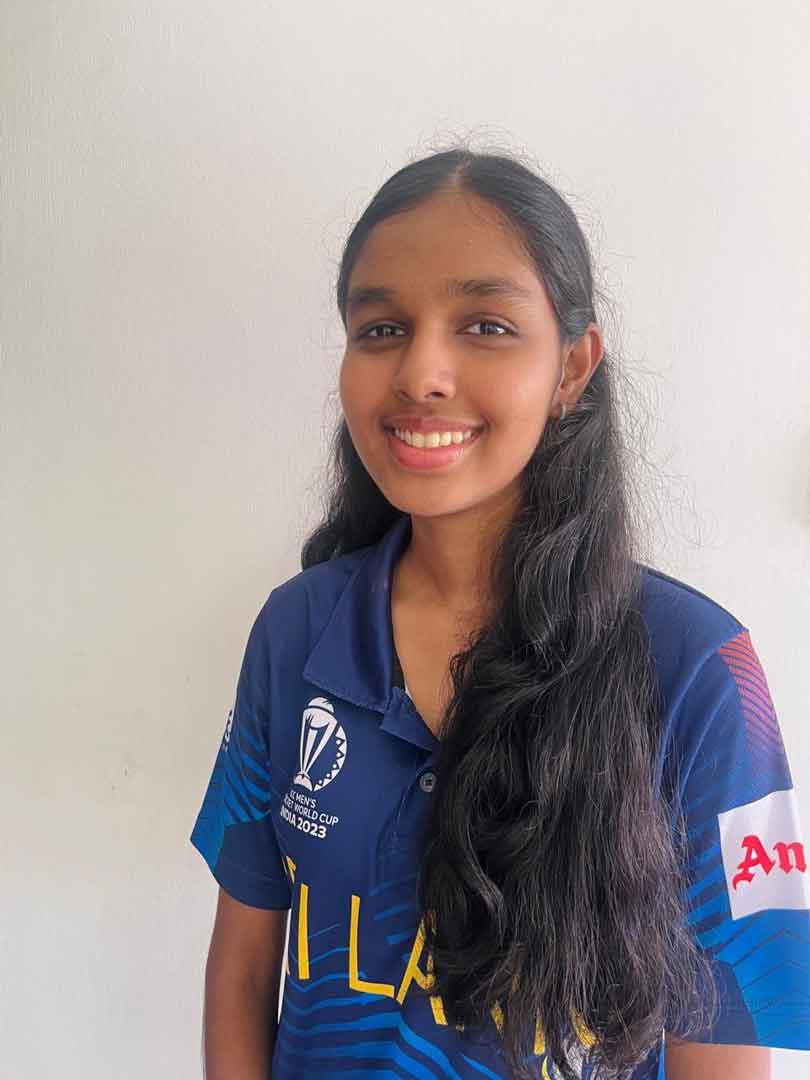
At just eighteen years old, Seneesa Goonawardene is preparing to carry the hopes and aspirations of a nation far beyond Earth's atmosphere. Selected to represent Sri Lanka in Mission ShakthiSAT, an ambitious international lunar satellite programme led by Space Kidz India, she joins an exceptional group of young women from 108 countries working together on a scientific satellite mission destined for lunar orbit. For Sri Lanka, her participation marks an important milestone in the country's growing engagement with science, technology and innovation on the global stage. Mission ShakthiSAT is far more than a space programme. It is a movement designed to empower young women through science, technology, engineering and mathematics while fostering leadership, collaboration and global citizenship. Participants receive more than 120 hours of specialized training in coding, satellite systems, communication technologies, PCB design, innovation and leadership, equipping them with the skills required to contribute meaningfully to the future of space exploration. For Seneesa, the opportunity represents the fulfilment of a childhood fascination with the stars and a chance to inspire other young Sri Lankan girls to believe that no dream is too distant to pursue. As she prepares to meet some of India's most prominent leaders, including Dr. Srimathy Kesan, the Prime Minister of India and the President of India, Seneesa speaks about her journey, her ambitions and the message she hopes to take from Sri Lanka to the world.
At just eighteen years old, you are preparing to represent Sri Lanka in Mission ShakthiSAT. Tell us about yourself and the journey that brought you here.
I recently completed my Edexcel Advanced Level examinations in Mathematics, Physics and ICT at St. Bridget's Convent, Colombo 07, and looking back, I realise that curiosity has always guided many of the decisions I have made throughout my school life. I have always enjoyed subjects that challenge me to think analytically and creatively at the same time. Mathematics taught me discipline and problem solving, Physics encouraged me to understand the laws that govern the universe, and ICT introduced me to the exciting possibilities of technology and innovation. Beyond academics, I have always believed in the importance of leadership and service. During my time at school, I had the privilege of serving as President of both the Altar Servers' Society and the IT Society, experiences that taught me how to work with teams, organise projects and support others in achieving common goals. Academically, I was fortunate to achieve nine A grades at the GCE Ordinary Level Examination in 2023, which was a proud moment for both myself and my family. I also led our school's IT Exhibition in March 2026, an experience that strengthened my confidence and leadership skills. I actively participated in several inter school ICT competitions over the years. One of the highlights was when my team secured first place at an international school ICT competition in 2025. I was also awarded third place in an inter school web designing competition, which further encouraged my passion for technology and innovation. Outside school, I am the eldest of three sisters, and my family has always encouraged me to work hard, stay humble and dream big. Their support has played an enormous role in every opportunity I have pursued, including Mission ShakthiSAT.
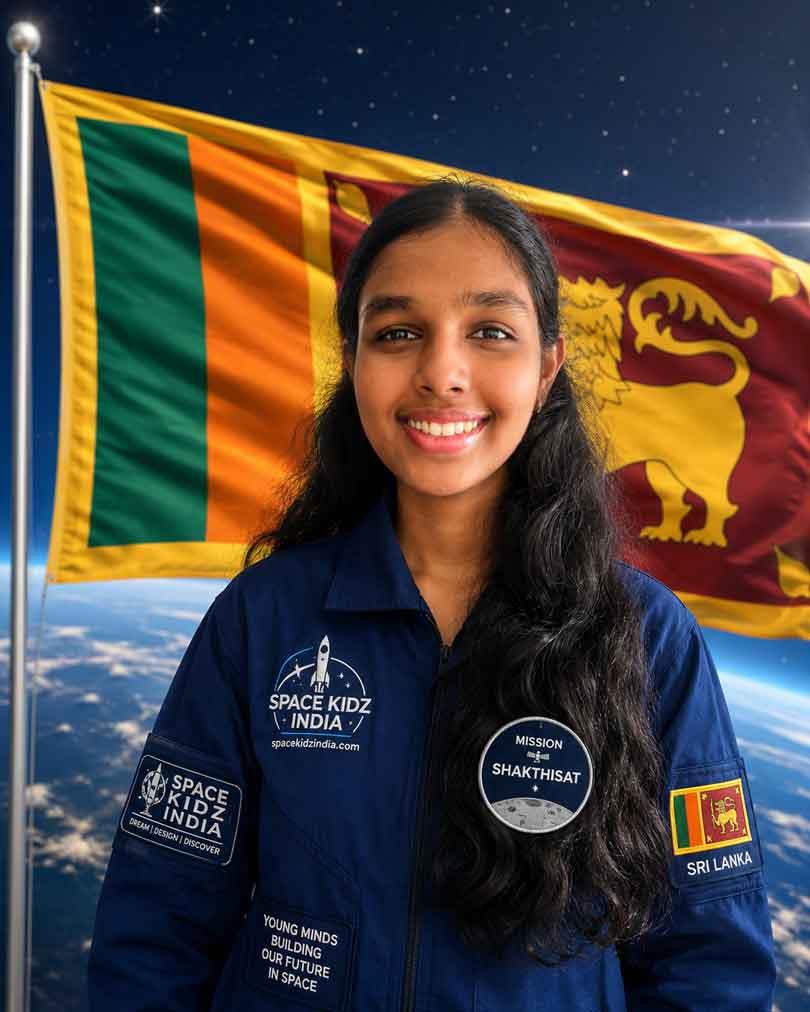
What inspired you to apply for Mission ShakthiSAT, and what does being selected mean to you personally?
I have always been fascinated by astrophysics and space exploration. Ever since I was young, I found myself asking questions about stars, galaxies, black holes and the origins of our universe. The idea that humans can design machines capable of travelling millions of kilometers through space has always amazed me. When I first learned about Mission ShakthiSAT and discovered that it focused on satellite engineering and practical experience with CubeSats, I immediately knew it was an opportunity I could not ignore. The chance to move beyond simply reading about space science and instead contribute to the development of a real satellite mission felt almost unbelievable. Being selected to represent Sri Lanka is an incredible honour. At the same time, it is also a responsibility that I take very seriously. I understand that I am not only representing myself but also my school, my family and my country. There are many talented young people in Sri Lanka who are passionate about science and technology, and I hope my participation demonstrates that international opportunities in these fields are possible for Sri Lankan students as well. Personally, this selection validates years of hard work and reminds me that dreams that once seemed distant can become reality when matched with determination and persistence.
The programme includes more than 120 hours of STEM education and practical satellite training. Which areas fascinated you the most, and what new skills have you gained?
One of the aspects I appreciated most about the programme was the opportunity to learn at our own pace while still engaging with highly advanced concepts and technologies. I particularly enjoyed learning about CubeSat missions and understanding how these relatively small satellites are capable of making significant contributions to scientific research and communication technologies. Before joining the programme, I had only a basic understanding of satellites and their applications. Through Mission ShakthiSAT, I gained insight into how satellites are designed, developed and operated. What fascinated me most was discovering how space technology affects everyday life on Earth. Satellite technology plays a critical role in communication, navigation, weather forecasting, environmental monitoring and disaster management. Realising how interconnected space science is with our daily lives made the subject even more exciting. The programme also strengthened my understanding of coding, communication systems and spacecraft technologies. Beyond technical knowledge, it improved my confidence in approaching complex problems and applying STEM concepts to practical situations. Perhaps most importantly, it taught me that innovation is not simply about having knowledge but about learning how to apply that knowledge creatively to solve real world challenges.
You recently met Dr. Srimathy Kesan in Sri Lanka, Founder and CEO of Space Kidz India. What was your first impression of her?
Meeting Dr. Srimathy Kesan was genuinely inspiring. From the moment I met her, I could immediately sense her passion and commitment to creating opportunities for young people, particularly young girls, in the field of space science. What impressed me most was her vision. Creating international programmes that allow students from around the world to participate in real space missions requires extraordinary determination and leadership. Her work demonstrates that education can be transformed into action and that young people can contribute meaningfully to ambitious scientific projects when given the right opportunities and guidance. Listening to her experiences reminded me that many of the achievements we admire begin with someone daring to believe that something difficult is possible. She showed me that courage and perseverance are just as important as technical knowledge. Her journey has encouraged me to work harder towards my own goals and to approach challenges with confidence rather than fear.
As you carry the Sri Lankan flag on this international platform, what do you hope the world will learn about Sri Lankan youth and young women?
I hope the world will see that Sri Lankan youth possess enormous potential and that our young women are capable of making meaningful contributions in every field, including science, engineering and technology. Although Sri Lanka is a relatively small island nation, our young people are incredibly resilient, creative and ambitious. We may not always have access to the same resources available elsewhere, but we have determination and the willingness to work hard. I want people to recognise that talent exists everywhere and that opportunities should not be limited by geography. I also hope my participation challenges outdated perceptions about women in STEM fields. Young girls belong in laboratories, engineering teams, research institutions and space programmes just as much as anyone else. Representing Sri Lanka on this platform is something I will carry with immense pride, and I hope I can contribute in some small way towards opening doors for others who follow.
During your visit, you are expected to meet the Prime Minister of India and attend a dinner hosted by the President of India. If given the opportunity to speak on behalf of Sri Lankan girls, what message would you share?
My first message would be one of gratitude. I would sincerely thank India and Space Kidz India for creating opportunities such as Mission ShakthiSAT that empower young women through world class STEM education and international collaboration. Programmes like this have the power to transform lives because they provide exposure, mentorship and practical experience that many students may not otherwise have access to. I would also express my hope of seeing similar initiatives established within Sri Lanka. I would love to see the creation of Space Kidz Sri Lanka, a platform that provides opportunities for young Sri Lankans to engage with space science, satellite technology and innovation. I believe programmes like these could inspire an entirely new generation of scientists, engineers and researchers while strengthening educational and scientific collaboration between our two countries. Most importantly, I would tell young girls that their ambitions matter and that they should never feel limited by their circumstances or background.
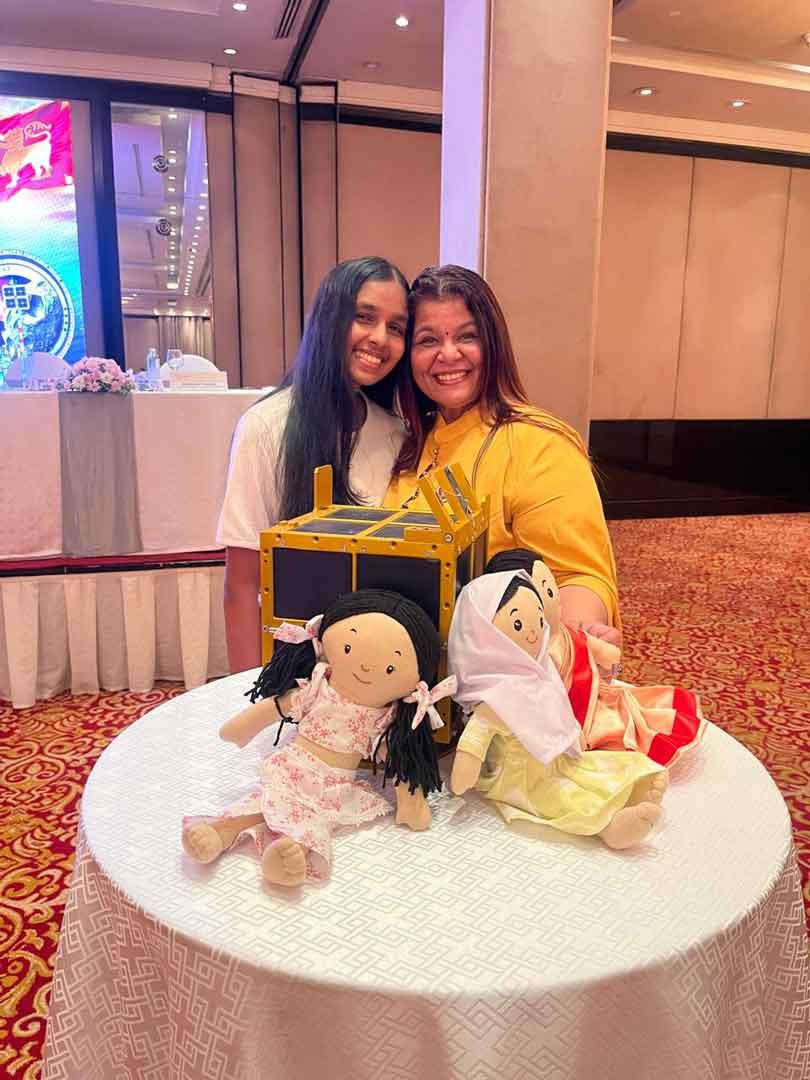
Looking ahead, where do you see yourself in the next ten years?
My dream is to build a career within the aerospace industry and contribute meaningfully to the future of space exploration. In ten years, I hope to be working on projects that advance scientific discovery and deepen our understanding of the universe. Organisations such as NASA represent the type of environment where I would love to contribute my skills and continue learning. What excites me most about aerospace is that it combines science, engineering, creativity and international collaboration in ways that very few industries can. Space exploration constantly pushes humanity to solve problems that once seemed impossible, and I would love to play even a small role in that journey. At the same time, I hope to inspire younger generations, particularly young girls, to pursue careers in STEM and believe that they belong in these spaces too.
Finally, what advice would you give to young Sri Lankan girls who are interested in STEM but may believe opportunities like this are beyond their reach?
My advice is simple. Never assume that opportunities like these are beyond your reach. Stay curious. Ask questions. Continue learning even outside the classroom. Read widely, do your own research and challenge yourself to explore subjects that interest you. Do not be afraid to step outside your comfort zone because growth often happens in moments of uncertainty. Every opportunity, whether large or small, has the potential to teach you something valuable. Even experiences that do not go exactly as planned contribute to your development and prepare you for future success. Confidence is incredibly important. Many young people underestimate their abilities and hesitate to apply for opportunities because they believe they are not good enough. My advice is to apply anyway. You lose nothing by trying, and you may discover possibilities you never imagined. I would also like to express my sincere gratitude to Dr. Sulochana Segera, Chairperson of Women in Management, for bringing this remarkable opportunity to Sri Lanka and for believing in young people like me. Through initiatives such as New Generation Sri Lanka, young people are provided with guidance, mentorship and valuable international exposure that encourage us to dream bigger than we ever thought possible. I hope many more young Sri Lankans will engage with these platforms, embrace new experiences and take advantage of the opportunities they create. The universe is vast and filled with possibilities. Sometimes the greatest challenge is not reaching the stars but believing that we are capable of aiming for them in the first place.