From Bieberchella to Brandchella: Coachella’s Desert of Content
Every year around April, the feed starts behaving like there’s only one place that matters - Coachella. A music festival that makes everyone collectively forget that deserts are not ideal locations for layered outfits, leather boots, and full-on fashion moments. And yet, that’s exactly what shows up - from performance-art looks like Katseye-level lingerie styling to dresses made entirely of earrings and pendants that feel like they shouldn’t survive a single movement, like Kalita Hon. What stands out most is how micro-influencers arrive looking far more styled and put together than the actual celebrities, who are often in a cute top and jeans.
Now coming to the actual point of the festival - the music - there were plenty of big moments, especially for its 25th edition. Sabrina Carpenter brought “Sabrinawood” to Coachella and even had Madonna join her on stage. Katseye performed Golden alongside the Huntrix cast, while Addison Rae brought out Olivia Rodrigo, turning a guest appearance into a viral moment. Karol G made history as the first Latina headliner at Coachella, and Zara Larsson joined PinkPantheress for a Midnight Sun remix that quickly made its way across feeds. Arguably, the most talked-about moment wasn’t even a traditional performance. It was Justin Bieber - or what the internet quickly dubbed “Bieberchella” where he was sitting behind a laptop, singing along to his own music videos, and brought out Billie Eilish for One Less Lonely Girl. But beyond the music, there’s another side to Coachella that exists just outside the performances - the brand activations and curated spaces that run alongside it, and at times, seem to matter just as much, if not more.
From Activation to Destination
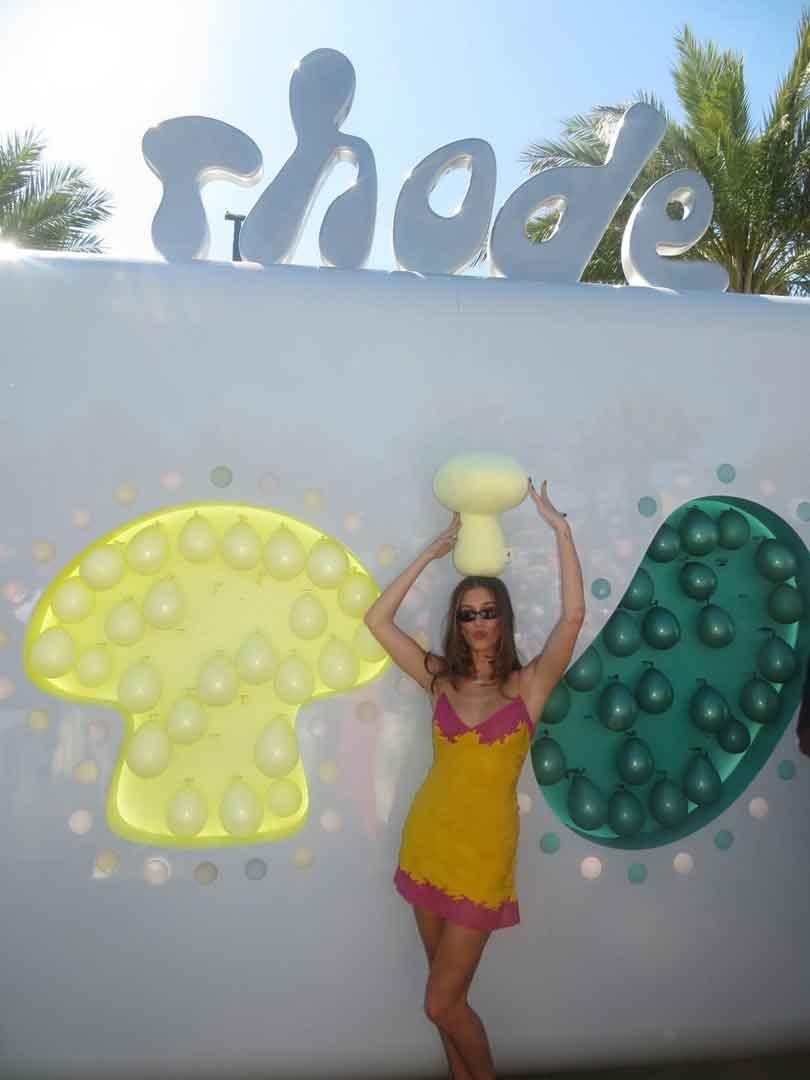
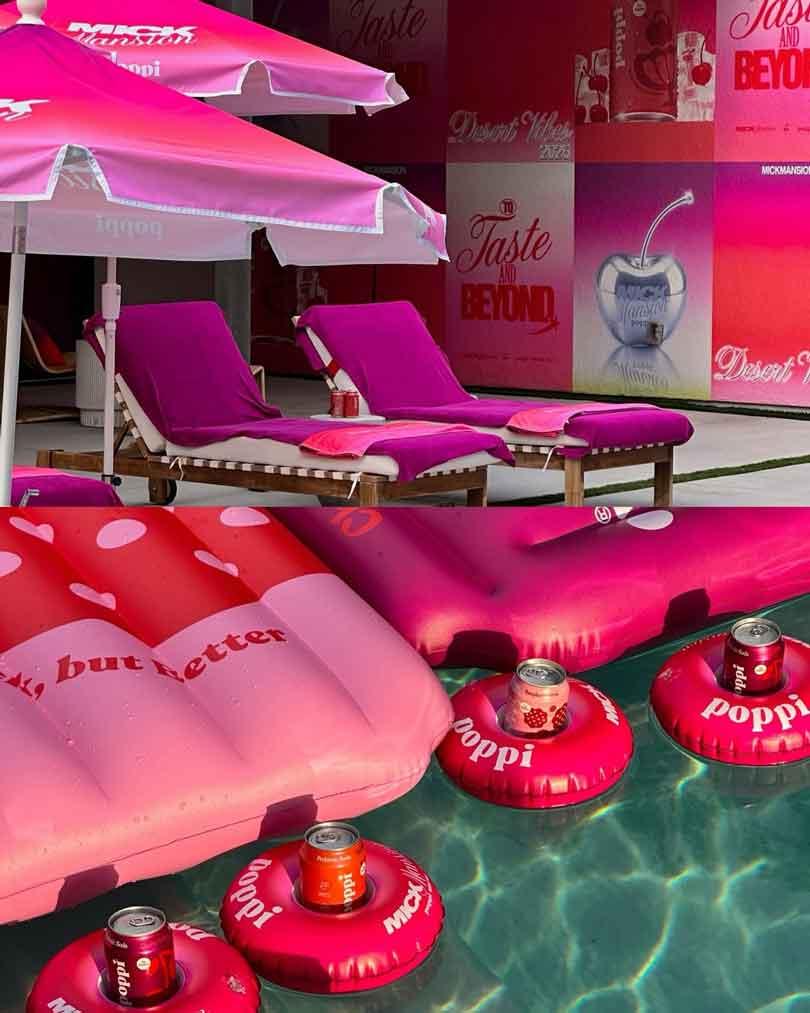
On the ground, Coachella turns into a spread of brand worlds across the festival, each one built with its own visual identity like a series of expensive moodboards you’re walking through. One of the clearest examples was Rhode World, set up as an invite-only space around its latest drop, Rhode x the Biebers. It leaned heavily into the Spotwear launch with Justin Bieber, and that came through in the details - from the Spotwear-shaped balloon pop game where people won matching plushies, to the umbrellas in the same shades as the product while waiting in line. There were other moments built into the space, too, like a claw machine and a touch-up room stocked with their products, but none of it felt separate. Even the extras - cocktails, tacos, wellness drinks, live music - felt less like add-ons and more like extensions of Hailey Bieber’s Rhode world.
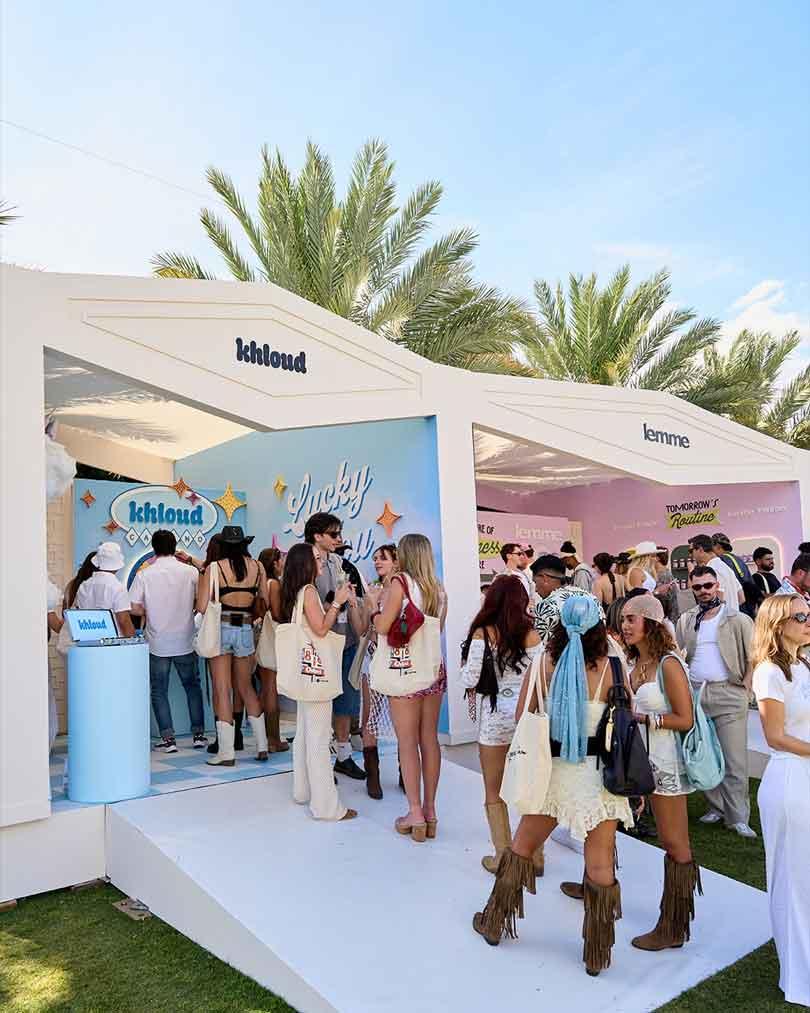
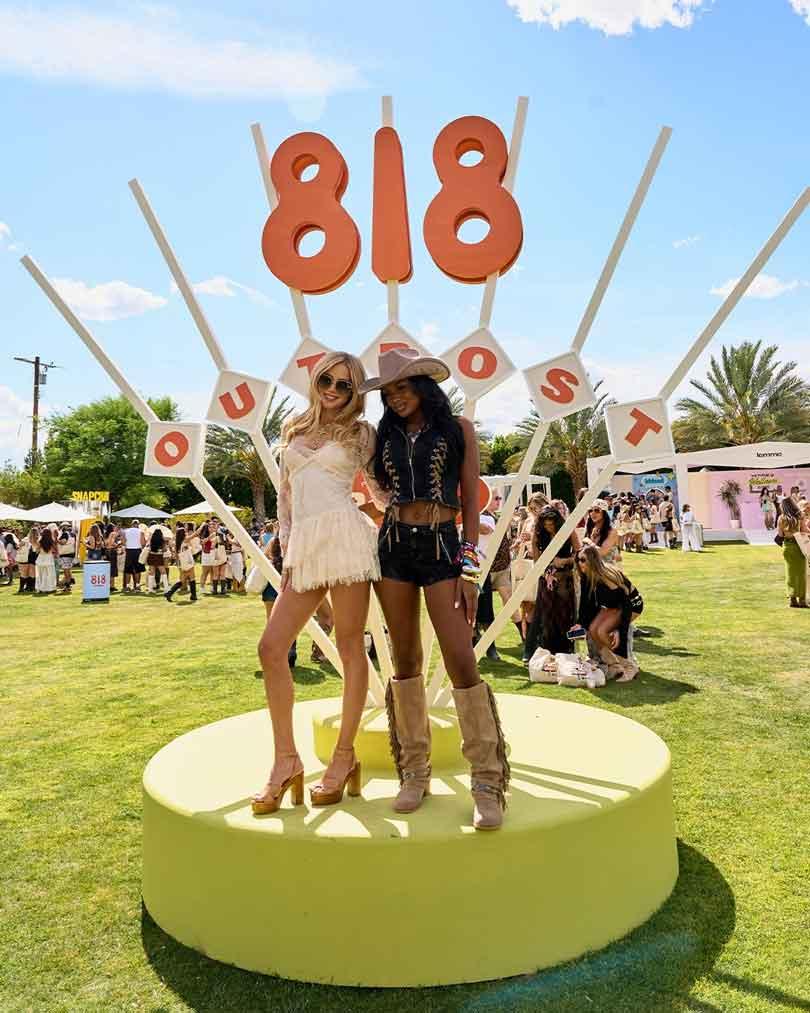
Then there was Kendall Jenner’s 818 Tequila Outpost, which felt less like a single activation and more like a shared space made up of multiple mini pop-ups with food, drinks, and music running through it, leaning into a retro, Palm Springs-inspired design with breezeblock walls, open layouts, and mid-century desert references that made it feel like its own self-contained world inside the festival. Within that setup, different collaborations were scattered across the space. Rhode appeared through a caramelised banana carajillo tied to the recent Rhode x the Biebers drop, served with a mini 818 tequila bottle and paired with the Peptide Lip Treatment in Caramelised Banana. Kylie’s hydration line, K20 by Sprinters and Kim’s energy drink line. Update, focused on hydration and energy across the grounds. Khloé’s snack line showed up as Khloud Casino with a casino-style setup tied to popcorn and protein chips, and Kourtney’s supplement brand, Lemme, leaned into wellness with gummy vitamins and shots.
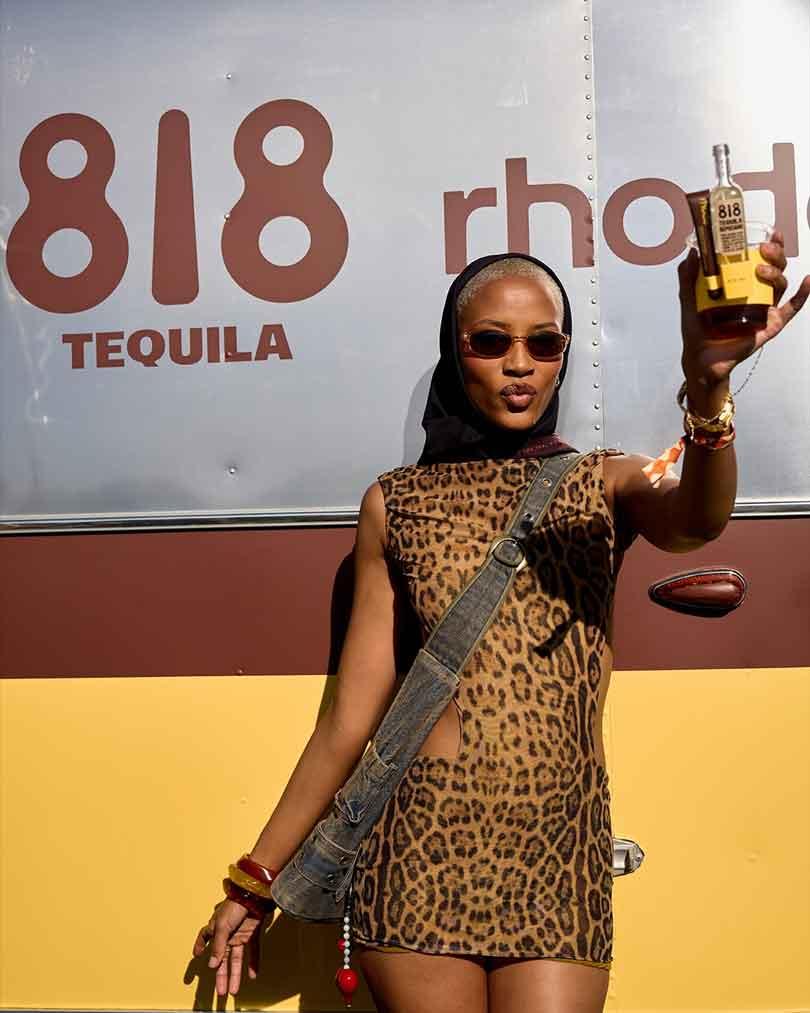
Alongside these, smaller brand partners like Salt & Stone, which debuted its limited-edition collaboration with 818 Tequila - Amber & Agave, inspired by the notes of 818 Añejo - as well as Urban Decay, Blank Street Coffee, LaCroix, Skechers, One/Size and Snapchat appeared throughout, alongside 818 merchandise, mirrored bars, poolside areas, photo booths, VIP zones, and the Postmates Pit Stop food garden - all contributing to a space that felt layered and constantly moving.
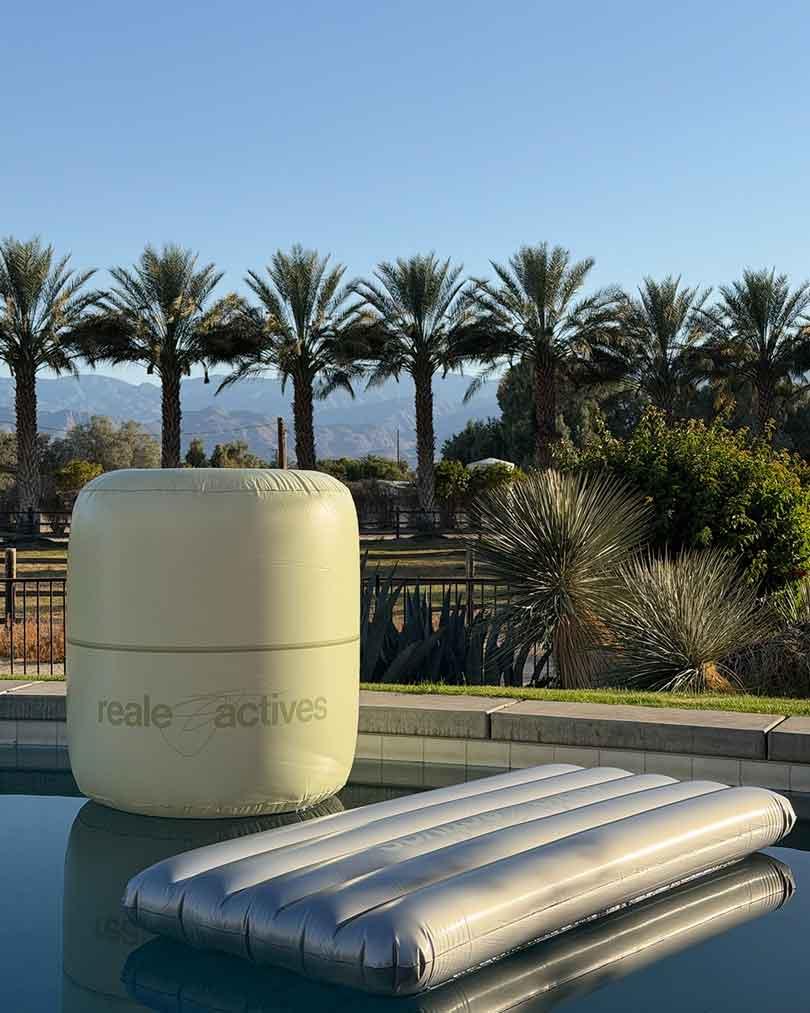
Camp Poosh and Revolve Fest pushed this further. Camp Poosh felt like a wellness-meets-desert retreat, a branded “reset” space set at a private estate, built around wellness moments, recovery, and curated dining, leading into an invite-only evening of activations and live performances. Revolve Fest was the opposite - high energy, heavily branded, and built around performances, influencer hosting, and constant visibility, with fashion, music, and content production all happening at once. Revolve Fest leaned into an exclusive “Grand Revivre” old-world carnival concept with mechanical bulls, rides, guest performances, and a curated, shoppable festival edit. Around these, other spaces filled in different parts of the same ecosystem - Gap, Medicube, Neutrogena, e.l.f. Cosmetics, Benefit Cosmetics Reale Actives, along with Poppi, Aperol, Pinterest and many more. Coachella started to blur into one continuous visual landscape rather than separate brand spaces.
Why Brands Build Worlds, Not Stalls
What stands out across all of this is that these brands aren’t just showing up at Coachella in the traditional sense anymore. Especially with the larger spaces, they’re building full destinations inside the festival - not sampling stations or logo placements, but environments that people move through, film, and remember as part of the experience itself. It shifts the role of the brand from being present at the festival to becoming part of where the festival “happens” for a lot of people.\
That matters because festivals today operate less like events and more like content ecosystems. You don’t just attend Coachella - you document it, post it, and in doing so, turn it into social currency. The brand becomes part of that signal. It’s no longer about impressions or reach in a traditional marketing sense, but memory - what people remember is what they share, and what they share is what travels.
With Coachella specifically, that effect compounds every year. Repetition builds familiarity, and familiarity builds association. Over time, these brand worlds start to sit inside the festival’s identity itself, not outside it. That’s why so much investment goes into brand trips, influencer invites, curated access, and fully built-out spaces - not just to be seen, but to be lived in, photographed, and circulated long after the weekend ends.
When the Festival Becomes the Feed
So, Coachella today isn’t just a music festival with brands woven into it - it’s a space where culture, content, and commerce overlap in real time. Performances still matter, but they sit alongside brand worlds designed to be experienced, filmed, and shared. Each activation adds another layer to how the festival is remembered, shifting attention from what happens on stage to the spaces around it, until the line between festival and marketing space blurs - and brands end up shaping how the entire weekend is seen and retold.