CHULAPADMENDRA KUMARAPATHIRANA.
By: Giselle Gunewardene
A Life of Beauty, Strength and an Unforgettable Presence
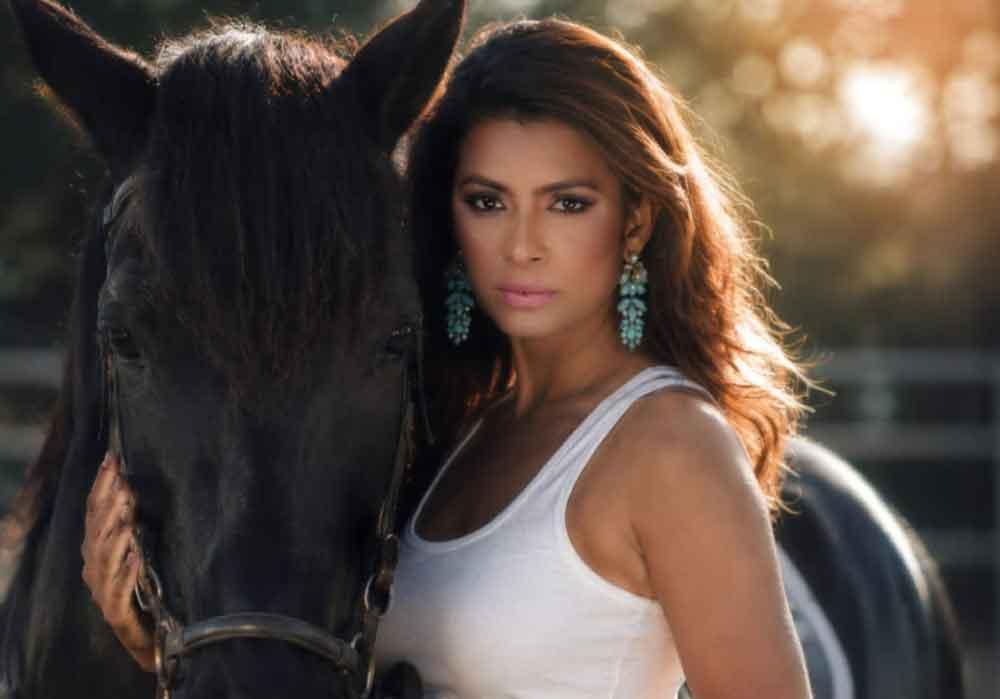
There are some people whose presence becomes inseparable from the industry they inhabit. For more than two decades, Chulapadmendra Kumarapathirana, known throughout Sri Lanka simply as Chula, was one of those people. Model, actress, catwalk trainer, pageant mentor and teacher, she belonged to a generation that helped shape the modern identity of Sri Lankan fashion. Her sudden death on the 31st of August 2026, at the age of 46, has brought an extraordinary journey to an unbearably premature end, leaving behind photographs, memories, students and an unmistakable legacy.
To understand Chula's story is to remember a very different era of Sri Lankan fashion. She began her career long before social media transformed the way models were discovered and personalities were created. There was no Instagram audience waiting to be accumulated and no instant digital platform through which a young model could manufacture visibility. A reputation was earned through castings, photographic shoots, fashion shows, advertisements, magazine editorials and, above all, consistency. Chula built her name in that world, slowly establishing herself through the qualities that would become synonymous with her career: confidence, discipline, versatility and a commanding presence in front of both the camera and an audience.
She possessed the quality that separates a beautiful person from a memorable model. Chula understood transformation. A model must be able to surrender herself to the creative vision of the photographer, designer, hairstylist and makeup artist while somehow retaining an identity of her own. Chula could do precisely that. Her appearance could change dramatically from one assignment to another, yet there was always something unmistakably Chula in the final image. It was in the eyes, the posture, the confidence and the sense that she understood exactly what the camera required of her.
That ability made her particularly memorable in the beauty imagery associated with Kess Salon. Created by celebrated hairstylist Vasantha de Silva, Kess became synonymous with imagination, transformation and theatrical beauty. During an era when fashion photography was becoming increasingly adventurous in Sri Lanka, the relationship between hairstylist, photographer and model was essential. Hair was not merely styled. It became part of the composition. Makeup was not simply applied to make a face attractive. It helped create a character. The model was required to complete that transformation.
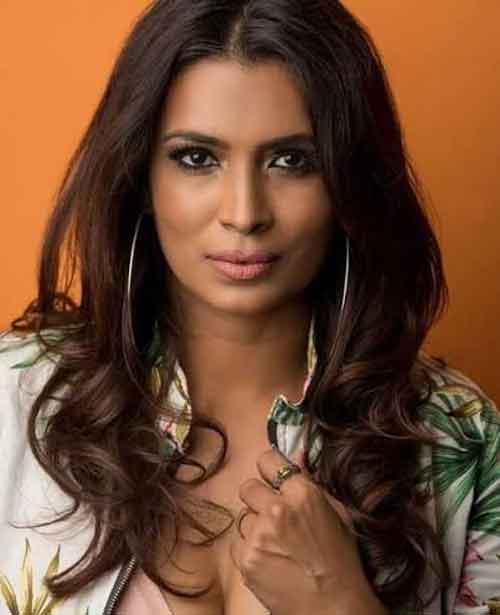
Chula was made for that kind of imagery. Her striking features and strong facial structure could accommodate dramatic styling without disappearing beneath it. She could carry elaborate hair, bold makeup and adventurous fashion while maintaining an extraordinary sense of presence. The images associated with Chula and the creative world of Kess belong to a period of Sri Lankan fashion that many still remember with enormous affection. Before photographs existed primarily on phones and disappeared within seconds from social media feeds, fashion images lived on magazine pages, advertisements, portfolios and salon walls. They became familiar because people encountered them repeatedly. Some eventually became part of the visual memory of an era, and Chula became one of the faces through which that era is remembered.
Her ambitions, however, were never confined to Sri Lanka. Chula represented her country internationally, including at the Miss Tourism Model of the World competition in Tanzania in 2006, where she received the Press Award. It was an important recognition for a Sri Lankan model working in an industry where international exposure was considerably harder to obtain than it is today. She also spent time working in Britain and spoke about being attached to modelling agencies in England, while her career took her to fashion assignments in India as well. These experiences exposed her to different professional cultures and strengthened a belief that would later become central to her life: modelling was not simply about appearance. It was a profession requiring discipline, knowledge and training.
Her career gradually expanded beyond conventional modelling. Television introduced Chula to audiences who may not have followed the fashion world closely, while her participation in Sirasa Dancing Star revealed another side of her performance ability. She finished as second runner up, demonstrating the determination and competitiveness that had already served her so well on the runway. Cinema followed too, with appearances including Sweet Angel and Swara. Whether she was modelling for a photograph, walking before an audience, dancing on television or appearing on screen, Chula possessed an instinctive understanding of performance.
Yet the most meaningful evolution of her career may have occurred when she began passing her knowledge to others. After spending years being watched, photographed and judged herself, Chula gradually moved into the role of teacher. It was a natural progression for someone who had accumulated decades of practical experience. She understood the small details that cannot easily be learned from a textbook: how to carry a garment, how to recover from a mistake on a runway, how to use posture, how to move confidently in heels, how to respond to the demands of a designer and how to remain composed when hundreds of eyes are watching.

Through the Chulapadmendra Catwalk Academy, she sought to give aspiring models something more substantial than a superficial introduction to the industry. Her philosophy was grounded in experience. She believed that a certificate alone could not make someone a model. A model had to work, practise, perform and understand the realities of the profession. Her students were therefore taught not simply how to walk but how to function within the world of fashion.
One of the clearest expressions of this philosophy came through Ramp Comes Alive, the graduation production associated with her academy. Rather than allowing students to complete their training entirely within the safety of a classroom, Chula placed them on an actual runway. Twenty-seven models presented the work of ten designers, giving young talent the opportunity to experience the pressure, excitement and discipline of a professional fashion production. For Chula, that transition from student to working model mattered enormously. She took particular pride in seeing graduates receive professional bookings after completing their training.
There was something beautifully circular about this stage of her life. The young woman who had once entered an uncertain industry hoping to establish herself had become the experienced professional standing beside the runway, preparing another generation to make the same journey. Every correction she offered, every posture she adjusted and every nervous young model she encouraged carried within it the experience of her own career.
Her influence also extended deeply into Sri Lanka's pageant culture. Chula became a respected trainer, consultant and mentor to contestants preparing for national and international competitions. Her knowledge of presentation, stage movement and confidence made her a natural presence in this world. Among those associated with her training was Caroline Jurie, who went on to win the Mrs World title. Over the years, Chula increasingly became the person young contestants turned to not merely to learn how to walk, but to understand how to occupy a stage.
That distinction mattered to her. Chula knew that confidence could not simply be painted onto a face. A contestant could wear the finest gown and receive the most accomplished hair and makeup, but when she stepped onto a stage she still had to believe that she belonged there. Chula spent years teaching that belief.
Perhaps this is why her longevity within Sri Lankan fashion is so significant. Fashion can be notoriously unforgiving about age and constantly preoccupied with discovering the next new face. Chula refused to become simply a memory from an earlier generation. Instead, she evolved. When one chapter of her professional life began changing, she created another. She moved from model to mentor, from runway personality to educator, from contestant to trainer and from being part of fashion productions to helping shape them.
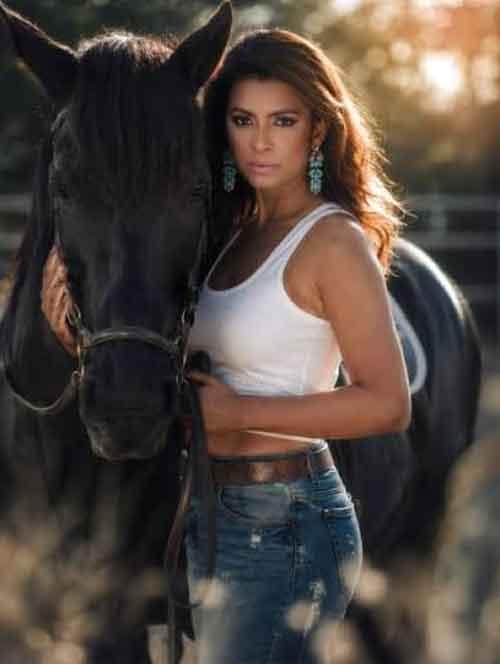
Motherhood and family life also became part of her journey, and there were periods when she stepped away from modelling. Yet she returned to the industry she loved. That return revealed something fundamental about her relationship with fashion. Modelling had never simply been a youthful adventure or a temporary occupation. Fashion was woven into her identity.
By her forties, Chula could look back on almost a quarter of a century in the industry. The young model had become one of its experienced voices. She had witnessed Sri Lankan fashion change around her, from the era of printed campaigns and magazine editorials to the age of digital personalities and social media. Through all those transformations, she continued working with young people and remained connected to the runway.
Even during the final year of her life, Chula was extraordinarily active. She continued judging, training and participating in pageants and fashion events. In what is now an especially poignant detail, Chula was working almost until the final hours of her life.
On Sunday, 30th of August 2026, she participated in the grand finale of Universal Woman Sri Lanka 2026 at Waters Edge, where she served as National Director and Chief Training Consultant. It was exactly the kind of environment in which she had spent so much of her life: contestants preparing themselves, lights illuminating a stage, carefully constructed looks, anticipation behind the scenes and the unmistakable energy of a major event.
The following day came the news that seemed almost impossible to reconcile with the images of Chula working only hours earlier. She was gone. Chulapadmendra Kumarapathirana was only 46 years old. The suddenness of her death has inevitably made the loss more difficult to comprehend. Initial reports referred to a suspected heart attack, while subsequent reports stated that she had been found unresponsive at a residence in Wewala, Piliyandala. Authorities began the necessary inquiries into the circumstances of her death. Until those official processes establish a definitive medical cause, speculation serves neither Chula nor the people who loved her. What matters in remembering her is the life that came before that final day. And it was a life lived with remarkable visibility.
For more than two decades, Chula allowed herself to be photographed, judged, transformed and observed. That is the peculiar vulnerability of modelling. The finished photograph may appear effortless, but behind it are hours of preparation and a professional whose face and body become part of somebody else's creative vision. Chula understood that process intimately, and some of the finest images of her career demonstrate how completely she could inhabit a transformation.

This is why those Kess images now carry an additional poignancy. They preserve Chula as fashion photography always preserves its subjects: forever within a particular instant. Hair sculpted into extraordinary forms, makeup transforming familiar features, the camera finding its angle and Chula looking back into the lens with absolute confidence. They belong to another period now, but great fashion imagery has a way of escaping its original purpose. An advertisement eventually stops being an advertisement. A salon campaign ceases to be merely a salon campaign. With enough time, it becomes cultural memory. Chula is part of that memory.
Her legacy, however, cannot be measured only in photographs. It exists in people. Somewhere today there are models who stand differently because Chula once corrected their posture. There are contestants who learned to enter a stage confidently because she showed them how. There are young women and men who received their first professional opportunities after training under her. There are designers, photographers, hairstylists, makeup artists and fellow models who remember the energy she brought into a room. That may ultimately be the most meaningful measure of a career.
Success in fashion is often presented through images, titles and applause, but influence is quieter. Influence is what remains in another person after the teacher has left. Chula spent the latter part of her career creating exactly that kind of influence. She once spoke about still learning what life meant, even after everything she had experienced. Her philosophy placed importance on giving something to another person, speaking truthfully, living without intentionally harming others and having the courage to stand for what one believed. Those words feel particularly meaningful now because they reveal the person behind the public image.
Chula was strong. She was expressive. She was ambitious. She was glamorous. She was a woman who understood the transformative power of fashion but also understood the discipline required beneath the beauty. Above all, she possessed presence. Presence is difficult to define and impossible to teach completely. It is the quality that makes an audience look towards someone before understanding why. Chula possessed it as a young model, carried it through her years before the camera and eventually spent her later career trying to awaken it in others.
Sri Lankan fashion will continue. Runways will be constructed. Cameras will flash. New faces will emerge. Young contestants will stand backstage waiting for their names to be announced. Another generation will discover the exhilaration and uncertainty of entering the industry Chula entered so many years ago. But an era has ended. There will now be old photographs that feel different when people look at them. Magazine pages, campaign images, runway pictures, television appearances and pageant photographs will no longer simply document Chula's career. They will preserve her. Perhaps that is fashion's strange gift to the people who dedicate their lives to it.
The show ends. The lights are switched off. The clothes are returned. The elaborate hair is undone. The makeup is removed. The audience goes home. But the photograph remains. And somewhere, in an old portfolio, on a salon wall, inside a magazine archive or among the photographs carefully saved by those who knew and admired her, Chulapadmendra Kumarapathirana will always be looking back at the camera. Poised. Elegant. Fearless. Unmistakably Chula.
She spent more than two decades walking through Sri Lankan fashion and, in time, teaching others how to make that walk themselves. Her death at only 46 is painfully premature, but the story of her life is far greater than the circumstances of its ending. Chula was a model who became a mentor, a familiar face who became a teacher, and a woman who transformed her own experience into opportunity for those who came after her. The lights may have dimmed on her final runway. The images remain. The students remain. The memories remain. And so does Chula.