Off track, Still on it
There is something oddly comforting about a plan. The act of sitting down, mapping things out, and telling yourself that this is how it is going to go. We build timelines, colour code our calendars, make lists that feel almost therapeutic to complete. There is a sense of control in it, a quiet confidence that comes from believing you have thought of everything. And for a while, it works. You move through your days ticking boxes, feeling like you are exactly where you are meant to be.
Until you are not.
 Because life has a way of stepping in unannounced. A delayed opportunity, a rejection email, a sudden change of plans, a conversation that does not go the way you rehearsed it in your head. It is never just one thing. It is usually a series of small disruptions that slowly chip away at the version of the future you had so carefully constructed. And in that moment, it does not feel like a minor inconvenience. It feels like you have somehow gone off track.
We do not talk enough about that feeling. The quiet panic of thinking you have fallen behind. The frustration of knowing you did everything right and still did not get the outcome you expected. It is easy to spiral there. To overthink every decision that led you here, to analyse what you could have done differently, to convince yourself that maybe you just were not prepared enough.
But the truth is, sometimes it is not about preparation. Sometimes it is just about unpredictability. We are often told to have a plan. What we are not told is that the plan itself is not always the safety net. It is the flexibility around it that matters. That is where a Plan B comes in. Not as a backup for failure, but as a quiet form of resilience.
There is a certain stigma attached to the idea of a Plan B. It almost sounds like settling, like you are already anticipating that things will not work out. It can feel like you are not fully committing to your first choice. But that is not what it is. Having a Plan B does not mean you are doubting yourself. It means you are acknowledging that life is not linear.
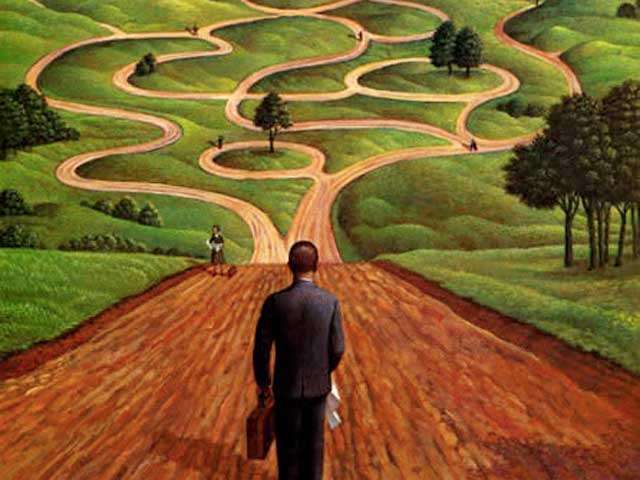
Think about how often things actually go exactly as planned. Not slightly adjusted, not mildly delayed, but exactly as you envisioned them. It is rare. And yet we still approach our goals as if there is only one path to get there. When that path shifts, even a little, it can feel like everything is collapsing.
A Plan B softens that impact. It gives you room to breathe when things do not align perfectly. It allows you to pivot without feeling like you are starting from scratch. More importantly, it reminds you that being off track does not mean you are lost.
The idea is not to create an entirely separate life path sitting in the background. It is to build options into your thinking. To understand that there are multiple ways to arrive at something meaningful. Sometimes the second option is not even something you would have considered at the beginning. And yet it ends up being the one that fits better.
There is also a certain honesty in admitting that things might not go according to plan. It requires you to let go of the illusion of control, which is not easy. We like to believe that if we work hard enough, plan well enough, and stay disciplined, we can guarantee outcomes. But life does not work on guarantees. It works on possibilities. And possibilities are not limited to just one plan.
 Having a Plan B is not about lowering your expectations. It is about expanding them. It is about recognising that your journey does not have to look one specific way to be valid or successful. Sometimes we hold on so tightly to Plan A that we miss out on opportunities that are quietly presenting themselves as alternatives.
There is also a practical side to it. A Plan B can be as simple as having another option lined up, another direction you are willing to explore, or even just the mindset that you will adapt when needed. It is less about the details and more about the readiness. The willingness to keep moving forward, even if the route changes.
What makes this particularly important is how we respond when things do go off track. Without a Plan B, that moment can feel final. Like a closed door that leaves you standing still. With a Plan B, it becomes a redirection. Not necessarily easier, but manageable. You are not stuck, you are adjusting. And adjustment is not failure.
In fact, it is often where growth happens. When you are forced to rethink, to reassess, to approach things from a different angle. It pushes you out of the rigid structure you created and into something more flexible. Something more real.
There is also a quiet confidence that comes with knowing you can handle change. That even if things do not go as planned, you will find a way to navigate it. That confidence does not come from having everything figured out. It comes from trusting your ability to adapt.
We often underestimate how capable we are of figuring things out as we go. We place so much importance on getting it right the first time that we forget that most things are learned along the way. A Plan B is not a sign that you expect things to go wrong. It is a reminder that even if they do, you will be okay.
It also takes some pressure off the original plan. When you are not holding on to it as the only option, you can approach it with more clarity and less fear. You are still committed, still invested, but not consumed by the idea that everything depends on it.
That shift in mindset can make a significant difference. You are no longer paralysed by the thought of what happens if it does not work out. You are focused on doing your best, knowing that there are other ways forward if needed.
And sometimes, Plan B does not even come into play. Sometimes Plan A works out, maybe not perfectly, but well enough. And that is fine. The presence of a Plan B does not take anything away from that. It simply exists as a quiet reassurance in the background.
Other times, Plan B becomes the plan. Not because Plan A failed, but because circumstances changed. Because you changed. Because what you wanted evolved. And that is something we do not always account for. The fact that we are not static, and neither are our goals.
In a way, having a Plan B is also about giving yourself permission to change your mind. To take a different route without feeling like you have given up. It allows you to approach your journey with a bit more openness, a bit more curiosity.
At the end of the day, it is not about having everything perfectly mapped out. It is about being prepared to keep going, regardless of what comes your way. It is about understanding that being off track is not the same as being lost. That there are always other paths, other options, other possibilities.
A plan gives you direction. A Plan B gives you resilience..