Mount Fuji, Japan
By Umasha Caldera
There are mountains, and then there is Mount Fuji. Rising with near perfect symmetry above the landscape of Japan, this iconic peak is more than just a geographical landmark it is a symbol of beauty, strength, and spiritual devotion. For centuries, artists have painted it, poets have written about it, and travelers have journeyed across oceans just to stand in its presence. Yet no photograph or description truly prepares you for the quiet power of seeing Mount Fuji in person.
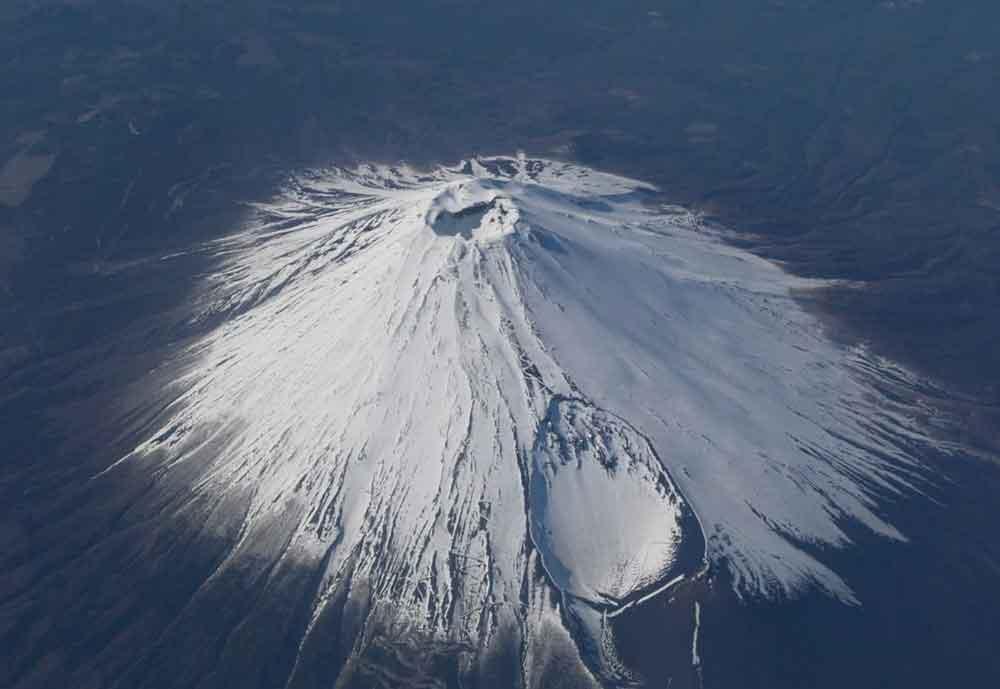
At 3,776 meters tall, Mount Fuji is Japan’s highest mountain. Its snowcapped summit, visible from miles away on clear days, rises gracefully above lakes, forests, and cities. Unlike jagged mountain ranges that stretch endlessly across the horizon, Fuji stands alone, dignified and balanced, like a solitary guardian watching over the land. Its shape is so perfectly conical that it almost appears sculpted rather than formed by nature.
Though peaceful in appearance, Mount Fuji is an active stratovolcano. Its last eruption occurred in 1707, sending ash as far as Edo, modern day Tokyo. Yet today, Fuji rests quietly, its slopes inviting hikers and pilgrims instead of warning them away. The contrast between its explosive geological history and its serene present-day beauty is part of what makes Fuji so fascinating. Standing at its base, you feel both comforted and humbled. The mountain seems calm, yet you are aware of the immense natural forces that shaped it over thousands of years.
Its volcanic soil has enriched the surrounding region, allowing forests to flourish and lakes to shimmer at its feet. This combination of fire born origins and tranquil surroundings gives Mount Fuji a layered personality both powerful and peaceful at once.
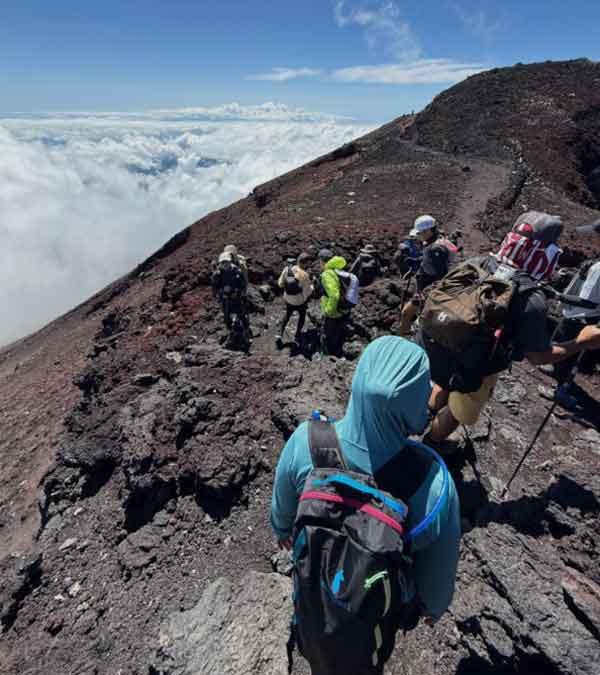
Mount Fuji is not simply a mountain; it is sacred ground. For centuries, it has been revered in Shinto and Buddhist traditions. Pilgrims once believed climbing Fuji was a spiritual journey, a way to purify the soul and gain enlightenment. Even today, many Japanese people consider it a symbol of perseverance and renewal. During the official climbing season, thousands of visitors ascend its slopes, beginning their journey in the dark hours before dawn. The goal is to reach the summit in time to witness Goraiko the sunrise from the top of Fuji. As the first rays of sunlight break over the horizon, the sky transforms into shades of gold and crimson, and the shadow of the mountain stretches dramatically across the clouds below. It is a moment that feels almost sacred, whether you are religious or not.
The climb itself is not merely physical; it is emotional. Each step upward brings changing landscapes from lush greenery at the base to rocky volcanic terrain near the summit. By the time you reach the top, the sense of accomplishment is profound. Mount Fuji’s elegance has inspired countless artists over centuries. One of the most famous artistic tributes comes from the ukiyo-e master Hokusai, whose series “Thirty-Six Views of Mount Fuji” immortalized the mountain in vibrant woodblock prints. Perhaps the most recognized image, “The Great Wave,” depicts Fuji framed beneath a towering wave a reminder that the mountain has long symbolized resilience amid life’s turbulence.
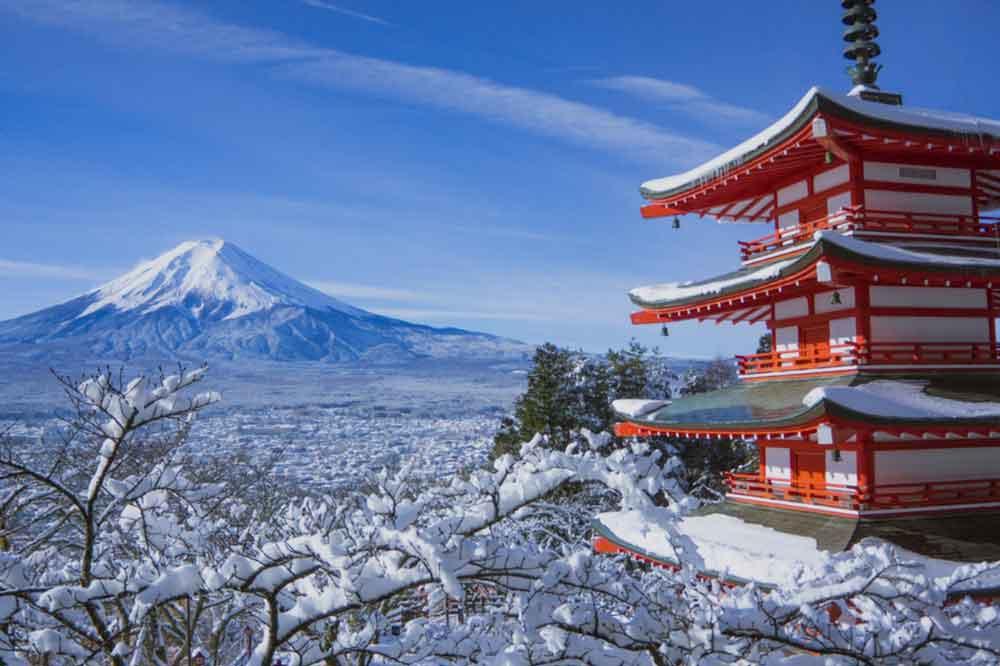
Fuji’s image appears everywhere in Japan from postcards and paintings to currency and corporate logos. Yet despite its frequent representation, seeing it in reality is different. Its scale, silence, and subtle presence cannot be fully captured on paper or screen. On clear winter days, Fuji appears crisp and sharply defined against a bright blue sky. In spring, cherry blossoms frame its snowy peak, creating scenes that feel almost unreal. In autumn, fiery red and orange leaves surround its base, adding warmth to the cool mountain air. Every season paint Fuji in a different light.
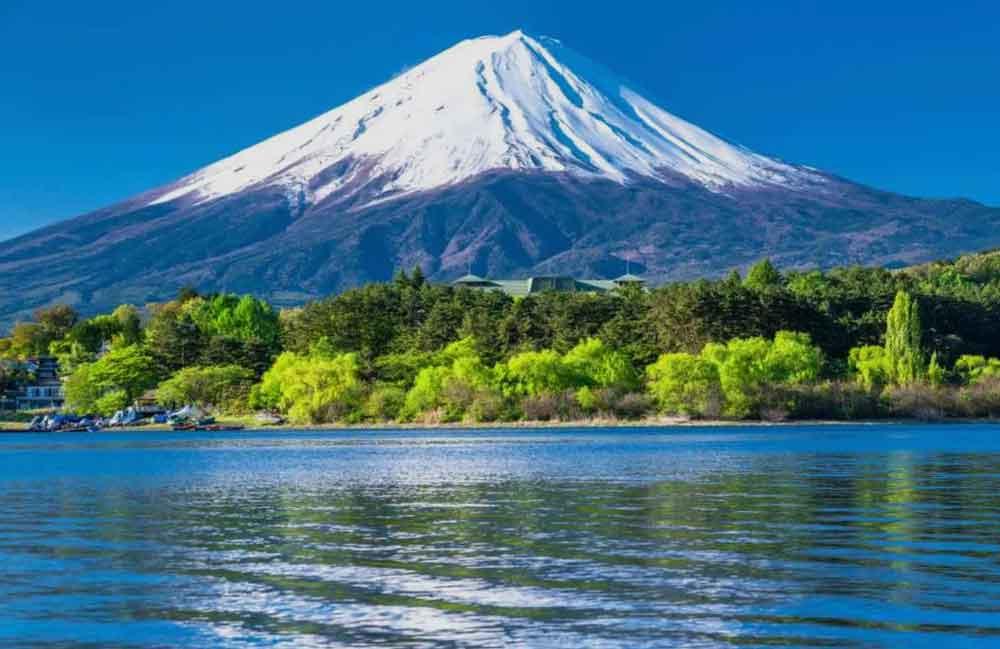
At the northern base of Mount Fuji lie the Fuji Five Lakes, each offering unique views of the mountain’s reflection on calm waters. Early mornings here are magical. Mist rises gently from the lakes while Fuji’s mirrored image shimmers on the surface, doubling its beauty. The surrounding region offers hiking trails, hot springs, and peaceful villages where visitors can experience traditional Japanese hospitality. After a day of exploring, soaking in an outdoor onsen while gazing at Fuji in the distance feels like the perfect ending. The mountain remains ever present, whether you are climbing it or simply admiring it from afar.
One of Fuji’s most captivating qualities is its ability to change with the weather. On some days, it stands bold and clear, dominating the skyline. On others, it hides shyly behind clouds, offering only brief glimpses of its peak. Locals sometimes say that Fuji reveals itself only when it chooses to. This unpredictability adds to its charm. Travelers often wait patiently for clouds to part, cameras ready. When the mountain finally appears, even if only for a few minutes, the moment feels like a reward.
Sunset brings yet another transformation. The white snow at the summit glows pink under fading light, while the sky shifts through soft pastels before deepening into night. As darkness settles, Fuji becomes a quiet silhouette beneath a canopy of stars. Due to its popularity, Mount Fuji faces environmental challenges. Efforts have been made to promote responsible tourism, encouraging climbers to carry their waste down and respect designated paths. Preservation is crucial not only for ecological reasons but also to maintain the mountain’s cultural and spiritual integrity.
In 2013, Mount Fuji was designated a UNESCO World Heritage Site, recognized not just for its natural beauty but also for its cultural significance. This recognition reinforces the idea that Fuji is more than scenery it is a living symbol of Japan’s identity. What makes Mount Fuji unforgettable is not simply its height or symmetry. It is the feeling it creates. Standing in its presence evokes a sense of balance and calm rarely found elsewhere. It reminds you that strength can be graceful, and that stillness can hold immense power.
Whether you climb to its summit or admire it from a quiet lakeshore, Fuji leaves a mark on your memory. It teaches patience through its hidden days and rewards persistence with breathtaking clarity. It stands unchanged while seasons shift, and generations pass a timeless witness to history and humanity. Long after leaving Japan, the image of Mount Fuji often returns unexpectedly: a snowcapped peak against endless sky, serene and unwavering. It is a reminder that somewhere in the world, there exists a mountain that embodies harmony between earth and spirit. In its quiet majesty, Mount Fuji proves that true greatness does not need to shout. It simply stands, steady and elegant, touching the sky while grounding all who gaze upon it.