IN CONVERSATION WITH POOJA BAHRI CO-FOUNDER, ART FOR ART FOUNDATION AND CHAMPA-TREE ART GALLERY.
By: Rishini Weeraratne
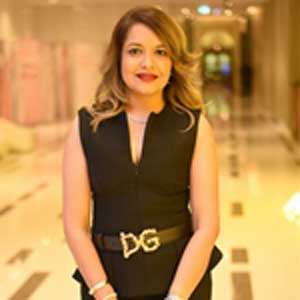
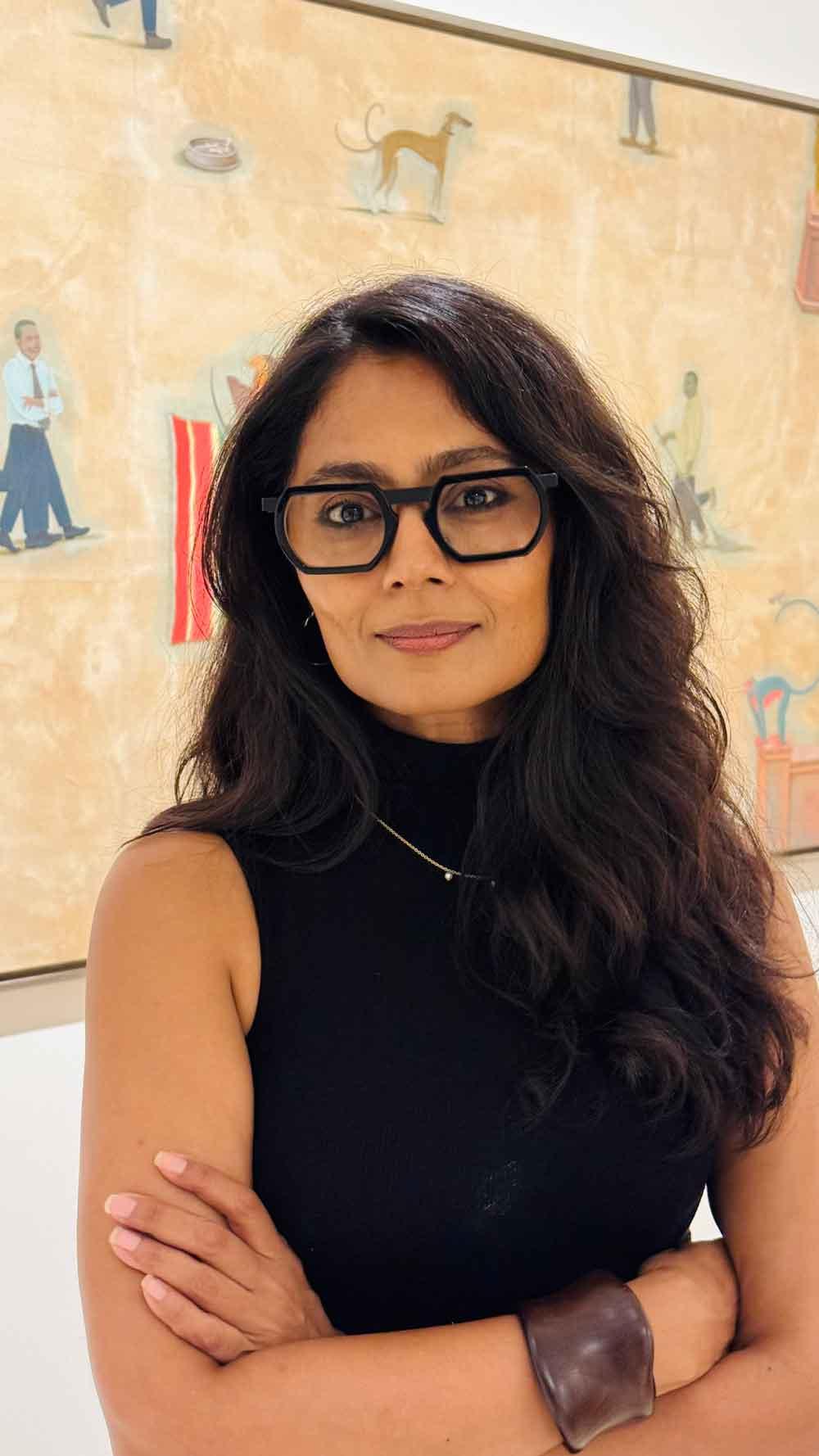
I first met Pooja Bahri at the home of Nonita Kalra in Belgravia on Diwali evening, the 8th of November. Nonita, former Editor in Chief of Harper’s Bazaar India, founding Editor in Chief of Elle India, and now Chief Creative Officer at the Times of India Group, has a remarkable instinct for bringing interesting minds together. Amid the festivities, Pooja and I found ourselves immersed in lively conversation, eventually arranging to meet again during her stay in London. Our next encounter was one late afternoon at Maison Estelle in Mayfair, where coffee turned into hours of fascinating conversation. An accomplished contemporary artist, co-founder of Art For Art Foundation and ChampaTree Art Gallery, mentor, curator and former spokesperson for the Indian National Congress in Delhi, Pooja is a woman of extraordinary intellectual curiosity and conviction. Fiercely independent, spirited and refreshingly candid, she has always lived life on her own terms, while remaining deeply committed to nurturing others.
Pooja, let's begin at the beginning. Tell us about your childhood, your family and the environment in which you grew up. Were you always drawn to art and creativity, or was there a particular moment when you discovered that art was going to become such an important part of your life?
My mother loves telling this story. Apparently, I was so quiet as a child that she actually took me to a doctor! The doctor told her, “don't worry, one day she'll talk so much you won't be able to stop her.” He was quite right, as it turned out! I was born in Delhi into a large joint family of fifteen girls. At six, I went to boarding school in Shimla with my older sister, just eleven months older than me, who was supposed to be my protector. She was the popular, outgoing one. I was quite the opposite. I remember being terribly excited initially, but once that wore off, I was lonely and frightened. I was shy, observant, and had a hundred stories going on in my head. Drawing became my language. I would sit on my bed sketching, copying images and putting drawings up on my cupboard. I soon discovered that art could also make me friends. I drew Goddess Lakshmi and Lord Ganesha for the school Diwali pujas and even made science diagrams for my classmates! Neither of my parents came from an artistic background. My father was in politics, and my mother was a homemaker. Art became my own little world. It was both a safe haven and a space of complete freedom. Even today, when I'm talking to someone, my fingers are constantly moving, almost as though I'm drawing them.
Education often shapes an artist's way of seeing the world. Could you take us through your educational journey, the subjects you studied and the teachers, mentors or experiences that had the greatest influence on your artistic thinking?
Art was always my favourite subject, although becoming an artist was hardly considered a career. I loved literature too, graduating in English Literature from Lady Shri Ram College in 1995. After my son’s birth in 1998, I began painting seriously, entirely self-taught. Mr. Chawla of Chawla Art Gallery encouraged me to exhibit alongside established artists, including M. F. Husain. His faith in me was transformative. Artists such as Paresh Maity and supportive gallerists became my mentors. Yet, after two decades, something felt incomplete. Following the devastating fire that destroyed my home and studio in 2021, I pursued an MFA at Arts University Bournemouth, aged 46. I arrived with a rather confident ‘Madam Know-It-All’ attitude! Instead, I discovered the joy of questioning, experimenting and unlearning, surrounded by wonderfully carefree younger artists. Mr Chawla gave me the confidence to become a professional artist. Bournemouth gave me the freedom to become a student again.
Your journey has taken you from being an artist to becoming a gallery owner and a champion of emerging talent. What were the defining turning points in your career? Was this a journey you consciously planned, or did one opportunity lead organically to another?
I wish I could say there was a grand plan, but there really wasn’t! Most things in my life have happened organically, usually because something captured my imagination. Meeting Archana Sapra in 2004 was a turning point. Trained as an architect, she was working in curating and art advisory, having grown up surrounded by art through her mother, renowned curator Sushma Bahl. We were the same age, our children were growing up together, and we connected instantly. We spent hours discussing art in my studio. We’re complete opposites! I’m the impulsive dreamer, while Archana is wonderfully practical. Her favourite expression is, “Hold on your horses!” We joke that ChampaTree would have gone bankrupt long ago if left entirely to me! In 2011, mentoring two young artists opened our eyes to what encouragement could achieve. Our friend Somu Desai suggested sharing our experience and resources. Art For Art began in a small barsati above my studio, welcoming four artists monthly. ChampaTree came later, entirely Archana’s idea. I resisted initially but realised nurturing talent and sustaining careers required different approaches. Twenty years on, friendship, disagreements, mutual trust and shared convictions remain our greatest strengths. And a little madness, naturally!
Your artistic practice encompasses performance, video, installation and participatory art. How would you describe your artistic language to someone encountering your work for the first time? What are the central ideas, emotions or questions that you hope your work communicates?
I’m curious by nature, rather impulsive, and enjoy not knowing where things might lead. My practice responds to the world around me, particularly questions of patriarchy, ritual, faith and ecology. I rarely begin with a fixed idea. Mine is more practice-based research than research-based practice. I do things first and make sense of them afterwards. Rather like my life! In 2011, my friend Somu Desai travelled from Gujarat to Delhi in a truck. I thought it sounded exciting. When I expressed my enthusiasm, he simply asked, “Why don’t you?” That question inspired Blow Horn, a stop-motion performance in which I became Munna, wearing overalls and a wig, travelling alongside a truck driver who never realised I was a woman. I ate, slept and smoked bidis beside him, while Somu documented everything. I wanted to experience the freedom of being ordinary. Why should being a woman prevent that? My work evolves through curiosity, accidents and unexpected discoveries. Since losing my studio to fire in 2021, I haven’t picked up a paintbrush. Instead, I explore installations, photography, video, writing, coding and AI. I’m happily a novice again! Perfection doesn’t interest me nearly as much as experimentation and the freedom to lose control.
Your work engages with ecology, care, education and low-tech creative methods. Why are these themes important to you? Do you believe that artists today have a responsibility to respond to environmental, social and cultural challenges?
The Yamuna flows close to my Delhi home. For years, I drove past Kalindi Kunj, noticing enormous stretches of white foam floating on the river. During Chhath Puja, I stopped. The stench was overwhelming, yet people were bathing, praying and performing rituals in that polluted water. We worship the Yamuna as a mother yet look what we’ve done to her! That contradiction inspired River of Faith, performances exploring faith, ritual and pollution. Wearing protective clothing, I watched a young man casually bathe in the same water before leaving for work. For me, it was artistic enquiry. For him, everyday life. Confronting that privilege was deeply uncomfortable. My ecological interests have since expanded into technology. I coined Anthrosolix, bringing together humanity, environment and invention. My first experiment, a solar-powered digital publication hosted on a Raspberry Pi server in Delhi, explores mentorship in the arts. Dependent on sunlight, the website occasionally goes offline! Ironically, I used energy-hungry AI to create an ecological experiment. I rather enjoy that contradiction. Art needn’t provide solutions. Sometimes its greatest purpose is to challenge our assumptions, confront uncomfortable truths and encourage us to see familiar things differently.
As someone who is both an artist and a curator of other people's creative expressions, how do you protect your own artistic voice? Is there ever a tension between creating art for yourself and managing the responsibilities of a gallery and foundation?
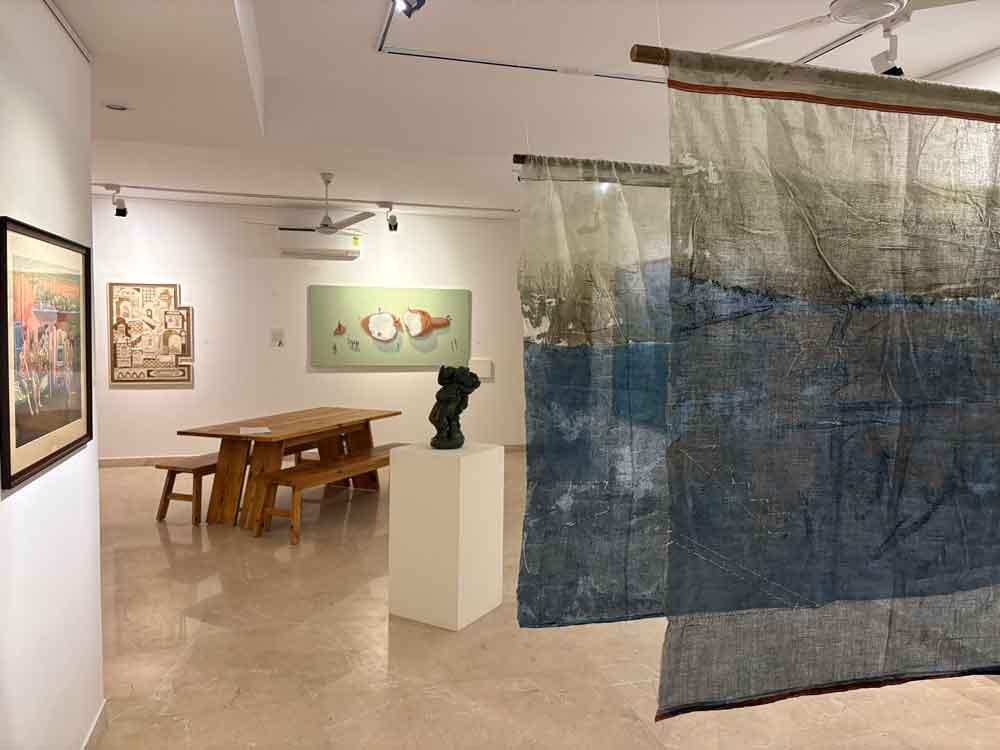
Recently, some artist friends asked, “Pooja, what happened to your art?” Ravi Chunchula, an artist we represent, immediately replied, “now she makes artists!” Quite an ego massage, I must admit! But it made me think. I still create art, although my practice has become more fluid and experimental. Increasingly, I consider research, curation, exhibition design, writing and conversations through A4A and ChampaTree extensions of my creativity. Working with young artists is stimulating. I’m constantly learning, questioning and discovering fresh perspectives. Of course, there’s tension. My personal practice is entirely mine, whereas building institutions demands collaboration, which is also its greatest strength. Residencies in Iceland, curatorial studies in Berlin and experiments with technology continue to nourish my artistic thinking. These roles constantly inform one another, even when competing for my time! I’d certainly welcome more studio time, but I’m equally excited about nurturing artists. Perhaps I’ve simply acquired a rather large extended studio!
Let's talk about ChampaTree Art Gallery. What inspired you to establish or develop the gallery, and what was your original vision? How has that vision evolved as India's contemporary art scene has grown and changed?
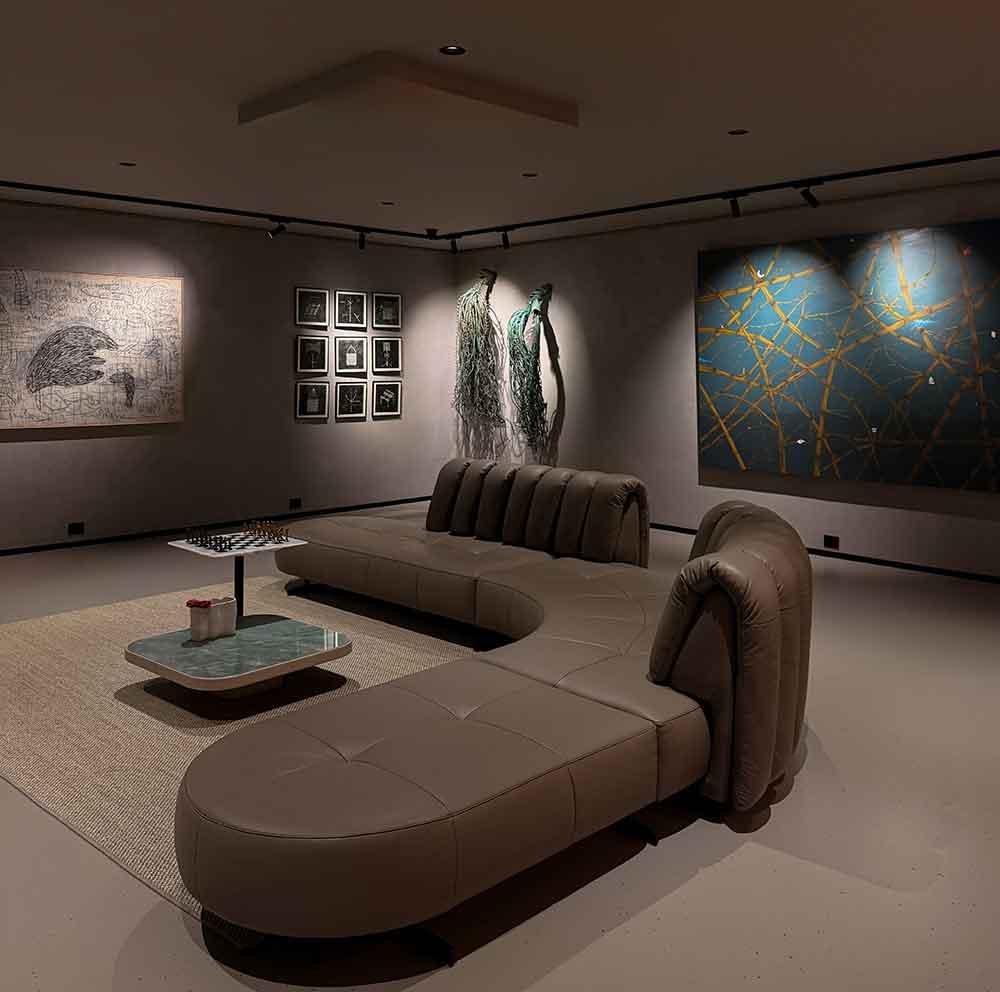
ChampaTree began almost by accident! We were busy running A4A and The Create Studio, our art school, when artists increasingly approached us for financial support and help selling their work. So, we thought, why not establish an online gallery? When the pandemic interrupted our workshops, we transformed our 3,000-square-foot Delhi space into a gallery. What began modestly evolved into a commercial platform championing emerging and mid-career artists. We wanted an accessible, welcoming environment where nobody felt intimidated by the art world. Hyderabad followed organically through a collaboration with ARTYK. Seeing the gallery packed at its opening was wonderful, rather like watching our baby grow up! With spaces in northern and southern India, we’re connecting artists and collectors across regions, creating exciting opportunities for exchange. Now our ambitions extend internationally, through collaborations, art fairs and stronger South Asian connections. But our philosophy remains unchanged. Build meaningful relationships, nurture talent and grow alongside artists, creating opportunities that endure.
ChampaTree works with emerging and mid-career artists, with spaces in New Delhi and Hyderabad. What do you look for when you discover a new artist? Is it technical excellence, originality, courage, storytelling or something less tangible that makes you believe in someone's potential?
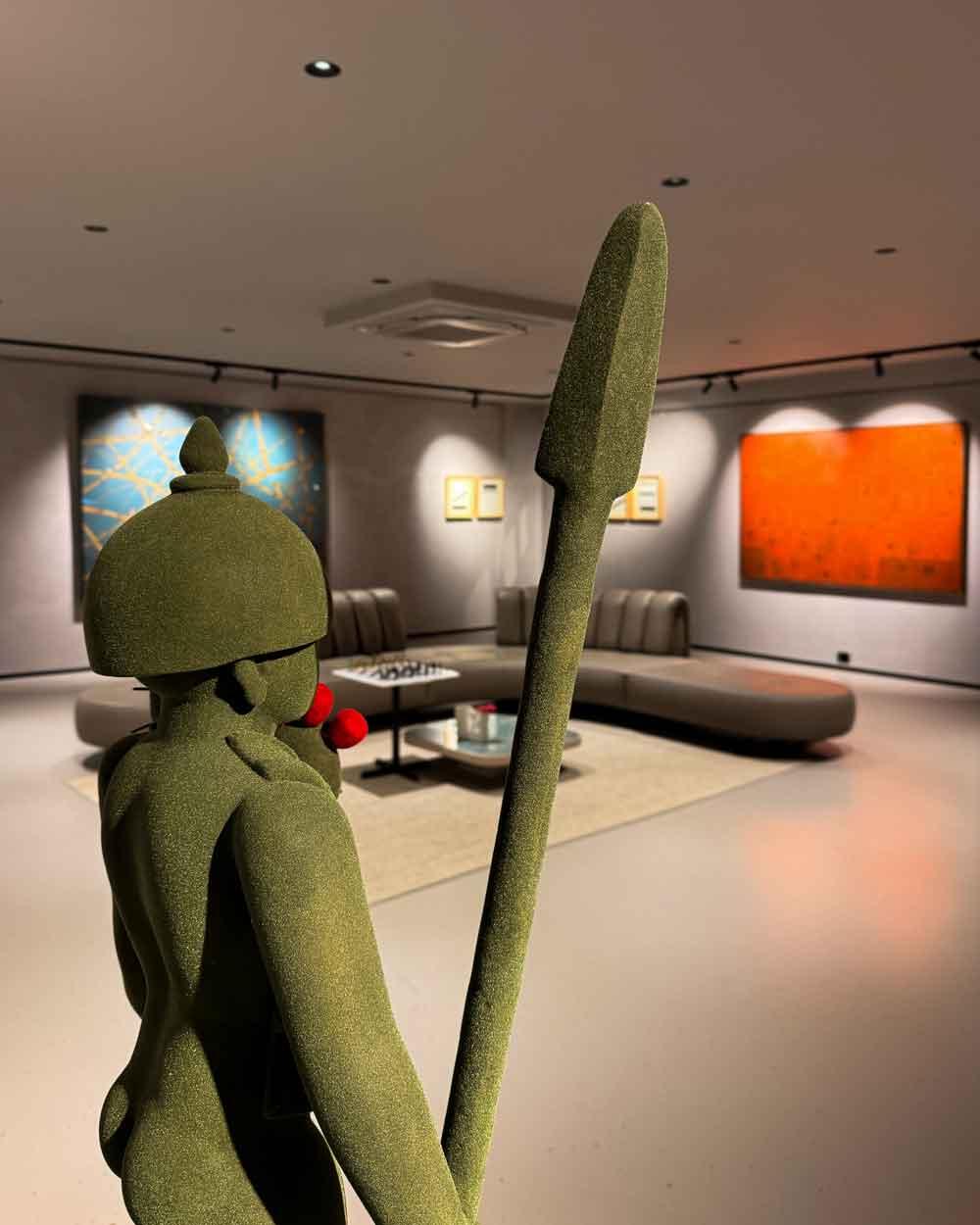
For me, it’s the thinking behind an artwork that matters most. Technical brilliance is wonderful, but I’m drawn to originality, curiosity and the questions an artist explores. Sometimes imperfections make a work more compelling! We regularly visit art colleges, exhibitions and studios, reviewing portfolios and, importantly, talking to artists. You can discover an enormous amount over a cup of tea! ChampaTree currently represents around twenty artists, although our wider community is much larger. Representation goes beyond commercial agreements. It involves mentorship, residencies, fellowships and helping artists build sustainable careers. Importantly, we learn from them too. I particularly admire artists who challenge our thinking, question our advice and occasionally refuse to listen! A little stubbornness can be rather refreshing. Our openings attract young artists alongside established collectors, which I love. ChampaTree should never feel intimidating. Ultimately, representation is a relationship built on mutual trust, shared curiosity and growing together.
Running an art gallery is both a creative and entrepreneurial undertaking. What have been your greatest challenges as a woman working in the art world, and what have been the most satisfying moments when you felt that your efforts were making a real difference?
Surprisingly, I haven’t encountered much gender bias in the gallery world. India has so many women-led galleries that I sometimes joke we need more male gallerists! Our greatest challenge is building a sustainable business without compromising our convictions. Supporting emerging artists requires patience, investment and occasionally taking risks. Opening ChampaTree in Hyderabad was a proud moment. Seeing the gallery packed with artists and collectors felt like watching our baby grow up! But nothing compares to seeing young artists establish successful careers. That’s what truly motivates us. We have ambitious plans for international growth, and plenty more ideas up our sleeves!
You have been involved with Art For Art Foundation, which dates back to 2011. What was the inspiration behind this initiative? Was there a particular gap in the Indian art ecosystem that you wanted to address, especially for young artists who have talent but lack financial resources, connections or opportunities?
I remember two of our earliest artists, Ronak and Pragnesh, from Pardi, a small town in Gujarat. Exceptionally talented but painfully shy, they accompanied me to an exhibition opening at India Habitat Centre. I encouraged them to mingle, enjoy some wine and meet people. The following morning, they confessed, “we didn’t even pick up a glass of wine. Everybody was looking at us!” That stayed with me. Here were gifted young artists who simply felt they didn’t belong. Yet within a month, their confidence and creativity had blossomed.
That’s precisely why we established A4A in 2011. What began in a small barsati has supported over 350 artists through residencies, fellowships and mentorships, with remarkable mentors including Mithu Sen, Gigi Scaria, Atul Bhalla, Pushpamala N and Vibha Galhotra. Our philosophy is simple. For the artists, by the artists. Talent matters, but so do confidence, community and belonging!
Through the foundation's residencies, mentorship, fellowships and collaborative programmes, you help artists develop their practices. Could you share a story about an emerging artist whose journey particularly moved you, or whose growth demonstrated why this work matters so much?
A couple of months ago, we were having lunch with Ravi Chunchula after his solo exhibition in Hyderabad. Ravi had joined our A4A residency in 2013, and after thirteen years, he casually revealed something extraordinary. Back then, he was ready to abandon painting and return to his village. We’d sold one of his large paintings for ₹30,000, and that sale helped convince him to continue. Now he owns a studio and is planning to buy a house! Archana and I just looked at each other. Moments like that remind us why we began. Then there’s Lokanath Pradhan, who came from a village in Odisha, joined our residency, studied at Delhi College of Art and eventually pursued his PhD in China. Watching artists find confidence, build careers and support their families is deeply rewarding. Their achievements are entirely their own. We’re simply grateful to have played a small part in their journeys.
Many talented artists, particularly those from smaller towns, rural communities or less privileged backgrounds, struggle to gain recognition. How can organisations like A4A create more equitable access to the art world? And how important is it to provide not just funding, but also guidance, visibility, confidence and long-term support?
For me, access isn’t simply about offering opportunities. It’s about trusting artists enough to take risks, even when their ideas make you uncomfortable! In 2019, five young artists proposed Scars of Scarcity, exploring water scarcity and environmental degradation. We had a beautiful, 3,000-square-foot gallery in Greater Kailash. So naturally, we brought in ten truckloads of mud! The artists transformed it into an immersive landscape of sludge, mud and polluted Yamuna water. Visitors encountered a dispenser containing untreated river water they couldn’t drink. It was messy, unsettling and utterly unconventional. But we believed in their vision. That’s mentorship. Standing behind artists, not merely advising them. We also help artists develop practical skills through masterclasses, portfolio guidance and professional mentorship. Online residencies now connect artists in smaller towns with established practitioners. Opening doors isn’t enough. Artists need confidence and freedom to walk through them, occasionally bringing ten truckloads of mud along!
South Asia has an extraordinarily rich artistic heritage, yet artists across India, Sri Lanka, Bangladesh, Nepal and Pakistan often work in relatively separate cultural ecosystems. Do you see an opportunity to create stronger artistic connections across the region? What role could ChampaTree and A4A play in building these bridges?
I have a love-hate relationship with the term Global South. It creates visibility and opportunities but also places artists in another box. Aren’t we supposed to be breaking boundaries? South Asian countries share histories, rituals, cultural memories and social concerns, yet we know surprisingly little about contemporary artists across our borders. We want to change that. A4A has spent fifteen years bridging arts education and professional practice, while ChampaTree brings exhibitions, collectors and commercial sustainability into the conversation. We’re now collaborating with The Alternative Art School, founded by Nato Thompson and Eden Imrie. For 2027, we’re developing a year-long programme for up to ten Indian Artist Fellows, alongside a curatorial fellowship, connecting them with international mentors and peers. Ultimately, I envision a genuinely collaborative South Asian platform, where artists and institutions from every participating country have an equal voice. Nobody can do everything alone, and why should we?
Sri Lanka, in particular, has a vibrant contemporary art community, with artists exploring identity, memory, heritage, conflict, nature and social change. Have you had opportunities to engage with Sri Lankan artists, and are you considering collaborations, exchange programmes, joint exhibitions or artist residencies between India and Sri Lanka?
I’ve visited Sri Lanka, although my last trip was for my sister’s fiftieth birthday, so art research wasn’t exactly the priority! I’ve encountered Sri Lankan artists in Delhi but haven’t yet explored the contemporary art scene there deeply. That’s precisely what excites me. We’d love to develop reciprocal residencies, mentorships, fellowships and exhibitions, bringing Sri Lankan artists to India and Indian artists to Sri Lanka. Eventually, perhaps we could present their work together at international art fairs. But I’d rather begin with genuine conversations than arrive with a grand plan. And who knows? Perhaps this interview will open those doors!
Looking ahead, imagine creating a South Asian artistic platform bringing together emerging artists from India, Sri Lanka and neighbouring countries. What would your dream project look like? How could such a collaboration encourage cultural understanding while also providing practical opportunities for artists to exhibit, travel, learn and access international markets?
I’d love to begin with a meaningful exchange residency, not just a few workshops and everyone swapping business cards! Imagine Indian and Sri Lankan artists spending a month together in Delhi, researching, experimenting and working with mentors, followed by another month in Sri Lanka. Different generations, disciplines and perspectives coming together.
The unexpected conversations could be fascinating! A4A could jointly develop the programme with a Sri Lankan institution, culminating in exhibitions at ChampaTree in Delhi and a partner gallery in Sri Lanka. Our foundation encourages experimentation, while the gallery connects artists with audiences, collectors and international opportunities. But two exhibitions wouldn’t be the finish line. We want lasting relationships, future fellowships and genuine artistic exchange. Crucially, both countries must shape the programme equally. We’re not arriving with a ready-made blueprint! It’s ambitious, certainly, but I’d rather build one meaningful partnership than make grand declarations about connecting South Asia.
Pooja, what inspired you to enter politics with the Indian National Congress, and what did the experience teach you about leadership and public service? Why did you eventually step away, and did you feel you could make a greater difference through art and philanthropy?
Coming from a political family, politics was always discussed at home. Of my three sisters, I was the one drawn to campaigning, communication and research. I began helping my father before joining the Indian National Congress, eventually becoming a Delhi spokesperson and heading research. I contributed to election manifestos, including working with Dr. Shashi Tharoor on arts, culture and environmental policy. Remember the painfully shy little girl whose mother took her to a doctor? She was now holding press conferences! The doctor was right after all! Politics taught me how narratives, language and perceptions shape public opinion. Fascinating stuff! I didn’t leave out of disillusionment. Family responsibilities, financial realities and my longing for art all played a part. I also preferred research to public speaking. Through A4A, I could see tangible, lasting change in artists’ lives. Politics still fascinates me, but ultimately, I chose my first love, art.
You are also a mother. Tell us about your children and family life. How has motherhood influenced your creativity, your ambitions and your understanding of care and responsibility? Have your children inherited your artistic interests, or have they chosen very different paths?
I married young and became a mother early. In India, women are often defined as someone’s daughter, wife or mother. Art gave me an identity entirely my own. In my studio, I was simply Pooja. Our home resembles a little museum! Vedant loves cooking, while Devina has an eye for photography. Once, Vedant saw me wearing a wig and overalls for my performance Blow Horn and asked, “why can’t you be like other moms?” Years later, Devina became the mother when I nearly abandoned my MFA at Bournemouth. “Mum, you’ll regret this,” she insisted. She even offered university survival tips. Drink cheap beer don’t judge drunken classmates and stop mothering everyone! Of course, motherhood meant juggling residencies, travel and school holidays. Now Vedant proudly explains our artworks to his friends. I spent years introducing my children to my world, never imagining they’d teach me how to navigate theirs!
You have achieved international recognition, including a Gold Medal for Video Art at the Florence Biennale in 2011, and have spent years supporting other artists. When you look back at your journey, what achievement gives you the greatest personal satisfaction? And is there a dream, either artistic or philanthropic, that you have yet to fulfil?
Winning the Gold Medal for Video Art at the Florence Biennale in 2011 for Maaya was completely unexpected! Archana was there, and we celebrated enthusiastically. Back in India, there were newspaper stories, parties and sudden attention. I loved every minute! But my greatest personal achievement was completing my MFA at Bournemouth. After twenty years as an artist, becoming a beginner again was humbling, frustrating and wonderfully liberating. No familiar studio, assistants or reputation to rely on. Just me, my ideas and plenty of self-doubt. I nearly gave up several times. Florence was recognition from the world. Bournemouth was something I proved to myself. My unfinished dream? A studio where I can paint, write, code, make films and experiment without commercial pressures. Once a week, I’d invite young artists over, cook, debate art and politics, and exchange ideas. A little solitude, a little chaos and endless curiosity. Perfect!
When you look ten years into the future, what legacy would you like to leave behind? Would you most like to be remembered for the art you created, the artists you helped discover, the institutions you built, or the cultural bridges you established? And what message would you give to young women and emerging artists across South Asia who are just beginning their journeys?
I’m not particularly concerned about being remembered for one achievement. I’d rather see what we’ve created continue growing, perhaps in ways we haven’t imagined! My dream is for A4A to become an independent institution, nurturing artists across generations and borders. Alongside ChampaTree, I envision a South Asian network connecting artists from India, Sri Lanka, Bangladesh, Nepal, Pakistan and beyond, creating opportunities through residencies, fellowships and international collaborations. Personally, I hope I’m still creating, questioning, learning and occasionally doing something unexpected! My advice to young women? Be patient, remain curious and never allow circumstances to define you. When fire destroyed my home and studio in 2021, everything disappeared in eleven minutes. I narrowly escaped with my life. Afterwards, I kept wondering why I had survived. Surely there was more I was meant to do. Life rarely follows a plan. Don’t be afraid to begin again. I certainly wasn’t!