BEYOND THE DRAWING BOARD
By: Thasmina Sookoor
Consider three rather different creative challenges. The first involves taking a familiar garment and finding ways to make it appealing to a new generation of wearers. The second begins with an aluminium drink can that has already served its original purpose. The third requires developing digital lettering capable of accommodating the complexities of Sri Lanka's languages. Each demands a different kind of expertise. One requires an understanding of fabric, construction and the human body. Another involves investigating the physical properties and potential value of a discarded material. The third brings together visual judgement, language and software. All three will find a place within the Sri Lanka Design Festival's exhibition programme this November. For visitors accustomed to associating design primarily with attractive finished objects, these presentations offer an opportunity to investigate the work involved in producing them. They also introduce a professional landscape considerably more varied than it might initially appear. A designer may spend much of the working day developing technical solutions rather than drawing. An independent creative business must consider production costs, customer expectations and distribution. A specialist studio might devote years to refining a relatively narrow area of expertise. At Shoppes at Cinnamon Life and other participating venues, the festival will bring examples of these different approaches together. What makes the collection particularly interesting is the opportunity to encounter creative work at several stages of development, from the experiments of recent graduates to projects undertaken by established practitioners and manufacturers.
BEFORE THE FIRST BIG BREAK
There is something exciting about encountering a designer's work before it becomes associated with a recognisable commercial identity. At this stage, ideas may be unusually ambitious. Materials can be approached without the expectations that accompany an established collection, and the outcome of an investigation may be less predictable. The AOD Emerging Designer Exhibition brings together work across fashion, textiles, interiors, visual communication and animation. For visitors, the exhibition provides an opportunity to encounter the interests and concerns of individuals preparing to enter professional practice. For prospective employers, it offers a different way of identifying talent. A conventional job application can communicate qualifications and technical experience, but a creative project reveals something about how its author approaches a problem. What has the designer chosen to investigate? Which aspects of the subject have received particular attention? How effectively has an initial idea been developed into something that communicates with an audience? These questions are worth considering when exploring graduate work. The exhibition also provides a useful opportunity to observe the differences between creative disciplines. A textile designer may investigate the relationship between materials, texture and construction. A visual communication project might concentrate on how information can be understood. An animation project introduces the additional considerations of movement, sequence and time. Interior design brings together spatial requirements, material choices and the behaviour of people occupying an environment. Although the disciplines require distinct technical skills, the process of developing a project often involves similar stages of investigation, experimentation and refinement. Visitors interested in pursuing creative education may find the exhibition particularly useful. Seeing the range of work produced by graduates can offer a clearer understanding of the possibilities available within a discipline than its name alone might suggest.
THE SMALL GARMENT WITH BIG POSSIBILITIES
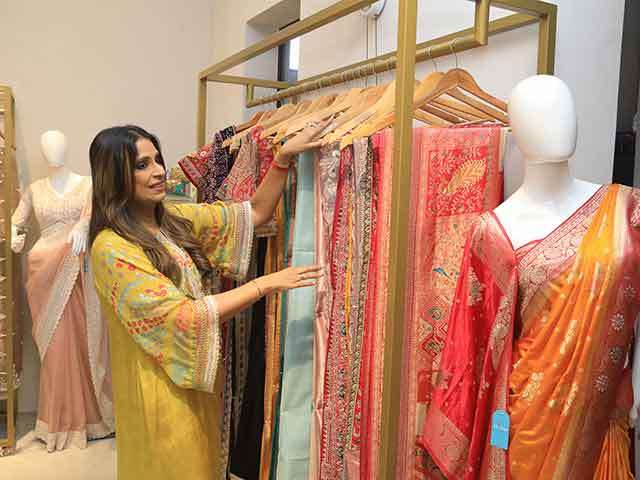
When discussing a saree, attention often gravitates towards its fabric, colour and drape. The jacket tends to receive less consideration, despite its considerable influence on the appearance and comfort of the complete ensemble. The Saree Jackets exhibition places this smaller garment at the centre of the discussion. There are numerous decisions involved in designing a successful jacket. Its neckline can determine how jewellery sits against the body. Sleeve length changes the proportions of the outfit. Construction influences movement, while fabric selection affects comfort and appearance. The same saree can acquire a noticeably different character when worn with another jacket. For contemporary designers, the garment offers a particularly interesting balance between familiarity and freedom. Its cultural associations are well established, but there is considerable room for individual interpretation within its construction. A designer might concentrate on a distinctive silhouette, investigate the possibilities of an unusual textile or reconsider how a jacket can be incorporated into a contemporary wardrobe. These decisions have practical commercial implications. Customers may wish to retain the cultural significance of wearing a saree while finding ways to express their personal preferences. An independently designed jacket can offer opportunities for individuality without requiring an entirely new garment collection. For fashion entrepreneurs, working within a recognisable category presents its own challenges. A product must remain sufficiently familiar to be understood by potential customers while possessing qualities that distinguish it from existing alternatives. The exhibition offers visitors an opportunity to examine how different designers negotiate that balance. It is also a reminder of the expertise contained within relatively small garments. The precision of a seam, the placement of a fastening and the relationship between different fabrics can determine whether a design succeeds when worn.
TWENTY-FIVE YEARS AND MANY DIFFERENT CAREERS
The AOD Alumni Exhibition marks the institution's 25th anniversary through a presentation of work developed by its graduates. Located on the eighth floor of Shoppes at Cinnamon Life, the exhibition will feature projects and products spanning graphic design, interiors, fashion and animation. Visitors will also have opportunities to meet alumni. This aspect of the exhibition is particularly valuable because the experience of establishing a creative career can be difficult to understand through finished work alone. Graduation introduces a new set of circumstances. A project developed within an educational environment may be assessed through the strength of its concept, research and execution. Professional work introduces additional considerations, including client expectations, deadlines, budgets and the requirements of production. For graduates establishing independent practices, there are further responsibilities. Pricing a service, communicating with customers and maintaining a consistent flow of work can occupy a considerable proportion of the working week. The alumni exhibition provides an opportunity to encounter the outcomes of careers that have developed under these different circumstances. Some practitioners establish studios. Others pursue specialist areas of design that require additional technical education or research. Product-based businesses must develop expertise in production and sales alongside their creative capabilities. The variety of professional directions represented is worth examining, particularly for younger visitors considering creative careers. One of the festival's most interesting examples of specialisation can be found in a field that influences everyday communication while attracting relatively little public attention.
PATHUM EGODAWATTA AND THE BUSINESS OF LETTERS
The typeface used to display a message can influence how easily it is read, how information is organised and the impression created by the organisation communicating it. Yet the people responsible for developing typefaces remain largely unfamiliar to the audiences who encounter their work. For AOD alumnus Pathum Egodawatta, typography became the foundation of a specialist creative practice. Following his education at AOD, he pursued postgraduate studies in typeface design at the University of Reading. His work encompasses type design, font engineering and research. Through his involvement with Colombo-based studio and type foundry Mooniak, and as co-founder of Akuru Collective, Egodawatta has explored the relationship between Sri Lankan languages and the technologies through which they are communicated. The festival's Akurugraphy exhibition provides an opportunity to encounter this work in greater depth. Presented through a special experience in collaboration with the Bawa Trust, the exhibition brings together original typefaces, archival material and open-source software, representing a decade of exploration. For audiences unfamiliar with the technical requirements of font development, the subject can be surprisingly complex. Creating a typeface involves considerably more than producing a collection of individually attractive letters. Characters must function together. Their proportions, spacing and visual weight influence the readability of words and passages. The system must accommodate different combinations of characters while maintaining consistency. Digital environments introduce additional requirements. A font may need to function across different applications, devices and display sizes. Its technical development must account for the writing system it represents. In a multilingual country such as Sri Lanka, working across Sinhala, Tamil and English introduces further considerations. Each script has its own visual characteristics and technical requirements. Developing functional digital typography demands an understanding of those differences rather than simply applying the same visual treatment across languages. Akurugraphy offers visitors a chance to appreciate these decisions through the work of practitioners who have devoted considerable attention to them. It is a compelling example of how a creative career can develop around an area of highly specialised knowledge.
THE SECOND LIFE OF AN ALUMINIUM CAN
What determines the value of an empty drink can? Once its contents have been consumed, its commercial identity changes. The object that previously contained a branded beverage becomes a quantity of recoverable material. Within Sri Lanka's informal recycling economy, collecting and trading discarded aluminium already provides economic activity. Rewoven, Cans in Motion investigates whether design could introduce additional value into that process. The project explores weaving aluminium into square forms, transforming the material through a different method of construction. Its significance lies partly in the questions it raises about the relationship between material experimentation and existing livelihoods. Recycling initiatives frequently concentrate on the environmental advantages of recovering waste. For those involved in collection, however, the economic value of the material is an equally important consideration. If an alternative process creates a more valuable product, who performs the additional work? What skills and equipment are required? Can the resulting value benefit the people already involved in recovering the material? These are important questions for any project seeking to develop a commercially meaningful approach to upcycling. A successful experiment within an exhibition environment does not automatically establish a viable production process.
The amount of labour required, the consistency of available materials and the suitability of the finished product must also be considered. Nevertheless, material experimentation provides an essential starting point. The accompanying Cans Rewoven workshop, inspired by the AOD and Lion Foundation upcycling initiative, will allow participants to explore the subject through practical activity. Working directly with a material often reveals considerations that are difficult to appreciate when viewing a completed object. Its resistance, flexibility and response to different forms of manipulation influence the possibilities available to the designer. The workshop offers an opportunity to discover something of that process.
FINDING VALUE IN FABRIC
Textile waste presents another interesting challenge because discarded fabric can vary considerably in size, condition, composition and appearance. For a manufacturer, small remnants may have limited usefulness within an established production system. For a designer working at a different scale, those same pieces can provide material for experimentation. The Upcycling Fabric workshop introduces participants to alternative uses for overlooked textiles. It is an accessible opportunity to consider how material availability can influence creative decisions. Rather than beginning with a predetermined design and purchasing the required fabric, a participant working with existing remnants may need to develop an idea around the material at hand. The dimensions of individual pieces, their colours and their physical properties can all inform the outcome. This reversal of the conventional process can produce unexpected results. It also introduces a useful consideration for designers interested in developing products through recovered materials. Consistency may be difficult to achieve when the available supply changes, making adaptability an important part of the creative approach. For visitors who enjoy sewing, making or experimenting with materials, the workshop provides an opportunity to approach familiar resources from a different direction.
LONALI RODRIGO AND THE QUESTIONS BEHIND WASTE
Environmental design becomes particularly interesting when creative experimentation is considered alongside the systems through which materials are obtained. House of Lonali founder Lonali Rodrigo brings an entrepreneurial perspective to this subject through Beneath the Surface, Transforming Waste into Design. She will participate in a discussion alongside Lanka Environment Fund Executive Director Vinod Malwatte and artist and environmental advocate Dilsiri Welikala. Rodrigo also serves as Project Lead for Cohort 1 of the Hyacinthesis Accelerator Programme. The session is structured around two short documentaries. The Monster's Cave, developed by Welikala and director Mahinda Abeysinghe, examines environmental accountability. Harnessing the Power of Water Hyacinth, A Sri Lankan Story investigates the potential of an invasive aquatic plant as a resource for livelihoods and ecological restoration. The two subjects introduce different considerations. Waste management raises questions about responsibility, consumption and the systems through which discarded materials are handled. Working with an invasive plant introduces the possibility of developing a useful material from an environmental problem. In both instances, the relationship between creative intervention and environmental benefit deserves careful examination. A product made from recovered material may attract customers through its appearance or environmental associations. Its wider contribution, however, depends on factors including the sourcing process, production requirements and the eventual use of the finished object. The documentaries provide a starting point for discussing these considerations with individuals approaching the subject through environmental advocacy, enterprise and conservation.
For audiences interested in sustainable fashion, product development or environmental filmmaking, the session brings several perspectives into the same conversation.
WHEN A GOOD IDEA HAS TO BECOME A REAL PRODUCT
Developing a successful prototype is an important achievement. Producing that object repeatedly, at an appropriate cost and with consistent quality, presents a different challenge. The festival's collaboration with Phoenix introduces the practical relationship between design and commercial manufacturing. Established manufacturers operate within systems shaped by equipment, available materials, production schedules and customer expectations. A proposed design must accommodate those circumstances if it is to move successfully into production. Even relatively small alterations can have significant consequences. Changing the dimensions of an object may affect how it is manufactured, packaged or transported. Selecting a different material can influence its durability, weight and cost. A feature that appears attractive in an exhibition prototype may prove difficult to reproduce efficiently. Conversely, an apparently modest adjustment can improve the experience of using an everyday product. These considerations explain why collaboration between designers and manufacturers can be valuable. Designers bring attention to the relationship between an object and the person using it. Manufacturers contribute knowledge of the processes required to produce it reliably. The strongest outcomes often depend on both areas of expertise informing the development process. For visitors interested in product design, the Phoenix collaboration provides an opportunity to consider the commercial circumstances behind the objects encountered in everyday life.
OBJECTS, SURFACES AND IMMERSIVE EXPERIENCES
Several additional exhibitions extend the programme into different areas of creative practice. Vessels, Urban Island, Textures and The Projection Room offer visitors further opportunities to encounter objects, spatial presentations and digital media. Experiencing these different formats within the same programme allows for an interesting comparison. A physical object can invite attention through its proportions, material and surface. A spatial presentation may influence the way visitors move through an environment. Digital media introduces the possibility of changing visual experiences over time. Each requires decisions about how an audience will encounter the work. Exhibitions also offer a useful setting in which to spend time with creative projects outside their usual commercial or functional contexts. A visitor may notice aspects of construction or presentation that would receive little attention when encountered during ordinary use. For those interested in several creative disciplines, exploring the exhibition programme without restricting oneself to a familiar field could prove particularly rewarding.
WHEN A BUILDING BECOMES A CANVAS
Composer and educator Shannon Jacob and Marlon Jesudason will introduce another form of creative collaboration through When Sound Meets Space. Their discussion examines the Independence Arcade Mapping project, which combines music, moving imagery and projection mapping. The relationship between these elements presents an interesting creative challenge. A musical composition develops through time. Moving imagery introduces another sequence of changes. An architectural surface provides the physical framework within which the visual experience takes place. Bringing these components together requires attention to how they influence one another.
The proportions and features of a building can inform the arrangement of projected imagery. Musical decisions can influence the pace and emotional character of the experience. The collaboration provides an example of creative work that requires practitioners from different disciplines to develop a shared understanding of the intended outcome. For audiences interested in music, animation or digital art, the session offers an opportunity to consider the processes involved in producing experiences that cannot be attributed to a single medium.
SHOPPING WITH A LITTLE MORE CURIOSITY
There is a particular pleasure in discovering an object that does not appear in every shop. Perhaps it is a limited-edition print that captures something personally meaningful, a piece of homeware with an unusual finish or a carefully made item of stationery. The Design Market, located on the eighth floor of Shoppes at Cinnamon Life, brings together independent brands and makers working across a variety of product categories. Visitors can expect homeware, handcrafted objects, contemporary products, art prints, photography, sculpture and stationery. The opportunity to encounter independent creative businesses gives the marketplace a different character from conventional retail environments. For customers, it can provide a chance to learn more about the thinking behind a purchase. A conversation with a maker may reveal why a particular material was selected or how an object was developed. Understanding these decisions can add considerably to the pleasure of owning it. For businesses, direct contact with customers can provide valuable information. An independent maker may have limited opportunities to observe how people respond to a collection. A marketplace allows customers to compare products, ask questions and express preferences. These encounters can inform future decisions about product development, pricing and presentation. The market also offers a relatively accessible starting point for anyone interested in collecting contemporary Sri Lankan creative work. A print, photograph or small sculptural object can introduce a new artist or designer into one's home without requiring the commitment associated with purchasing a larger piece. For visitors looking ahead to the festive season, the timing provides an opportunity to discover gifts with individual character while supporting local creative businesses.
A GALLERY ON THREE WHEELS
The exhibition programme will extend into Colombo's streets through Design on the Move. Three-wheelers featuring artwork by AOD students will become travelling expressions of creative practice. The choice of vehicle is particularly appropriate because three-wheelers already possess a strong visual presence within the capital. Their owners frequently personalise them, introducing individual preferences into an otherwise recognisable form of transport. Designing artwork for a moving vehicle presents different considerations from developing an image intended for a gallery wall. The work will be encountered from different angles and distances, often briefly. Its relationship with the shape of the vehicle becomes an important part of the composition. The initiative provides students with an opportunity to introduce their work into an environment where audiences may encounter it unexpectedly. It also offers a lively departure from the conventional exhibition format.
THE WORK BEHIND WHAT WE SEE
A visitor could easily spend several hours moving between the festival's exhibitions without considering how differently the practitioners represented spend their working days.
The development of a digital typeface bears little resemblance to the construction of a garment. A material researcher faces challenges distinct from those encountered by a manufacturer. An independent artist selling prints must make decisions that may never arise within a collaborative architectural projection project. That variety is one of the most interesting qualities of the programme. It offers younger audiences an opportunity to discover professional directions they may not previously have considered. It allows businesses to encounter creative expertise that could prove relevant to their operations. For everyone else, it provides the simple pleasure of discovering how things are made and meeting some of the people responsible for making them. The finished object may be what initially attracts attention. The story of how it came into existence is often what makes it worth remembering.
The AOD Alumni Exhibition and Design Market will be open from 10.00 am to 6.00 pm from 27th to 29th November on the eighth floor of Shoppes at Cinnamon Life. Further exhibition and workshop information is available at: www.srilankadesignfestival.lk