El Niño Has Arrived. Is Sri Lanka Ready?
GROUND TRUTH | BY DAMINTHA GUNASEKERA
On June 11, 2026, the United States National Oceanic and Atmospheric Administration confirmed El Niño has officially arrived, with a 63% chance of becoming a Super El Niño, potentially the strongest since 1877. Climate experts in Sri Lanka say severe local impact is unlikely, and significant effects may only emerge after February 2027. The President chaired a high-level meeting at the Presidential Secretariat this week to review potential impacts on food security, water, agriculture and power generation. So far, so reassuring. But the question this column is asking is different. It is not whether El Niño will be catastrophic. It is whether Sri Lanka's existing structural vulnerabilities mean that even a moderate El Niño, with hotter temperatures and below-normal rainfall expected in July and August, carries risks that a more resilient system would absorb comfortably. The evidence suggests it does.
What El Niño Does to South Asia
El Niño works by shifting where heat and rainfall concentrate across the tropics. Trade winds in the Pacific weaken, warm waters move eastward, and the ripple effects redistribute rainfall patterns across the globe.
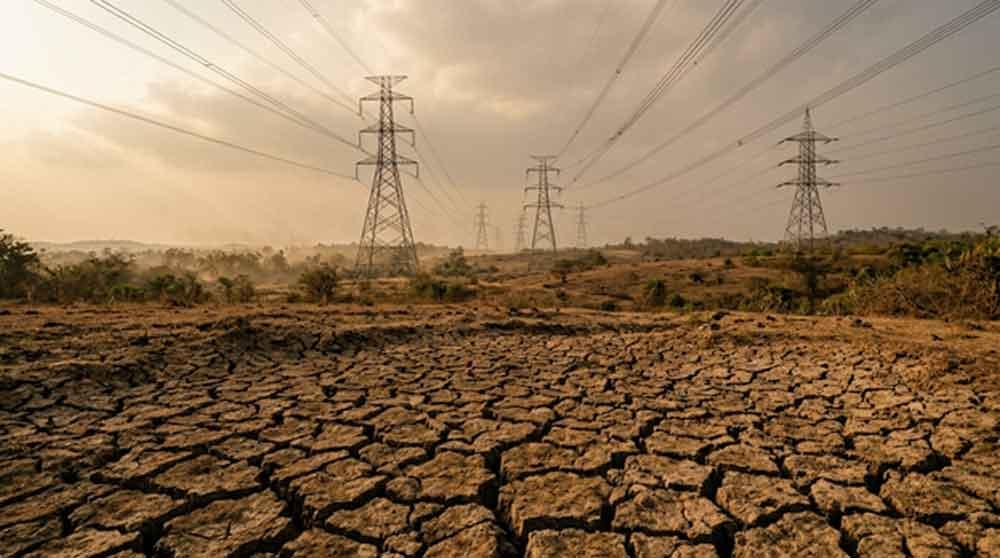
For South Asia, the consistent historical pattern is weaker monsoon pulses, less reliable rain over India, Bangladesh and Nepal, pressure on Himalayan-fed rivers, hotter cities, drier soil, and more strain on irrigation systems that millions of farmers depend on. South Asia is entering this period already weakened. The Iran war has disrupted global fertilizer supply chains, and farmers from India to Bangladesh to Sri Lanka have spent months dealing with price shocks and supply constraints. A drought now would not hit a healthy agricultural sector, it would hit one that is already struggling. The combination of a fertilizer shortage and drought stress does not produce two separate manageable problems, it produces one significantly larger problem.
The Second Warning Light: Energy
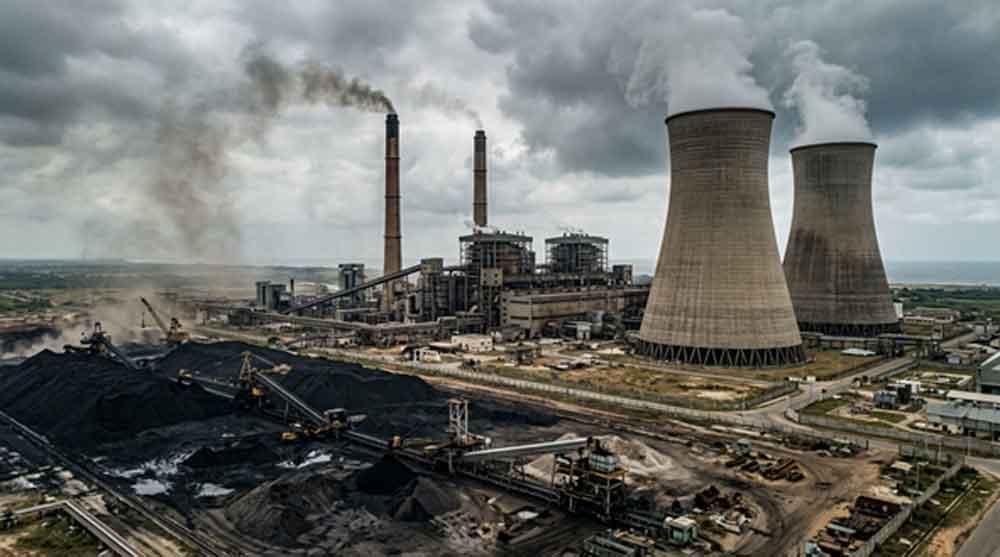
Sri Lanka's energy system has a structural vulnerability that every government has known about for decades and none has adequately addressed. Hydropower, dependent entirely on rainfall in the central highlands, can supply up to 45% of the country's electricity in a good water year. When the monsoon underperforms, reservoir levels drop, and the Ceylon Electricity Board compensates with thermal generation, which means coal and diesel; both imported, both expensive and both exposed to global fuel prices already elevated by the Iran war. This makes the Lakvijaya coal plant at Norochcholai extremely important. It supplies roughly 30-40% of the national grid on its own. And right now, Norochcholai is in the middle of a serious procurement crisis. A Special Audit Report covering the 2025-2026 procurement cycle has exposed systemic procurement failures in the coal supply contract. Substandard coal was procured through a tender process the audit characterizes as having multiple irregularities and highly questionable practices. Over 55,000 metric tonnes of rejected coal have been offloaded at the plant, triggering fires within the plant's machinery and forcing emergency shutdowns. The Auditor General estimates a direct loss of Rs.2.2 billion, while a PUCSL investigation found total losses from nine substandard shipments at Rs.8.5 billion. Opposition MPs cite projected losses exceeding Rs.100 billion, a figure the government has not accepted.
The practical consequence is that the grid may be forced to rely more heavily on diesel generation from other plants to compensate, at a moment when global fuel prices are already elevated.
The Convergence Being Discussed, But Not Yet Resolved
The President's meeting this week covered food security, water supplies, agriculture and power generation, which is the right agenda. But what emerged was a discussion of El Niño as a weather event, not as a stress test on systems already under pressure from several other directions simultaneously. What is not happening, at least not visibly, is anyone connecting El Niño risk to those specific concurrent vulnerabilities.
Here is what that convergence looks like in full. Drought conditions weaken hydropower. A coal plant already compromised by a procurement scandal cannot reliably compensate. Diesel generation fills the gap at elevated global prices. Electricity tariffs, already raised 15% on June 12th under the IMF's cost-reflective pricing requirement with the full burden falling directly on households, absorb further upward pressure. And a sixth element was disclosed at the Committee on Public Finance last week: CPC officials confirmed that government fuel subsidies are scheduled to end this month. The President acknowledged on May 13th that the government is subsidising approximately Rs.100 per litre of diesel to keep the pump price at Rs.392 against an actual cost of Rs.720, and that this cannot continue. When the subsidy ends, the pump price rises. When the pump price rises, transport costs rise.
When transport costs rise, the price of vegetables, food and essentials follows. Sri Lankan households lived this in 2022. And sitting beneath all of this, farmers already short on fertilizer face drought stress on top. Not one of these elements is speculation. Not one is secret. What is missing is anyone treating them as one story rather than six separate ones.
The Pattern That Keeps Repeating
Sri Lanka has been through energy crises driven by exactly this kind of hydropower-thermal dependency before. The 2016 and 2017 drought periods produced electricity shortfalls, emergency thermal generation, and significant financial strain on the CEB. The dynamic is not new. The vulnerability has been identified, reported on, and acknowledged repeatedly. What changes with this cycle is the starting position, and how much more exposed Sri Lanka is entering it. That exposure could have been reduced. Sri Lanka has the renewable energy resources to meaningfully reduce its dependence on both hydropower and imported fossil fuels, with offshore wind potential alone estimated at 56 gigawatts. Instead, the current government's record has moved in the opposite direction. The 484-megawatt Adani wind project was withdrawn after years of NPP opposition. A further 43 renewable energy projects remain stalled with no approvals. In April 2026 the CEB directed over 300 megawatts of existing rooftop solar capacity to shut down, while ground-mounted solar, wind, and even mini-hydro projects have faced curtailment without compensation for months. Every megawatt curtailed or delayed is a megawatt of fossil fuel dependence retained, and a megawatt of vulnerability to exactly the kind of moment Sri Lanka now faces.
What Preparation Would Actually Look Like
Acknowledging a risk publicly is not the same as planning for it. Sri Lanka's energy and economic authorities should be able to answer several specific questions now. What are the current reservoir levels and at what point does the CEB activate emergency thermal protocols? What is the coal stock position at Norochcholai and what is the contingency if disruption worsens? What is the fiscal cost to the state if diesel generation covers base load through a sustained period of below-normal rainfall? And if fuel subsidies end this month, what is the plan to protect the most vulnerable households from the price cascade that follows? These are not difficult questions. They are the questions competent risk management produces automatically. If the answers exist, the public is entitled to them.
Conclusion
Climate experts say severe El Niño impact on Sri Lanka is unlikely. That is genuinely reassuring. But a moderate El Niño landing on a grid with a compromised coal plant, a renewable energy policy moving in the wrong direction, a fertilizer-stressed agricultural sector, and fuel subsidies ending is not a moderate problem. It is a compounding one. The President chaired a meeting. Awareness exists at the highest level. The question now is whether that awareness extends to the full picture, and whether it becomes preparation rather than explanation after the fact.
About The Writer: Damintha Gunasekera is a political affairs professional and Senior Aide to a Member of Parliament. He writes on Sri Lankan politics, economics and global affairs. The views expressed are his own and do not represent any institution or employer. Follow South Asia Explained on Instagram and TikTok.