BORN AT THE TOP, BROKEN AT THE ROOT: THE QUIET DAMAGE OF NEPOTISM

There is a particular kind of inheritance we do not speak about enough. Not land, not money, not even power in its visible form, but entitlement. It arrives quietly, dressed as opportunity, justified as legacy, and defended as loyalty. We call it nepotism when we are being honest.
More often, we simply call it “family business.”
At first glance, it seems harmless, even natural. A father builds, a son inherits. A mother leads, a daughter follows. After all, what is legacy if not continuity? But beneath this neat narrative lies a far more uncomfortable truth: when succession is handed down without preparation, it does not merely weaken institutions; rather, it weakens people. More dangerously, it weakens an entire generation.
History, interestingly, offers us a different blueprint, one that many modern societies have quietly ignored. George Washington, a man who helped shape one of the world’s earliest democratic systems, was deeply wary of nepotism. When his nephew, Bushrod Washington, sought appointment as a district attorney, Washington refused to indulge him. His reasoning was simple but profound: public office, or indeed any position of responsibility, must remain
“proof against just criticism.” In other words, competence must be visible, not assumed through bloodlines.
That principle feels almost radical today. Across much of the world (and closer to home!), we see a very different pattern. Businesses painstakingly built over decades are handed over to children who have never stepped onto the factory floor, never negotiated a difficult client, never endured the slow grind of failure. The irony is almost poetic. The first generation gets its hands dirty. The second inherits clean hands, and often, an unclear sense of purpose.
To be fair, there is nothing inherently wrong with children taking over their parents’ businesses. In many cases, it is the most practical and even the most meaningful form of continuity. Legacy matters. Institutions need stability. And yes, there is often an intuitive understanding (irrespective of whether we call it instinct or DNA) that positions children well to lead.
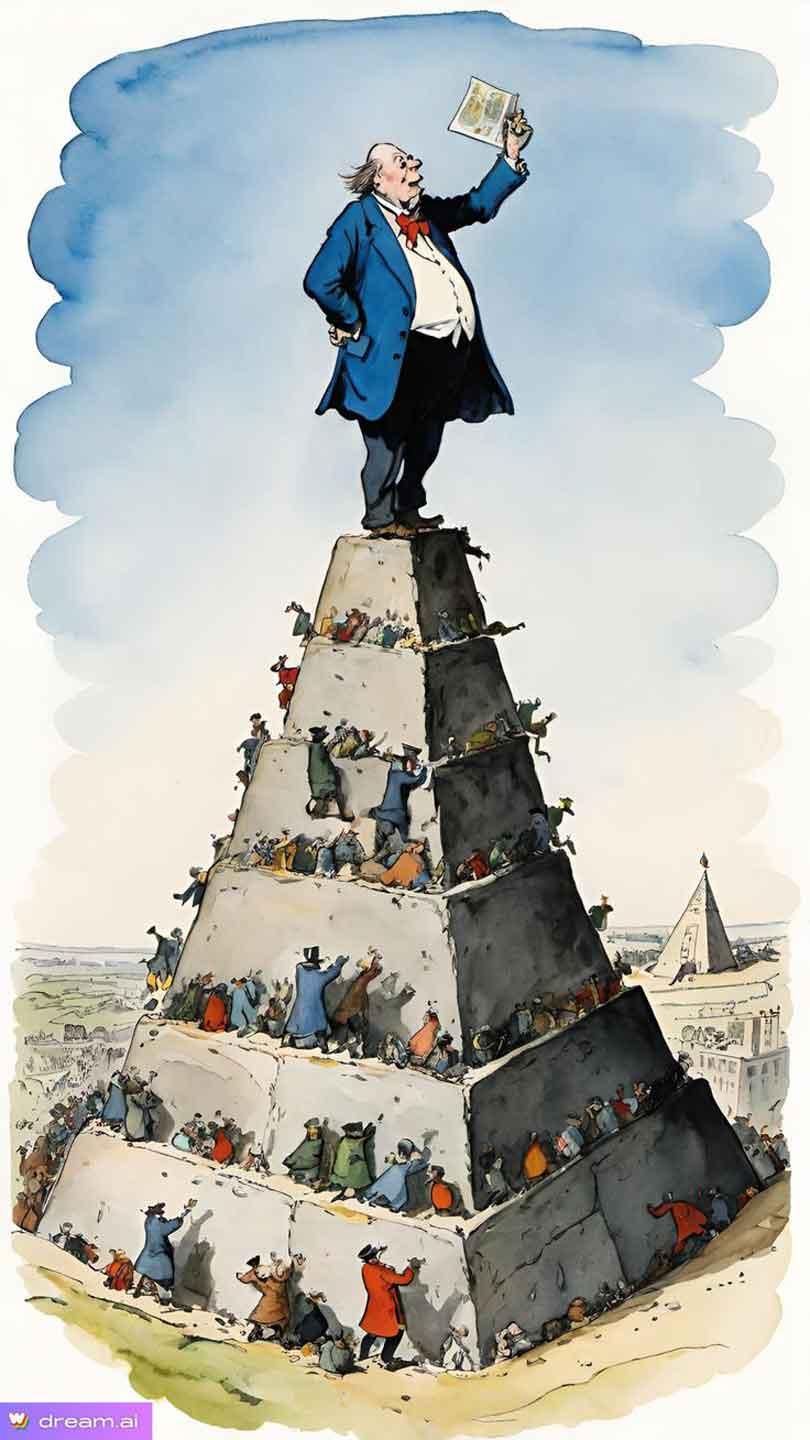
But instinct is not a substitute for experience. The problem begins when inheritance replaces effort. When titles are conferred without trials. When leadership is assumed without ever being earned. A young heir who walks into a boardroom without ever having worked at the grassroots level is not just underprepared; they are disconnected. They do not understand the rhythms of the business, the frustrations of the workforce, the fragile relationships that sustain it. And most critically, they do not understand the cost of failure, because they have never had to pay it.
Contrast this with the journey of Ratan Tata, who, despite belonging to the illustrious Tata family, did not inherit his position by default. As a distant relative of Jamsetji Tata, he rose through the ranks, gaining experience across different levels of the business before assuming leadership. His story is often held up as a model not because he was born into the system, but because he respected it enough to learn it.
And this is where the real damage of unchecked nepotism reveals itself: not in balance sheets, but in character. A child who is guaranteed success rarely develops ambition. A child who is shielded from failure rarely develops resilience. When everything is handed over, there is no need to strive, to question, to endure. Over time, this creates individuals who are more concerned with maintaining appearances than building substance. Branding replaces competence. Networking replaces knowledge. Visibility replaces value.
We have all seen versions of this story play out. Businesses that thrived under one generation quietly decline under the next. Decisions become impulsive. Employees lose respect. Innovation stalls. While it is difficult (not to mention, impolite!) to name specific examples, the pattern is unmistakable: legacy, when mishandled, becomes liability.
Interestingly, even in vastly different political and cultural contexts, the dangers of nepotism have not gone unnoticed. In 2023, Hibatullah Akhundzada issued a formal decree prohibiting Taliban officials from appointing relatives to government positions, even ordering the removal of family members already employed. Similarly, under Xi Jinping, Chinese authorities implemented restrictions barring officials from hiring spouses or children within key administrative and regulatory roles. These are not systems typically associated with liberal meritocracy, yet even they recognise that unchecked familial favouritism corrodes institutions from within.
And yet, to dismiss nepotism entirely would be intellectually dishonest. There is a reason family-run enterprises have survived for centuries. Familiarity breeds not just comfort, but continuity. A child raised around a business often absorbs its nuances in ways an outsider cannot. There is pride involved, a sense of stewardship that can, when properly cultivated, lead to exceptional leadership.

The question, then, is not whether nepotism is right or wrong. It is whether it is earned. Because there is a world of difference between inheritance as a starting point and inheritance as a shortcut. If the next generation is to take over, let them begin at the bottom. Let them understand the machinery before they command it. Let them earn the respect of those they will one day lead. Ideally, let them step outside the family enterprise altogether, face rejection, navigate unfamiliar systems, prove themselves where their surname holds no weight. And if they must return, let them return not as beneficiaries, but as builders in their own right.
Parents, in particular, must confront an uncomfortable responsibility. To love a child is not to make life easy for them. It is to make them capable of handling difficulty. When we use our influence to secure their path, we may believe we are protecting them. In reality, we are stripping them of the very qualities that make success meaningful: effort, perseverance, and the quiet confidence that comes from having earned one’s place. Because the truth is this: a
business can survive poor leadership for a time. A person, however, cannot thrive without purpose. And purpose is never inherited. It is built.