Effects of El Niño on Marine Food Chains
By Sajini Perera
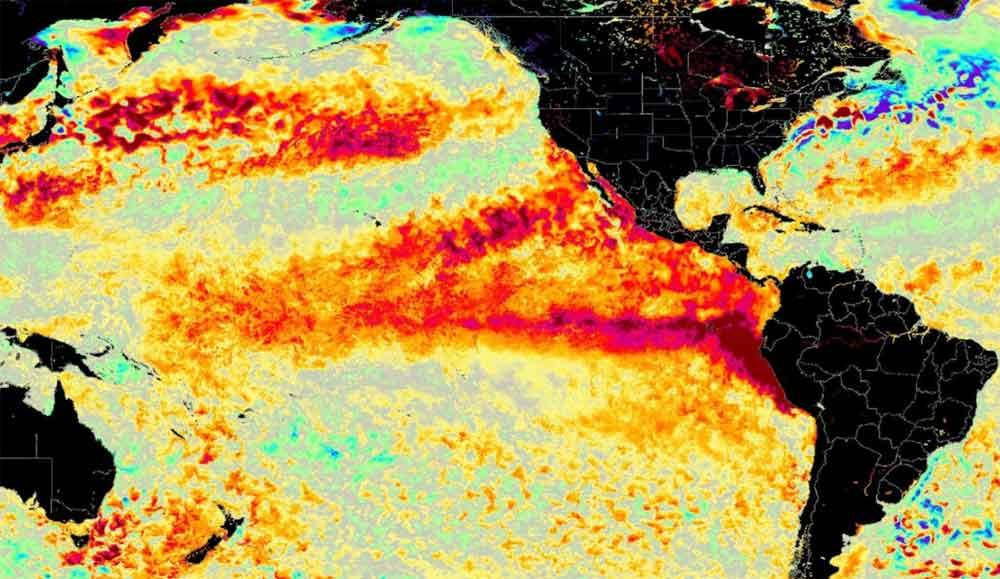
El Niño is a phase of the El Niño–Southern Oscillation (ENSO), one of the most significant natural climate phenomena affecting the world’s oceans. El Niño–Southern Oscillation involves a cycle of changes in ocean temperatures and atmospheric pressure in the tropical Pacific Ocean. During El Niño, unusually warm surface water develops in the central and eastern Pacific, altering normal ocean circulation patterns. Marine food chains are mainly based on the balance between the physical and biological interactions in the ocean. In a marine food chain, the primary producers are the phytoplankton, which do photosynthesis, and these organisms provide food for zooplankton, small fish, large predators, marine mammals, and seabirds. As all organisms are connected through the food web, when there’s a small change at the lowest level, it can have an impact on the whole system.
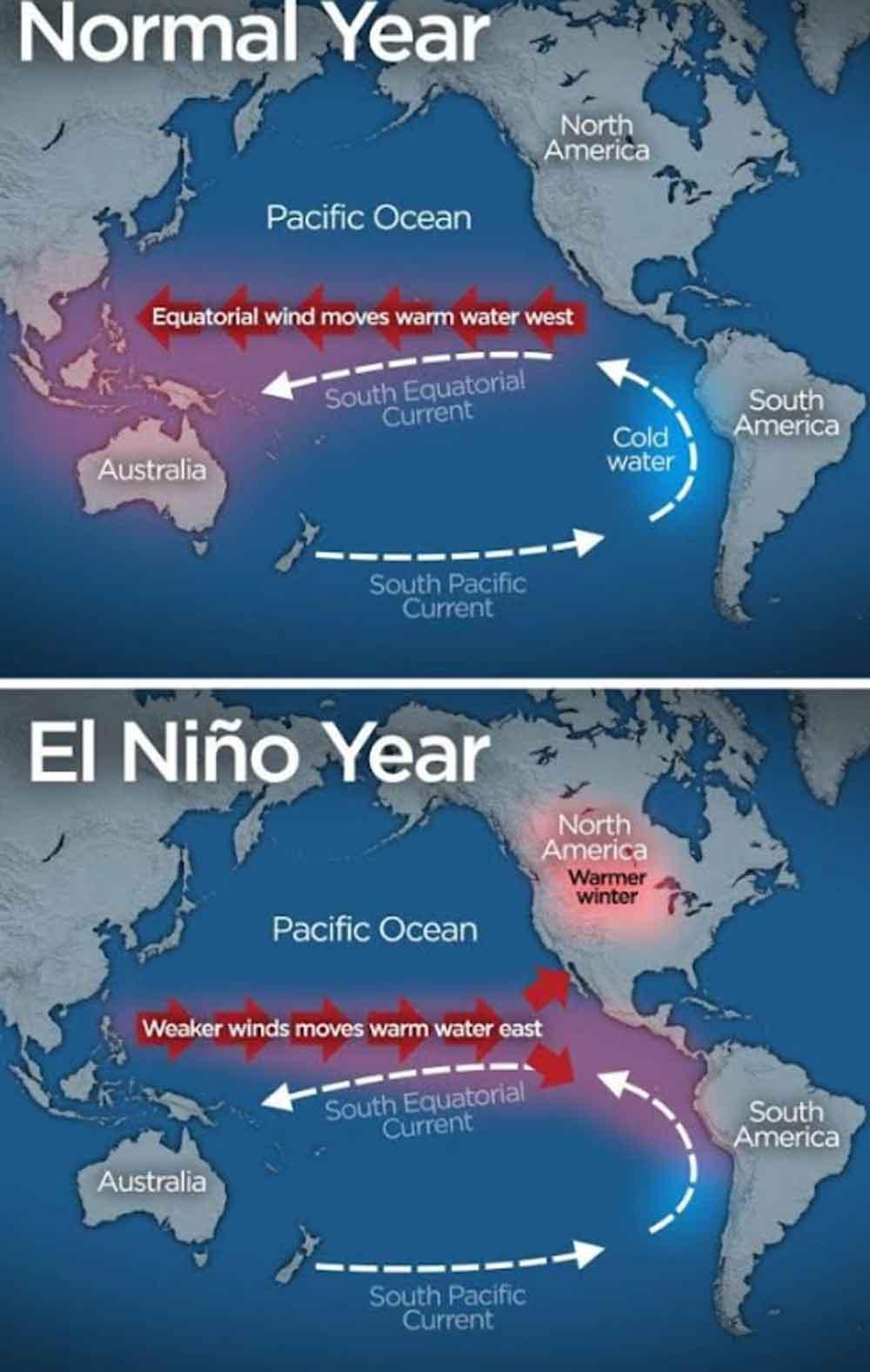
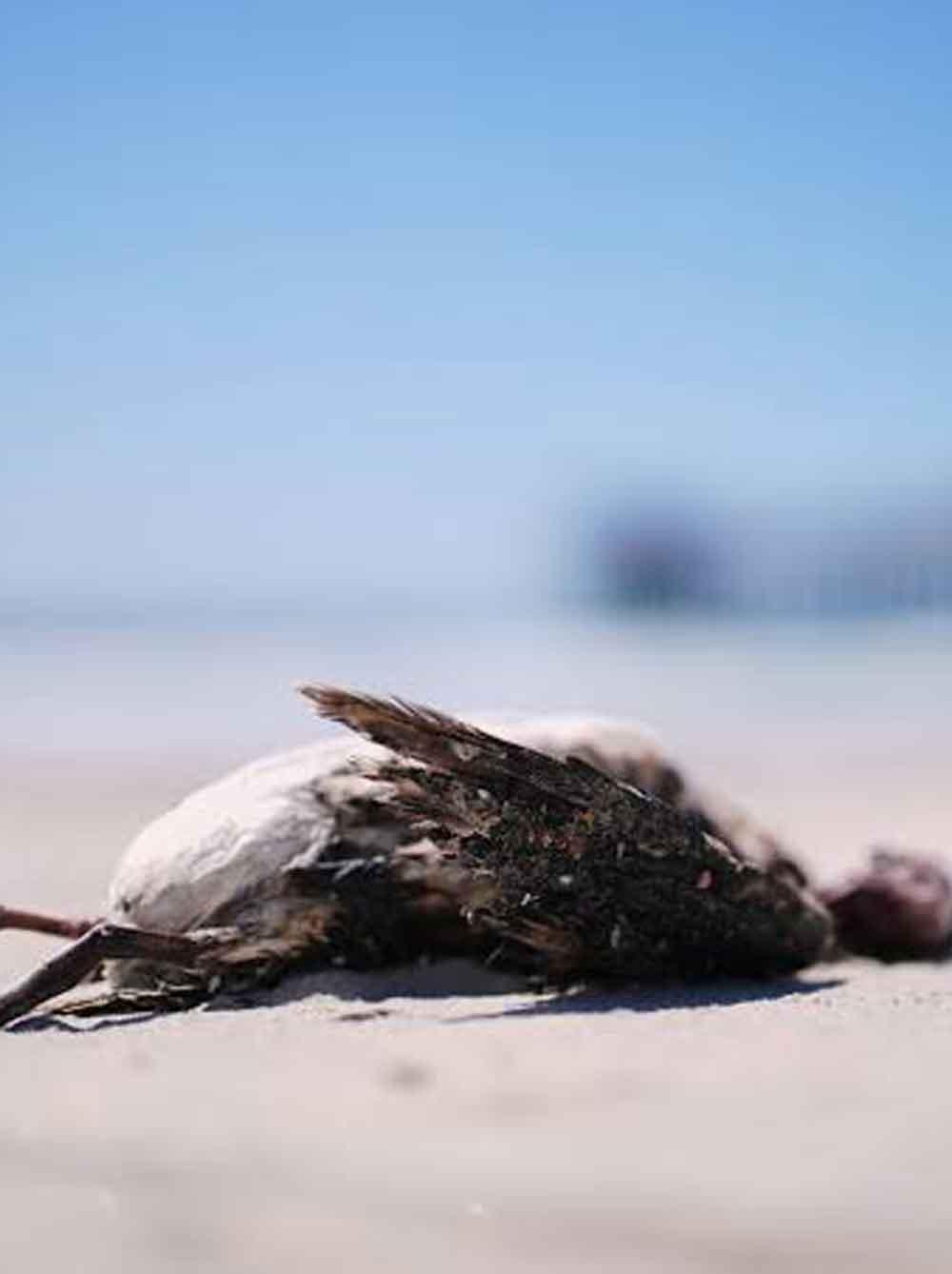
Under normal conditions, the upwelling process happens, which means that strong trade winds push warm surface water from the eastern Pacific toward the western Pacific. Through this process, cold, nutrient-rich water from deeper ocean layers moves to the surface layers, which supports the growth of phytoplankton. But during El Niño, as trade winds weaken, warm surface water moves eastward, and upwelling becomes weakened. As a result, lower nutrients in the surface layer cause less growth for phytoplankton, and ocean productivity declines. So, the amount of energy entering the food chain is reduced. When El Niño occurs, it can also cause a decrease in the diversity of phytoplankton species; species that require more nutrients they get decrease while the species require less nutrients grow faster during El Niño. Zooplankton are directly reliant on phytoplankton, as when phytoplankton populations decrease during El Niño, zooplankton populations also decrease due to the reduced availability of food. Small fish such as anchovies, sardines, and herring get reduced as they directly depend on phytoplankton. Also, these fish migrate into cooler waters, and their reproduction rates decline. Fish eggs and larvae are affected due to reduced food availability. Large predatory fish such as tuna, sharks, and swordfish populations get reduced as their prey becomes less abundant or migrates to other regions. So, predator fish have to travel long distances to find food, using more energy, and as a result, their reproduction declines. Marine mammals, such as whales, dolphins, sea lions, and seals, are also impacted by the reduced availability of food. Sea birds are dependent on fish populations, and they can be considered as highly sensitive indicators for the changes of the marine food chain.
El Niño can disrupt predator-prey relationships, while predators arrive in areas where prey have already disappeared, and fish move to new regions and encounter a familiar predator. Also, this causes an increase in competition between species for limited food resources. During El Niño conditions, it reduces the amount of energy available at higher levels when large predators receive much less energy because the food chain becomes weaker from its primary levels. El Niño causes warm-water species to replace cold-water species, changes in feeding in species, new competition between species, and temporary changes in marine community structure.
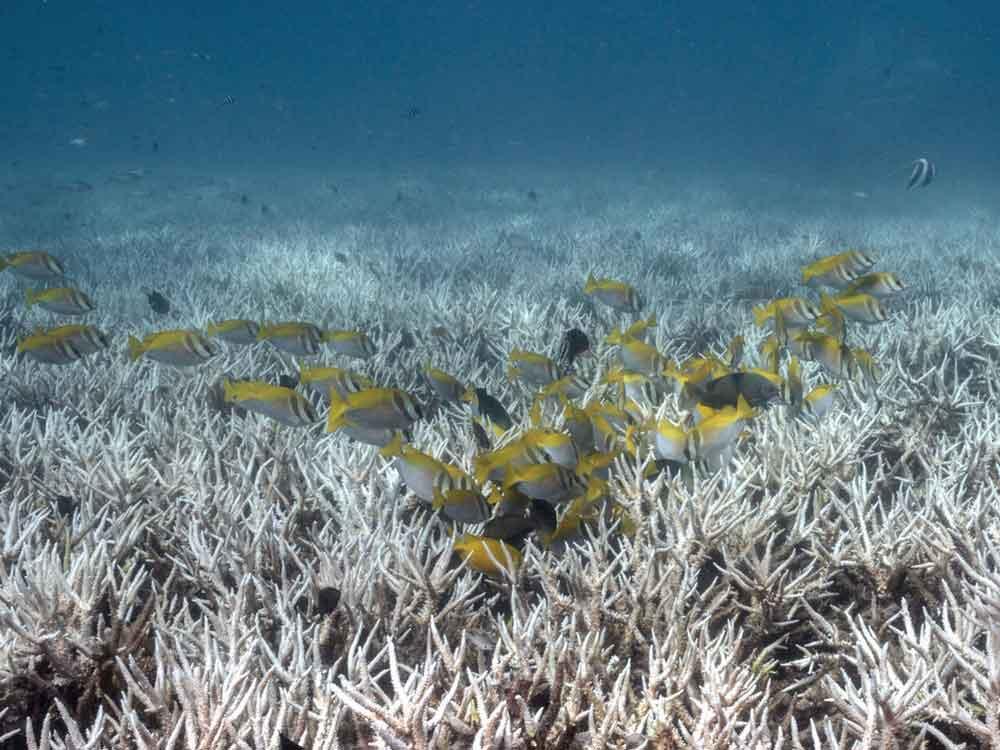
El Niño leads to high water temperature that leading to coral bleaching and coral mortality. Dead corals lead to deterioration of reef ecosystems through the removal of habitat, breeding grounds, and food for reef-associated fish and other organisms. Fewer prey organisms lead to fewer food sources for predator species in food chains.
In Sri Lanka, seawater temperature also affects where fish live and how they migrate. When the water gets warmer, it changes the environment, makes it less productive, and results in fewer fish being caught. El Niño can disrupt the food chains in Sri Lanka's seas by changing the temperature of the ocean’s surface, how the water moves, and how many nutrients are available. These changes affect phytoplankton and zooplankton amounts, which then affect fish that swim in the open sea and bigger fish, such as tuna. When fish move differently and coral reefs bleach, it can finally change the marine biodiversity and fisheries productivity.
After El Niño ends, marine food chains can recover when normal ocean conditions return. However, repeated or intense El Niño events can make recovery more difficult by repeatedly disturbing the same food chains. If important species decline for long periods, the structure of the ecosystem may change.
El Niño affects marine food chains by disrupting the supply of nutrients that support primary producers. As marine food chains are interconnected, a change at one level can spread throughout the entire ecosystem. El Niño demonstrates how physical changes in the ocean environment can influence the movement of energy through marine webs and alter the abundance of ocean life, directly impacting biodiversity.