FAME GAME: KUMAR DE SILVA
BY THASMINA SOOKOOR
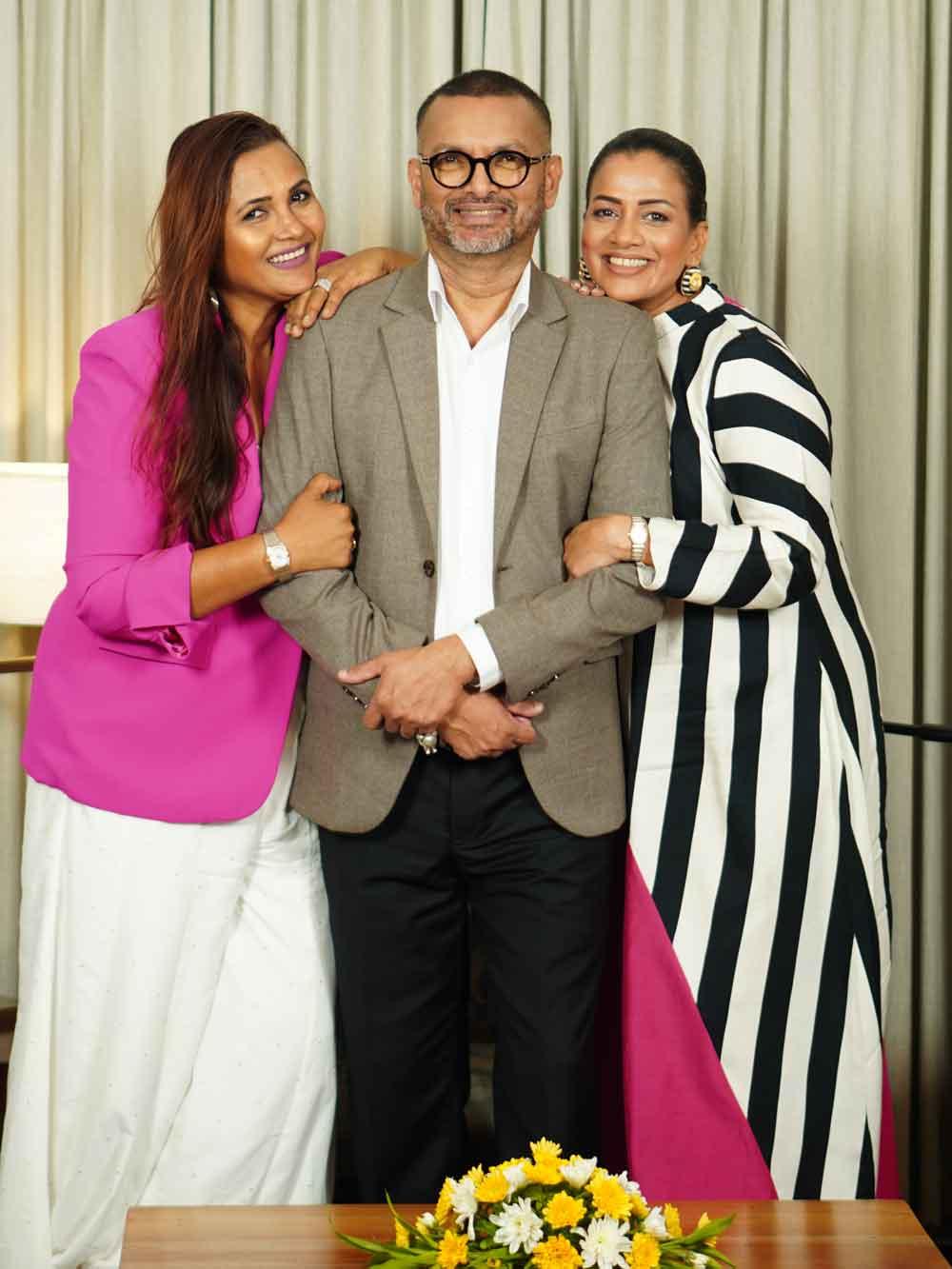
With 46 years in the media industry and 40 years on the small screen, Kumar de Silva has built a career spanning television, public relations, international pageantry and corporate training. Known for his association with the French-language television programme Bonsoir and his longstanding involvement with Miss World Sri Lanka, he has remained a familiar figure in Sri Lankan media. In a special episode of Fame Game, hosted by Sangeetha Weeraratne and Rozanne Diasz, Kumar reflects on his childhood, professional journey, the evolution of the media industry, his experiences working with beauty queens and the personal principles that have shaped his approach to life. The conversation also offers a glimpse into the personality behind his professional image, including his sense of humour, his affection for France and his determination to overcome personal challenges.
Q: You have completed 40 years on television and 46 years in the media industry. How does it feel to reach this milestone?
A: It feels good. The interesting thing is that Bonsoir has ended, but people continue to talk about it. It was a programme that began long before the internet, YouTube and mobile phones became part of everyday life. I did not start Bonsoir. It was started by Aruni Devaraja, and I joined the programme in January, exactly 40 years ago. It has been a wonderful journey. Yasmin Rajapakse later joined me as my co-host, and together we became part of a programme that created a special place in the lives of viewers.
Q: Before all of this, what was your childhood like? What kind of family did you grow up in?
A: I was a nerd and a bookworm. There were two children in our family, my younger brother and me. He was three years younger than I was. We came from an ordinary, middle-class family. School was enjoyable, although I had one particular difficulty. I was a severe stammerer, which affected my ability to communicate. As a result, I did not have a girlfriend during my school days.
Q: You may not have had a girlfriend, but surely you had a crush?
A: Yes, I had one major crush. She was a Malay girl who attended school in Borella, while I was at Wesley College. I used to walk from Wesley College towards her school just to be near the bus stand where I could see her. She was a beautiful girl with lovely almond-shaped eyes and flawless skin. It was an unrequited crush, but it remains a memory from my school days.
Q: You have spoken about your affection for France over the years. What makes the country so special to you?
A: France is my favourite country. I have always had a special connection with it. I have travelled there many times, but I have never wanted to make it my permanent home. Sri Lanka is home, and that is where I always want to return.
I travel frequently, but home is here. This year marks my 40th year associated with France, and last September marked my 30th visit to the country.
Q: Your association with France is closely connected to Bonsoir. What made the programme so successful, particularly among Sri Lankan audiences?
A: The programme was successful because it was authentic. Yasmin and I both speak French as our first language, and we had travelled to Paris for training. We knew what we were talking about because we had been there, experienced the culture and understood the country. The English Bonsoir programme received around 500 postcards a month for its quiz, while the Sinhala programme received approximately 5,000 postcards. Many came from villages across Sri Lanka, including places where television was not readily available in individual homes. One particular letter touched me deeply. A viewer wrote that they lived in a remote village without a television at home. The villagers would gather at the local community hall, where a black-and-white television was kept in a small space. They would finish dinner, come together at around nine o'clock, sit on the ground and watch the programme. That kind of response was incredibly moving. It showed us that the programme meant much more to people than simply watching television.
Q: Looking back at the changes in the media industry, is there anything from those earlier days that you particularly miss?
A: I miss the sound of the good old typewriter and the smell of paper. There was something special about writing on paper with a ballpoint pen. You could hear the pen moving across the surface. These may seem like small things, but they were an important part of the experience of working in the media industry. Today, everything is done on computers, and the working environment has changed considerably. However, every era has its own context, and each has its place.
Q: You have also been associated with Miss World Sri Lanka for many years. How has your working relationship with Sangeetha Weeraratne developed over time?
A: I have been working with Sangeetha for around 13 years. I enjoy working with her because she does not interfere with my work. She has sufficient confidence in me and allows me to do what I need to do. When you work with professionals, you need to trust their abilities. Sangeetha understands that, and it makes the working relationship easier.
Q: Sangeetha, how would you describe Kumar's contribution to Miss World Sri Lanka?
A: When I brought in professionals to handle different aspects of the pageant, I made a conscious decision not to interfere with their individual responsibilities. I hired them because they were good at what they did. I explain what I expect from them and communicate their responsibilities and boundaries. However, Kumar is someone who often goes beyond what is expected of him and takes personal responsibility for the contestants. He has developed relationships with many of the contestants, and some of them continue to maintain those connections even after their pageant journey comes to an end. I believe his involvement became particularly significant during the COVID period. That was a difficult time, but it also gave us opportunities to build closer relationships with the contestants.
Q: Kumar, you have often taken on a fatherly role with the contestants. What does that responsibility mean to you?
A: I have always wanted to look after them and prepare them for what lies ahead. There is more to participating in an international pageant than simply appearing on stage. They need to be organised, prepared and confident enough to manage different situations. I also believe that they need to become strong women. At one point, Sangeetha felt that I had been too harsh with some of the girls. My intention was to prepare them for the challenges they would face. Sometimes, you have to be firm. However, the important thing is to achieve the desired result without losing sight of the purpose behind what you are doing.
Q: Have you encountered contestants who were particularly difficult to train or guide?
A: There have been a few who were rather stubborn and believed that they already knew everything. However, I would not describe this as the experience of most contestants. People come into the programme with different perceptions and expectations. Sometimes, they are convinced that their approach is correct. Eventually, after listening to different perspectives, they understand why certain things need to be done differently.
Q: How do you handle such situations without forcing your opinions on them?
A: Patience is extremely important. You have to understand how to approach each person. I would explain that I may have a point of view, but they have theirs as well. I ask them to listen to what I have to say and consider the situation from another perspective. You cannot force these young women to accept everything you say. You have to persuade them, communicate with them and allow them to understand the reasoning behind your advice.
Q: Apart from television and pageantry, you have also established yourself in corporate training. How did that journey begin?
A: I have been involved in corporate training for approximately 16 years. It was not something I had planned from the beginning. When I closed my public relations company, Adahas, which I had run with my ex-wife, Tharindra, I began thinking about what I could do next. I wanted a profession that would allow me to continue working as I grew older. I felt that training was something that could develop with experience. As you grow older, you gain maturity, knowledge and a better understanding of people. These qualities can become valuable in a training environment. I learned through what I call the University of Life. I continue to learn from people and experiences, including the young women I have worked with through Miss World Sri Lanka.
Q: What are the most important qualities you encourage people to develop when entering the corporate world?
A: My training programmes are based on what I call my 'Trishulaya'. It consists of three important principles: self-respect, self-love and self-belief.
These are fundamental qualities that everyone should develop. However, there are two other qualities that I consider equally important: gratitude and humility. You need to have gratitude and humility in your life. When these qualities are in place, many other things begin to fall into place, whether you are working in a corporate environment or outside it.
Q: Sangeetha, having worked with Kumar for so many years, what would you say about him beyond his professional achievements?
A: I have a great deal of admiration for Kumar, both as a person and as a professional. He has faced his own setbacks and difficulties, but he has continued to move forward. I also appreciate the way he has been there for me during difficult situations. There have been times when people have let me down or when I have felt cornered, and Kumar has been a supportive friend. People who know him professionally may see him as a serious, respectable and composed individual. However, there is also a very different, humorous side to him that those close to him get to experience. I have a great deal of love and respect for him. I was happy to be part of this conversation because 40 years on television and 46 years in the media are significant milestones worth celebrating.