The US Midterm Elections: Why Should Sri Lanka Care?

By: Giselle Gunewardene
On the 3rd of November, millions of Americans will head to the polls in an election that will determine the political balance of power in Washington. For voters in the United States, the midterm elections are an opportunity to judge the direction of their country, the performance of their elected representatives and the policies of President Donald Trump's administration. But thousands of kilometers away, in Sri Lanka, the outcome could have consequences that extend well beyond American domestic politics. At first glance, an election involving congressional districts in Pennsylvania, Senate contests in Georgia or political battles in Arizona might appear to have little relevance to a country navigating its own economic recovery. Yet the United States remains one of Sri Lanka's most important export destinations, a major influence on international financial markets and a powerful actor in the diplomatic and economic institutions that shape the global economy. The question, therefore, is not simply who wins control of the American Congress. It is whether the political decisions that follow could influence Sri Lanka's trade competitiveness, economic stability, investment prospects and diplomatic relationships. Understanding those consequences requires looking beyond the campaign rhetoric and examining how American political power actually works.
What Exactly Are the US Midterm Elections?
Unlike presidential elections, which take place every four years, midterm elections are held halfway through a president's term. Americans do not elect a president during these elections. Instead, they vote for representatives in Congress, the legislative branch of the federal government, along with numerous state and local officials. All 435 seats in the House of Representatives are contested every two years, while approximately one-third of the 100-member Senate is elected during each cycle. In 2026, the regularly scheduled Senate elections involve 33 seats, with any special elections adding to that number. Congress plays a central role in American governance. It passes legislation, approves federal spending, exercises oversight over the executive branch and can influence the direction of economic and foreign policy. The Senate also confirms senior presidential appointments, including ambassadors, Cabinet officials and federal judges. If the president's party maintains control of both chambers, the administration generally has a clearer legislative path, although disagreements within the party can still obstruct its agenda. If the opposition gains control of one or both chambers, the president may face greater scrutiny, legislative resistance and difficult budget negotiations. For the Trump administration, the 2026 elections therefore represent an important test of its political authority. For the rest of the world, they will help determine how much freedom the administration has to pursue its domestic and international priorities during the remaining two years of the presidential term.
However, congressional control does not translate automatically into control over every aspect of American foreign policy. Presidents retain substantial executive authority, particularly in diplomacy, national security and certain trade matters. This distinction is important when assessing what the elections could realistically change for Sri Lanka.
Why American Trade Policy Matters to Sri Lanka
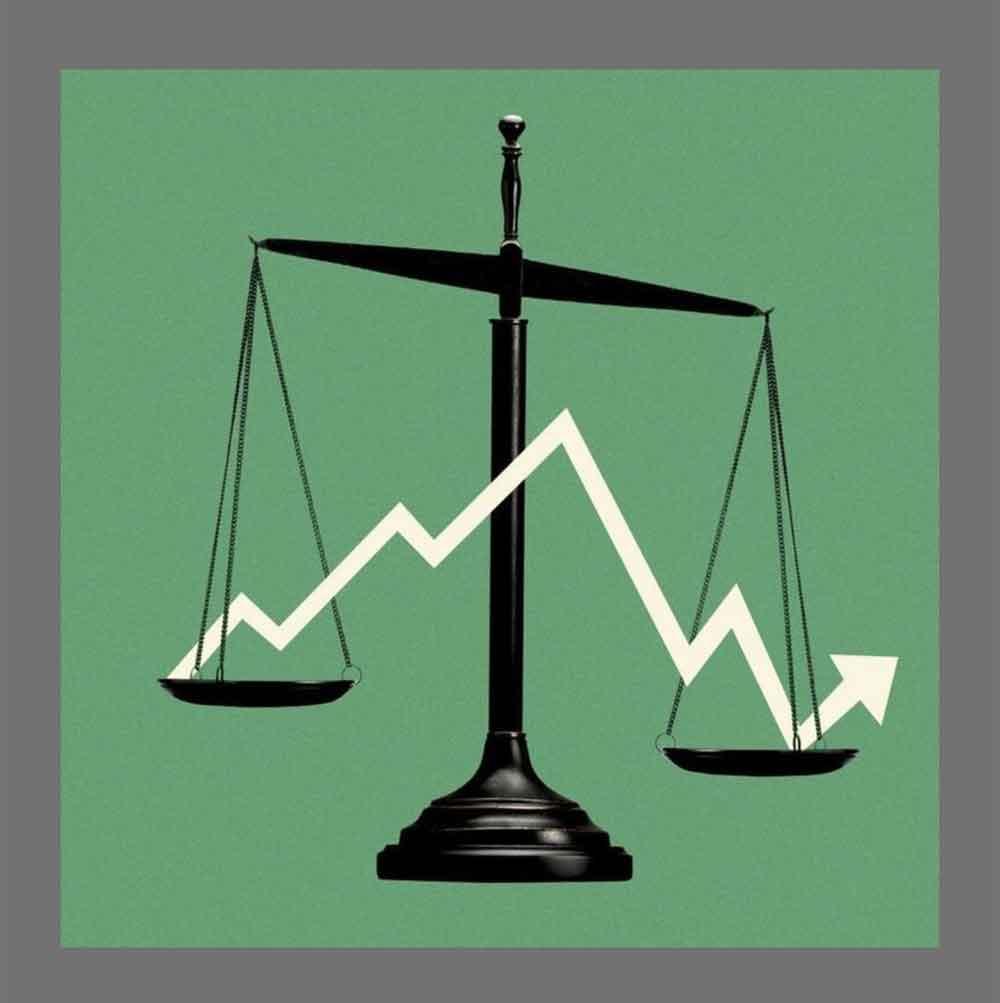
The most immediate connection between the American elections and Sri Lanka lies in international trade. According to the United States International Trade Administration, the US remained Sri Lanka's largest single export market in 2025, making American economic policy particularly important to the island's export-dependent industries.
Figures published by the Office of the United States Trade Representative show that American imports of goods from Sri Lanka reached approximately US$3.1 billion in 2025, while total bilateral goods and services trade amounted to an estimated US$4.2 billion. Sri Lanka's apparel industry alone exported approximately US$1.9 billion worth of products to the American market that year. Sri Lanka's exports to the United States extend beyond clothing. Rubber products, tea, coconut-based goods, activated carbon, spices and other manufactured products also form part of the trading relationship.
The relationship becomes particularly sensitive when American policymakers introduce tariffs, revise import regulations or encourage domestic manufacturers to relocate production away from overseas suppliers. For a Sri Lankan apparel manufacturer supplying an American retailer, even a relatively small change in import costs can influence negotiations, pricing and future orders. Buyers may seek discounts, reduce orders or consider competing manufacturing destinations. The resulting pressure can travel through the supply chain, affecting factory revenues, investment decisions and, potentially, employment.
This does not mean that every American tariff automatically results in job losses in Sri Lanka. The consequences depend on the products affected, the tariffs imposed on competing countries, exchange rates, consumer demand and how additional costs are distributed between importers, retailers and manufacturers.
Nevertheless, the relationship demonstrates why Sri Lanka cannot afford to regard American trade policy as an exclusively American concern.
Could the Election Affect Sri Lanka's Economic Recovery?
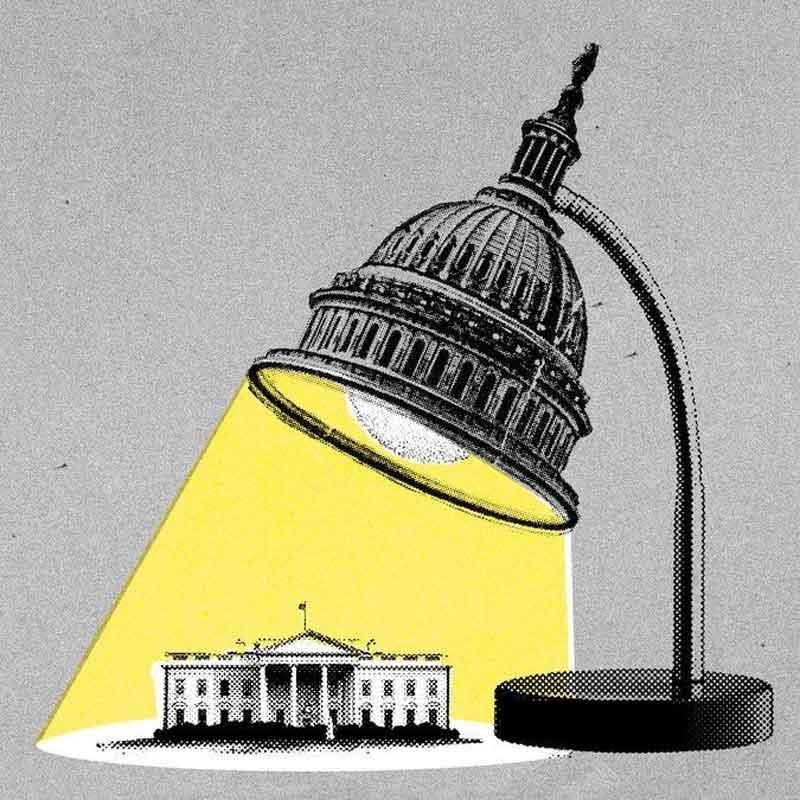
Sri Lanka's economic recovery remains closely connected to developments beyond its borders. Although the country has made progress since the economic crisis of 2022, export earnings, foreign investment, tourism and international financial conditions continue to influence its economic outlook. The United States affects these conditions through several channels. As the world's largest economy, American economic performance influences global demand, investor confidence and financial markets.
Decisions by the US Federal Reserve can also affect international borrowing costs, currency movements and capital flows. It is important to distinguish the responsibilities of these institutions. Congress does not directly set American interest rates. Monetary policy is determined by the Federal Reserve, which operates with institutional independence. Nevertheless, American fiscal decisions, economic legislation and political uncertainty can influence the wider conditions in which monetary policy operates.
For Sri Lanka, higher global borrowing costs or a stronger US dollar can create challenges, particularly for an economy with foreign-currency obligations and significant import requirements. There is also the question of international financial assistance. The United States is an influential member of institutions such as the International Monetary Fund and the World Bank, although their decisions are made through established institutional processes rather than dictated by Congress alone.
Sri Lanka's IMF-supported reform programme has involved fiscal adjustments, debt restructuring and efforts to restore macroeconomic stability. American political developments may influence the broader international economic environment, but it would be misleading to suggest that a particular midterm election result would directly determine Sri Lanka's IMF arrangements.
The more realistic concern is indirect: whether changes in American policy influence global growth, financial stability, trade demand and investor expectations.
The Geopolitical Question: Where Does Sri Lanka Fit?
Beyond economics, the elections may also influence the direction of American foreign policy at a time when competition between major powers continues to shape international relations. Sri Lanka occupies a strategically significant position in the Indian Ocean, close to major maritime routes connecting Asia, the Middle East, Africa and Europe. Its geographical location has attracted the diplomatic and commercial attention of countries including India, China and the United States.
For Washington, the wider Indian Ocean region forms part of a broader strategic environment involving maritime security, regional partnerships, trade routes and competition over infrastructure and technology. Sri Lanka, meanwhile, must manage relationships with multiple international partners while protecting its own economic and strategic interests.
A Congress more closely aligned with the Trump administration could provide additional legislative support for certain national-security priorities. An opposition-controlled chamber might exercise greater scrutiny over foreign-policy spending, military commitments and executive decisions. Yet American foreign policy is rarely divided into two entirely opposing positions. There is considerable bipartisan agreement on issues such as competition with China, the importance of regional security partnerships and the protection of strategic supply chains, even when Democrats and Republicans disagree about methods.
Consequently, a change in congressional control would not necessarily produce a fundamental shift in Washington's approach to South Asia. For Sri Lanka, the challenge is to maintain a foreign policy that is economically practical, diplomatically balanced and responsive to changes in the international environment without becoming excessively dependent on any single external power.
What Are Americans Actually Voting About?
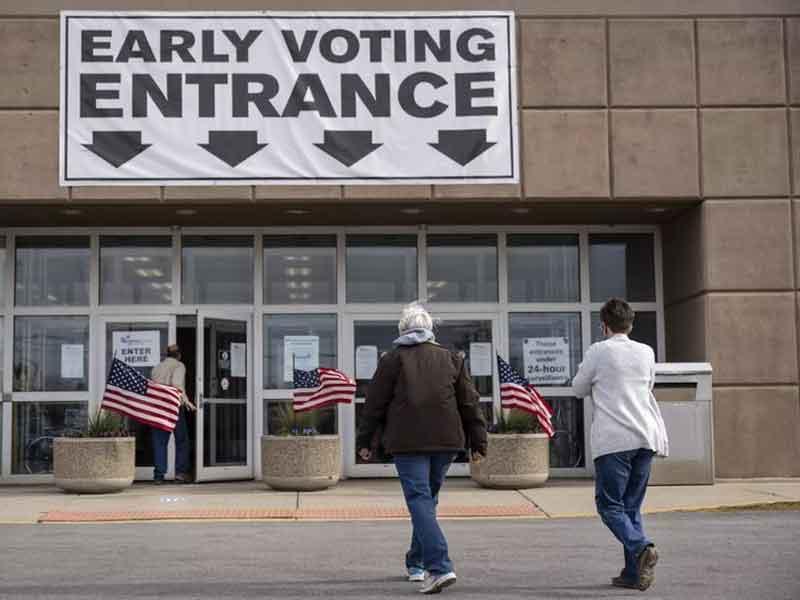
Although the international consequences of the elections are significant, American voters are primarily concerned with issues affecting their own lives. The cost of living, employment, immigration, healthcare, government spending and the direction of the national economy have featured prominently in the political debate. Foreign-policy disputes, including the economic consequences of international conflict, have also entered the campaign. A Reuters assessment published on November 2 identified the cost of living, the Iran war, voter turnout and the balance of congressional power among the major factors shaping the election. Democrats are seeking to overturn the Republicans' narrow congressional majorities, while Republicans are attempting to preserve the administration's ability to advance its agenda.
The election also reflects a familiar pattern in American politics. Midterm elections frequently become a referendum on the sitting president, particularly when voters are dissatisfied with economic conditions or the government's direction.
However, the result is not determined by national sentiment alone. Individual congressional races are shaped by local issues, candidate popularity, campaign spending, district boundaries and voter turnout. A party can perform strongly in the national popular vote without necessarily securing equivalent control of Congress, particularly because House elections are decided across individual districts. The political implications will also depend on whether one party controls both chambers or whether Congress becomes divided. For international observers, this makes the outcome more complicated than a simple victory or defeat for President Trump.
An American Election With International Consequences
When Americans cast their ballots on November 3, their immediate concerns will be domestic. They will be deciding who represents them in Congress, how their government should be held accountable and what direction their country should take over the next two years.
For Sri Lanka, the significance of those decisions lies in what happens afterwards.
Will Washington pursue a more predictable approach to international trade? Will Congress challenge or support the administration's economic policies? Could political disagreements affect financial markets, international relations or the wider investment climate? And how prepared is Sri Lanka to respond if the world's largest economy changes course? The answers will emerge through legislation, executive decisions, court rulings, diplomatic negotiations and economic developments long after election night.
The United States may be voting for its own political future, but the consequences of American policy do not stop at its borders. For a country such as Sri Lanka, whose economic prospects remain closely connected to international trade and global financial conditions, understanding those consequences is not simply an exercise in following foreign politics. It is part of understanding the forces shaping its own future.