Inside Nvidia’s Scandal: The Alleged Spy, the Billionaire and the Wife Who Could Crash Wall Street
By Thaliba Cader
An alleged Chinese spy, a billionaire caught in an affair, $190 billion wiped off a company's market value, and a wife the internet is now begging not to file for divorce. The Nvidia scandal has everything: money, power, espionage and a rather expensive lesson in human stupidity. But behind the memes lies a serious question about why so much of the global economy depends on so few people.
Welcome to the Nvidia scandal, where the chips are artificial, the intelligence is allegedly Chinese, and the consequences of one man's personal decisions are being calculated in billions.
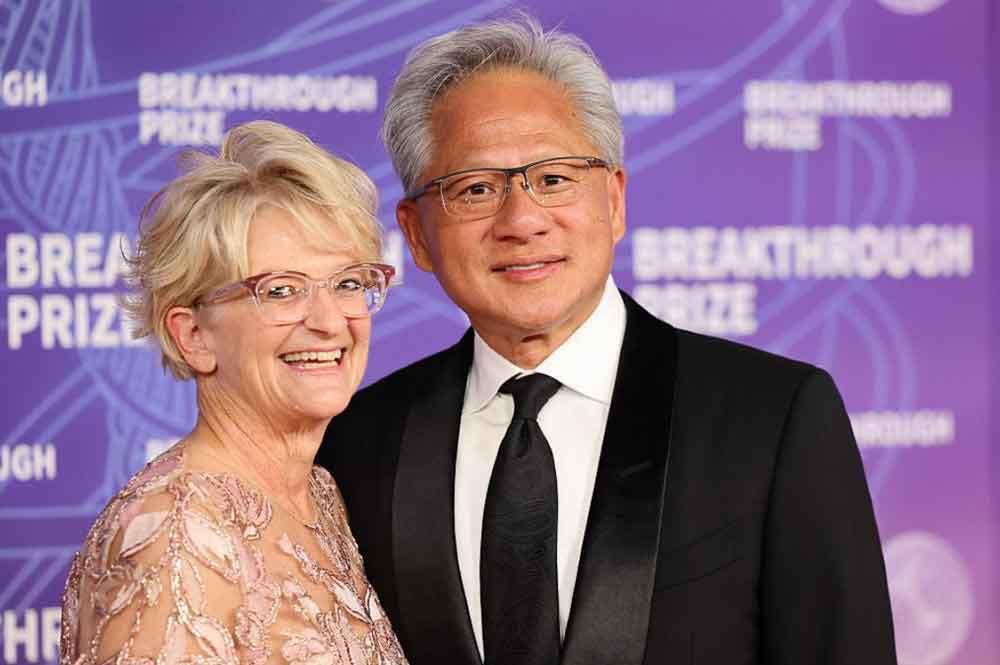
At the centre of this extraordinary mess is Jensen Huang, the 63 year old co-founder and chief executive of Nvidia, the technology giant supplying much of the computing power behind the artificial intelligence revolution. Huang has spent more than three decades building one of the world's most valuable companies. His processors help train sophisticated AI systems, his business decisions influence global technology markets, and his trademark leather jacket has become something of a Silicon Valley uniform. Now, following reports linking him to a woman suspected by American authorities of having connections to Chinese intelligence, Huang has acknowledged being unfaithful to his wife.
The joke? If she divorces him and receives a substantial portion of his Nvidia shares, the resulting financial upheaval could send the company's stock tumbling.
Imagine spending decades building machines capable of extraordinary calculations, only for the internet to conclude that your greatest financial vulnerability is your marriage. The memes are exaggerated, of course. There is no confirmed divorce, and a marital settlement would not automatically crash Nvidia, let alone the global economy. But the story behind them is considerably more serious. Because this is not simply about an affair. It is about alleged espionage, the global race for artificial intelligence, and the extraordinary amount of economic power concentrated in the hands of a few technology executives.
First, Why Does Everyone Care So Much About Nvidia?
The answer is that Nvidia has become rather important to the future of technology. Founded in 1993, the company originally specialized in graphics processors, the chips that helped computers produce increasingly realistic video games. For years, its products were primarily associated with gamers, engineers and people who understood computer specifications considerably better than the rest of us.
Then artificial intelligence arrived, and Nvidia discovered that the technology powering realistic video-game explosions was also exceptionally good at performing the enormous mathematical calculations required to train AI systems. Suddenly, everyone wanted its chips. Companies developing advanced AI systems need vast amounts of computing power. Training these models involves processing enormous quantities of information, performing complex calculations and operating sophisticated data centres. Nvidia supplies much of the specialized hardware that makes this possible.
Think of the AI revolution as a gold rush. Companies such as OpenAI, Google, Meta and Microsoft are racing to discover the next major breakthrough. Nvidia, meanwhile, is selling some of the most sought-after machinery required to dig. And business has been very good.
By early November 2026, Nvidia's market valuation was approximately $4.5 trillion, making it one of the world's most valuable companies. That is more than the annual economic output of most countries, although comparing a company's market value with a country's GDP is not quite comparing like with like. More importantly, Nvidia has become a major component of American stock-market indices. Its shares are held through investment funds, pension portfolios and retirement accounts around the world.
When Nvidia's share price rises, the effects can be felt well beyond Silicon Valley. When it falls sharply, investors who have never knowingly purchased an AI chip can still find themselves affected. That is the first uncomfortable fact behind the scandal: Nvidia has become so valuable that uncertainty surrounding one man's leadership can have consequences for millions of people who have never heard of him.
Enter the Alleged Spy
The woman identified in the reporting is Alice Huang, also known as Huang Le, a Chinese businesswoman formerly associated with Megaspeed International, a Singapore-based cloud computing company. Despite sharing a surname, she is not related to Jensen Huang.
According to international reporting, American authorities suspect Alice Huang of having connections to Chinese intelligence. Reports have suggested that investigators were examining whether her relationship with Nvidia's chief executive could have provided an opportunity to gather sensitive information.
China has rejected the espionage allegations.
And an important distinction needs to be made before the internet appoints itself judge, jury and intelligence agency. An alleged spy is not necessarily a proven spy. An affair is not proof of espionage. And knowing someone suspected of intelligence activity does not mean knowingly participating in it. There has been no public finding establishing that Jensen Huang knowingly assisted a foreign intelligence operation or that Alice Huang obtained Nvidia's confidential information.
Nvidia has stated that it has no reason to believe its company secrets or American national security were compromised. Nevertheless, the allegations are serious because of what Nvidia actually controls: access to some of the world's most advanced computing technology.
The $4.8 Billion Connection That Makes This More Than Gossip
This is where Megaspeed International enters the picture. According to reporting cited by the Associated Press, the Singapore-based company purchased more than $4.8 billion worth of Nvidia chips over approximately two years. That is a substantial amount of computing equipment, even by the standards of an industry in which billion-dollar investments have become almost routine. American authorities have scrutinised Megaspeed over concerns that restricted computing technology might have been made available to Chinese customers. To understand why this matters, consider how cloud computing works.
Imagine a company purchasing thousands of advanced AI chips and installing them inside a data centre in Singapore. The chips physically remain there, but customers in other countries may be able to rent access to their computing power remotely.
That is a perfectly ordinary business model. It is also a potential headache for governments attempting to restrict access to advanced technology. The United States has imposed export controls on certain powerful AI processors because officials are concerned that the technology could strengthen China's military and intelligence capabilities.
But restricting where a chip can be shipped is one thing. Restricting who can access its computing power remotely is considerably more complicated. In other words, the chip might never cross a border, even when the computing power it provides does. Alice Huang's reported involvement with Megaspeed therefore makes the allegations more consequential than an ordinary personal scandal.
When Your Affair Becomes a White House Conversation
On November 9, President Donald Trump told reporters that he had spoken with Huang about the controversy. According to Trump, Huang said he had not known that the woman involved was allegedly connected to Chinese intelligence. Trump also said the FBI was examining the matter.
Huang has publicly argued for maintaining commercial access to the Chinese market. There are straightforward business reasons for that position: China is a major potential customer, and restricting sales can create opportunities for competitors. That position alone is not evidence of improper influence.
When allegations of possible foreign intelligence activity emerge around someone in that position, the consequences can extend far beyond personal embarrassment.

Then Came the Confession
On November 8, Huang acknowledged in a message to Nvidia employees that he had been unfaithful to his wife, Lori, whom he has been married to for decades. He apologized for the pain caused to his family and accepted responsibility for his actions. On the same day, Nvidia's board announced an independent investigation into the reports concerning possible foreign intelligence activity. The company expressed confidence in Huang's leadership and stated that it had no reason to believe sensitive information or national security had been compromised. The investigation presents a delicate challenge. Huang is not simply another executive. He co-founded Nvidia in 1993 and has spent more than three decades leading it. His reputation, vision and relationships are closely associated with the company's success.
Why Is Everyone Suddenly Worried About Jensen Huang's Wife?
Lori Huang has spent decades maintaining a relatively private life while her husband became one of Silicon Valley's most recognizable figures. The couple met while studying engineering, long before Nvidia became a global technology giant. They have two children, Madison and Spencer, both of whom work at the company.
Now strangers on social media are jokingly begging her to consider the economic consequences of leaving her husband. The reasoning goes something like this. Jensen Huang's personal fortune is heavily connected to his Nvidia shareholding. If Lori were to divorce him, a substantial portion of their marital wealth might become subject to division. If that settlement required a large sale of Nvidia shares, the transaction could potentially put pressure on the company's stock price.
And so the internet has arrived at a truly extraordinary conclusion.
The future of artificial intelligence might depend on whether Lori Huang decides to forgive her husband..
The humour works because it turns the usual power dynamic upside down. Huang can influence technology markets, negotiate with major corporations and advise political leaders. Yet in the internet's imaginary version of events, the person holding the most consequential decision is his wife. It is absurd. It is intrusive. And, admittedly, the idea of Wall Street being forced to monitor the emotional condition of a billionaire's marriage is rather funny.
But could she actually crash Nvidia?
Could a Divorce Really Bring Down the Stock Market?Not in the way the memes suggest. First, there has been no confirmed announcement that Lori Huang intends to divorce her husband. The entire scenario is hypothetical.
Second, Jensen Huang does not own Nvidia outright. He owns a minority stake in the company. Even if a substantial portion of his personal wealth were divided in a divorce settlement, that would not mean Lori suddenly owned half of Nvidia. Third, divorce settlements involving large shareholdings do not necessarily require those shares to be sold immediately. They can be transferred between spouses, managed through negotiated financial arrangements or sold gradually.
Consider the 2019 divorce of Amazon founder Jeff Bezos and MacKenzie Scott. Scott received a substantial Amazon shareholding as part of their settlement. Amazon did not collapse, and the global economy survived the experience. A transfer of wealth is not the same as the destruction of wealth.
Of course, a sudden sale of a very large block of shares can affect a company's stock price. Investors may also react to uncertainty surrounding its leadership. But those possibilities depend on circumstances, not simply on the existence of a divorce. Lori Huang is not sitting on a button marked 'Collapse Wall Street'. And even if she were, nobody has established that she intends to press it.

The Real Danger Isn't Divorce. It's Dependence.
There is a term for the problem facing companies whose success becomes inseparable from one individual: key-person risk.
It describes the possibility that a business depends so heavily on a particular founder or executive that any threat to their leadership becomes a threat to investor confidence. Huang is an obvious example. He helped establish Nvidia, recognised the potential of graphics processing technology beyond gaming, and led the company through its transformation into an AI powerhouse. Investors have enormous confidence in his judgment. But confidence in a leader can become a vulnerability when that leader's personal circumstances create uncertainty. This is particularly important because Nvidia is not the only technology giant with an outsized influence on financial markets.
A relatively small group of companies, including Nvidia, Microsoft, Apple, Alphabet, Amazon and Meta, accounts for a significant portion of the value of major American stock indices. Their shares influence pension funds, retirement portfolios and investments across the world. When these companies perform well, they can lift the broader market. When investors lose confidence in them, the consequences can spread beyond individual shareholders.
For now, Nvidia remains a technological powerhouse. Huang remains its chief executive. Lori Huang has not announced a divorce. And the global economy faces considerably more immediate risks than an imaginary marital settlement being calculated by strangers online.