RAMAYANA VS GODZILLA: IS HOLLYWOOD LOSING ITS GRIP ON THE GLOBAL BOX OFFICE?
Two Asian blockbusters, two very different budgets and one remarkable box-office weekend. Are India and Japan changing the future of cinema?
By: Yashmitha Sritheran
Hollywood has long ruled the global box office, turning superheroes, dinosaurs and science-fiction adventures into billion-dollar franchises. But during the weekend of 6–8 November 2026, two Asian films reportedly pushed American productions out of the top two worldwide positions. Japan's Godzilla Minus Zero led with approximately $63 million, followed by India's Ramayana with $52.2 million. Both finished ahead of Hollywood releases including The Cat in the Hat and Clayface. What makes the result fascinating is the contrast between the productions. Godzilla Minus Zero reportedly cost just $19 million, while Ramayana belongs to a two-part epic with a combined investment approaching $500 million. One relies on a monster recognised around the world. The other brings an ancient Indian story to life on an unprecedented scale. Together, they challenge the assumption that Hollywood alone can deliver the world's biggest cinematic events.
RAMAYANA: INDIA'S MOST AMBITIOUS FILM
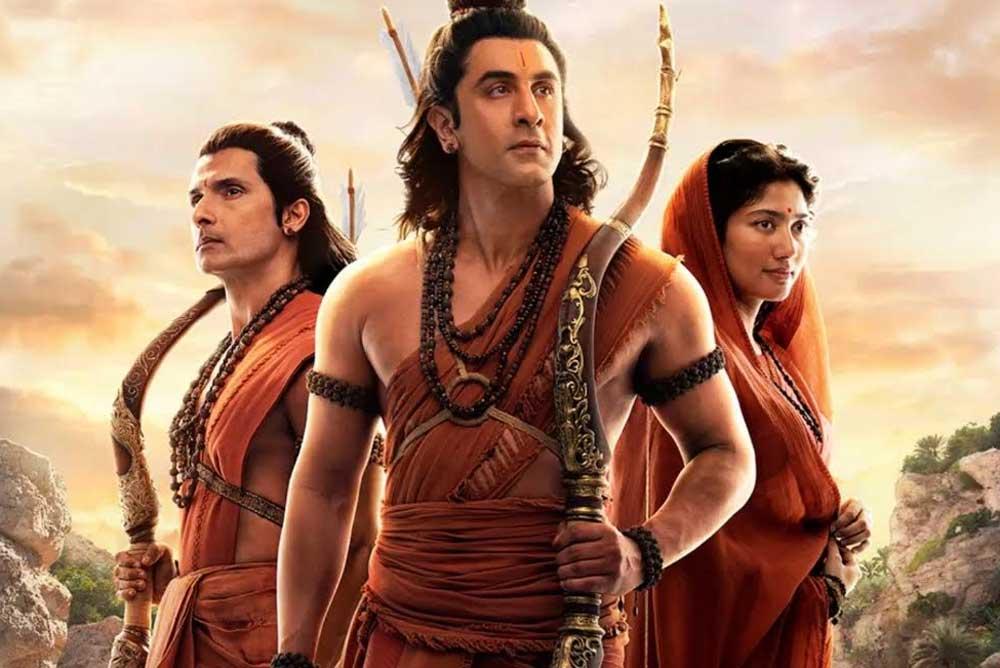
Directed by Nitesh Tiwari and produced by Namit Malhotra, Ramayana transforms one of Hinduism's most revered epics into a lavish cinematic spectacle. Ranbir Kapoor plays Rama, Sai Pallavi portrays Sita and KGF star Yash takes on the role of Ravana. Sunny Deol appears as Hanuman, with Ravi Dubey playing Lakshmana. The story begins in the kingdom of Ayodhya, where Prince Rama is forced into fourteen years of exile following a promise made by his father, King Dasharatha. Accompanied by his wife Sita and younger brother Lakshmana, Rama abandons royal life for the forests. Their peaceful existence is shattered when Ravana, the powerful ten-headed ruler of Lanka, abducts Sita. Rama's determination to rescue her leads him to form an alliance with Hanuman and the vanara army, setting the stage for a monumental conflict. Yet the Ramayana is far more than a battle between good and evil. It explores loyalty, sacrifice, temptation and the responsibilities that come with power. Rama's devotion to duty, Sita's resilience and Ravana's destructive pride have kept the story alive for generations. Adapting such a treasured epic presents an enormous challenge. Indian audiences know these characters intimately, while international viewers may be discovering them for the first time. The filmmakers must balance cultural authenticity with storytelling that crosses borders. The production's reported $450–500 million combined budget makes it an extraordinary gamble for Indian cinema. With elaborate kingdoms, mythical creatures and large-scale battles, its visual ambition rivals Hollywood's most expensive fantasy franchises. But spectacle alone cannot guarantee success. The Ramayana has endured because of its emotional and spiritual depth, not simply its battles. Whether the films can capture that richness will ultimately matter more than the money spent creating their magnificent world.
A CAST CARRYING HUGE EXPECTATIONS
Portraying characters regarded as sacred by millions is no ordinary acting assignment. Ranbir Kapoor's Rama demands quiet authority and emotional restraint rather than conventional action-hero swagger. Sai Pallavi's Sita requires equal sensitivity, portraying a woman whose courage and determination remain central to the epic. Yash faces perhaps the most intriguing challenge. Ravana is not merely a villain; he is a brilliant scholar, formidable warrior and devoted follower of Shiva whose arrogance brings about his downfall. After the international popularity of the KGF films, Yash brings both star power and expectations of a commanding performance. The casting also reflects Indian cinema's growing collaboration between regional industries, bringing together performers with enormous followings across different languages and markets.

GODZILLA MINUS ZERO: JAPAN'S MONSTER RETURNS
While India has invested heavily in mythology, Japan has returned to one of cinema's most recognisable monsters. Directed by Takashi Yamazaki, Godzilla Minus Zero follows the Academy Award-winning Godzilla Minus One, which became an international sensation in 2023. To understand the sequel's appeal, it helps to revisit the earlier film. Set in post-war Japan, Godzilla Minus One follows Kōichi Shikishima, a former kamikaze pilot tormented by survivor's guilt. Returning to a devastated Tokyo, he attempts to rebuild his life alongside Noriko Ōishi, a young woman caring for an orphaned child. Their fragile hopes are threatened when Godzilla emerges from the sea, unleashing destruction on a country already struggling to recover from war. Unlike conventional monster movies, the film places human trauma at its centre. Shikishima's battle is not simply against Godzilla but against the guilt and fear that have consumed him. Godzilla Minus Zero continues this post-war world, returning to the consequences of catastrophe and the threat posed by Japan's most terrifying cinematic creature. Godzilla's appeal has always extended beyond destruction. First introduced in 1954, the monster reflected Japan's anxieties about nuclear devastation. Over seven decades, the character has evolved into an international icon while retaining those darker cultural associations. Yamazaki's approach gives the franchise a distinctive identity. Rather than relying exclusively on spectacular action, his films use the monster to explore grief, survival and humanity's vulnerability. That combination helped Godzilla Minus One win the Oscar for Best Visual Effects, despite its production budget being a fraction of what Hollywood typically spends on comparable spectacles. The new instalment's reported $19 million budget makes its commercial performance particularly striking.
THE WEEKEND THAT SHOOK HOLLYWOOD
According to the worldwide rankings cited in the original report, the weekend of 6th to 8th November produced the following results:
|
Film |
Worldwide Weekend Gross |
|
Godzilla Minus Zero |
$63 million |
|
Ramayana |
$52.2 million |
|
The Cat in the Hat |
$30.5 million |
|
Stray Kids: Run It |
$13.9 million |
|
Clayface |
$13.5 million |
The two leading Asian productions reportedly earned a combined $115.2 million, outperforming Hollywood's major releases. Their success was not confined to domestic audiences. In Britain and Ireland, Ramayana reportedly opened at number one with approximately $2.9 million. Meanwhile, Godzilla Minus Zero was said to have dominated North America, taking around $31 million during its opening weekend. These results suggest that international audiences are increasingly willing to embrace films rooted in cultures and traditions different from their own. However, their financial circumstances are dramatically different. With a reported production budget below $20 million, Godzilla Minus Zero has a considerably lower threshold for recovering its investment. Ramayana, by contrast, must generate substantial revenue across two instalments to justify its enormous, combined expenditure. Indian trade estimates reportedly placed Ramayana's first-week worldwide earnings at approximately $104 million, although international tracking services recorded lower totals because of differences in reporting coverage. The figures underline an important distinction: a film can dominate the box office without necessarily becoming profitable, particularly when production and marketing costs are exceptionally high.

HANS ZIMMER AND A. R. RAHMAN: A MEETING OF MUSICAL WORLDS
One of Ramayana's biggest attractions is its musical collaboration between Hans Zimmer and A. R. Rahman. Zimmer, celebrated for Gladiator, Interstellar and Dune, has become synonymous with sweeping cinematic scores. Rahman, whose achievements include Slumdog Millionaire and Ponniyin Selvan, is renowned for blending Indian musical traditions with contemporary arrangements. Bringing these two composers together is an ambitious creative decision. Music plays an essential role in Indian mythological storytelling, communicating devotion, longing, heroism and sacrifice. For Ramayana, the soundtrack has the opportunity to connect audiences emotionally with its characters while complementing the film's spectacular visuals. It also represents something increasingly common in international cinema: creative partnerships that cross national boundaries without abandoning a film's cultural identity.
IS HOLLYWOOD REALLY LOSING ITS POWER?
Hollywood remains the world's most influential filmmaking industry, supported by extensive distribution networks, enormous marketing budgets and globally established franchises. Two successful Asian releases will not overturn that dominance overnight. Nevertheless, their reported box-office achievements reflect a wider transformation. Indian cinema has built substantial international audiences through films such as RRR, Pathaan and KGF. Japanese entertainment has similarly expanded its global reach through anime and franchises including Godzilla. Streaming services have also changed viewing habits. Subtitles and dubbing are no longer significant obstacles for audiences accustomed to watching entertainment from different countries. What makes Ramayana and Godzilla Minus Zero especially interesting is that neither needs to disguise its cultural origins. The former draws its identity from Indian mythology, while the latter remains closely connected to Japan's history and anxieties. Their international appeal comes partly from offering something Hollywood cannot reproduce in quite the same way. There is also an important lesson about budgets. Japan demonstrates that strong storytelling and inventive visual effects can create worldwide excitement without extravagant spending. India is pursuing the opposite strategy, investing on a Hollywood scale to bring its own cultural stories to international audiences. Both approaches carry risks, but both broaden the possibilities for global cinema.
THE FINAL VERDICT
Ramayana and Godzilla Minus Zero represent two contrasting visions of blockbuster filmmaking. India's mythological epic combines major stars, international creative talent and extraordinary financial ambition. Japan's monster sequel builds on a celebrated franchise, proving that familiar characters and emotionally engaging stories can compete with far more expensive productions. Their long-term success will depend on more than opening-weekend figures. Sustained audience interest, critical reception and financial returns will ultimately determine their place in cinema history. Hollywood is unlikely to surrender its position anytime soon. But the international box office is becoming a more competitive and culturally diverse landscape. For audiences, that is something worth celebrating. The biggest stories no longer have to come from Los Angeles. Sometimes, they arrive from Mumbai or Tokyo.