Melania Trump’s UN Security Council Appearance Sparks Global Criticism.
By: Giselle Gunawardene
Melania Trump’s decision to chair a session of the United Nations Security Council this week has triggered a wave of criticism across social media and international media outlets, with many observers questioning the appropriateness of a First Lady presiding over one of the world’s most powerful diplomatic forums.
The meeting took place during the United States’ rotating presidency of the Security Council, a role that changes hands among member states each month. Traditionally, sessions are chaired by a country’s ambassador to the United Nations or a senior diplomatic representative. However, in a move that surprised many diplomats, Melania Trump was invited to preside over the meeting, which focused on the protection of children in conflict zones and the role of technology in shaping their lives.
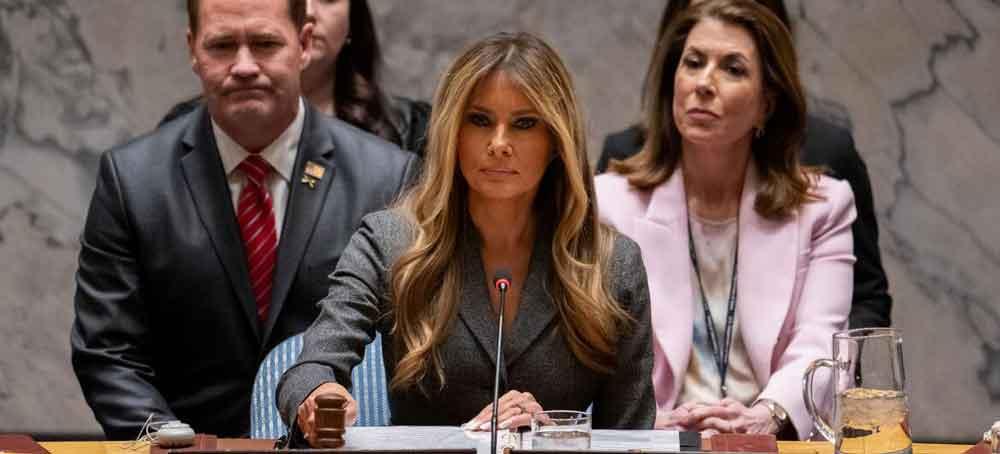
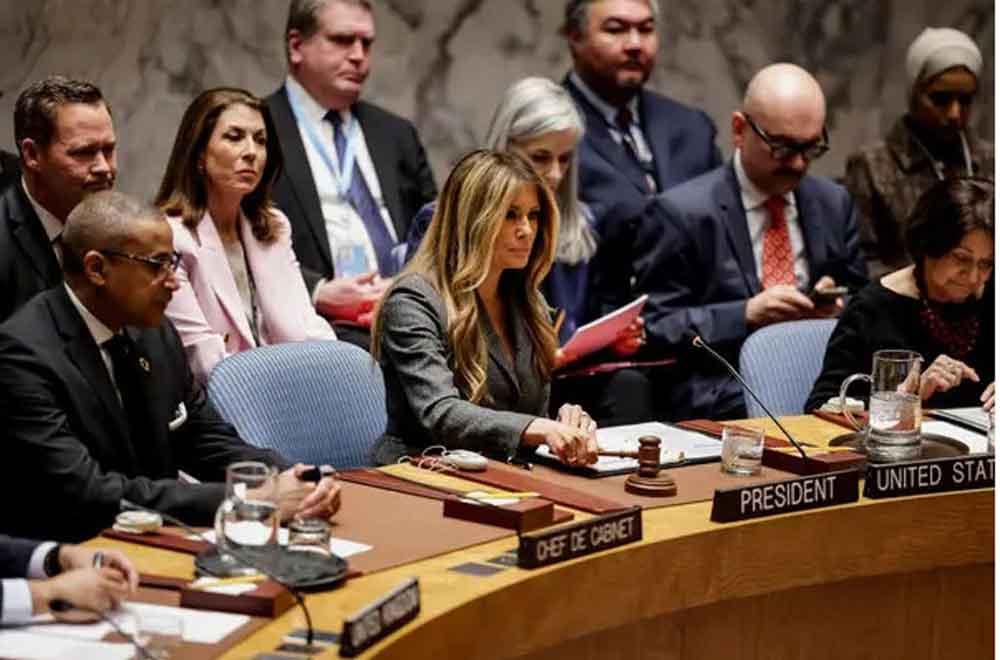
Images of the First Lady seated in the Security Council’s central chair quickly spread around the world. The session itself addressed a serious and widely recognised humanitarian issue, with delegates discussing how digital technology can both endanger and protect children living in areas affected by war.
Melania Trump used her remarks to emphasise the importance of safeguarding young people from online exploitation and propaganda, while also encouraging greater cooperation between governments, humanitarian organisations and technology companies. She called for stronger international action to ensure that children in conflict zones have access to education and protection in an increasingly digital world.
Despite the humanitarian focus of the meeting, the format of the session became the dominant talking point. Social media reaction was overwhelmingly negative, with many users questioning why a political spouse was placed in such a prominent diplomatic role.
Within hours of the meeting, the topic began trending across several social media platforms. Critics described the moment as symbolic of what they viewed as the politicisation of international institutions. Others mocked the optics of the situation, posting images and videos of the session accompanied by sarcastic commentary about the role of a First Lady presiding over a council normally led by seasoned diplomats.
Some commentators suggested that the move blurred the line between official diplomacy and political spectacle. Several users questioned whether the decision undermined the seriousness of the Security Council, which is responsible for addressing conflicts, sanctions and global security challenges.
Memes and short video clips circulated widely online, with critics portraying the scene as an example of celebrity style politics entering traditional diplomatic spaces. In some cases, the commentary focused less on the content of the discussion and more on the symbolism of the moment itself.
Major news outlets also reported the event in a largely critical tone. Coverage across international media often framed the appearance as highly unusual and potentially controversial.
Several prominent newspapers described the decision as a departure from diplomatic norms. Analysts interviewed by global broadcasters questioned whether the session should have been chaired by the United States ambassador to the United Nations instead of the First Lady.
Editorial commentary in some outlets suggested the move risked diminishing the credibility of the Security Council’s proceedings. Critics argued that the chamber is designed to serve as a forum for official representatives who have direct responsibility for national policy and international negotiations.
Television coverage frequently emphasised the rarity of the moment, noting that the Security Council chamber is traditionally occupied by ambassadors, foreign ministers and heads of state. For many viewers, the presence of a First Lady in the chair appeared unusual and prompted questions about protocol.
Some commentators argued that the decision reflected a broader shift toward spectacle driven politics, where symbolic gestures and media visibility sometimes take precedence over traditional diplomatic practice.
In the United States, reaction was sharply divided but often critical in the media. Several commentators suggested that the move was unnecessary and potentially distracting from the serious humanitarian issues being discussed.
Political analysts noted that the subject of children in conflict zones is widely recognised as a major global concern. However, they argued that the unusual format of the meeting overshadowed the substance of the discussion.
In several interviews, former diplomats expressed concern that the event could set an unusual precedent. They warned that if political spouses begin taking on ceremonial roles within formal diplomatic institutions, it could create confusion about the responsibilities and authority of official representatives.
Humanitarian groups also expressed mixed reactions. While many organisations welcomed attention being drawn to the plight of children living in conflict zones, some advocates said they worried that the controversy surrounding the meeting might distract from the urgent issues that were meant to be highlighted.
Representatives from several non-governmental organisations said the international community should remain focused on the realities facing young people in war affected regions, including displacement, trauma and the risks posed by digital manipulation and recruitment by armed groups.
Diplomatic observers also pointed out that the United States does have discretion when holding the rotating presidency of the Security Council. The country presiding over the council can organise thematic discussions and determine who chairs certain sessions.
Nevertheless, critics argued that the choice of chair sends a message about how seriously a country approaches the institution. Some analysts suggested that appointing a First Lady to preside over the meeting risked reinforcing perceptions that political symbolism was being prioritised over diplomatic tradition.
Supporters of the decision were less vocal but argued that high profile figures can sometimes help draw attention to humanitarian issues that might otherwise struggle to dominate international headlines.
They noted that political spouses around the world have increasingly become advocates for social causes, using their platforms to highlight issues such as education, health and human rights. From that perspective, they argued that Melania Trump’s participation could be viewed as an attempt to amplify concerns about children living in conflict zones.
However, the negative reaction online and in many major media outlets demonstrated how sensitive diplomatic symbolism can be in the modern political environment. In an age where images and narratives spread instantly across digital platforms, even small departures from protocol can quickly become global talking points.
For many observers, the controversy surrounding the session illustrated the delicate balance between raising awareness and maintaining the formal traditions of international institutions.
Whether the moment will have any lasting impact on diplomatic practice remains uncertain. It is unlikely that First Ladies or political spouses will regularly chair Security Council meetings in the future.
Yet the debate that followed revealed how quickly public opinion can shape the narrative around international events. While the meeting aimed to highlight the urgent need to protect children in conflict zones, the global conversation that followed focused largely on the symbolism of who was sitting in the chair.
In that sense, the episode may ultimately serve as a reminder that in modern diplomacy, optics can sometimes matter almost as much as policy.