THE STORY BEHIND PETTAH’S JAMI UL-ALFAR MOSQUE, THE RED MOSQUE
BY YASHMITHA SRITHERAN
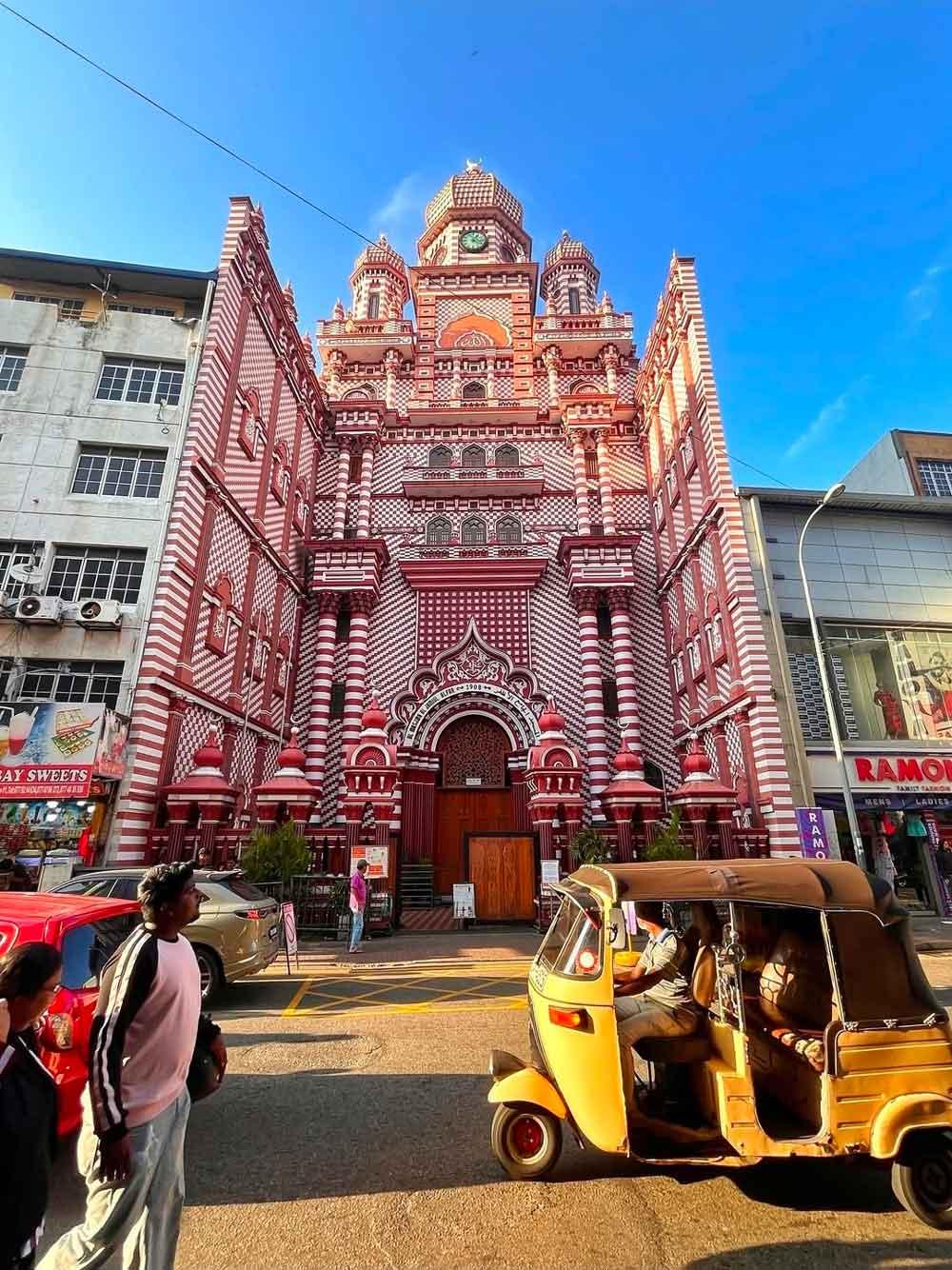
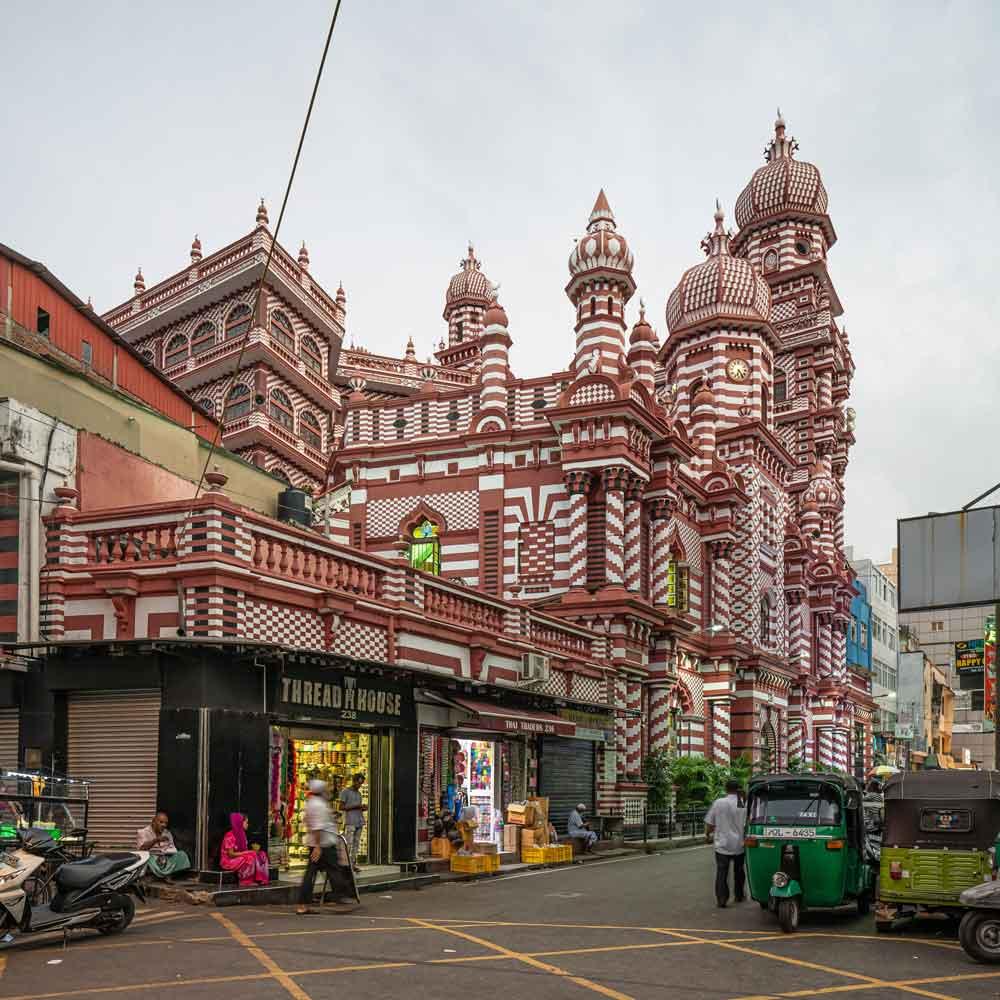
In the heart of Colombo’s bustling Pettah district, surrounded by crowded streets, colourful shops, busy traders and the constant movement of people, stands one of Sri Lanka’s most recognisable architectural landmarks. With its striking red and white exterior, towering minarets and intricate patterns, the Jami Ul-Alfar Mosque is a building that immediately captures attention. Commonly known as the Red Mosque, it has stood for more than a century, representing an important part of Colombo’s religious, architectural and cultural heritage.
Located on Second Cross Street in Pettah, the mosque is more than a place of worship. It reflects the history of the Muslim trading community that contributed to the development of Colombo as a commercial centre. Today, it remains an active religious institution and a popular attraction for visitors interested in discovering the city’s historic landmarks.
The story of Jami Ul-Alfar Mosque began in 1908, when members of the Indian Muslim trading community in Pettah recognised the need for a dedicated place of worship. As an important commercial district, Pettah was home to merchants and traders from different backgrounds, including a well-established Muslim community.
For Muslims living and working in the area, having a mosque nearby was essential for performing their five daily prayers and attending the congregational Friday prayer, known as Jummah. To meet this need, local South Indian Muslim businessmen came together to establish a mosque that would serve their community. According to the mosque’s official historical records, the land was purchased and donated by these businessmen for religious purposes. Following its construction, the mosque was registered as a trust, an arrangement that continues today, with trustees appointed from the descendants of the original donors and trustees.
Construction commenced in 1908 and was completed in 1909. What began as a place of worship for the local community would eventually become one of Colombo’s most distinctive and frequently photographed buildings. One of the most interesting aspects of the mosque’s history is the person responsible for its design. Habibu Lebbe Saibu Lebbe was entrusted with designing and constructing the building, drawing inspiration from architectural references provided by the South Indian traders who commissioned the project.
The design incorporated features associated with Indo-Saracenic architecture, a style that combines elements of Indian and Islamic architectural traditions with influences from European design. The result was a building that stood apart from the surrounding commercial structures of Pettah.
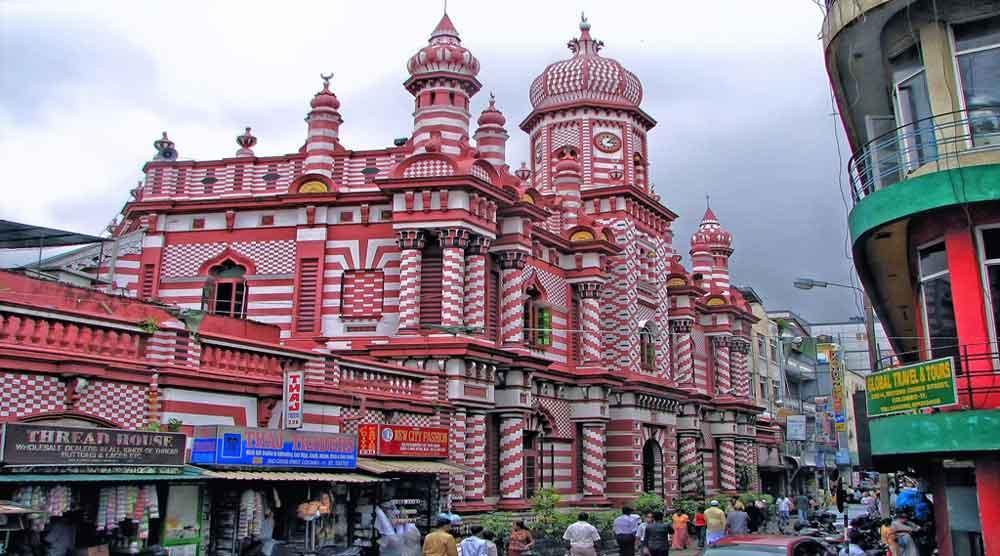
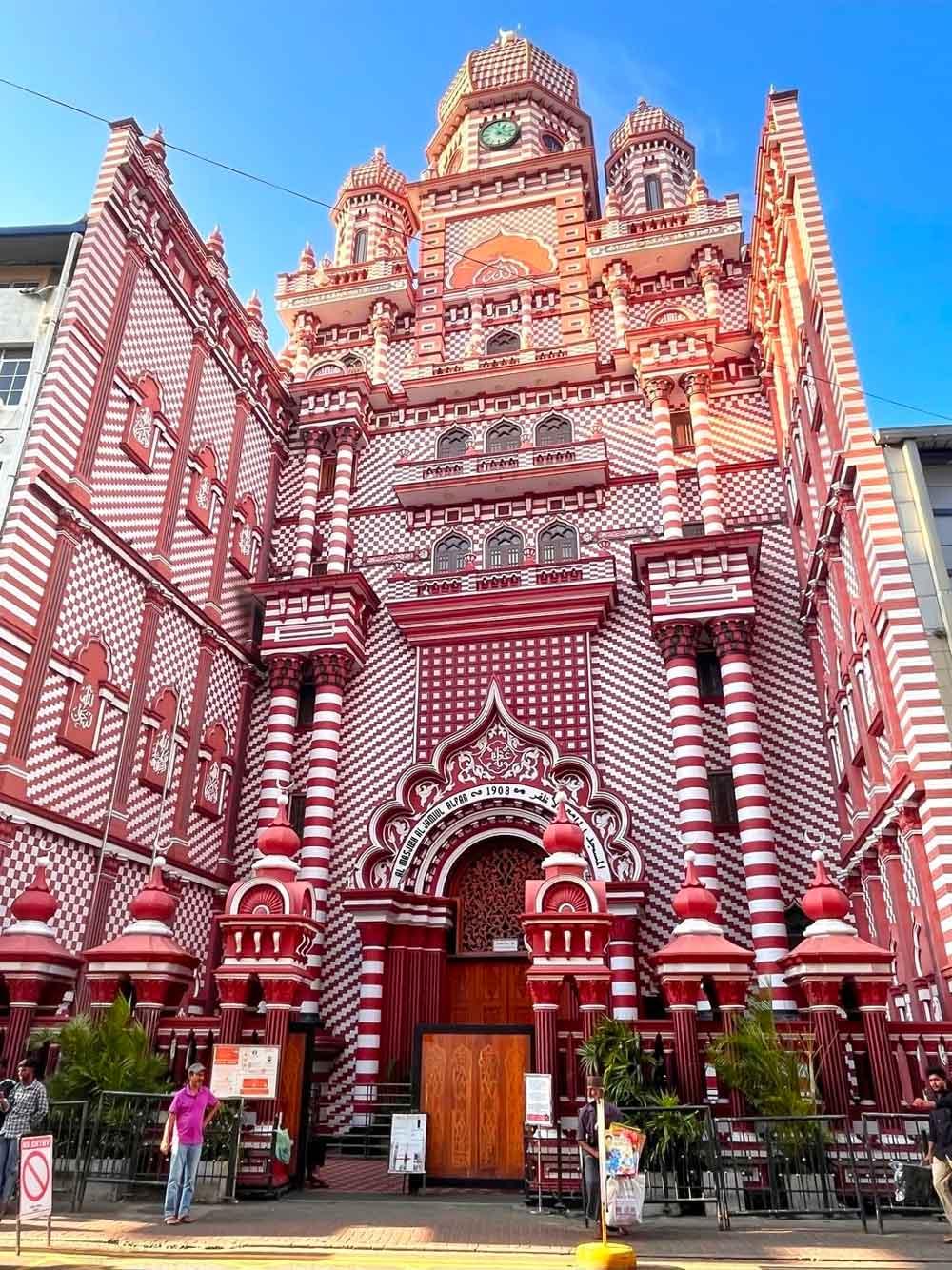
The mosque’s most recognisable feature is undoubtedly its red and white exterior. Alternating patterns cover the walls, arches, columns and minarets, creating a distinctive appearance that has become closely associated with the building. Unlike structures that rely on a single colour or relatively simple decorative features, Jami Ul-Alfar Mosque uses repeated geometric patterns to create visual interest throughout its exterior. The combination of red and white gives the building a striking identity, making it easily recognisable even among Pettah’s crowded streets.
Its architectural details include arches, domes, minarets and decorative elements that reflect the influences behind its construction. The original two-storey building also featured a clock tower, adding another distinctive element to its appearance. The mosque’s architecture is often described as a combination of Indo-Islamic and Indian traditions, with Gothic Revival and Neoclassical influences. These different styles contribute to the building’s unusual character and demonstrate how architectural ideas from different regions could be brought together in a single structure.
Beyond its architectural beauty, Jami Ul-Alfar Mosque also tells a story about the communities that helped shape Colombo. For centuries, Sri Lanka has maintained commercial connections with merchants travelling across the Indian Ocean. Its location along important maritime trading routes attracted traders interested in commodities such as spices, gemstones and pearls.
Arab and South Asian merchants played significant roles in the island’s trading history, contributing to the establishment and development of Muslim communities in different parts of Sri Lanka. Over generations, these communities became an important part of the country’s religious, cultural and commercial life. Pettah, in particular, developed into a major centre of business and trade. Its streets became home to merchants, shops, markets and places of worship representing different communities.
The establishment of Jami Ul-Alfar Mosque reflected the religious needs of the Muslim traders who lived and worked in this busy commercial environment. Its continued presence today serves as a reminder of the relationship between trade, community life and religious institutions in Colombo’s history. When the mosque was originally constructed, it was designed to accommodate approximately 1,500 worshippers. However, historical accounts indicate that around 500 people were attending prayers during its early years.
As the Muslim community grew and the number of people attending prayers increased, the available space gradually became insufficient. This was particularly noticeable during Friday congregational prayers, when larger numbers of worshippers gathered at the mosque. By the early 1970s, the need for additional space had become increasingly apparent. In 1975, the mosque began an expansion programme with assistance from the Haji Omar Trust.
As part of this development, adjoining properties were acquired to allow the mosque to accommodate a growing congregation. The expansion was intended to increase its capacity to approximately 10,000 worshippers, representing a significant development from the original structure.
These changes reflected the mosque’s continuing importance to the Muslim community and the need to adapt its facilities to changing circumstances. Despite the expansion, the building has maintained the distinctive architectural character that made it one of Colombo’s most recognisable landmarks.
Today, Jami Ul-Alfar Mosque continues to serve as an active place of Islamic worship while attracting visitors interested in its history and architecture. Its striking exterior has made it a popular subject for photography, particularly among tourists exploring Pettah and its surrounding streets. The contrast between the mosque’s carefully arranged patterns and the busy commercial environment around it creates one of Colombo’s most memorable urban scenes.
According to the mosque’s official website, visitors are welcome to explore and appreciate its cultural and religious significance without paying an admission fee. The administration specifically states that mosque tours are free and cautions visitors against individuals outside the premises who may attempt to collect money. The mosque also makes religious educational material available through its official website, including a collection of more than 360 recorded Tamil Jummah sermons that can be accessed for listening and downloading.
What makes Jami Ul-Alfar Mosque particularly significant is its ability to connect different aspects of Colombo’s history within a single landmark. Its architecture reflects influences from different traditions, while its establishment highlights the contribution of Muslim merchants to the development of Pettah.
More than a century after its construction, the mosque continues to hold an important place in the city’s religious and cultural landscape. As Colombo continues to develop, with modern buildings and changing commercial spaces transforming its appearance, Jami Ul-Alfar Mosque remains a reminder of the city’s architectural heritage. For those walking through the busy streets of Pettah, the Red Mosque offers more than an opportunity to admire an unusual building. Behind its red and white patterns lies a history of faith, community, craftsmanship and continuity. It is this combination of architectural beauty and historical significance that makes Jami Ul-Alfar Mosque one of Colombo’s most treasured landmarks, preserving a story that continues to be part of the city’s identity.