Aloka the Peace Dog Arrives in Sri Lanka: A Walk for Compassion, Coexistence, and Change.
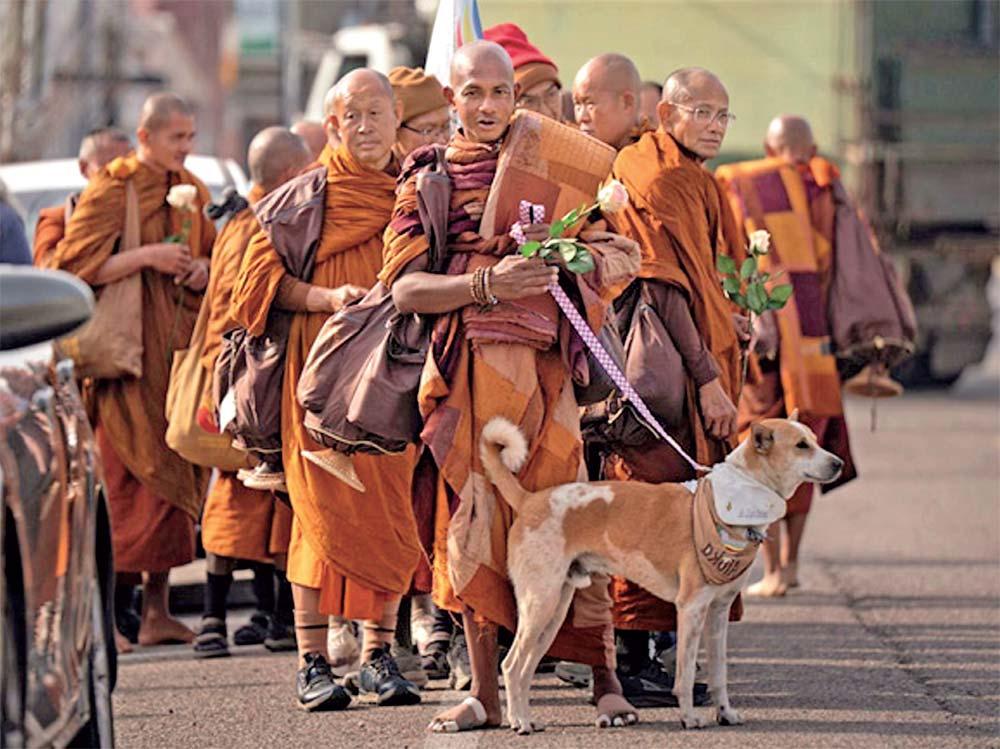
The arrival of Aloka, affectionately known as the peace dog, has sparked a wave of reflection, curiosity, and hope across Sri Lanka. His presence has resonated deeply with animal welfare advocates and compassionate citizens who view this moment as more than a ceremonial visit. For many, it represents a rare opportunity to inspire meaningful social change and to reexamine how society treats its most vulnerable living beings. Aloka is not an ordinary dog. He became a global symbol of peace and unity after completing a remarkable 2,300-mile walking journey across the United States alongside Buddhist monks. During that journey, he touched the hearts of countless people, drawing attention to kindness, mindfulness, and coexistence. Now, as he sets foot in Sri Lanka to take part in a historic Walk for Peace programme, his presence carries a quiet yet powerful message that extends far beyond symbolism.
For animal welfare advocates across the island, Aloka’s arrival is both uplifting and significant. Many see him as a living mirror that reflects the current realities faced by Sri Lanka’s community dogs. These dogs have long been part of the island’s social fabric. They live among people, share public spaces, and in many ways form an unspoken bond with communities. Yet despite this coexistence, they often remain overlooked, under protected, and misunderstood. The term community dogs is widely used to describe them, but in practice, their welfare is inconsistent, and their lives are frequently marked by hardship. Activists hope that the attention generated by Aloka’s visit will prompt both the public and policymakers to reconsider existing attitudes and approaches toward these animals.
For decades, Sri Lanka has struggled with the challenge of managing its street dog population. In many instances, responses have been reactive rather than strategic, sometimes relying on outdated or inhumane methods that fail to address the root of the issue. Animal welfare groups have consistently advocated for evidence-based solutions that are both humane and effective. Among the most widely supported approaches are sterilization programmes and comprehensive anti-rabies vaccination campaigns. These strategies have been proven globally to reduce population growth, improve animal health, and minimize the risk of disease transmission. In addition to rabies control, veterinarians emphasize the importance of administering core vaccines such as those that protect against distemper, hepatitis, leptospirosis, and parvovirus. These diseases pose serious risks not only to dogs but also to the wider community, making preventive care essential for public health.
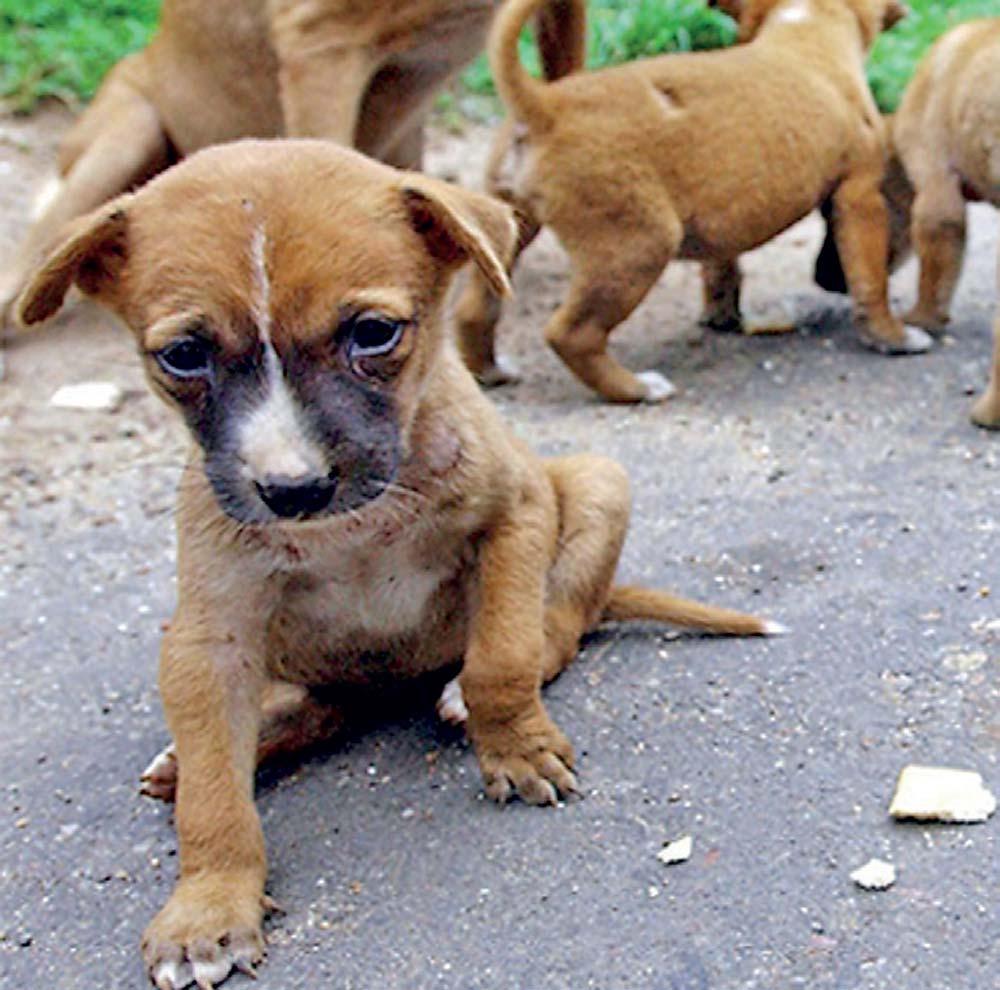
Aloka’s presence has helped bring renewed attention to these issues, encouraging discussions that extend beyond the animal welfare community. His story has the power to engage people from all walks of life, including those who may not have previously considered the challenges faced by street animals. In doing so, he creates a bridge between compassion and policy, highlighting the need for solutions that are rooted in empathy as well as science. At the same time, his visit has drawn attention to specific challenges faced by animal welfare organizations operating in certain parts of the country. In areas such as Port City Colombo and other government managed spaces, restrictions on feeding, medical treatment, and sterilization of dogs have raised serious concerns among activists. These limitations, they argue, not only hinder humane care but also contribute to the very problems authorities seek to control.
Without access to basic interventions such as food, vaccination, and sterilization, dog populations can grow unchecked, leading to increased suffering and heightened public health risks.
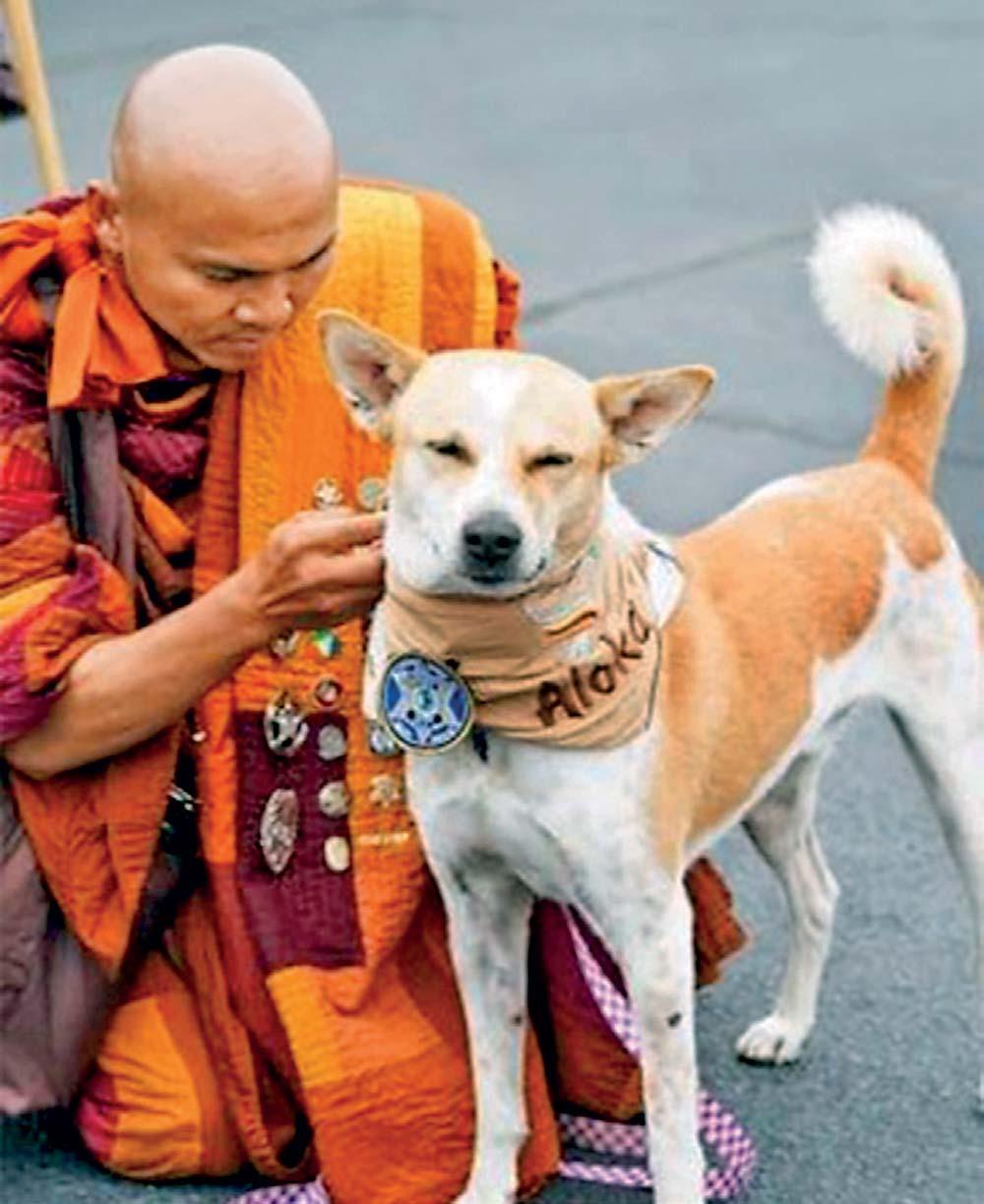 Animal welfare advocates are calling for a more collaborative approach that brings together government authorities, local organizations, veterinarians, and communities. Many of these organizations have spent years developing practical and culturally appropriate strategies tailored to Sri Lanka’s unique environment. Their experience and knowledge represent a valuable resource that can inform national policy and improve outcomes for both people and animals. Activists emphasize that compassion and responsibility must go hand in hand. Celebrating Aloka as a symbol of peace should also inspire a commitment to extend that same compassion to the thousands of dogs that live quietly among us, often unseen and unheard.
As preparations for the Walk for Peace continue, attention has also turned to ensuring Aloka’s safety during the event. Organizers are carefully planning security arrangements to protect him while allowing him to participate fully in the programme. One of the concerns raised involves the presence of local community dogs along the route. These dogs, acting on instinct, may react to the arrival of an unfamiliar animal in their territory. While this is a natural behaviour, it presents logistical challenges that must be addressed thoughtfully.
Animal welfare advocates have urged that any protective measures be implemented in a humane and non-intrusive manner. Instead of aggressive control methods, they have suggested the creation of gentle guard corridors that can guide and protect Aloka without causing harm or distress to local dogs. This approach reflects the broader message of the event itself, which emphasizes coexistence and respect for all living beings. It is a reminder that safety and compassion are not mutually exclusive, and that even in complex situations, humane solutions are possible.
The spiritual dimension of Aloka’s journey adds another layer of meaning to his visit. The delegation accompanying him includes Buddhist monks from the United States, whose presence underscores the connection between spiritual practice and compassionate action. Their journey in Sri Lanka began with a visit to the sacred Attanagalla Maha Viharaya, a site of deep historical and religious significance. From there, they travelled to Anuradhapura, where they are set to receive a sapling from the revered Sri Maha Bodhi, one of the most sacred symbols in Buddhism. This sapling represents continuity, enlightenment, and the enduring power of faith.
The monks will then proceed on foot to the Ruwanweli Maha Seya, continuing a journey that blends devotion with a universal message of peace. The official Walk for Peace is scheduled to begin on Wednesday, covering the route from Dambulla to Matale. The event will culminate on April 28 at Independence Square, where a state ceremony is expected to take place. This final gathering is anticipated to bring together leaders, citizens, and participants from diverse backgrounds, united by a shared commitment to peace and compassion.
For the people of Sri Lanka, Aloka’s journey offers a rare and inspiring experience. It is an opportunity to witness a living symbol of peace in motion and to take part in a movement that transcends boundaries of nationality, religion, and species. The simplicity of a dog walking alongside monks carries a profound message that resonates across cultures. It speaks of humility, connection, and the possibility of harmony in a complex world.
Citizens are encouraged to join the Walk for Peace, not only as participants but as observers and reflectors. The event invites individuals to consider the deeper meaning behind Aloka’s presence. It challenges people to think about the ways in which compassion can be practiced in everyday life, from small acts of kindness to larger commitments that shape communities and policies. At its core, the message is clear. Compassion is not selective. It cannot be limited to certain beings while excluding others. True peace begins with recognizing the intrinsic value of all life and acting in ways that honour that understanding.
As Sri Lanka welcomes Aloka, there is a sense that this moment holds lasting significance. His quiet footsteps carry with them the potential to inspire change that goes beyond the duration of the event. Whether through increased awareness, improved policies, or a shift in public attitudes, the impact of his visit may continue to unfold in the months and years ahead. For the countless voiceless animals who share this island, that possibility represents hope. In the end, Aloka’s journey is not just about a walk. It is about the path it illuminates for others to follow. It is about the choices people make when faced with the opportunity to act with kindness. And it is about the belief that even small gestures of compassion can create ripples that lead to meaningful transformation.