Female Genital Mutilation in Sri Lanka
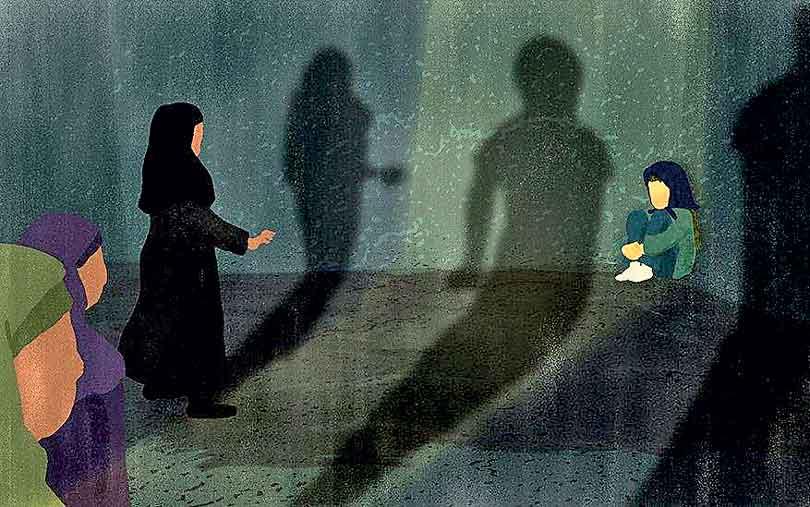
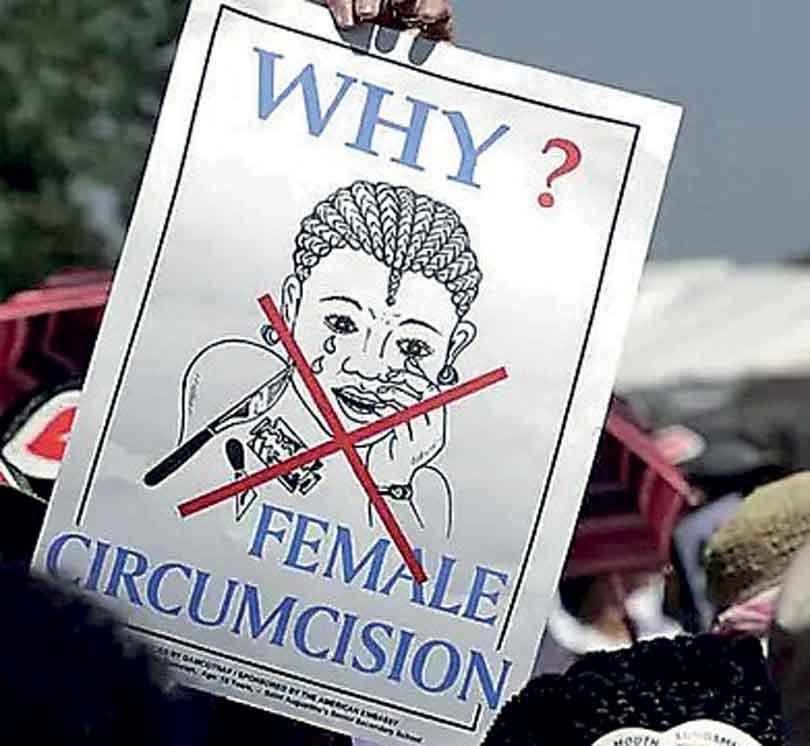
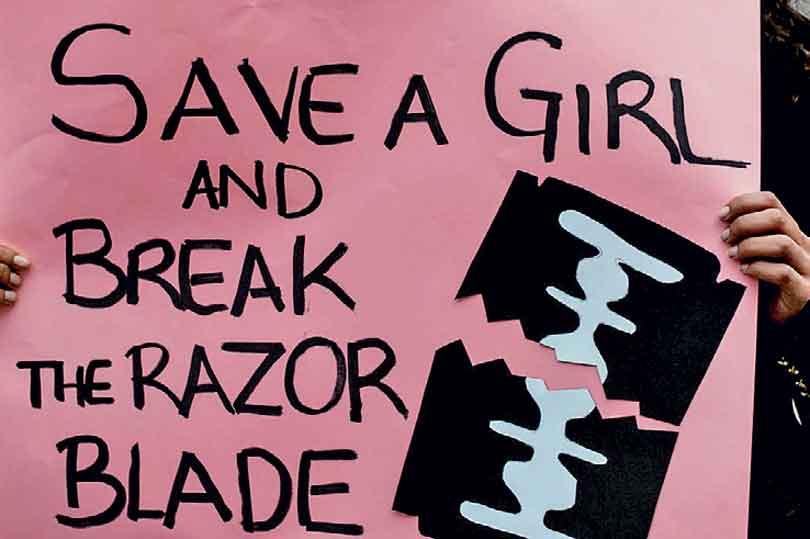
 Female genital mutilation (FGM) is a documented practice in Sri Lanka. This is not an opinion or allegation; it is acknowledged by multiple authoritative sources.
- CEDAW (2017) raised concerns that FGM continues in Sri Lanka and noted the absence of a specific law criminalizing it.
- Peer-reviewed research (Reproductive Health, 2021) documented the practice through community-based studies across several districts, with awareness among religious leaders, healthcare workers, and legal professionals.
- The FGM/C Research Initiative reported FGM in some Sri Lankan communities, often performed in infancy or early childhood by traditional practitioners or medical professionals.
- Sri Lanka’s Ministry of Health (2018) issued a circular prohibiting medical practitioners from performing FGM, an acknowledgment that it was occurring in clinical settings.
Globally, FGM affects over 200 million women and girls and is practiced in at least 94 countries. It exists across religious and cultural lines, including Muslim, Christian, Jewish (historically), and animist communities. It is not confined to any one group, it persists wherever silence is enforced and survivors are punished for speaking. The question is not whether FGM exists in Sri Lanka. The question is why Sri Lanka still lacks a specific law criminalizing it and why exposing this reality so often leads to silencing of survivors and activists.
The Legal Gap
What makes Sri Lanka's position particularly troubling is that out of the 94 countries where FGM is practiced, 59 countries have specifically prohibited it under their national laws, either through a specific anti-FGM law or by prohibiting it under a criminal provision in the criminal or penal code, child protection laws, violence against women laws, or domestic violence laws Equality Now. Since 2020, Sudan, Indonesia, Finland, Poland, and the United States have all passed federal laws criminalizing FGM, while France has strengthened its penal code, and the European Union has adopted new regional legislation. Eighteen African countries including Benin, Burkina Faso, Chad, Egypt, Ethiopia, Ghana, Kenya, Niger, Senegal, Tanzania, and Togo have enacted specific laws criminalizing FGM, with penalties ranging from six months to life in prison. Fourteen out of the current 27 EU Member States have specific anti-FGM legislation. Twelve industrialized countries that receive immigrants from countries where FGM is practiced including Australia, Canada, the United Kingdom, and the United States have passed laws criminalizing the practice. Sri Lanka has done none of this.
Despite being a signatory to international human rights instruments that call for the elimination of FGM, despite the UN raising concerns, despite documented evidence from research and healthcare workers, Sri Lanka has no specific law in its penal code criminalizing FGM. Research published in 2021 explicitly noted the need to work closely with the Sri Lankan government to promote collaboration between the health, education, and justice sectors, and called for accessible support services for women affected by FGM. That was nearly four years ago. Nothing has changed.
The Silencing
Female genital mutilation does not become ‘non-existing’ because a community chooses to silence the activists or the survivors from talking about it; it thrives in it, especially when survivors are made to regret ever saying, “It happened to me.” It continues in private clinics, in whispered family conversations, in the careful maintenance of a practice that everyone knows about but no one is allowed to name. And I'm done pretending that silence is anything other than what it is: protection for perpetrators, dressed up as cultural sensitivity. The global pattern of FGM survives in 2025 not through ignorance, but through deliberate, strategic silencing by people who claim to care about truth, faith, and the wellbeing of their daughters.
What happens when FGM gets exposed
First comes the blanket denial. Not we've addressed it. Not we're working to eliminate it.
But: "This does not exist in our community or country."
This claim persists even when:
- The United Nations has documented FGM in the region
- Local healthcare workers have quietly acknowledged performing these procedures
- Research organizations have published reports with data
- Survivors have spoken, often anonymously, sometimes publicly, always at tremendous personal cost
But the first line of defense is always: prove it exists. Secondly, the act of "Show Us One Real Name". When denial stops working, the demand shifts. "Show us one real person. One name. One family. One woman who will come forward publicly and confirm this." This sounds reasonable, doesn't it? Like basic verification. But here's what that demand actually is: a trap. Because survivors of FGM live with:
- Physical trauma that never fully heals
- Psychological damage from violation by their own families
- Fear of ostracism if they speak
- Pressure to minimize their experience to "protect" the community or country
- The knowledge that coming forward publicly means becoming a target
Most were cut as infants. Many were told it was "necessary" or "religious duty." Some don't even have language for what was done to them until years later. So, demanding they publicly identify themselves isn't verification. It's social extortion. It's saying: Expose yourself to retaliation, or we won't believe you. And when survivors do speak anonymously, with journalistic protections, their testimony is dismissed as "unverifiable," "exaggerated," possibly "fabricated." When the story can't be denied and the "show us one name" gambit doesn't work, the attack shifts to the storyteller.
How Religion Gets Weaponized to Protect Harm
One of the most effective ways to shut down any conversation about FGM is to frame opposition as an attack on faith. So, let's address this directly. If you are people of faith, if you claim to follow religious principles, if you say you care about justice and the protection of the vulnerable, how are you still cutting girls? And more importantly: How are you silencing the ones who speak about being cut? Because here's what we know:
FGM is not mandated by any major religious text.
This isn't my opinion. This is the position of:
- Al-Azhar University, the highest authority in Sunni Islamic scholarship
- The Organization of Islamic Cooperation
- Leading Islamic scholars globally, many of whom have issued fatwas condemning FGM
- Christian religious leaders in regions where FGM exists in Christian communities
- Jewish scholars who have condemned historical practices
FGM exists in Muslim communities. It also exists in Christian communities (Ethiopia, Kenya, Nigeria), Jewish communities (historically), and animist communities. It is not a religious practice. It is a cultural practice that has been retro-fitted with religious justification to make it harder to oppose. So, when someone says, "This is part of our faith," what they're really saying is: "Don't question this, or you're questioning all of us." It's rhetorical blackmail. And it works because institutions; governments, media, NGOs are terrified of being accused of religious bigotry, cultural imperialism, or "Western imposition." So, they stay silent. And girls keep being cut.
Who Are You Protecting?
This is the question that needs to be asked plainly: Who are you protecting when you silence survivors? Who wins when activists are pressured into retreat? Because I can tell you who doesn't benefit: The girls being cut right now. The survivors living with trauma. The next generation who will inherit this practice because you refused to stop it.
So, who does benefit?
- Community leaders who don't want their authority questioned
- Religious figures who've endorsed or stayed silent on the practice
- Families who don't want to face what they've done to their daughters
- Healthcare workers profiting from performing procedures
- Anyone invested in maintaining the status quo
You're not protecting girls. You're protecting the system that harms them. And you're calling it "cultural sensitivity" or "religious respect" or "community solidarity." But let's call it what it is: protecting perpetrators. And punishing survivors for speaking.
The Questions You Need to Answer
So here are the questions I want answered, not with deflection, not with demands for names, not with attacks on journalists, but with honesty:
1. If this practice is harmless, why do you fight so hard to keep it hidden?
2. If this practice is religious, why do your own highest religious authorities condemn it?
3. If survivors are lying, why are you so afraid of them speaking?
4. If you truly care about girls, why is your first instinct to silence those who were harmed rather than stop those who are harming?
5. If you are people of faith and morality, how do you justify cutting children and calling it holy?
6. When you demand "one real name," are you actually seeking truth or just trying to make the cost of speaking so high that no one will pay it?
8. When your daughter or granddaughter is cut, and years later she comes to you in pain; physical, psychological, sexual, will you tell her it was worth it?
9. And when she asks you, "Why did you let them do this to me?" what will you say?
Answer those questions honestly. Not to me. Not to activists. Not to human rights organizations. Answer them to yourselves. Because you can silence stories. You can pressure the activists and survivors. You can dismiss them as liars. But you can't escape the truth: Every time you demand silence, you are choosing perpetrators over victims. Every time you attack an activist, you are protecting harm. Every time you say "prove it with a name," you are making sure no one ever will. And that is on you.
What Accountability Actually Looks Like
Real accountability isn't:
- Demanding survivors publicly identify themselves
- Threatening journalists who report harm
- Issuing statements about "misrepresentation"
- Medicalizing mutilation and calling it "safer"
Real accountability is:
- Admitting the practice exists in your community
- Supporting survivors medically, psychologically, legally
- Ending the practice, completely, with no exceptions
- Protecting those who speak about being harmed instead of silencing them
- Working with not against journalists, researchers, and activists
- Advocating for laws that explicitly criminalize all forms of FGM
- Confronting religious leaders, healthcare workers, and family members who perpetuate the practice
But you're not doing any of that. Because you've chosen reputation over reality. And girls are paying the price.
Your Silence Is a Choice
Silence is not neutrality. It is not respect. It is not protection. Silence is complicity. Complicity is at work, when survivors are told to stay quiet, when journalists are pressured into retreat, when harm is defended through selective interpretations of faith or culture and when institutions demand “proof” they know cannot be safely given. Responsibility does not rest with survivors. It rests with institutions.
Religious authorities that refuse to clearly condemn FGM, governments that fail to criminalize it, healthcare professionals who perform or facilitate it, and local administrative bodies that look the other way all play a role in sustaining this harm despite overwhelming medical evidence that FGM causes lasting physical and psychological damage. FGM does not persist because of ignorance. The harm is well established. It persists because accountability is avoided.
Sri Lanka’s continued lack of a specific law criminalizing FGM sends a dangerous message: that enforcement is optional and protection is conditional. Without clear legislation, healthcare regulation, and municipal oversight, responsibility is diffused and survivors are left unprotected. If ending FGM is truly the goal, action must be institutional. That means unambiguous legal prohibition, accountability across religious and civic structures, enforcement within healthcare systems, and protection for survivors and activists. Ending FGM does not begin with silence. It begins when institutions are held to account.