THE MALDIVES THROUGH THE ARTIST LENS
BY: FARZANA BADUEL
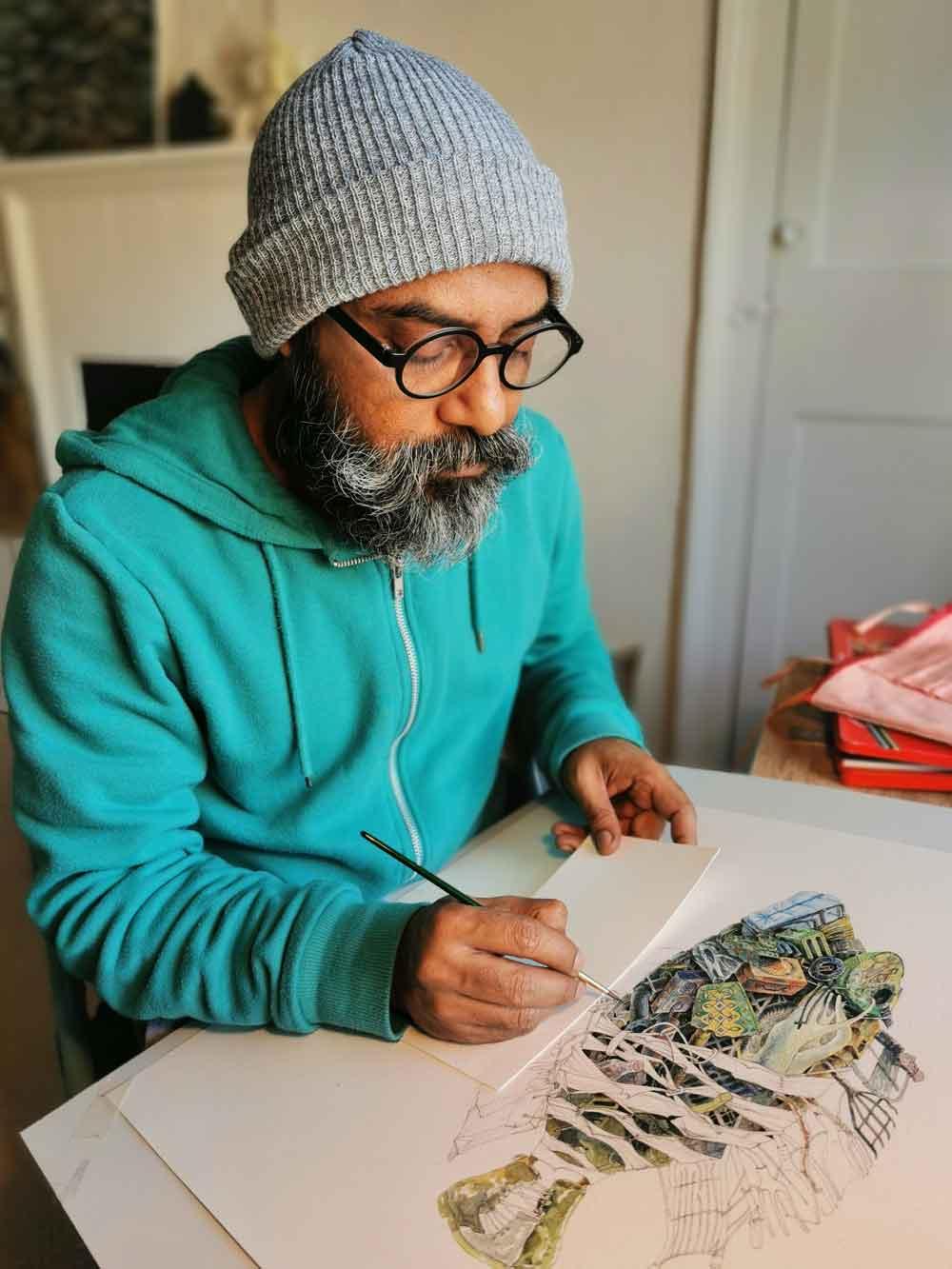
Maldivian Artist Afzal Shaafiu
On a recent visit to the Maldives, the photographer and author Ismail Abdulla took me to Gallery 350 in Malé. My knowledge of the country had largely been shaped by the images seen around the world: white beaches, clear water and villas extending into the ocean. The beauty is real. Even after years of seeing the photographs, arriving there still brings a sense of wonder. Ismail wanted to show me something else. His 1992 book, Maldives Impressions, documented the culture and everyday life of the islands as the country’s international tourism identity was developing. More than three decades later, he introduced me to artists creating their own record of Maldivian life.
Gallery 350 is an artist-run contemporary art space supporting experimentation and socially engaged practice. During my visit, it was hosting Ocean Junk: Reimagined, a solo exhibition by Afzal Shaafiu, widely known as Afu. The creatures on its walls resembled fish, although none existed in nature. Broken utensils, discarded plastic, pieces of machinery and other remnants of human activity had become fins, organs and skeletons. Each species had been named and presented with the precision of a scientific illustration.
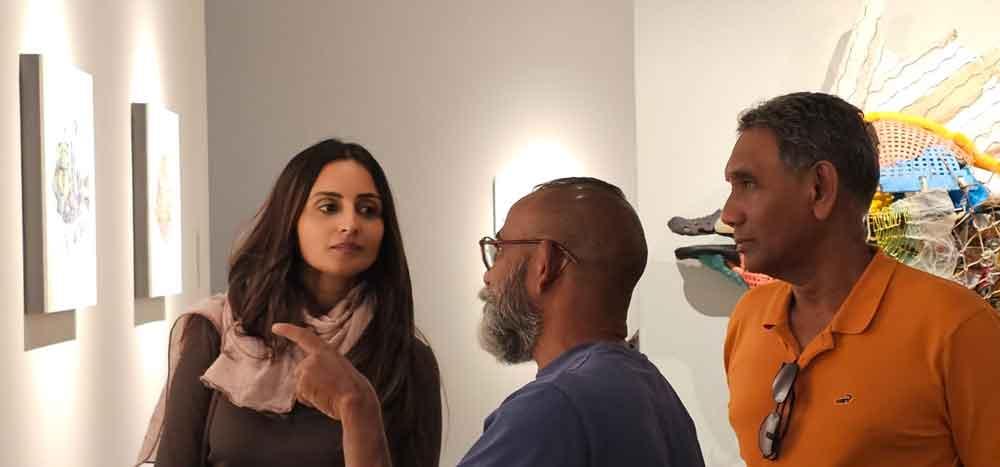
Afu Showing me his art at Gallery 350
Imagining Another Ocean
Afu explained that Ocean Junk began with objects he encountered during reef and beach clean-ups in the Maldives. Things once used in homes, workplaces and boats had found their way into the marine environment. The series took shape while he was living in Sri Lanka. Seeing similar waste in the waterways around Nugegoda brought back memories of the Maldives and changed how he viewed these discarded objects. The ocean does not recognise the borders we draw on maps. What enters the water in one place may travel far beyond it.
Afu began imagining marine species that might emerge from the relationship between nature and human consumption. His fictional creatures borrow the visual conventions of natural history, as though they have been observed, classified and recorded by researchers. Yet their bodies contain the products people manufacture, use and abandon. The humour draws you in before the darker possibility emerges these may be illustrations from a future in which familiar marine species have disappeared and life has adapted to our waste. Afu does not call himself an environmentalist. His practice responds more broadly to the social, political and natural world, leaving viewers to reach their own conclusions. Ocean Junk does not issue instructions. It presents an imagined world whose ingredients are familiar.
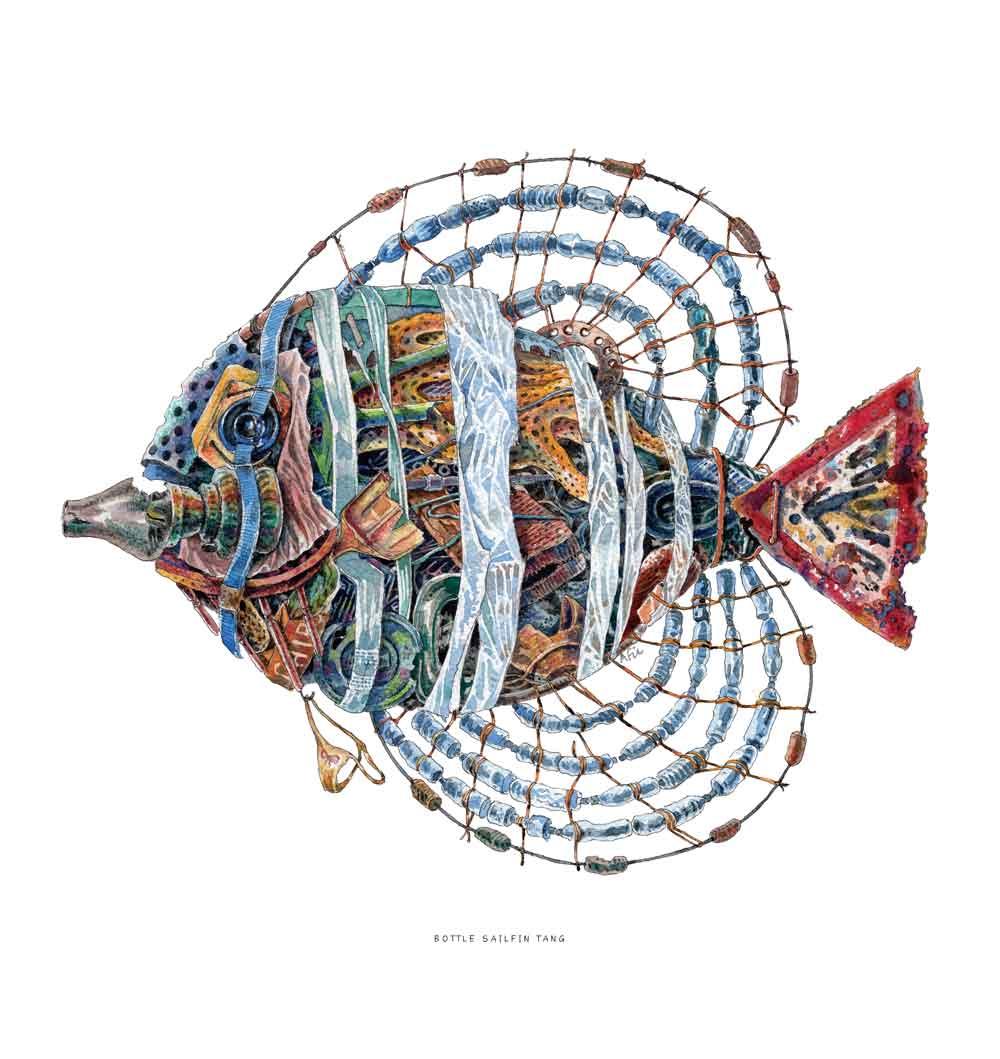
Afu began making art at 18 alongside a career in graphic design, advertising and postage-stamp design. He committed himself fully to fine art in 2010 and has since exhibited internationally. His work is held by the National Art Gallery of Maldives and the Fukuoka Asian Art Museum. In 2014, he received the Maldives National Award of Recognition for Visual Arts.
The original Ocean Junk collection was exhibited in Beijing in 2019 and subsequently sold. For Ocean Junk: Reimagined, the images were reunited as prints on wood and shown alongside sculpture, moving image and imagined specimens. A project inspired by objects travelling through water had itself travelled across countries, changed hands and returned home in another form.
As we spoke, Afu shared his hope that the Maldives would become known internationally for the strength of its art scene as well as its natural beauty.
Another View of the Maldives
The Maldives pioneered the “one island, one resort” model, a hospitality concept closely suited to the geography of the archipelago. It has helped the country create a distinctive experience centred on privacy, natural beauty and a close relationship with the ocean. A visit to Malé offers something complementary: the opportunity to explore galleries and cultural spaces where Maldivians are presenting their own ideas, concerns and memories. At Gallery 350, I also met Afu’s wife, Mary Halym, a botanical artist whose practice offers another view of the natural life of the islands.
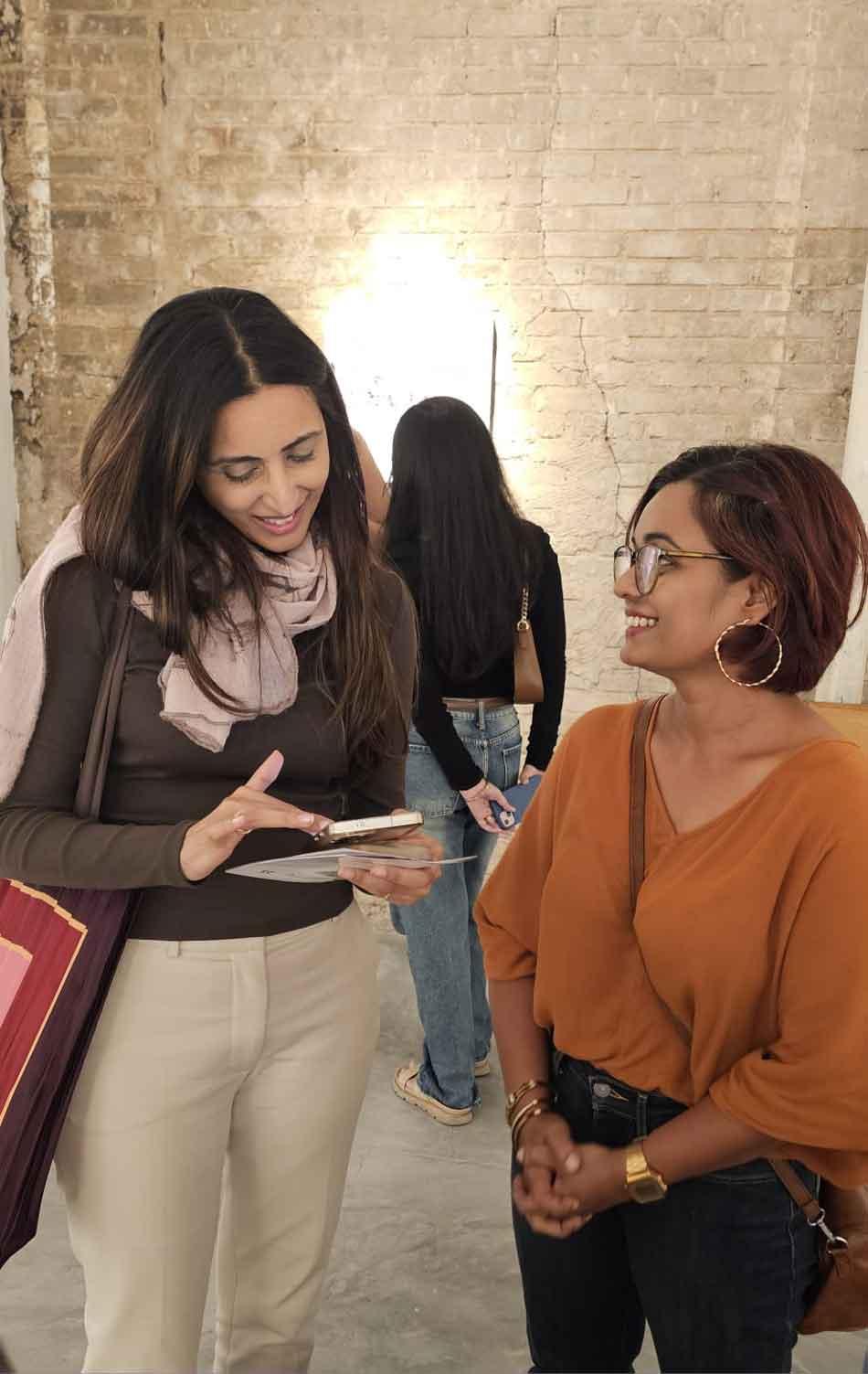
With Mary Halym
Her path into art began with a small handmade-bag business. She initially worked with ready-made fabrics but wanted to create patterns of her own. That ambition led her into embroidery, drawing and painting. Mary is self-taught. She developed her practice through experimentation before settling on watercolour. She enjoys the degree of uncertainty involved, particularly the way water and pigment interact on the paper. Her botanical work developed during the pandemic while she was living in Bath with her family.
Separated from the Maldives through lockdown and the English winter, she began painting breadfruit, banana flowers and other plants associated with home. Over time, she understood that she was returning to these subjects because she missed Malé. Her first solo exhibition, Gasthakun, opened in 2023. The title carries two meanings in Dhivehi: “intention” and “from the trees”. The collection drew on Maldivian vegetation, the floral patterns in her mother’s dhigu hedhun, and the experience of holding on to home while living elsewhere. Mary studies each subject closely. Her paintings trace its shapes, colours and stages of growth, sometimes following a plant from bud to flower, fruit and decay. For a painting of a taro plant, she travelled to Fuvahmulah, entered the mangroves and collected a specimen to study.
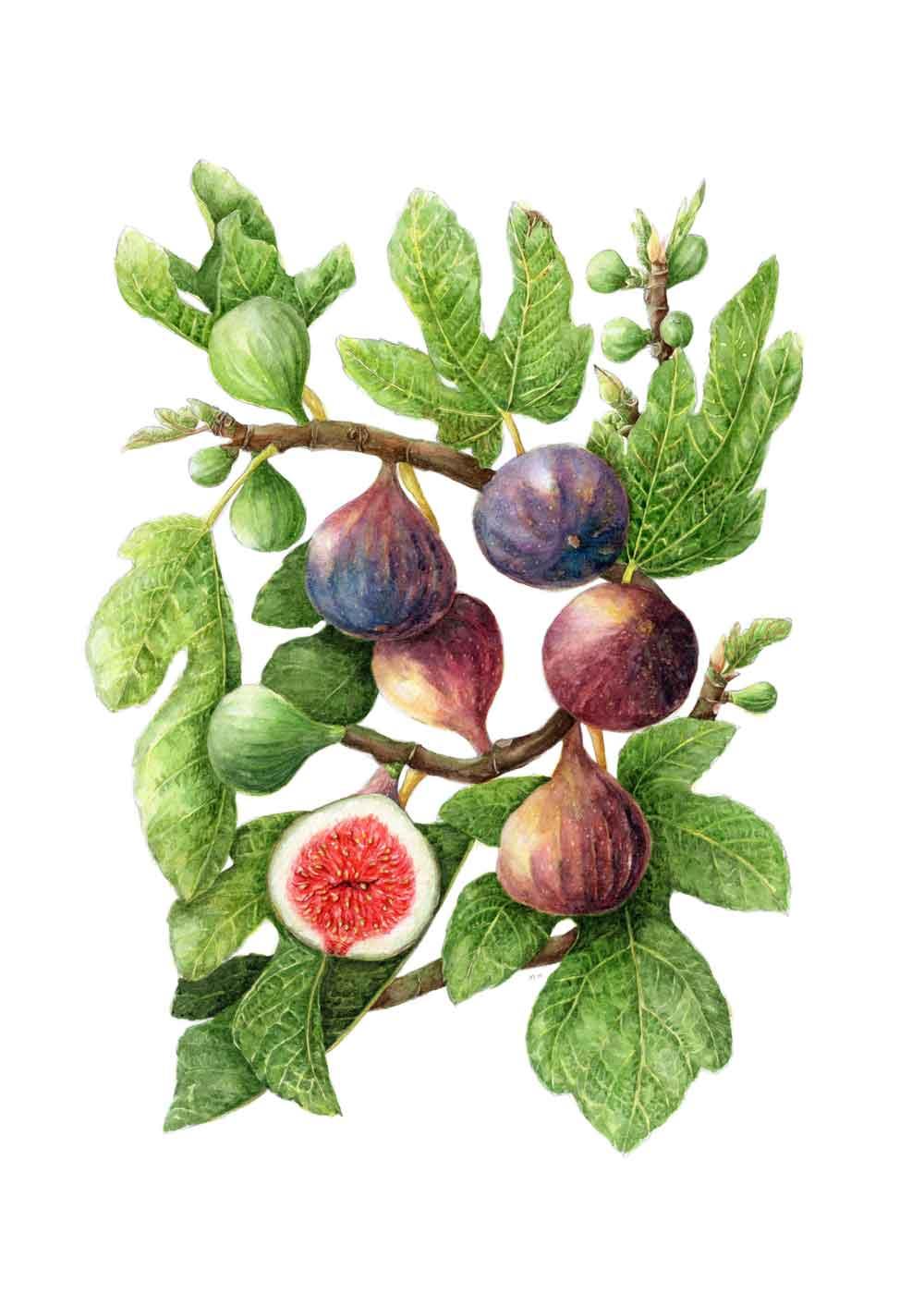
Fig by Mary Halym
Her images combine botanical precision with personal memory. Breadfruit and banana flowers become records of place, family and belonging. Painting has also changed how Mary sees the plants around her. Things she might once have passed without much thought now invite closer attention. She shares that practice through botanical watercolour workshops attended by people across different generations.
Art as a Record of Place
Afu and Mary share a life and a landscape but interpret that landscape differently. Afu looks at what people discard. Mary looks at what grows. His work imagines a future shaped by consumption. Hers began as a way of returning home through memory. Both depend on noticing what others may pass without a second thought. In Afu’s hands, rubbish becomes evidence of human behaviour and its consequences. In Mary’s, familiar vegetation becomes a record of Maldivian life.
Their connections with Sri Lanka also run through their work. Afu developed much of the thinking behind Ocean Junk while living near Nugegoda. Mary spent time in Colombo during the earlier development of her design practice. Their journeys reflect the longstanding movement of people and ideas between two countries separated by a short stretch of the Indian Ocean.
Afu and Mary are part of a broader Maldivian art community working across painting, photography, sculpture, textiles, digital media and traditional craft. Their work explores the environment, memory, identity, urban change and the pressures facing island communities. Spaces such as Gallery 350 give these conversations room to develop. The gallery brings artists and the public together, supports experimentation and helps Maldivian work reach new audiences.
Before I left, Afu spoke about his hope that the world would recognise the Maldives for its art as well as its beaches. The country’s natural beauty will always command attention and has earned its place in the global imagination. Its artists are adding more voices, experiences and ideas to that picture. I arrived with the beaches in mind. I left thinking about marine creatures assembled from waste and Maldivian plants rendered delicately in watercolour. Both belong to the Maldives. Only one version was familiar to me before I arrived.