Justice for the Em Dash: The Breather in Literature
By Thaliba Cader
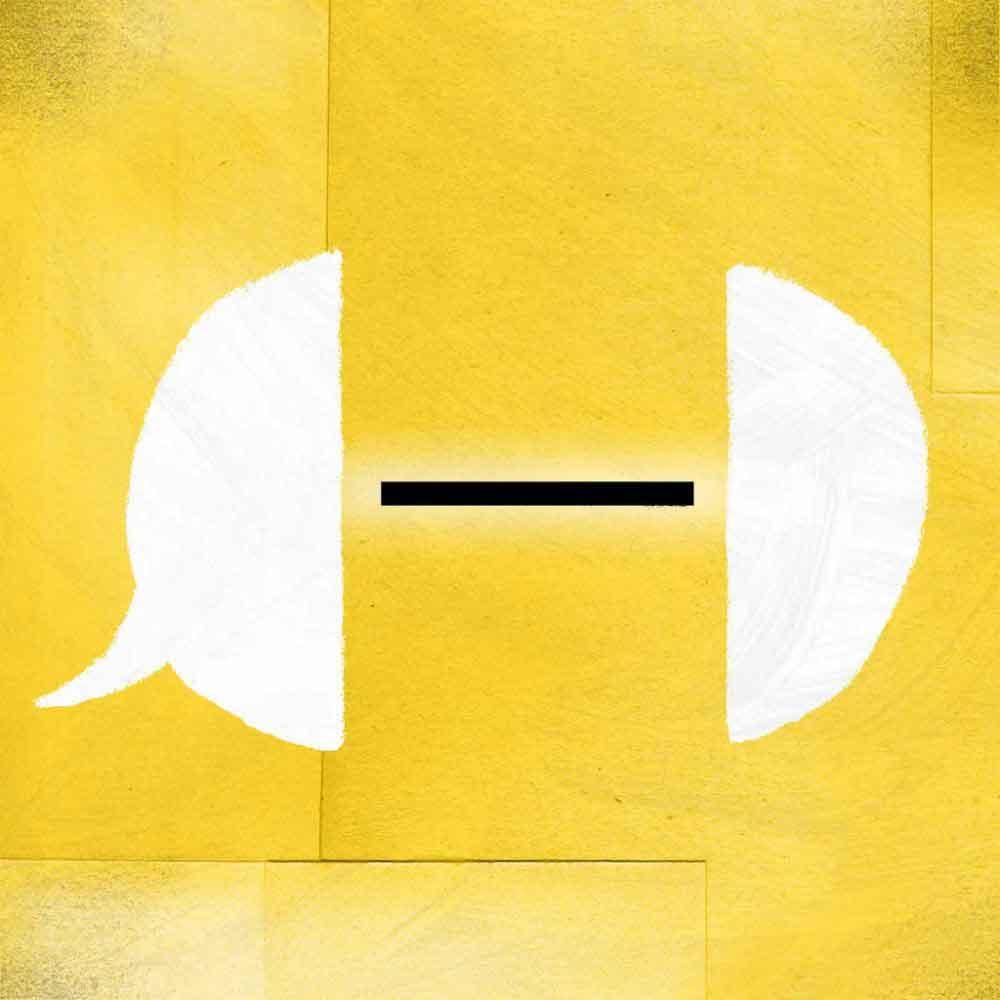
There is a peculiar kind of accusation circulating through contemporary digital space, delivered with the calm certainty of something already judged. It appears in classroom comments, workplace Slack threads, and increasingly in automated systems that claim to distinguish human writing from machine generation. It reads, almost casually: “This feels AI-generated because of the em dashes.” The em dash—long, suspended, visually unhurried—has become a suspect punctuation mark, treated as forensic evidence in a linguistic investigation where the crime is not error, but coherence itself. To write with rhythm, clarity, or syntactic confidence is suddenly to risk appearing artificial.
And yet the em dash is none of these things: it is neither new, nor mechanical, nor alien to human expression. It is, in fact, one of the oldest gestures of written breath in English prose. Before its current suspicion, it was simply a solution to a familiar problem—how to represent thought as it actually moves. Where the period insists on completion and the comma allows only a controlled pause, the em dash creates suspension, a space where meaning continues without fully settling. It behaves less like punctuation in the strict sense and more like a trace of cognition unfolding on the page.
Human speech carries breath within it; it pauses, interrupts, and resumes in ways grammar alone cannot contain. That rhythm is not an exception in language—it is its natural condition. The em dash is one of the few marks that allows writing to remember this fact, to hold a trace of spoken movement inside the structure of text.
In nineteenth-century literature, this gesture appears as necessity, not ornament. Writers used it to interrupt themselves, to expand an idea mid-sentence, and to allow thought to exceed the boundaries of grammar. In the poetry of Emily Dickinson, the dash becomes almost architectural; lines fracture and reassemble around it, as if consciousness itself were refusing to remain contained within stable syntax. Meaning is not delivered in her work so much as approached, interrupted, and reconfigured in motion. In the prose of Virginia Woolf, thought rarely progresses in straight lines. It drifts, returns, contradicts itself, and reforms in altered shapes. The em dash, in this context, becomes a visible record of mental movement—the closest punctuation offers to the instability of lived awareness. In Dickens, it appears as timing: comedic, emotional, and rhetorical shifts are marked not by rigid stops but by sudden openings in thought.
The suspicion surrounding the em dash today is therefore less about punctuation than about pattern recognition. Modern language models, trained on vast corpora of fluent writing, often reproduce the stylistic features of high-quality prose. They tend toward balanced sentences, rhythmic variation, and punctuation that supports flow rather than disrupts it. In doing so, they naturally adopt devices like the em dash—not because it is artificial, but because it is common in precisely the kind of writing humans most value. Essays, journalism, literary fiction, and long-form narrative nonfiction all rely on it with quiet frequency.
But in the emerging culture of AI detection, pattern becomes evidence. A well-placed em dash is no longer read as style, but as signal—a clue in a system attempting to reverse-engineer authorship. The irony is difficult to ignore: the more literary a piece of writing appears, the more likely it is to be flagged as machine-like. Coherence begins to resemble suspicion.
This creates a subtle historical inversion. At various points, literary style has always been policed. Long sentences once seemed excessive; then short sentences were deemed simplistic; now punctuation itself has entered the field of scrutiny. Yet literature has never evolved according to such anxieties. It has always moved through experimentation, excess, and individual rhythm. Manuscripts from earlier centuries reveal punctuation practices that would now be considered inconsistent or overused, yet they were not errors; they were the visible imprint of voice, timing, and emphasis.
What is being mistaken today for “AI style” is often simply disciplined writing. The phrase itself has become a shorthand for something vague: smoothness, structure, lack of visible struggle. But these qualities have never been outside human writing. They are, in fact, hallmarks of skilled authorship. A carefully edited essay, a piece of long-form journalism, or a literary essay in a reputable magazine will frequently contain exactly the features now treated with suspicion.
The underlying issue is not punctuation, but expectation. There is a growing assumption that authentic writing must be slightly uneven to be trustworthy, that visible imperfection guarantees human presence. This assumption flattens the diversity of literary tradition into a narrow aesthetic of “naturalness,” as if coherence were itself suspicious.
Yet thought, as it occurs in the mind, is not irregular in the way this assumption suggests. It is structured and unstructured at once, capable of precision and drift in the same moment. The em dash captures this tension more accurately than many other marks. It allows a sentence to move the way thinking moves interrupted, revised, extended beyond its initial boundary.
It is this quality—its ability to hold continuation without closure—that makes the em dash so enduring. It is one of the oldest tools for representing the unfinished nature of thought itself. And so, the irony deepens. A punctuation mark designed to preserve interruption is now itself interrupted by suspicion. A device created to mimic the fluidity of consciousness is now treated as evidence of non-conscious authorship. In this reversal, something larger becomes visible: not a failure of language, but a moment of uncertainty in how human expression is being interpreted in the presence of machines.
Literature has survived many such misreadings. Techniques once dismissed as excessive later became foundational; rhythms once considered unstable later became canonical. The em dash has lived through those transformations before, and it will continue to do so again. Because in the end, it is not a sign of artificial intelligence. It is a reminder that human thought has never moved in straight lines—and never needed to.