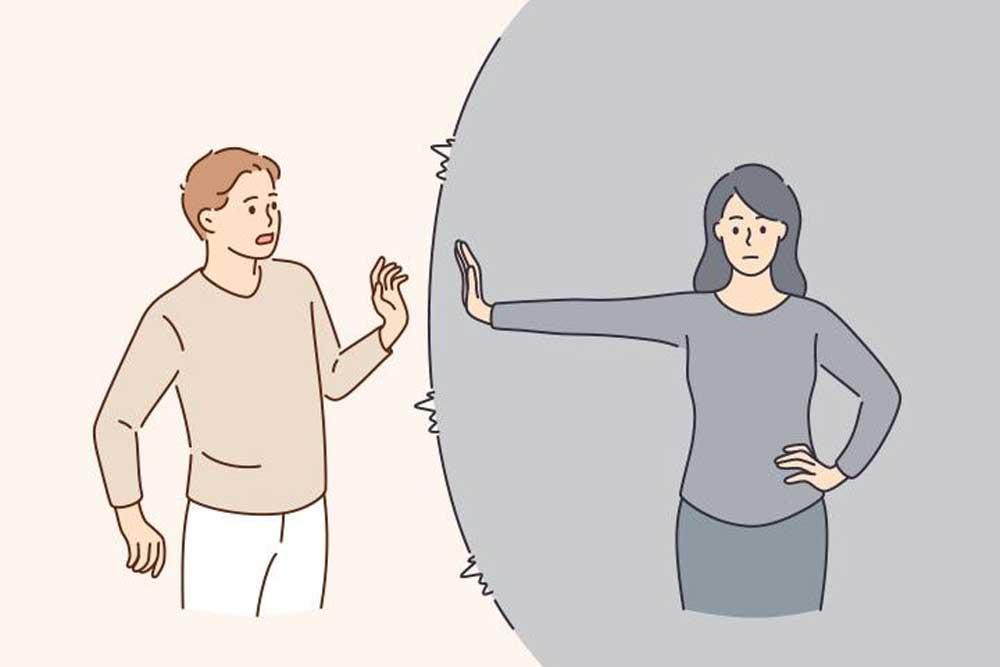
When Boundaries Go Too Far

The word “boundaries” has become one of those concepts that almost everyone agrees with. It shows up consistently in relationship advice, therapy discussions, and social media posts about self-respect and emotional health. The basic idea is simple: people should know their limits and communicate what they are comfortable with. In theory, boundaries help protect someone’s mental and emotional wellbeing by creating a sense of safety in relationships. They allow both people to understand what behaviour is acceptable and what is not. Yet somewhere along the way, the meaning of boundaries has started to blur. What was originally meant to be a tool for self-protection sometimes evolves into something much stricter, harsher, a set of rules placed on other people rather than limits placed on oneself. When this metamorphosis occurs, boundaries can stop being healthy and start becoming restrictive.
A healthy boundary is usually about how someone responds to certain behaviour. It focuses on what they will do if something crosses their comfort level. For instance, someone might say they are not comfortable being shouted at during arguments and that they will walk away from the conversation if it happens. This boundary is clear but does not try to force the other person to behave in a specific way. It simply defines what the person is willing to tolerate. The problem starts when the language of boundaries is used to control situations instead of protecting emotional limits. Instead of saying what they will do, someone begins telling the other person what they are not allowed to do. At this point, the boundary stops being a personal limit and becomes a restriction on someone else’s freedom. This becomes especially noticeable in romantic relationships. It is common to hear people say that certain everyday situations “cross a boundary.” Sometimes those include things like interacting with people of the opposite sex, attending social gatherings without a partner, or even being in mixed environments such as university classes. When something as normal as existing in shared social space is described as violating a boundary, it raises an important question: is the boundary protecting someone’s wellbeing, or is it trying to control another person’s environment?
The Shift from Boundaries to Control
Universities are a good example of how unrealistic some boundaries can become. They are naturally social spaces where people interact with a wide range of individuals: classmates, lecturers, group project members, friends, and strangers. These interactions often happen across genders, cultures, and social groups. It is simply part of being in an academic environment. If someone says that being around men or women in a place like university crosses a boundary, it creates an impossible situation. The person on the receiving end cannot realistically avoid those interactions without isolating themselves from normal life. In that case, the boundary does not just shape the relationship but also begins reshaping the other person’s entire life.
The complicated part of this is that these extreme boundaries often come from understandable emotions. People sometimes create strict limits because they are afraid of being hurt. Past experiences like betrayal, cheating, or abandonment can make someone hyperaware of potential threats to their relationship. Limiting situations that feel risky can seem like a way of protecting a relationship from those fears becoming a reality. The logic behind it is usually something like this: if certain environments or interactions are removed, the chances of something bad happening will decrease. We have to keep in mind that relationships do not work like controlled lab experiments. Restricting someone’s surroundings does not automatically build trust. In fact, it can sometimes weaken it.

Trust grows when people feel they are choosing the relationship freely, not when they feel monitored or caged. When someone starts treating normal interactions as violations, it creates pressure and resentment instead of reassurance. The relationship begins revolving around avoidance rather than mutual confidence. Another contributing factor is the way people sometimes mistake discomfort for disrespect. Feeling uncomfortable about something does not automatically mean the situation is wrong or inappropriate. Emotions like jealousy or insecurity are normal human reactions, especially in relationships that matter deeply. However, those feelings do not mean another person is doing something harmful.
For example, someone might feel uneasy about their partner having friends of another gender. That feeling is not unusual. Yet the response to that feeling can go in different directions. One option is acknowledging the emotion and trying to understand where it comes from. Another option is framing the situation as a boundary and demanding that the partner avoid those friendships entirely. The first approach treats the emotion as something to work through, and the second shifts responsibility for the feeling onto someone else.
Healthy vs Unhealthy Boundaries
One of the clearest differences between healthy and unhealthy boundaries is the impact they have on someone’s independence. Healthy boundaries tend to protect personal wellbeing without shrinking the other person’s life. They allow both individuals to maintain friendships, hobbies, and everyday routines while still respecting the relationship. Unhealthy boundaries, on the other hand, often lead to gradual isolation. At first, the restrictions might seem small or reasonable. Certain friends might make someone uncomfortable. Certain places might feel inappropriate. Over time, those limits can expand, sometimes without either person fully noticing how much things have changed. The person being asked to respect those boundaries might start adjusting their behaviour more and more. They may avoid certain conversations, decline social invitations, or distance themselves from friends just to keep the peace. Eventually, their world becomes smaller than it used to be.

Since the restrictions are framed as respecting boundaries, it can be difficult to question them without feeling like the one who is being inconsiderate. Healthy boundaries should not require someone to disconnect from ordinary parts of their life. In reality, most healthy boundaries are straightforward. They involve basic expectations of respect and emotional safety. Wanting honesty in a relationship, asking for space during a heated argument, or refusing to tolerate insults are all examples of boundaries that protect someone’s wellbeing without limiting another’s independence. These kinds of boundaries focus on behaviour that directly affects someone’s dignity or emotional security. They do not try to regulate everyday social environments or control normal interactions.
Another important aspect of healthy boundaries is flexibility. Relationships revolve around two individuals with different experiences, comfort levels, and perspectives. When conflicts arise, the goal is usually to communicate and find a middle ground rather than impose strict rules. A boundary that only works when one person sacrifices their autonomy is rarely sustainable. The growing popularity of boundary discourse online has made these distinctions harder to notice. Social media often presents relationship advice in simplified terms where certain actions are automatically disrespectful or unacceptable. While these discussions can raise awareness about emotional wellbeing, they can also turn complex relationship dynamics into harsh and rigid guidelines. In reality, boundaries are meant to support relationships, not control them. They should help people be secure enough to be honest, independent, and emotionally safe at the same time. When boundaries start dictating where someone can go, who they talk to, or what spaces they are allowed to simply exist in, the whole purpose of the concept begins to fade.
Ultimately, the line between healthy and unhealthy boundaries often comes down to their intention and impact. If a boundary protects someone’s emotional safety while still allowing both people to live full, independent lives, it is most likely doing what it is supposed to do. If it gradually limits someone’s freedom, isolates them from normal environments, or places constant restrictions on their behaviour, it may no longer be functioning as a boundary at all.