The Pike Effect: When Past Failures Hold Us Back

Success is often described as the result of hard work, persistence, and opportunity. We are told that talent, dedication, and timing are the main ingredients for achieving our goals. Yet, there is another, less visible factor that can silently block us from reaching our potential: the weight of past failures. Sometimes, the biggest barrier to success is not a lack of ability, resources, or opportunity, but the invisible psychological barriers that form after repeated disappointment. These mental patterns can shape the way we think, behave, and respond to challenges long after the initial setbacks have passed. A concept that beautifully illustrates this phenomenon is known as the Pike Effect, a story that has become a metaphor in psychology, education, and personal development, reminding us how past failures can limit future behaviour.
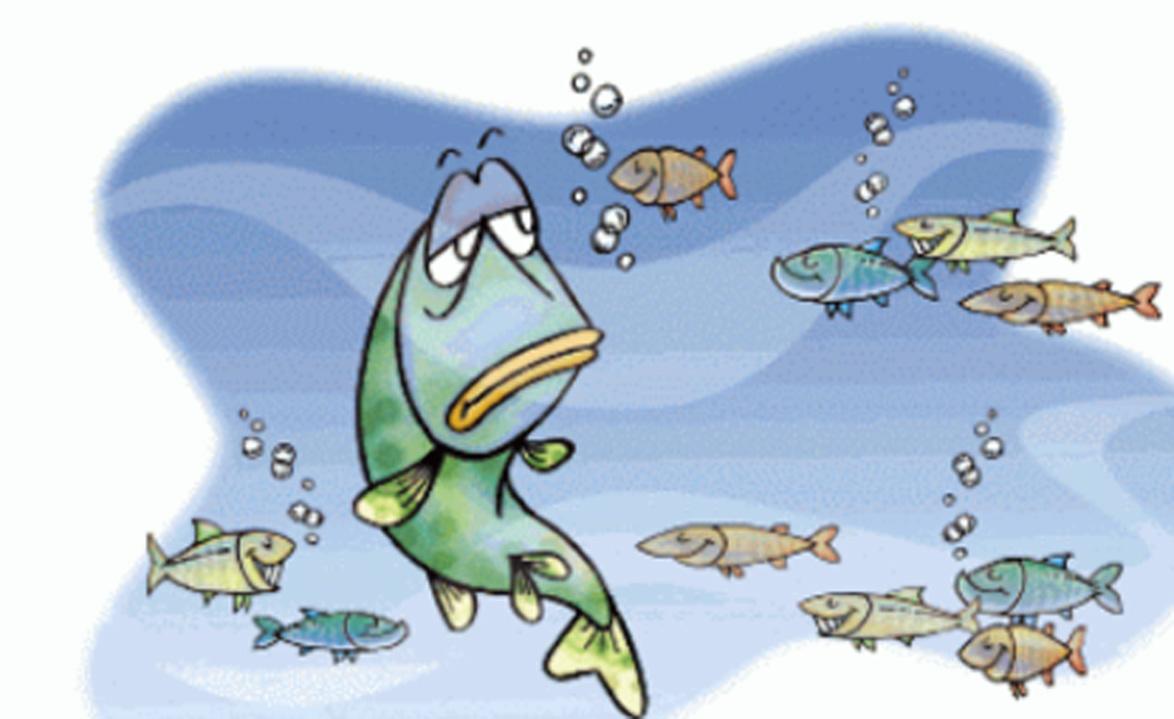 The Pike Effect originates from a behavioural experiment involving a predatory fish called a pike. Researchers placed a pike in a large tank alongside several small fish, its natural prey. As expected, the pike immediately attempted to hunt the smaller fish. However, the researchers introduced an unusual element: a transparent glass barrier between the predator and its prey. To the pike, the small fish appeared perfectly reachable. They swam freely and were visibly within striking distance. But each attempt to catch the prey was met with an invisible obstacle, causing the pike to crash repeatedly against the glass.
Over time, the repeated failures produced a surprising result. The pike stopped trying. It became conditioned to the idea that hunting the small fish was futile, learning to accept frustration as an unchangeable reality. Later, when the glass barrier was quietly removed, the small fish swam freely, completely accessible to the predator. Yet, the pike no longer pursued them. The physical obstacle was gone, but the psychological barrier, the memory of repeated failure, remained. According to the story, the pike eventually died of starvation, surrounded by the food it once instinctively sought, unable to overcome the mental block formed through prior disappointment.
Whether the experiment unfolded exactly this way or has been simplified in retelling is less important than the insight it provides. The Pike Effect serves as a compelling metaphor for how repeated failure can create long-lasting mental barriers. It demonstrates that even when the real obstacles disappear, past experiences can continue to shape behaviour, often in ways that are self-limiting.
In human experience, the Pike Effect appears frequently, albeit in more subtle forms. Consider the student who struggles repeatedly with mathematics. Every poor test result reinforces a belief that “I am just not good at math.” Even when new teaching methods, extra support, or encouragement are introduced, the student may stop trying altogether. The expectation of failure has become a stronger deterrent than the actual difficulty of the subject. In the same way, employees who face repeated rejection in job applications may eventually stop applying. Entrepreneurs who experience multiple business failures might abandon new ventures, not because of a lack of skill, but because their previous setbacks have conditioned them to anticipate defeat.
Even in relationships, the Pike Effect manifests when individuals avoid emotional vulnerability after past disappointments, fearing a repeat of previous pain.
Psychologists often describe this phenomenon using the concept of learned helplessness, a term first coined in experiments with animals in the mid-20th century. Learned helplessness occurs when individuals repeatedly experience situations in which they feel powerless to change the outcome. Over time, they internalize a belief that their actions have no impact on results, leading to passivity and resignation. The Pike Effect is a specific illustration of learned helplessness, showing how early failures can imprint patterns of behaviour that persist even when conditions change, and opportunity returns.
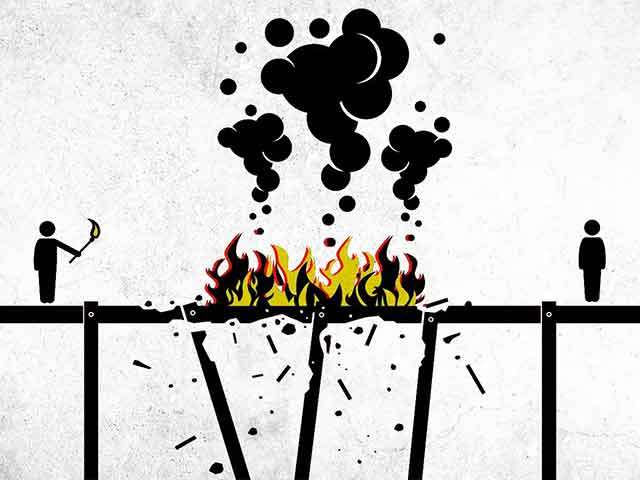
What makes the Pike Effect particularly striking is that it highlights the mind’s capacity to create limitations stronger than any physical barrier. While the glass was a literal obstacle for the pike, the lasting barrier was psychological. Once conditioned, the predator’s mental framework prevented it from acting in its best interest. Similarly, human beings often carry invisible barriers constructed by fear, self-doubt, and past setbacks. These barriers can shape career decisions, personal goals, and even daily habits, preventing individuals from reaching their full potential.
The implications of this effect extend beyond the individual. Families, schools, workplaces, and communities all play a role in either reinforcing or helping to dismantle these invisible barriers. Encouragement, mentorship, and structured opportunities to try again can help individuals rebuild confidence after failure. Positive reinforcement, acknowledging effort, resilience, and improvement, can reduce the likelihood that early setbacks will dictate future behaviour. For example, educators who allow students to retake exams or revisit challenging topics give them a chance to rewrite their narrative of failure. Employers who provide constructive feedback and multiple opportunities for skill development help employees overcome learned helplessness, allowing talent to flourish.
Failure itself is not inherently harmful. In fact, failure is often an essential part of learning and growth. Each setback provides critical feedback, revealing what strategies work, what requires adjustment, and where persistence is needed. The danger arises when failure becomes internalized as a permanent judgment on ability or worth. In such cases, the memory of past mistakes forms a self-fulfilling prophecy: the expectation of failure inhibits effort, which in turn ensures poor outcomes. The Pike Effect reminds us that success is not only about skill, effort, or opportunity; it is also about resilience, mindset, and the willingness to challenge the echoes of previous setbacks.
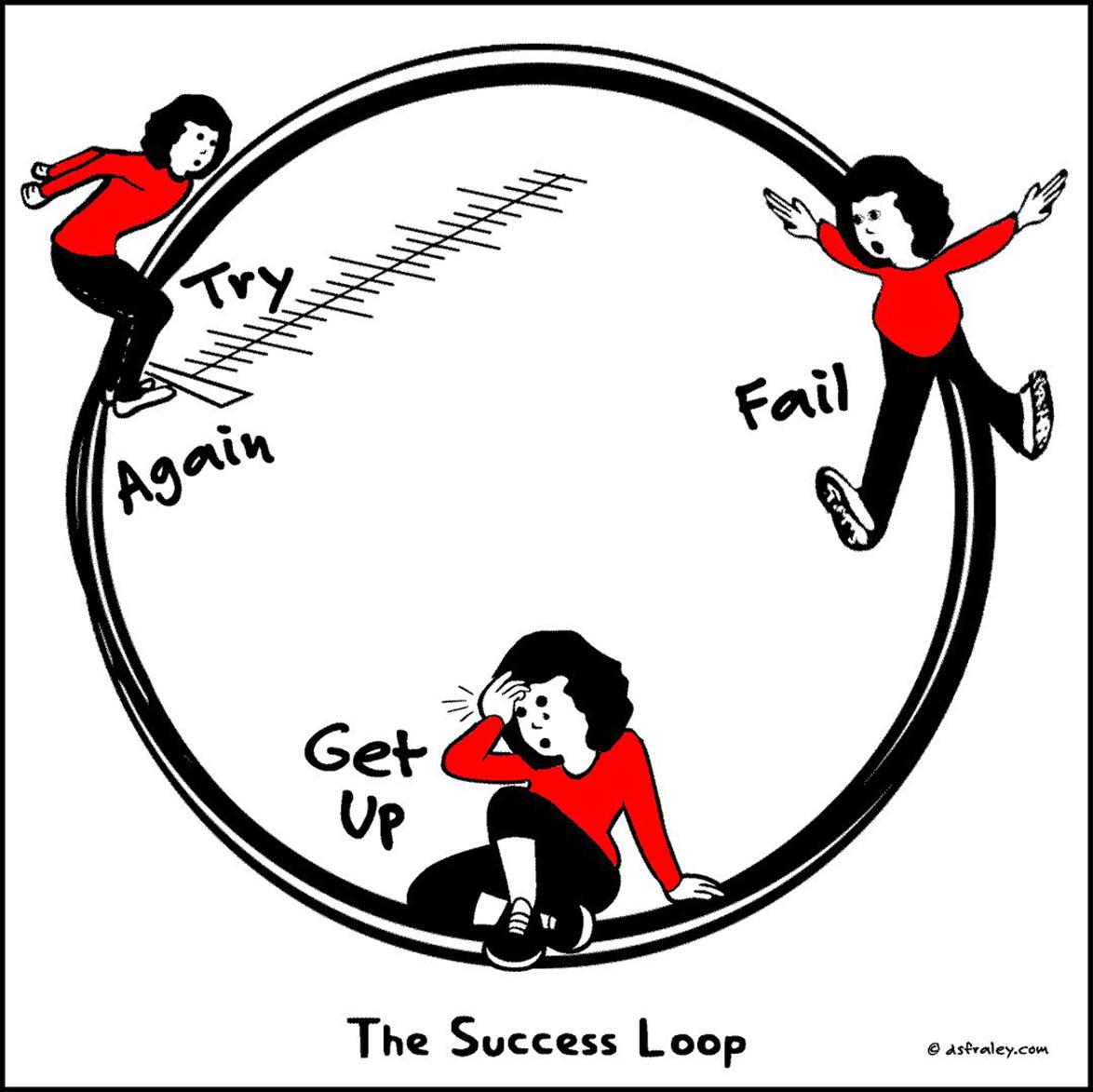
Consider real-world examples of individuals who have broken free from the Pike Effect. Many of today’s successful entrepreneurs and innovators experienced repeated failures early in their careers. Thomas Edison, who famously said, “I have not failed. I’ve just found 10,000 ways that won’t work,” embodies the opposite approach to learned helplessness. Instead of internalizing failure as proof of inability, he treated each setback as information. Similarly, J.K. Rowling faced multiple rejections before “Harry Potter” found a publisher, and her persistence transformed initial failure into eventual triumph. These stories show that overcoming the Pike Effect requires conscious effort to reinterpret failure and rebuild confidence in one’s ability to act.
Breaking free from the Pike Effect requires awareness and deliberate strategies. The first step is recognizing that the barrier is mental rather than physical. Reflection and self-awareness allow individuals to identify where past experiences may be unconsciously influencing their decisions. Once recognized, individuals can begin testing the limits of their own expectations through incremental action. Small, achievable steps help rebuild trust in one’s abilities. Just as the pike could have rediscovered hunting by taking cautious, low-risk attempts, humans can gradually challenge long-held beliefs about their limitations.
Another powerful tool is reframing failure. Instead of seeing failure as evidence of incompetence, it can be viewed as feedback or a stepping stone toward improvement. Reframing shifts the focus from what went wrong to what can be learned, fostering a growth mindset. Carol Dweck, a prominent psychologist, emphasizes that individuals who adopt a growth mindset believe that abilities can be developed through effort and learning. This mindset directly counteracts the learned helplessness highlighted by the Pike Effect, empowering individuals to persist despite past setbacks.
Support systems are equally critical. Mentors, teachers, coaches, and peers provide encouragement, feedback, and opportunities to try again in a safe environment. Communities that normalize failure as part of the learning process reduce the stigma associated with setbacks. In workplaces, leaders who celebrate effort and improvement over perfection help employees develop confidence and resilience. Educational institutions that offer remediation, tutoring, or experiential learning programs provide students with repeated opportunities to succeed, preventing early failures from calcifying into long-term avoidance or resignation.
The Pike Effect also carries broader societal implications. Communities that fail to address psychological barriers risk losing talent and innovation. When capable individuals avoid opportunities due to past setbacks, society as a whole suffers. Encouraging resilience, offering second chances, and cultivating environments that balance challenge with support are essential for unlocking collective potential. In contrast, environments that punish failure harshly or ignore the emotional impact of setbacks risk creating widespread learned helplessness, stifling creativity and progress.
Ultimately, the lesson of the Pike Effect is simple yet profound: sometimes the only barrier between us and success exists in our minds. Physical obstacles may be temporary, and opportunities may be abundant, but the echoes of past failure can keep us from acting. Understanding this effect invites reflection: are the limitations we perceive in our lives real, or are they the shadows of experiences we have internalized? Once we recognize the difference, we can begin to dismantle these mental barriers.
Consciously challenging the Pike Effect often requires courage. It involves testing beliefs, stepping into discomfort, and risking failure once more. Yet, each attempt, no matter the outcome, chips away at the invisible walls constructed by the past. The process is incremental: small successes rebuild confidence, repeated action restores agency, and supportive feedback reinforces belief in possibility. Over time, the accumulated effect can transform behaviour, turning hesitation into initiative and doubt into determination.
In today’s fast-changing world, resilience and adaptability are more critical than ever. Understanding the Pike Effect equips us with a lens to examine not only personal setbacks but also systemic and cultural obstacles that inhibit progress. By identifying where learned helplessness may have taken hold, individuals, educators, employers, and communities can create strategies to overcome inertia, reignite motivation, and seize opportunities that may have previously seemed out of reach.
In conclusion, the Pike Effect is both a cautionary tale and a source of hope. It reminds us that repeated failure can condition the mind to expect defeat, creating barriers far stronger than any physical constraint. Yet, it also shows that these barriers are not permanent. With self-awareness, reframing, deliberate action, and supportive networks, it is possible to reclaim agency, rebuild confidence, and pursue opportunities with renewed determination. Failure is not the enemy of success; passivity in the face of prior setbacks is. By recognizing and confronting the mental blocks left by past disappointments, we can free ourselves to act, to grow, and to thrive.
The story of the pike teaches that success is not just about talent, preparation, or external conditions; it is about mindset. The invisible obstacles we carry from past experiences can determine the difference between stagnation and achievement. When we understand the Pike Effect, we are empowered to question our own limitations, challenge the ghosts of prior failures, and rediscover the courage to try again. In doing so, we open the door to new opportunities, renewed confidence, and the potential for growth that was always within reach but temporarily obscured by the shadows of the past.