TEARDROP NATION: IN CONVERSATION WITH SARAH KABIR
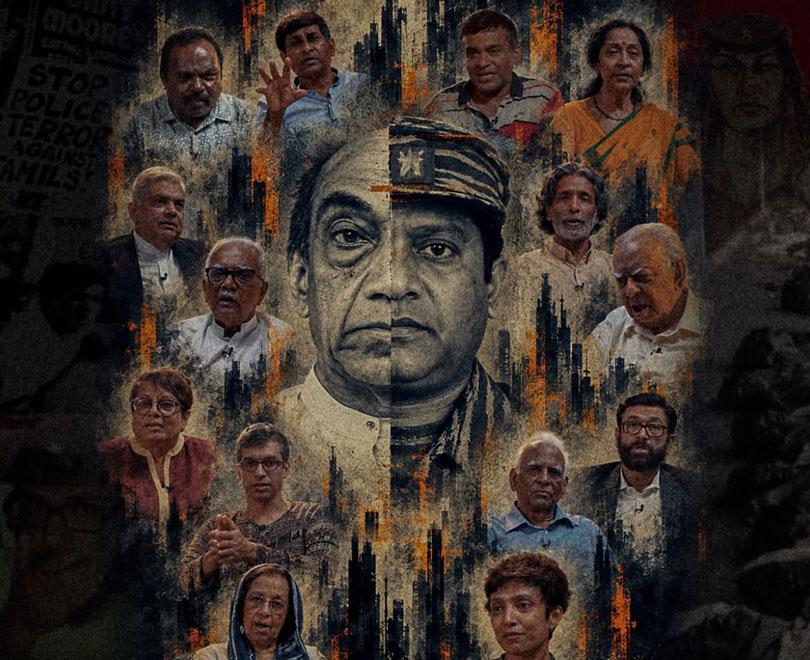
Seventeen years after Sri Lanka's civil war ended, through six years of research, Sarah Kabir's Teardrop Nation asks a difficult question: how does a country learn from a history it has never fully confronted? Sarah Kabir kept returning to one particular thought during our conversation: this is just the beginning. Not the conclusion of six years of research, not the definitive account of Sri Lanka's troubled history, and certainly not the final word on a war whose consequences continue to shape the country seventeen years after its end. I found myself thinking about how peculiar that sounded. We are speaking about events that unfolded decades ago, some before either of us was born, others within living memory, and yet we are apparently still at the beginning of understanding them. Perhaps that is the tragedy of Sri Lankan history. We have spent generations experiencing it, arguing over it, commemorating it and occasionally rewriting it, but remarkably little time agreeing on what we ought to learn from it. There is no shortage of writing about Sri Lanka's conflict. Historians, journalists, academics, survivors and human rights researchers have produced decades of valuable work, often at considerable personal and professional cost. I am conscious that another article will hardly resolve the questions they have spent their lives investigating. I am equally conscious that someone born in 2001 cannot reasonably expect to reform the political and social failures of several generations. But then, who is a writer if she cannot at least put her own words to the questions she has inherited? And perhaps that is where Teardrop Nation becomes interesting. It does not promise to repair Sri Lanka. It asks whether Sri Lankans, particularly those who grew up after the fighting, understand enough about the country's past to recognize its dangers in the present.
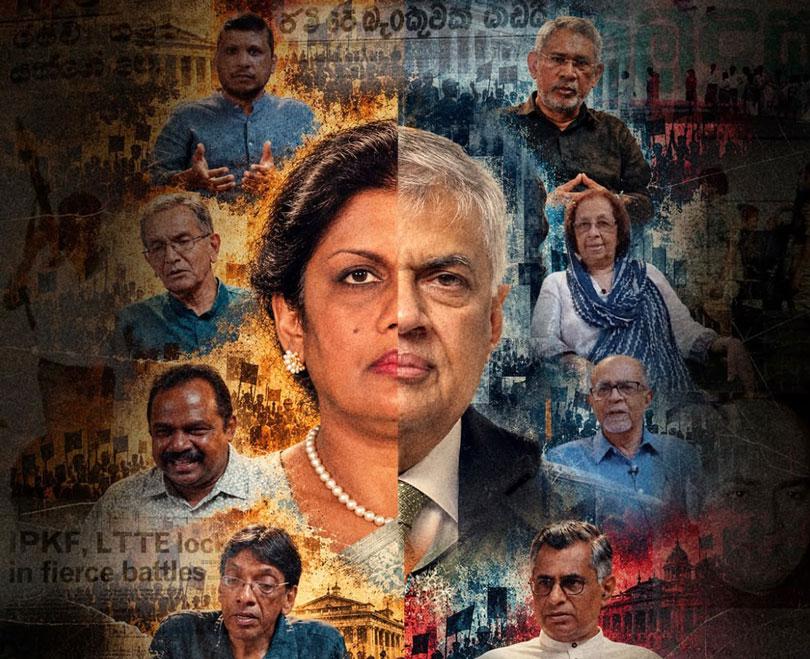
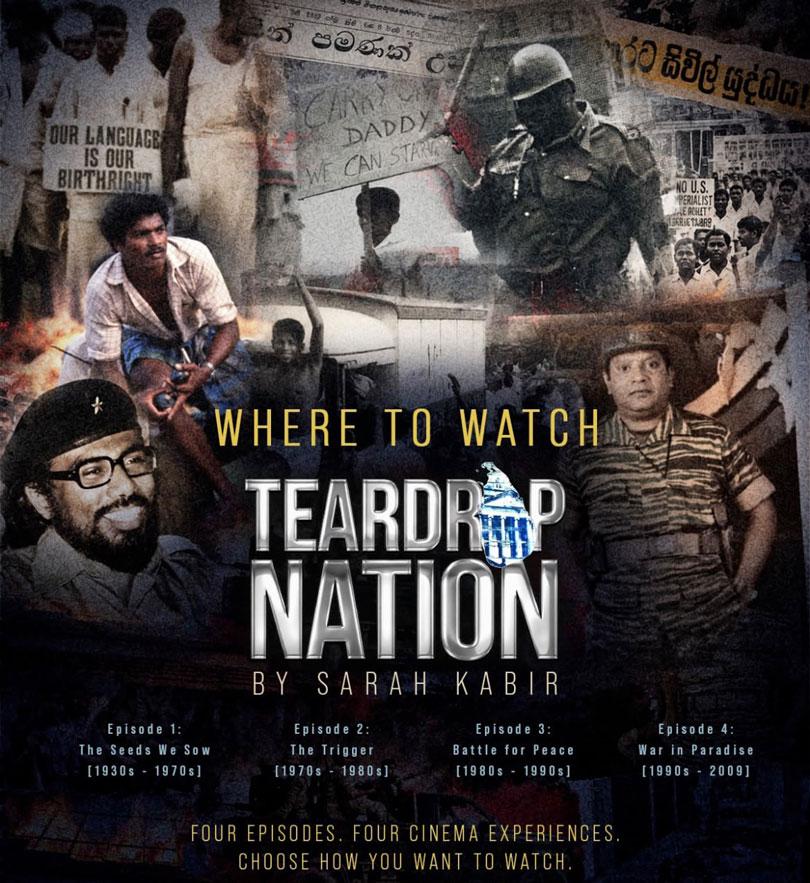
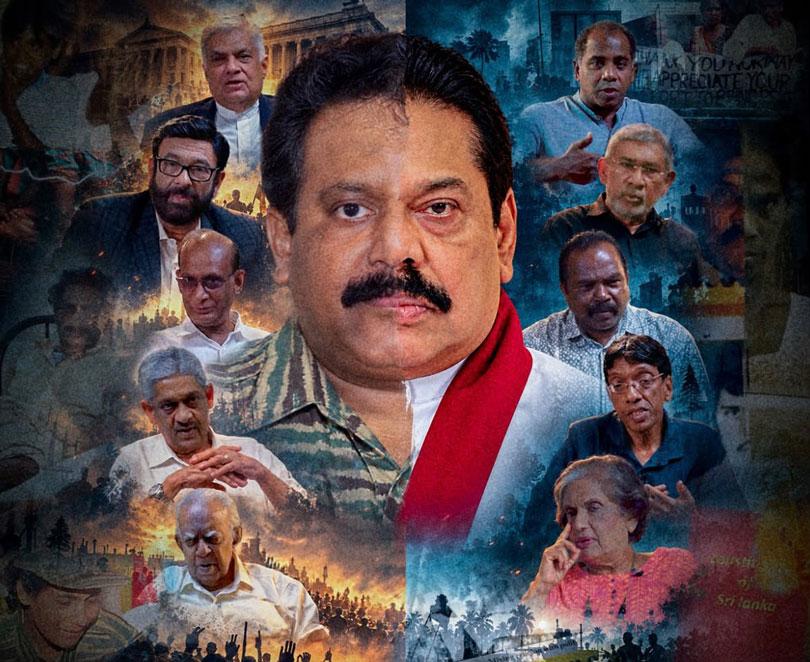
- Project 72 – Teardrop Nation: Developed over six years, the four-part documentary explores Sri Lanka's political and social history, from the pre-independence period to the end of the civil war in 2009.
- 1948 – Citizenship Act: Citizenship laws left hundreds of thousands of Indian-origin Tamil plantation workers stateless and politically marginalized.
- 1956 – Sinhala Only Act: Sinhala became the sole official language, disadvantaging Tamil speakers in public administration and employment.
- 1958 – Anti-Tamil Violence: Communal violence deepened ethnic tensions and mistrust.
- 1972 – Constitutional Changes: A new constitution heightened concerns over minority rights, while university admissions policies during the 1970s intensified Tamil grievances.
- 1981 – Burning of the Jaffna Public Library: The destruction of a major Tamil cultural institution became a symbol of ethnic discrimination and impunity.
- 1983 – Black July: Anti-Tamil pogroms marked a decisive escalation into full-scale civil war.
- Southern Insurrections: Armed uprisings, state repression and class grievances demonstrated that Sri Lanka's political violence extended beyond ethnic conflict.
- 1983–2009 – Civil War: The LTTE committed serious abuses, including suicide bombings, political assassinations and child recruitment. Government forces also faced grave allegations of human rights violations.
- 2009 – End of the War: The military defeat of the LTTE ended the armed conflict, but allegations concerning civilian casualties, war crimes and accountability remained unresolved.
Understanding the historical grievances that contributed to Tamil militancy does not justify atrocities committed by the LTTE. Recognizing the state's responsibility to protect its population does not exempt its forces from scrutiny.
Yet how much of this history is meaningfully understood by the generation that followed?
Sarah’s experiences working with young Sri Lankans suggest that the answer is considerably less than we might hope.
“With the youth, there is an awareness: ‘Okay, there was a war, it was the LTTE versus the state.’ That's as far as it goes,” she explained. When the conversation turns to why the LTTE demanded a separate state, she often finds that the historical reasoning is missing.
It is a disturbing educational gap. A generation may know who won a war without understanding what made the war possible. We can memories dates, recognize political figures and repeat familiar national narratives while remaining almost entirely unfamiliar with the experiences of fellow citizens. We have inherited the conclusion without necessarily understanding the argument that preceded it.
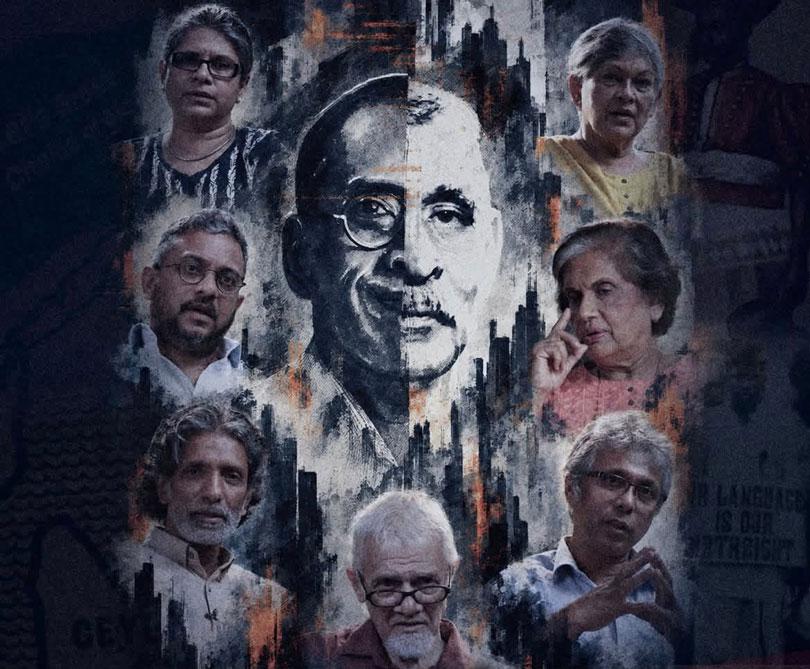
The Trouble With Having Only One Version of History
History is never entirely free from interpretation. Archives preserve some voices more faithfully than others. Governments construct official narratives, communities develop collective memories, and families pass down accounts shaped by their own experiences. .
Sarah approaches the subject through an insistence on examining multiple perspectives.
“To be honest, I don't think there's one version of truth,” she told me, explaining that Sri Lankans often become attached to accounts that place responsibility entirely upon another community while leaving little room for self-examination.
The responsibility of historical storytelling is not simply to collect opposing accounts and place them beside one another. It is to examine their evidentiary foundations. An allegation supported by documents, testimony and independent investigation cannot automatically be given the same weight as an unsupported denial. Sarah recognizes that the documentary cannot resolve every disputed question. Her approach is to establish what can be responsibly presented while encouraging viewers to investigate further. That distinction is important. Reconciliation cannot depend on inventing a comfortable middle ground between evidence and falsehood. It must make room for different experiences without surrendering the possibility of factual truth.
Six Years of Research, and a Country Changing Around It
When the documentary was first developed under Project 72, its creators could scarcely have anticipated the scale of political and economic upheaval that would unfold during production. Sri Lanka's 2022 economic collapse brought shortages, public anger, mass demonstrations and the Aragalaya protest movement. A population divided by decades of political and ethnic conflict was suddenly confronting another national crisis, this time centred on economic survival and the legitimacy of political leadership. The temptation to draw direct parallels between the past and the present must have been considerable.
Sarah nevertheless decided to keep the documentary's historical narrative ending in 2009. The production was intended to examine the foundations of the conflict rather than become an account of every subsequent political crisis. That did not mean the present could be entirely excluded. Interviewees were living through the economic collapse as they reflected on earlier struggles. A former LTTE cadre interviewed during the Aragalaya, for example, questioned why people expected former combatants to participate in the protests. Even the practicalities of filming became difficult. Fuel shortages complicated travel, particularly during interviews conducted in the North and East. Sarah recalled that the team eventually found petrol in Valvettithurai, the hometown of LTTE leader Velupillai Prabhakaran. There is something almost absurdly Sri Lankan about that detail: a documentary team researching the country's political tragedies, navigating another national emergency, finding temporary relief in a place inseparable from the history they were investigating.
Yet the larger significance lies in the continuity between crises. Political exclusion, institutional weakness, distrust of authority and the consequences of failed governance are not questions confined to the war years. They have continued to influence Sri Lanka's national life.
The Difficult Business of Looking at Ourselves
One of the more uncomfortable aspects of Sarah’s argument concerns responsibility. Sri Lankans, she suggests, have become exceptionally skilled at identifying villains elsewhere. Colonialism is blamed for ethnic division. Politicians are blamed for exploiting it. Communities blame one another for failing to understand their grievances. None of these explanations is entirely without foundation, but none is sufficient on its own.
British colonial rule undoubtedly shaped the island's political and social structures. Yet independence in 1948 also created opportunities for Sri Lankan leaders to construct a more inclusive political order. The decisions that followed were not simply unavoidable consequences of colonial policy. They were choices made by governments, political movements and institutions with their own interests and responsibilities.
“The things that I read and heard and saw it made me feel like, I can't believe these things happened in our country, to our own people,” she said.
It is easy to condemn discrimination retrospectively, once history has made its consequences undeniable. It is considerably harder to recognise it while it is being justified as a matter of national security, cultural preservation or political necessity.
Sarah sees echoes of earlier patterns in the anti-Muslim hostility that intensified in Sri Lanka during the past decade, particularly following the 2019 Easter Sunday attacks. Debates surrounding religious clothing, halal certification and collective suspicion of Muslim communities raised questions about how quickly fear can be converted into political capital.
“What you clearly see is how volatile our foundation is,” she observed, warning that ethnic tensions can be revived whenever political circumstances make them useful.
What Does Reconciliation Mean Without Accountability?
The final stages of Sri Lanka's civil war remain among the most difficult subjects in the country's public life. For some, May 2009 represents the end of decades of suicide bombings, insecurity and armed violence. For others, it is inseparable from displacement, missing relatives, civilian deaths and questions that have never received satisfactory answers. These experiences are not mutually exclusive. A country can recognise the relief that followed the defeat of the LTTE while continuing to demand credible investigations into alleged violations committed during the war. The United Nations has repeatedly identified shortcomings in Sri Lanka's transitional justice efforts. A 2020 report by the UN Special Rapporteur on truth, justice, reparation and guarantees of non-recurrence found that the country had failed to establish a comprehensive approach to addressing its past, despite some institutional progress.
“I didn't want this to be a Channel 4-style documentary,” she explained, stressing that the production had a different purpose: to reconstruct the wider historical circumstances that led to conflict.

Who Gets to Learn This History?
“I am very committed to getting this as freely and widely available as possible,” she said.
Her original ambition included a digital resource through which people could explore the supporting historical material. Funding constraints and the practical requirements of distribution have complicated that vision, but she maintains that wider access remains a priority. The issue is more consequential than it might initially appear. Historical education is not simply a matter of making information available. It concerns which information becomes accessible, in which languages, through which institutions and to whom.
A documentary screened primarily in urban cinemas may reach an audience already interested in history and politics. A freely available multilingual resource has the potential to reach students, teachers and communities whose experiences are often absent from dominant national narratives.
“This is a start. This does not cover everything. This is not the end-all and be-all,” she Said.
She readily acknowledges that the series contains gaps, some arising from the limits of available evidence and others from the impossibility of compressing such an extensive history into four episodes. Rather than treating those gaps as a failure, she hopes they will encourage others to continue the research.
The Things We Remember, and the Things We Refuse to Call Mistakes
Towards the end of our conversation, I asked Sarah what troubled her more: the possibility that Sri Lankans had forgotten the mistakes that led to war, or that they remembered those decisions perfectly well and remained capable of repeating them.
“I really think it's the fact that we don't realize that those were mistakes. We don't think it was wrong.” She explained that people may remember the decisions and events that contributed to conflict without recognizing their own community's actions as unjustified. What appears to one person as a historical mistake may remain, to another, a necessary response to the circumstances of the time.
“There is a memory of the mistakes, but sometimes they're not seen as mistakes,” she said. This may be the most unsettling observation of the entire conversation. Forgetting suggests that information has been lost. It offers the possibility that education, documentation and public discussion might restore what is missing. But what happens when the information is available and the moral conclusion remains unchanged? What happens when violence is remembered but justified, discrimination acknowledged but defended, and suffering recognized only when it belongs to one's own community?
There is no straightforward documentary solution to that problem. Most importantly, Sri Lanka does not lack history. It lacks a sufficiently shared willingness to confront its implications.
When Sarah says this is just the beginning, I no longer hear it simply as a filmmaker's description of an unfinished project. I hear an uncomfortable assessment of where we stand as a country. Seventeen years after the war, we are still negotiating the meaning of what happened before it, during it and after it. We have inherited monuments, anniversaries, political narratives, personal testimonies and unresolved grief. I was eight years old when the war ended. I am twenty-five now. I cannot claim to remember its history with the authority of those who survived it, and I would be foolish to imagine that writing about it makes me capable of repairing its consequences. But I can ask why so much of that history remains unfamiliar to people my age, why some accounts have been elevated while others struggle to be heard, and why the mistakes of earlier generations remain so difficult to recognize as mistakes.