THE REAL SCANDAL BEHIND BUDDY.NET
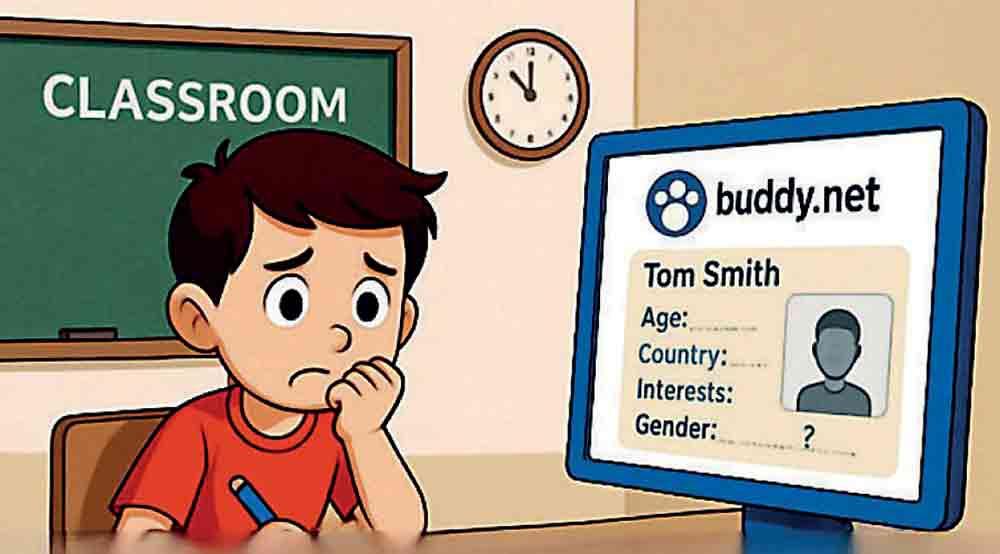
 I read on people’s performative outrage on the Grade 6 textbook scandal, where a government-approved English module contained a live link to an adult dating site. Did it concern me? Yes. Was the concern that this was a ‘gay’ dating site like what the uproar says? No. My concern is that the collective response, from both sides of the aisle, reveals a truth far more damning than the error itself. And that is, the exploitation of this crisis to avoid the very conversations Sri Lanka’s children desperately need. The ruling party demands investigations.
The opposition cries institutional collapse. Both of them are lying by omission. Because what neither side will admit is, this scandal happened precisely because Sri Lanka refuses to teach children what they actually need to know about their bodies, relationships, and digital safety. The system has created an educational vacuum so profound that a dating site link in a textbook becomes a national emergency, while the systematic absence of age-appropriate sex education, consent frameworks, and digital literacy remains politically untouchable. The system is not protecting children; it’s protecting the electoral prospects.
The Lie We’re All Supposed to Accept
The dominant narrative is one of shock and negligence: How could this happen? Who approved this? Heads must roll. Fine. Investigate. Fire someone. Print new textbooks. Block the website. Feel virtuous. But let’s examine what they’re not talking about:
Why was an 11-year-old child completely unprepared to recognize that a dating site link was inappropriate?
Because in Sri Lanka’s education system, we don’t teach children:
- The difference between healthy and exploitative relationships
- How to recognize grooming behaviour
- What consent means and why it matters
- Basic anatomical literacy in age-appropriate language
- How to navigate digital spaces safely
- That their bodies belong to them and no adult has the right to violate that boundary
Instead, we teach them English grammar through textbook exercises while pretending the internet doesn’t exist, predators are a Western problem, and sex education is a foreign conspiracy to corrupt “our culture.” And when the inevitable happens, when a child clicks a link because no adult ever taught them what to watch for, you act surprised. This is not negligence. This is wilful ignorance codified as policy.

The Bipartisan Conspiracy of Silence
The ruling party is scrambling to demonstrate competence, launching CID investigations and forcing resignations at the National Institute of Education. They’re treating this as a quality control issue; a technical glitch in the printing process. But they will not touch the deeper rot, which is the decades-long refusal to implement comprehensive sexuality education in Sri Lankan schools, despite repeated recommendations from UNICEF, WHO, and their own education reform commissions. Why? Because ‘religious leaders’ and ‘other politicians’ feel uncomfortable admitting children need sex education would alienate religious constituencies, invite accusations of Western cultural imperialism, and require actual courage.
The opposition is equally complicit. They’re weaponizing this scandal as evidence of governmental incompetence, but where were they when they held power? Did they implement digital safety curricula? Did they mandate consent education? Did they create frameworks for age-appropriate discussions about bodies, boundaries, and healthy relationships? No. Because opposing sex education is easier than defending it. Because “family values” rhetoric wins votes. Because every party in Sri Lankan politics has made a Faustian bargain: we will pretend children don’t have bodies, don’t encounter sexual content online, and don’t need tools to protect themselves, as long as it keeps religious leaders and conservative parents happy. Both parties have decided it is politically safer to let children remain ignorant and vulnerable than to have honest conversations about sexuality and safety. And now a child-directed link to an adult dating site, the exact kind of scenario comprehensive sex education is designed to prevent, is being used to reinforce the taboo, rather than break it.
The Vacuum They Created
Sri Lanka does not have mandatory, age-appropriate comprehensive sexuality education. What exists are euphemistic references buried in science lessons, often skipped by teachers too uncomfortable to teach them or stripped of any discussion about consent, relationships, or safety. The consequences are measurable:
- Children encounter pornography as their first exposure to sex
- Abuse goes unreported because children lack the language to describe it
- Online sextortion thrives on digital illiteracy
- Teen pregnancy and STI data remain opaque because acknowledging them would require action
Meanwhile, every serious education system globally has accepted one truth Sri Lanka refuses to face: children who receive comprehensive sexuality education are safer, delay sexual activity, make healthier choices, and are better equipped to recognise abuse. UNESCO’s global reviews confirm this. CSE does not increase promiscuity. It reduces harm. But here, evidence is dismissed as “Western,” as if exploitation respects borders or culture.

How the Scandal Is Being Weaponised
This scandal will be used to argue for “stronger moral education,” code for religious instruction. Calls for “parental oversight” will morph into veto power over consent education and LGBTQ inclusion. Any attempt to introduce evidence-based CSE will be framed as “another buddy.net waiting to happen.” This is a lie. The dating site link was not progressive education. It was a catastrophic failure of vetting. Conflating the two poisons the conversation and ensures children remain unprotected. Both parties benefit. One looks tough on safety. The other looks tough on values. And children are left alone in a digital world that does not care about Sri Lankan political sensitivities.
What Children Actually Need
Let’s be clear about what age-appropriate comprehensive sexuality education actually includes. For young children, it is about correct anatomical language, understanding bodily autonomy, and knowing how to seek help. For pre-teens, it includes puberty education before puberty begins, consent as a concept, and basic digital safety. For adolescents, it means understanding healthy relationships, coercion, contraception, online exploitation, and media literacy. For older teens, it includes legal rights, sexual health decision-making, and recognising abuse. This is standard in countries like Finland, the Netherlands, Germany, Canada, and Australia, which also happen to have lower rates of teen pregnancy, STIs, and child sexual abuse. But in Sri Lanka, even suggesting this invites hysteria. So instead, we give children textbooks with live links and no tools to understand danger.
The Path Forward You Won’t Take
If protecting children was the priority, the response would be clear. Immediate independent vetting of all educational materials. A public inquiry into how hundreds of thousands of textbooks passed basic digital checks. Mandatory safeguarding training for everyone involved in curriculum development. Within a year, age-appropriate digital literacy for every grade. Pilot comprehensive sexuality education programs with transparent evaluation. A national review board that includes psychologists and digital safety experts, not just politicians. Long-term, mandatory evidence-based CSE aligned with international guidelines, teacher training with support from credible global organisations, and real accountability mechanisms for safeguarding failures. None of this will happen. Because it requires admitting the system failed. Defending sex education in Parliament. Telling religious leaders that children’s safety matters more than political comfort. It requires courage. And courage is the one thing both sides have consistently lacked.
The Reckoning
The buddy.net scandal exposed two failures. One was specific: a textbook link that should never have existed. The other is systemic: a decades-long refusal to equip children with the knowledge, language, and agency to protect themselves. You will fix the first and ignore the second. You will investigate, resign officials, reprint books, and declare victory.
And children will remain vulnerable. Not because of dating site links, but because you refuse to teach them what consent means, what grooming looks like, and why their bodies belong to them. This is not negligence. This is cowardice masquerading as tradition. So here is the question every policymaker should be forced to answer: When the next child is exploited, will you admit your refusal to act made them more vulnerable? Or will you continue hiding behind “culture” while children pay the price? The textbook has been recalled. The website has been blocked. An official has resigned. But the system that failed those children remains intact. And all of you are responsible.