Sayumi Jayawardene: Bridging Gender, Climate, and Youth Leadership in Sri Lanka
 HER STORY. HER STRENGTH. BY: DR. SULOCHANA SEGERA
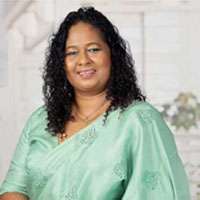
In a world increasingly shaped by climate uncertainty, social inequality, and shifting geopolitical realities, development practitioners are being called upon to work across disciplines with empathy, strategy, and purpose. Sayumi Jayawardene represents a new generation of humanitarian professionals who navigate these complexities with clarity and conviction. With an academic background in International Relations, Strategic Studies, and Human Rights, Sayumi currently works with the United Nations Development Programme (UNDP) in Sri Lanka, contributing to projects within the Climate and Environment portfolio while integrating gender and social inclusion perspectives.
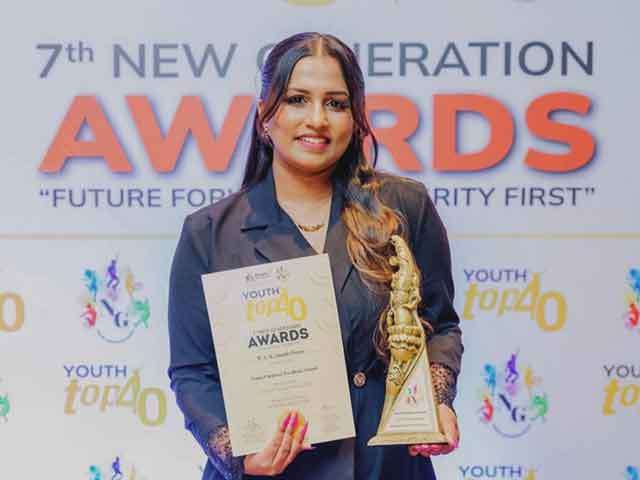
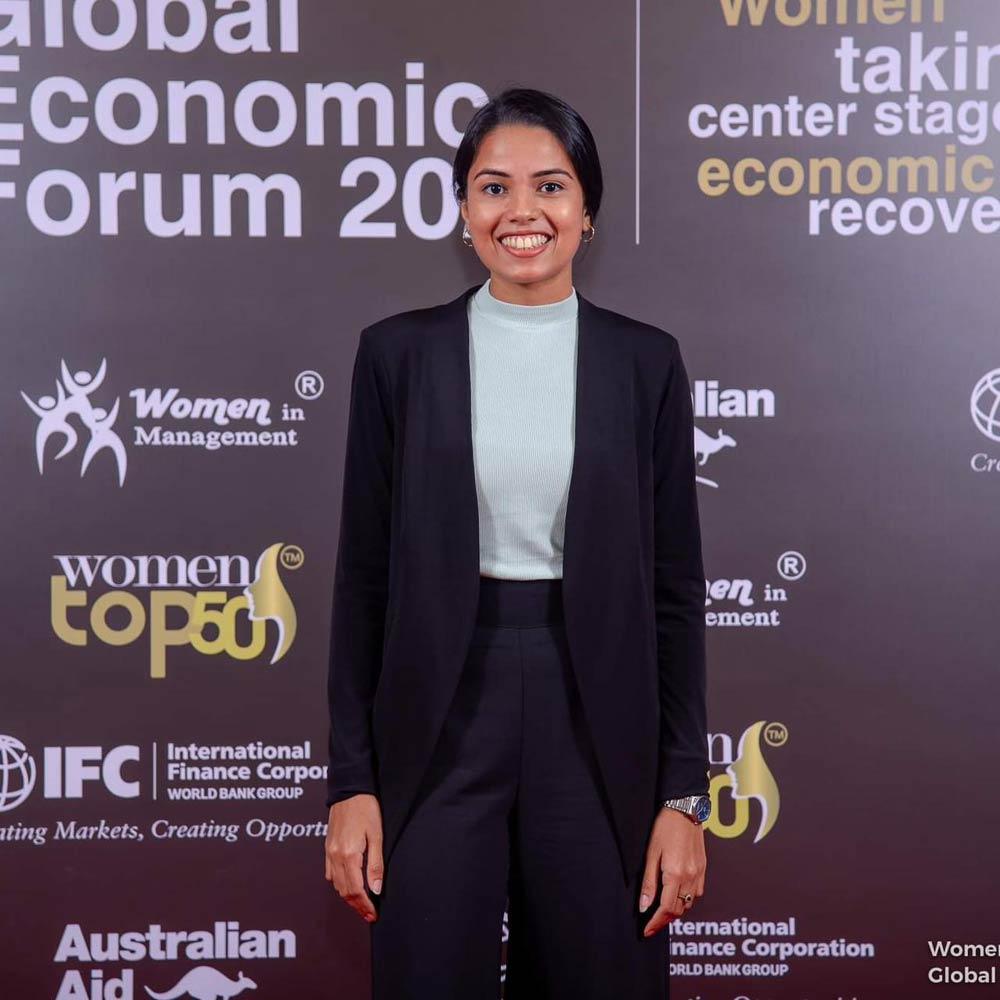
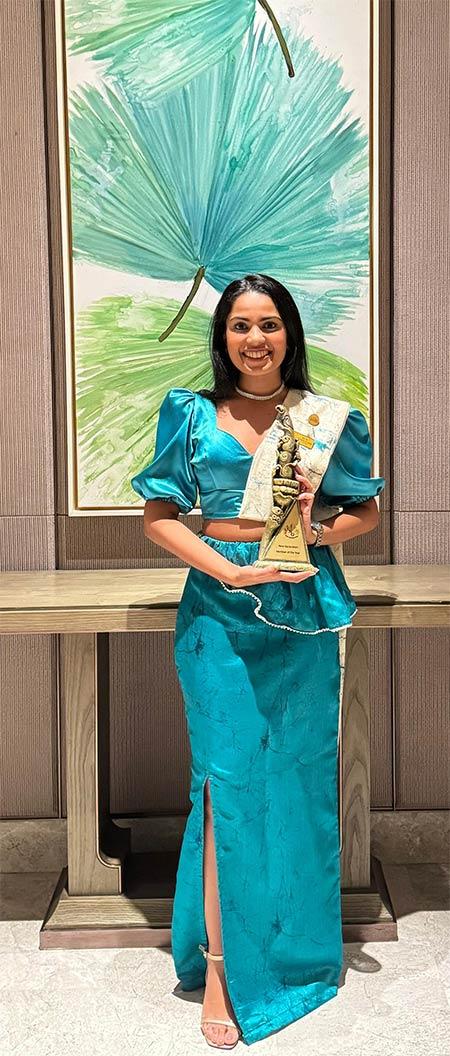 Beyond her professional work, she has emerged as a thoughtful voice in public discourse, speaking and moderating panels on gender and sexuality, crime and justice in South Asia, geopolitics, civil rights, and youth education and career development. As Honorary Secretary of New Generation Sri Lanka, she is also deeply engaged in youth leadership and civic engagement. In this conversation, Sayumi reflects on her journey into development work, the intersections of gender and climate, and the role of young people in shaping a more inclusive and resilient Sri Lanka.
What first drew you toward development work and humanitarian action, particularly in the areas of gender and climate?
My journey toward development work really began during my school years at Bishop’s College, where the ethos of “Not for self, but for all” deeply shaped how I understood service, responsibility, and citizenship. From a young age, I felt a strong desire to help those in need and to respond to the inequalities I observed around me, sometimes subtly, sometimes very visibly. Being actively involved in initiatives such as the Social Service Club and the Red Cross Society exposed me to community engagement beyond the classroom. These experiences helped me understand that vulnerability is often shaped by circumstances beyond individual control, economic conditions, social norms, and access to resources. They also taught me the importance of compassion in action, rather than charity alone. As I grew older, these early experiences evolved into a deeper awareness of how structural inequalities, particularly those linked to gender, are intensified during crises. In Sri Lanka, climate-related events such as floods, droughts, and landslides directly affect livelihoods, education, and personal safety. Observing how women and marginalized communities bear a disproportionate share of these impacts strengthened my interest in the intersection of climate change and social justice. What began as a school-level commitment to service gradually developed into a clear purpose: to contribute to development and humanitarian work that is inclusive, equitable, and grounded in dignity.
How has your academic grounding in International Relations, Strategic Studies, and Human Rights shaped the way you approach your work today?
My academic background trained me to think critically and structurally. International Relations and Strategic Studies helped me understand power dynamics, between states, institutions, and communities, and how global decisions often translate into local consequences. It also taught me to analyse risk, strategy, and long-term implications, which is invaluable in development work.
Human Rights, on the other hand, grounded my approach in values. It constantly brings me back to questions of dignity, equity, and accountability. Together, these disciplines shape how I approach development practice today. I don’t see projects as isolated interventions or technical solutions; I see them as part of larger political, economic, and social systems. This grounding pushes me to ask difficult but necessary questions: Who benefits from this intervention? Who might be excluded? Are we addressing root causes or just symptoms? And how can change be sustained beyond project cycles? It has helped me balance pragmatism with principle, ensuring that development efforts remain people-centred while being strategically sound.
Climate change affects communities unevenly. From your experience, how are women and marginalized groups disproportionately impacted in Sri Lanka?
In Sri Lanka, climate change does not exist in isolation, it interacts with existing social and economic inequalities. Women, particularly those from rural, estate, and coastal communities, are often more exposed to climate risks because of their reliance on natural resources for livelihoods such as agriculture, fisheries, and informal labour. Climate impacts also increase unpaid care responsibilities, as women are often expected to manage household recovery during crises. Loss of income, food insecurity, and displacement can limit girls’ access to education and increase protection risks, including gender-based violence during emergencies. Marginalized groups, such as informal workers, low-income households, and communities with limited land ownership, often lack access to social protection, insurance, and decision-making spaces. As a result, climate shocks can push them further into vulnerability. Climate change essentially acts as a multiplier of existing inequalities, making recovery slower and adaptation more difficult for those already at the margins.
How can gender-responsive climate policies move beyond theory and create real change on the ground?
Gender-responsive climate action must be practical, not performative. Real change happens when gender considerations are integrated from the very beginning, during policy design, budgeting, implementation, and monitoring, rather than treated as an add-on. This means actively involving women and marginalized groups in decision-making processes, investing in gender-disaggregated data, and funding locally led solutions that respond to community realities. Policies must translate into tangible resources, capacity-building, and accountability mechanisms at the local level. When women are recognized not just as beneficiaries but as leaders, innovators, and knowledge holders, climate solutions become more effective and sustainable. Gender equality is not a parallel objective to climate action, it is central to building resilience.
Sri Lankan youth are navigating economic uncertainty, climate challenges, and evolving career paths, what do you believe are their greatest strengths, and where do they need the most support?
Sri Lankan youth are incredibly resilient, adaptable, and innovative. Many are digitally savvy, socially conscious, and deeply aware of national and global challenges. They are willing to question existing systems and imagine alternatives, which is a powerful strength. However, they need greater access to mentorship, decent employment opportunities, and platforms where their voices can influence decision-making. There is also a need to better align education and skills development with evolving labour markets, particularly in green and sustainable sectors. Equally important is mental health and well-being. Prolonged uncertainty can take a toll, and support systems must acknowledge this. Empowering youth means not only equipping them with skills, but also ensuring they feel supported, heard, and valued.
Can you share insights into some of the climate and environment projects you are currently involved in at UNDP Sri Lanka?
My work at UNDP Sri Lanka focuses on integrating climate resilience, gender equality, and community participation. Many projects aim to strengthen local adaptation strategies, support sustainable livelihoods, and improve institutional capacity to respond to climate risks. A key focus is ensuring that climate solutions are inclusive, addressing environmental sustainability while also advancing social equity. This involves working closely with communities, local authorities, and partners to ensure interventions are context-specific and people-centred.
What does success look like for a development project in a climate-vulnerable country like Sri Lanka?
Success goes beyond meeting output indicators or completing activities on time. It means communities are more resilient, informed, and empowered to manage future risks. A successful project leaves behind strengthened institutions, local ownership, and lasting capacities. Importantly, it should reduce vulnerabilities without creating dependency and ensure that the most marginalized are better off than before. Sustainable change is measured by long-term impact, not short-term visibility.
Finally, what message would you like to leave with young Sri Lankans who want to contribute meaningfully to society?
You don’t need to have all the answers or wait for the “perfect” opportunity to start. Meaningful contribution begins with curiosity, empathy, and consistency. Learn continuously, stay grounded in your values, and don’t underestimate the power of small, collective actions. Sri Lanka’s future depends on young people who are willing to engage critically, act compassionately, and imagine alternatives, even in uncertain times.