In Conversation with Dr. Sara Nasserzadeh On Education SEX in Sri Lanka and Why Protection Isn’t “Western” | PART 1 OF 2
Writer’s Note:
This interview provides research-based perspectives on sexuality education. It does not advocate for any single curriculum, but seeks to support informed, culturally aware dialogue.
Introduction
 When Sri Lanka’s Prime Minister recently announced plans to introduce sex education into the national curriculum, the backlash was immediate. Religious leaders united in opposition. Parents flooded social media. Politicians warned of “Western agendas.” Within days, the proposal was paused. The accusations were familiar: sex education will encourage promiscuity, undermine values, expose children to inappropriate content. But beneath this rhetoric lies an urgent reality. In 2023, over 1,500 girl children were raped in Sri Lanka. Research shows 67% of parents lack adequate knowledge about child sexual abuse. Meanwhile, young people are already being educated by peers, pornography, and social media.
The question isn’t whether Sri Lankan children will be exposed to sexual content. They already are. The question is whether their information will reflect Sri Lankan values of compassion and protection or whether we abandon them to the internet. Dr. Sara Nasserzadeh has spent two decades navigating this exact tension. She created the BBC’s award-winning Whispers program for Persian-speaking audiences in Iran and Afghanistan. She’s worked in 41 countries and advised the United Nations on culturally adapted frameworks. This is Part 1 of our conversation.
Q You created the BBC Whispers program for deeply conservative contexts. Sri Lanka faces similar resistance, with religious groups claiming sex education undermines our values. How do you respond to the argument that comprehensive sexuality education is “Western” or culturally inappropriate?
I take that concern very seriously, because it often comes from a sincere wish to protect children and preserve a way of life. Comprehensive Sexuality Education doesn’t have a consistent reputation across the world, and many people are put off just by hearing the term CSE. So here I would like to offer my definition: Comprehensive Sexuality Education for me is an education that will inform and protect in an age-appropriate and culturally acceptable way without diluting the rigor or accuracy of the material offered.
When people say sexuality education is “Western”, I usually start by gently distinguishing between the content and the container. The content we are talking about is not foreign at all. Every society, including Sri Lanka, has children going through puberty, families navigating marriage and young people creating loving relationships which they hope bring them fulfilment. Bodies, vulnerability, and the need for protection are universal. The container is how we talk about these realities: which words we use, which values we anchor them in, which stories we tell, and who is considered a trusted messenger. That part must be deeply local.
In my work on the BBC Whispers program or in my work with the United Nations where I am asked to weigh in on bringing best practice models from around the world or make the content culturally relevant and respectful, I never tried to “import” a ready-made model. Instead, I started from people’s own religious and cultural pillars: dignity, non-harm, care for children, modesty, responsibility to family and community. From that shared ground, it becomes clear that proper sexuality education is not about encouraging sexual activity or flooding people with inappropriate material, it is about equipping young people to live those values in a world where they will inevitably encounter risk, misinformation, and pressure.
This is also the spirit of the Sexuality Education Wheel of Context that my colleague Dr. Pejman Azarmina and I developed. The Wheel is a framework to inform our holistic planning all the way to successful execution. The elements of the Wheel are: considering historical background, culture, religion and language, stability versus change, policies and legislation, economy, and tools and technology. When any of these are ignored, even the most well-intentioned program feels like an implant in the body (the system will try to reject it). When they are honoured, sexuality education can grow out of a culture’s own values rather than being imposed on it.
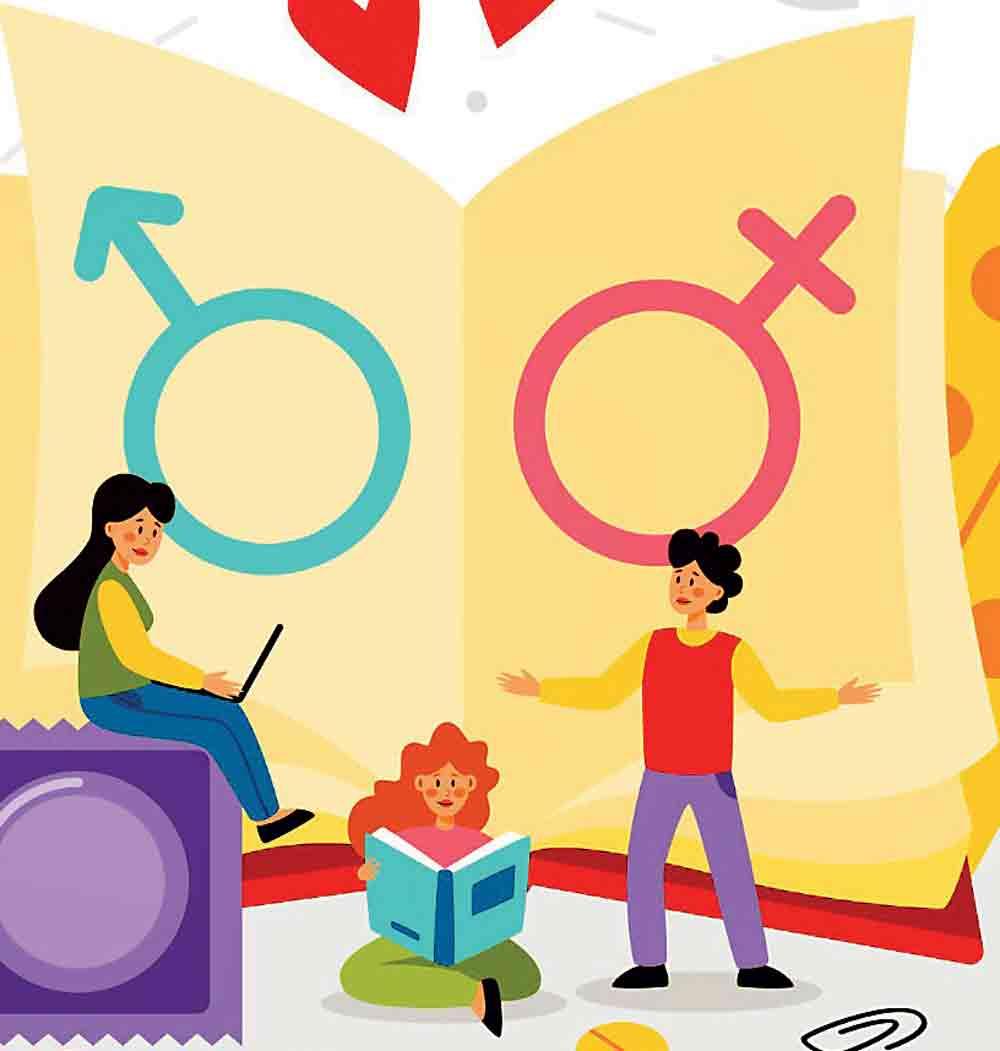
It may be reassuring for Sri Lankan audiences to know that large evidence reviews from UNESCO and WHO have examined sexuality education programs around the world, including in more conservative contexts. These reviews consistently find that comprehensive, age-appropriate sexuality education does not increase sexual activity or promiscuity. Instead, it tends to delay sexual initiation, reduce risky behaviours, and improve the likelihood that young people seek help or protection when something is wrong. The question is not whether young people will be exposed to sexual content, they already are, through peers, media, and the internet. The question is whether their first and most trusted information will reflect Sri Lankan values of compassion, responsibility, and protection, or whether we leave them to navigate alone.
Q You developed the Sexuality Education Wheel of Context to help educators navigate cultural and religious barriers. In Sri Lanka, we’re seeing opposition from religious leaders, reluctance from parents, and silence from teachers, while child sexual abuse cases rise. How can policymakers use this framework to design sex education that respects cultural context while protecting children?
The Wheel of Context was created to prevent exactly what you are describing: well-meaning efforts that collide with local realities and then get stuck. It invites policymakers to pause and systematically ask, “In this specific community, what forces are shaping people’s experiences of sexuality and relationships?” When we map those forces explicitly, we can design education that works with the grain of culture, not against it.
Let me briefly translate the Wheel into the Sri Lankan current context.
Historical background: Sri Lanka’s colonial legal history, civil conflict, and shifting gender norms have all influenced how people talk about morality, honour, and family. Sexuality education that ignores this history can easily be framed as yet another outside imposition. Acknowledging history, in the local language and with local examples, helps communities feel seen rather than managed.
Culture, religion and language: The country’s rich Buddhist, Hindu, Muslim and Christian traditions all contain strong teachings on non-harm, compassion, self-discipline and care for the vulnerable. These are powerful foundations for a child-protection-oriented curriculum. Working with respected religious figures to identify scriptural and ethical anchors for bodily integrity, consent, and respectful relationships can transform opposition into cautious partnership.
Stability versus change: Young people’s worlds are changing rapidly. Smartphones, social media and online pornography mean that children can be exposed to sexual material (including abusive images) long before any adult has spoken to them. The statistics you cited about child sexual abuse in Sri Lanka are not created by sexuality education; they are the consequences of change happening in the absence of guidance. The Wheel helps governments look honestly at where change is already occurring, and to respond instead of react.
Policies and legislation, economy, and tools and technology: These segments remind us that teachers and parents cannot carry this burden alone. Laws on child protection, reporting mechanisms, teacher training policies, media regulation, labour migration, and economic pressures all shape risk and vulnerability. For example, a Sri Lankan study found that a majority of parents lacked adequate knowledge about child sexual abuse and felt ill-prepared to educate their children. Another recent intervention with mothers of adolescent girls showed that, when parents are supported with structured information and skills, they are both willing and able to communicate more effectively with their daughters.
For policymakers, the Wheel is both a compass and a conversation tool. It can be used in stakeholder workshops where religious leaders, teachers, parents, young people, health professionals and child-protection services sit together and populate each segment with their own realities, fears and hopes. The outcome is not a single “perfect” curriculum, but a shared understanding of what is non-negotiable for protecting children and where there is room for cultural adaptation. When people see themselves and their values reflected in the design, they are much more likely to support implementation.
Q One of the most common objections in Sri Lanka is that “teaching sex education will encourage promiscuity.” You’ve navigated this argument for decades. What does the research actually show? And how do we reframe this from “promoting sex” to “protecting children”?
This is perhaps the most common worry I hear, and it is understandable. If we only imagine sexuality education as explicit instruction about sexual acts, it is natural to fear that it might spark experimentation. The quality of the material, the way they are delivered (even the person who delivers them) and the process of evaluation to see if they are leading to the outcomes that would serve the young people in short and long run are key. Fortunately, we now have several decades of research from multiple countries, including more conservative settings, that allow us to answer this question with evidence rather than fear.
Large systematic reviews and international guidance documents consistently conclude that comprehensive, age-appropriate sexuality education does not lead to earlier sexual debut or increased sexual activity. On the contrary, many programs are associated with delayed first intercourse, reduced number of sexual partners, increased condom and contraceptive use among those who are sexually active, and better communication with partners and parents. In fact, one of the reasons for early sexual activity is known to be the curiosity that a young person has and the naivety around sex not because the person knows too much. Recent analyses of comprehensive sexuality education and adolescent health again found no evidence that providing accurate information and skills hastens sexual activity; instead, it improves knowledge, self-efficacy and use of protection where relevant.

To reframe the conversation, I often invite communities to consider a simple comparison. In road-safety education, when we teach children how to cross the street, we are not encouraging them to play in traffic. We are acknowledging that roads exist, that children will encounter them, and that knowing how to navigate safely can save lives. Sexuality education plays a similar role in a world where sexual images, relationships, and risks are present whether we approve of them or not.
When we emphasise that the purpose of comprehensive sexuality education is to protect children from abuse, exploitation, coercion, unwanted pregnancy and disease, and to equip them for respectful relationships in adulthood, we align the curriculum with the deepest concerns of parents, religious leaders and policymakers. It becomes less about promoting sex and more about promoting safety, dignity and responsibility.
Conclusion
The evidence is clear. Comprehensive sexuality education, when designed with cultural respect and rooted in local values, does not encourage promiscuity, it protects children. It is not a Western imposition; it is a response to universal realities every society must face. But knowing what to teach is only half the conversation. What happens when we don’t teach it? How does silence shape people’s ability to build healthy relationships, recognise abuse, and live with dignity?
Next week, in Part 2, we’ll explore those questions.
About Dr. Sara Nasserzadeh
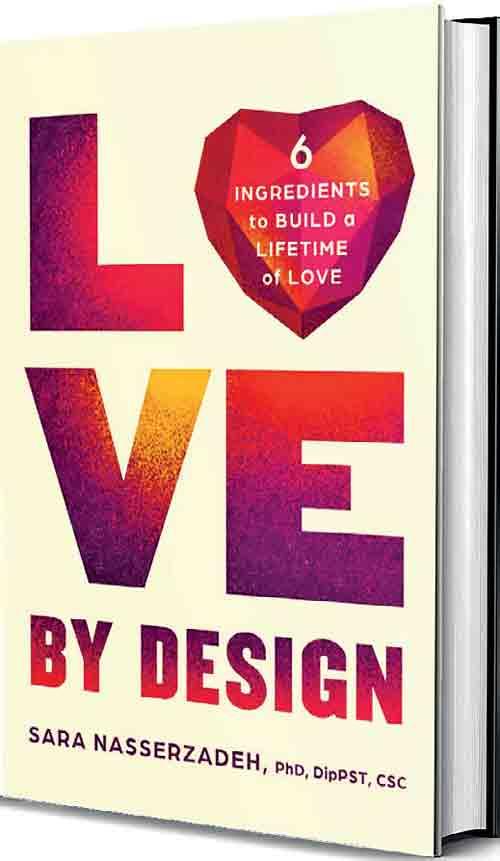
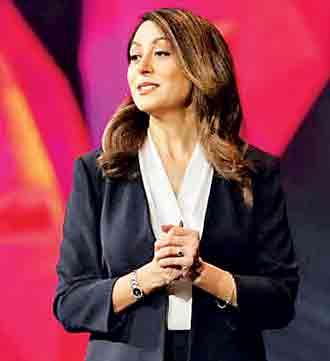
Dr. Sara Nasserzadeh, PhD is a social psychologist, psychosexual therapist, and senior intercultural advisor. She created the award-winning BBC Whispers program and is the author of Love by Design: 6 Ingredients to Build a Lifetime of Love and co-developer of the Sexuality Education Wheel of Context. She also has worked in 41 countries advising governments, NGOs, and the United Nations on culturally adapted sexuality education.
- Learn more: www.Sara-Nasserzadeh.com