Discovering Luang Prabang the Jewel of Indochina
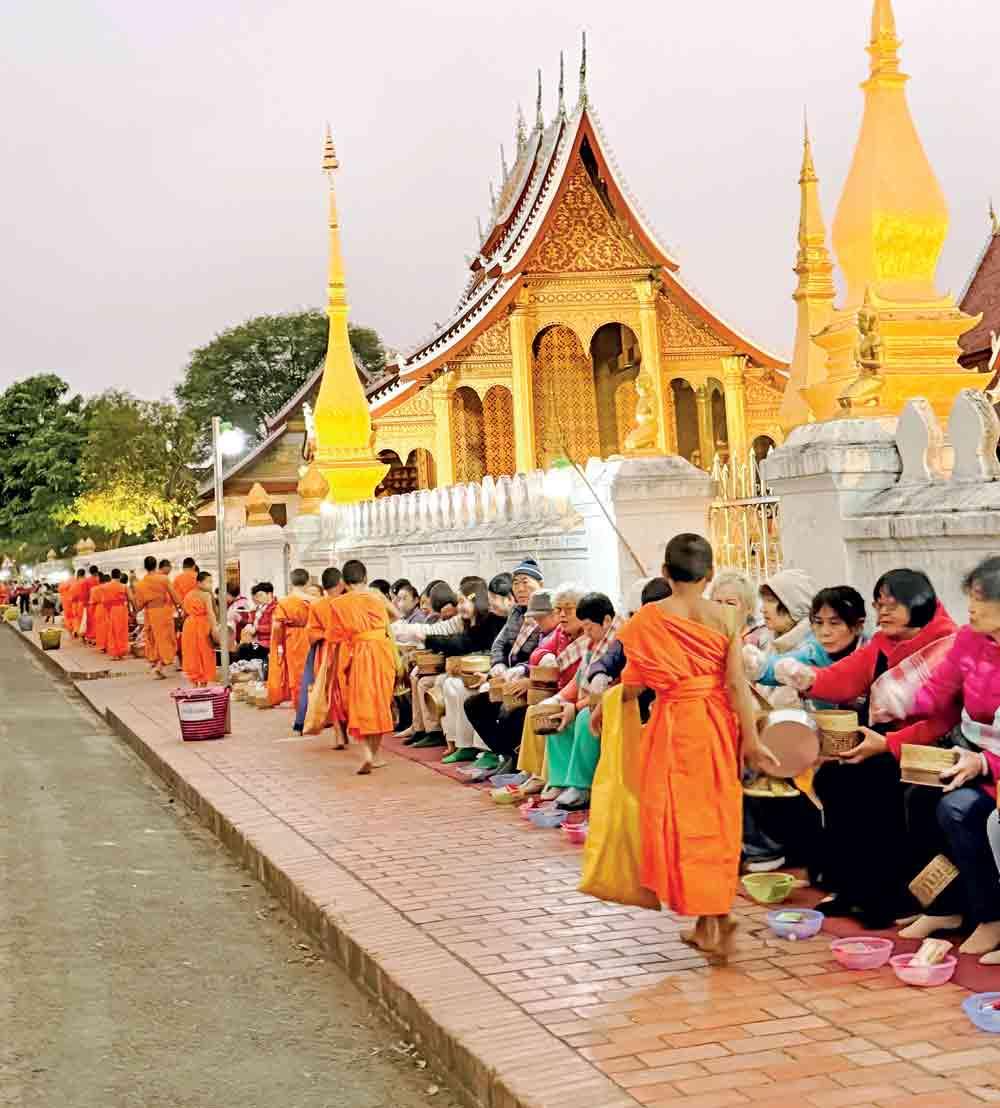
 There is something deeply mesmerizing about Luang Prabang. Tucked away in the heart of northern Laos and encircled by imposing mountains cloaked in dense jungle, time flows differently here. The former royal capital sits at the confluence of the Mekong and Nam Khan rivers, and at the meeting point of two worlds.
One world is unmistakably Southeast Asian: gold-roofed Buddhist temples that glisten in the sun; old teak houses draped in bougainvillea, vines tumbling from overhanging balconies; street markets stacked with fresh produce, river fish wriggling in shallow buckets; children bathing at the riverbanks who wave as you pass by; and old men squatting in quiet circles, cigarettes dangling from their lips.
Then there is the colonial Francophone world: whitewashed villas with colourful wooden shutters, now transformed into boutique hotels and galleries; crowded bookstores and airy shops with terracotta porches; and, of course, cafés serving the flakiest croissants and crusty baguettes.
In Luang Prabang, the two worlds blend so seamlessly that you drift from one to the other without noticing. A UNESCO World Heritage Site, the town retains the faded charms of Indochina, yet it is often overlooked as travellers flock to Cambodia, Thailand or Vietnam instead. In truth, I was initially lukewarm about visiting Laos. I didn’t quite understand the appeal. But after spending over a week in the country, including four blissfully unhurried days in Luang Prabang, I began to understand why it is fondly referred to as ‘the jewel of Indochina.’
A City Shaped by Rivers
It would be impossible to write about Luang Prabang without mentioning the Mekong. The wide, chai-coloured river has always been far more than a waterway; it is the lifeblood of Laos. For centuries, the only way to reach the city was by boat, unless you were willing to trek for days through thick rainforest. Early Lao civilizations flourished along its banks, connected to trade networks that stretched across mainland Southeast Asia.
In the 14th century, King Fa Ngum unified the region and established Luang Prabang as the royal capital of the Lan Xang Kingdom, which translates to ‘The Land of a Million Elephants.’ Shaped by the ebb and flow of the Mekong, the city became the cultural, spiritual, economic and political heart of the kingdom. Kings ruled under the guiding force of Theravada Buddhism, introduced by Sri Lankan missionaries, and gilded temples soon rose from the forested landscape, their spires piercing the canopy and anchoring the city’s sacred identity.
But tides change. In the mid-16th century, political power shifted south to the more accessible city of Vientiane. Luang Prabang was once again relegated to seclusion, an accident of history that would ultimately become its salvation.
A Delicate Balance
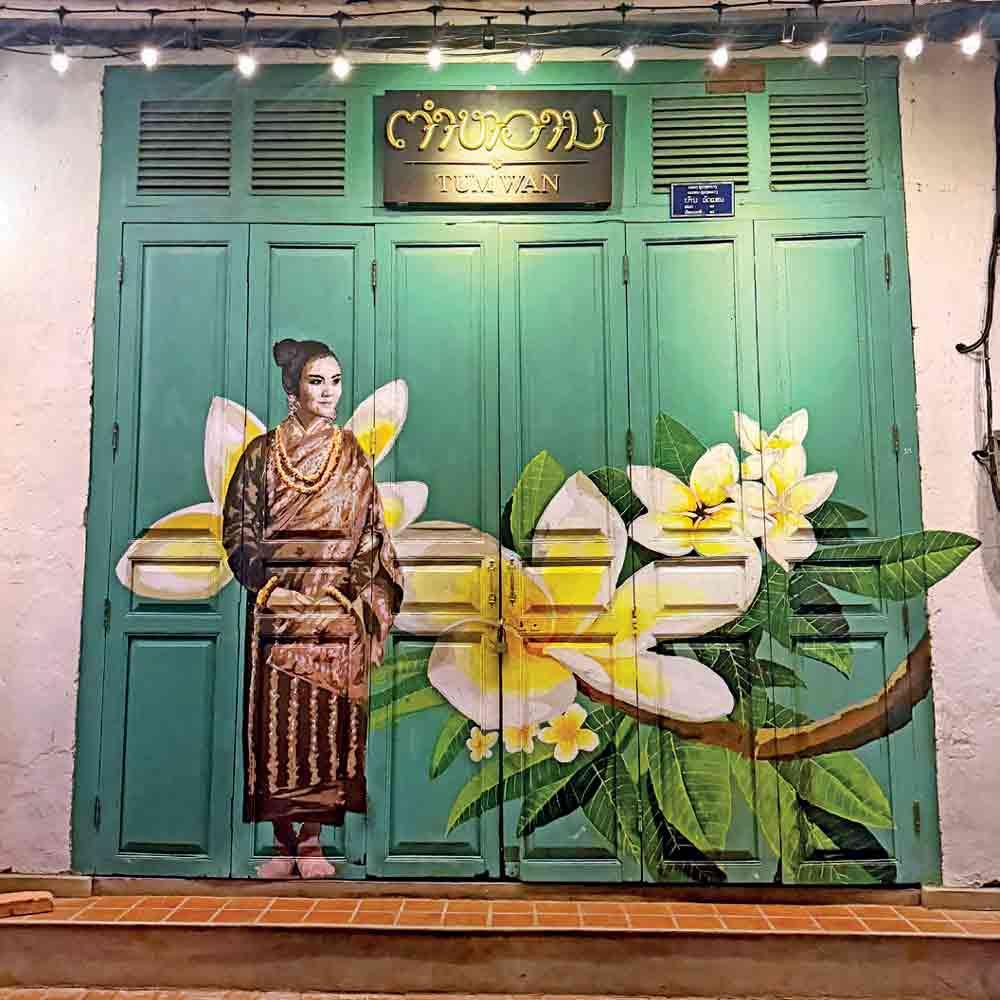
Today, the city feels far removed from the modern world, its isolation having preserved its essence. From the moment you arrive, Luang Prabang announces its difference through absence. There are no skyscrapers here, no traffic-clogged roads, no crosswalks, no frantic rush to be somewhere else. It is devoid of all the hallmarks of other Southeast Asian cities. This city moves at a gentler pace.
Nostalgia hangs heavy in the air, but Luang Prabang is not preserved in amber; it is alive and quietly evolving. The languid nature of the Mekong spills into the streets, carrying you along as you amble down the main road and quiet alleyways. Rather than chasing modernity, Luang Prabang became a custodian of memory, history and tradition.
This careful coexistence – between Lao and French, sacred and secular, past and present – is what defines the city. Yet above all, Buddhism remains its anchor. You see it in the numerous gold pagodas with their shimmering mosaic facades and in the saffron-robed monks who wander the city, sometimes laughing and chasing one another like schoolboys, or sometimes sitting in courtyards scrolling on their phones. Despite this delicate dance, there is a palpable sense of awareness that this harmony could easily be disturbed…
The Cost of Being Seen
While its relative isolation may be part of Luang Prabang’s allure, its fragility is impossible to ignore. One of the city’s greatest draws is the morning almsgiving ceremony, ‘tak bat.’ I had seen countless images online: monks clad in saffron robes moving silently through the streets, devotees kneeling reverently as they offer rice at dawn. I imagined a moment of profound stillness and devotion. I was sorely mistaken.
We woke before sunrise. It was early December, and there was a sharp chill in the air as I layered up and stepped out into the hushed darkness. As we made our way towards the main street, a woman approached us, urging us to buy sticky rice for the monks and promising to take us to a “good spot.” We had been warned about these encounters and told they were overpriced scams, so we pushed past, determined not to let it colour the experience entirely.
By the time we arrived, the street was already alive with movement. Woven mats and low stools topped with baskets of bamboo sticky rice lined the pavement. Thin ropes partitioned the street into sections. Vans pulled up one after another, unloading large tour groups who were ushered into position by guides on scooters with walkie-talkies. The atmosphere was loud and restless with people smoking, jostling for space, raising their voices. It bore little resemblance to the quiet reverence I had imagined.
Nearly forty-five minutes later, the monks began to appear, slowly lining up along one side of the street. A drum sounded, rhythmic and solemn, signalling the start of the ceremony. And then, suddenly, the stillness fractured. Tourists surged forward to the rope, cameras raised, phones clicking, flashes firing. What should have been sacred became spectacle. The monks were no longer participants in a ritual, but subjects of observation. The discomfort was immediate. Where was the restraint? The reverence? The very qualities that give Luang Prabang its soul felt alarmingly easy to erode.
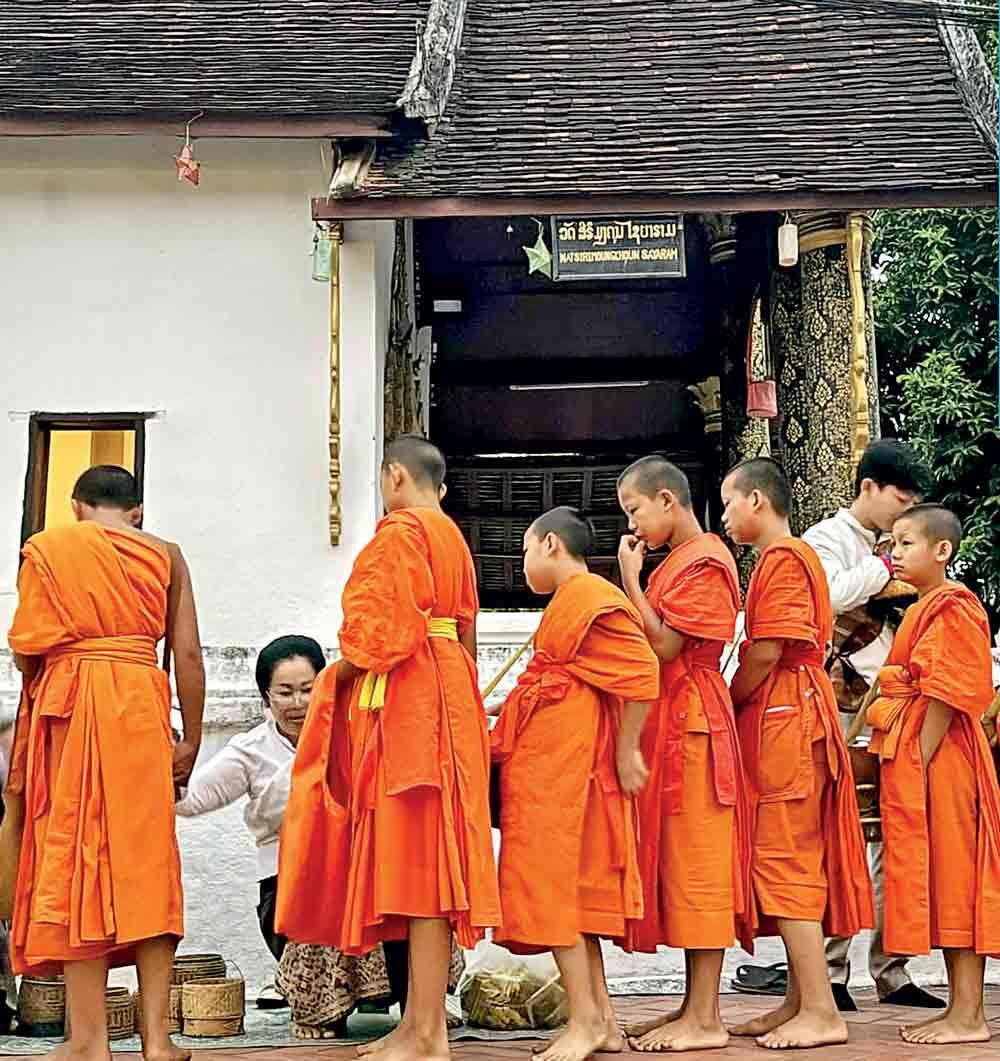
It left a sour taste in my mouth, not because tourism exists here, but because of how carelessly it intruded. What should have been an intimate, spiritual experience felt like a choreographed performance for outsiders. While the ceremony hadn’t lost its meaning, it felt as though it was quietly slipping away, corrupted by the attention drawn to it.
And yet, despite this, Luang Prabang captivated me.
Even though it wasn’t on my radar before this trip, it is a place I know I want to return to. Because cities like this rarely remain unchanged. Change will come, as it always does, and shift the tides. I left with the sense that in a few years, Luang Prabang may feel different, and that made experiencing it now feel all the more precious.