A Humbling Reset: What Clearing Mines in Northern Sri Lanka Taught Me About Safety, Dignity, and Real Reconstruction


THE PR INSIDER BY FARZANA BADUEL
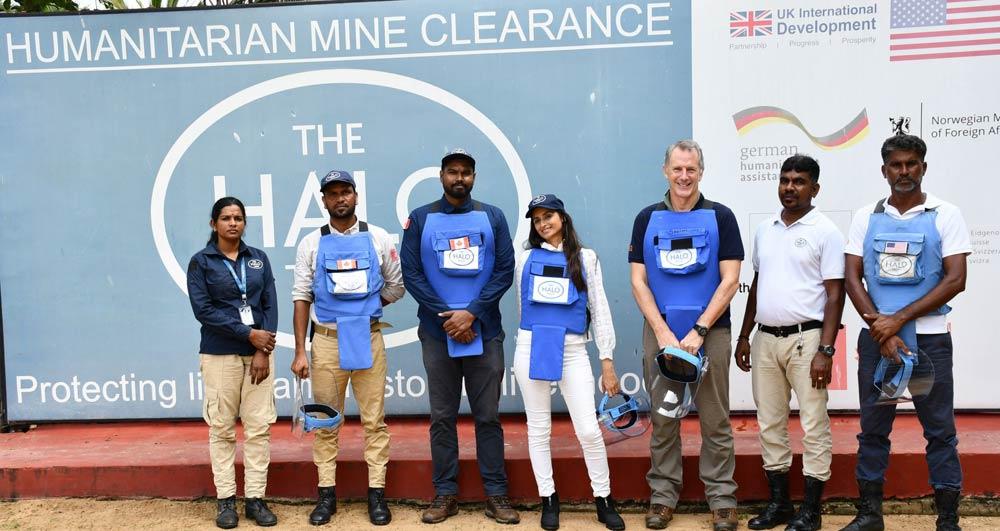
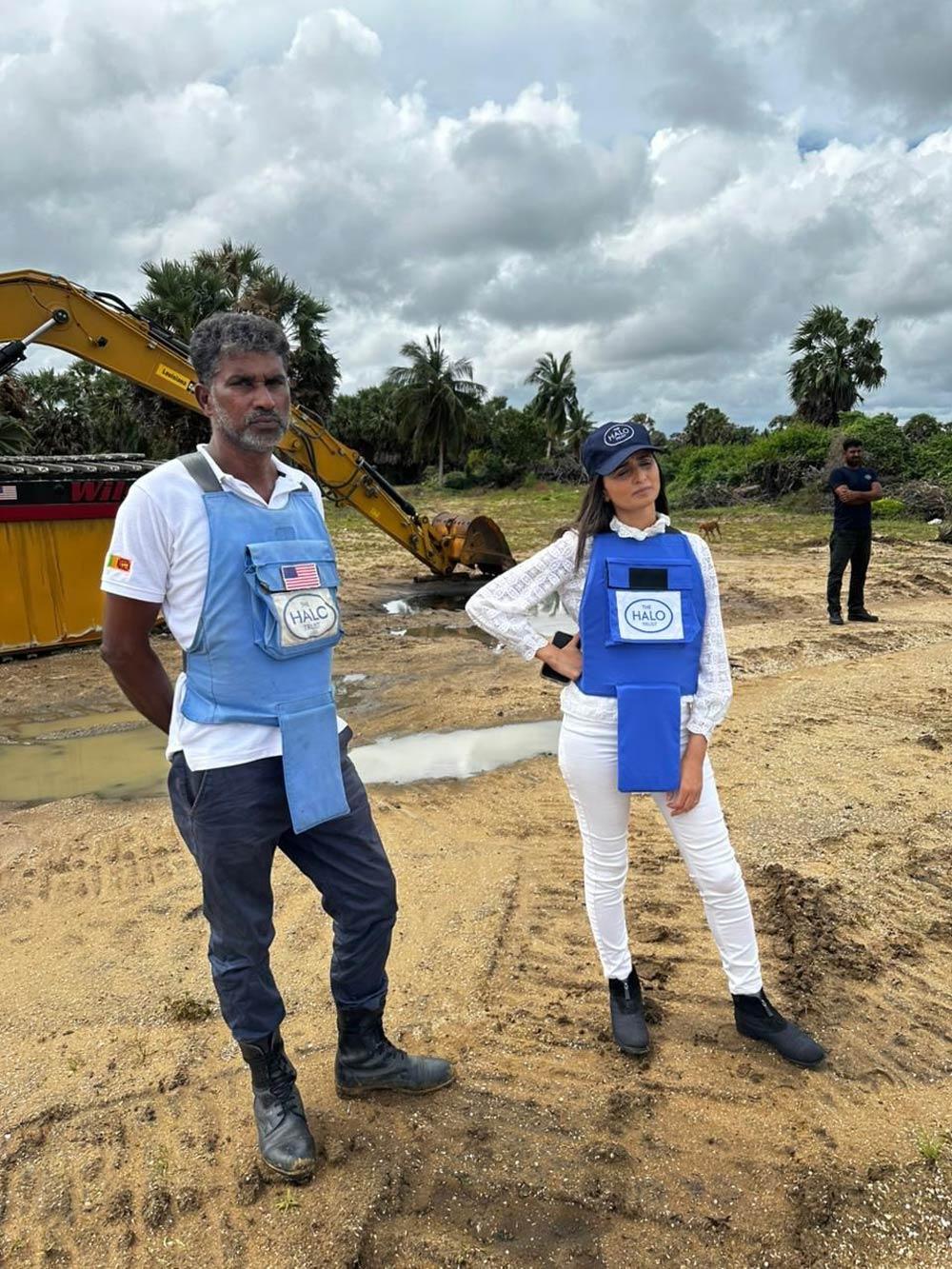
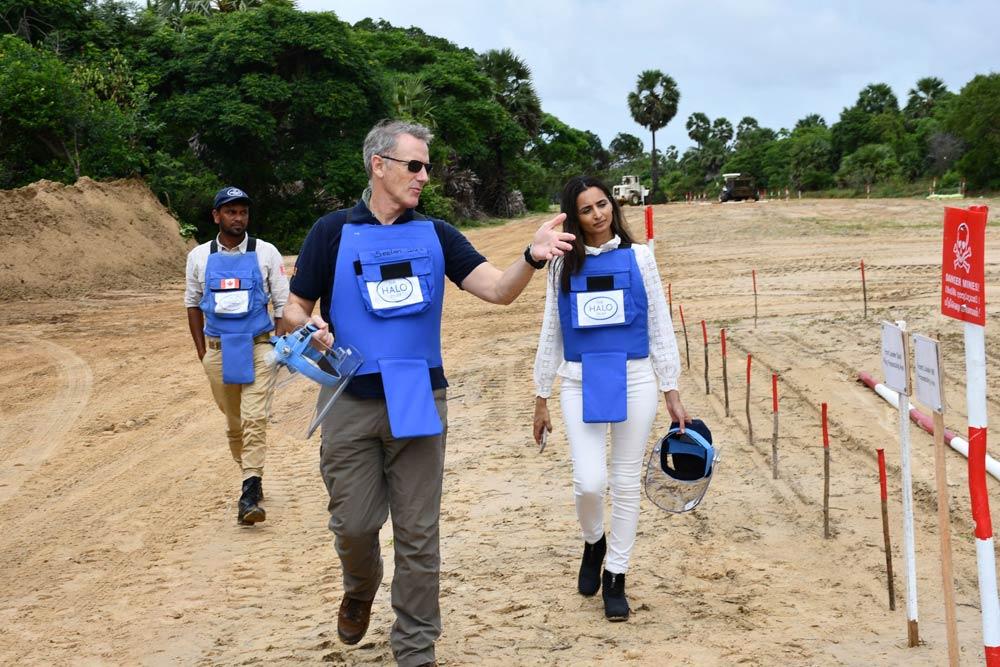
Sometimes life delivers a humbling reset. Last week, I travelled eight hours north from Colombo to Jaffna with The HALO Trust, the world’s largest humanitarian demining organisation. What I encountered there was a stark reminder of how much of what we call success is shaped by the lottery of birth: where we are born, the families who raise us, the countries we call home.
I joined HALO’s board of trustees earlier this year. Like many people, my awareness of the organisation began and ended with a single, iconic image: Princess Diana walking through a minefield in Angola in 1997. I knew the photograph. I did not truly know the work. Now I do.
HALO was founded in 1988, in the aftermath of the Soviet withdrawal from Afghanistan, when millions of landmines were left behind, hidden in soil, fields, and footpaths, long after the war had moved on. Since then, the organisation has operated in more than 32 countries and territories affected by conflict. In Sri Lanka alone, where HALO has worked continuously since 2002, its teams have cleared more than 300,000 landmines and, in total, over one million explosive items. Numbers like these can feel abstract until you stand on the land they refer to.
The Northern Province of Sri Lanka, where I spent several days with HALO’s teams, still bears the deep scars of the country’s decades-long civil conflict. Villages were abandoned. Farmland was mined. Entire communities were displaced for years, sometimes generations. HALO Sri Lanka is now one of the largest employers in the region, with staff numbers that have ranged from around 850 to more than 1,200. Over 99 per cent of these roles are filled by local recruits. Many of the people I met are clearing the very land from which they themselves were once forced to flee. What I witnessed there challenged almost every assumption I held about post-conflict reconstruction.
Decades of disrupted education mean that hiring locally cannot follow a conventional model. Training is not a single induction or a box to be ticked; it is a continuous, rigorous process of preparation and development. New deminers must first learn to identify at least seventeen different types of landmines, alongside other explosive hazards such as anti-personnel mines, anti-vehicle mines, unexploded ordnance, and improvised explosive devices. They are trained to locate, expose, and excavate these devices with absolute precision, following strict safety protocols. Only after passing demanding tests are, they permitted to join experienced teams working in live minefields. And even then, the learning does not stop.
For every team, every day begins with refresher training before clearance starts. Specific drills are rehearsed repeatedly, reinforcing muscle memory and discipline. More extensive refresher training takes place at regular intervals throughout the year. Those operating specialist equipment undergo additional training every three months. This culture of constant reinforcement is not optional; it is fundamental. In an environment where a single mistake can cost a life, safety is not assumed. It is engineered.
Forty-two per cent of HALO Sri Lanka’s deminers are women, represented at every level of field leadership. A standard manual demining team is led by a commander and consists of eight people. One of them is a highly trained team medic, supported by at least two additional personnel with medical training, including the commander and second-in-command.
The structure is deliberate. Every role exists for a reason. Every system is designed to minimise risk and maximise care. The land itself presents another layer of complexity.
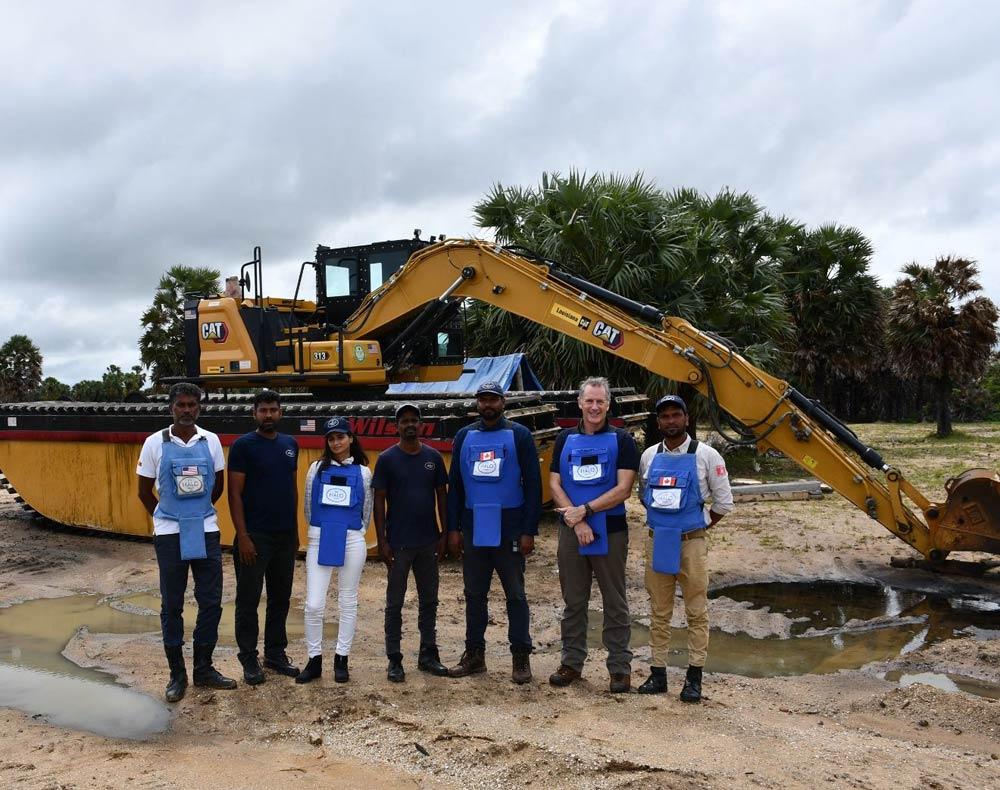
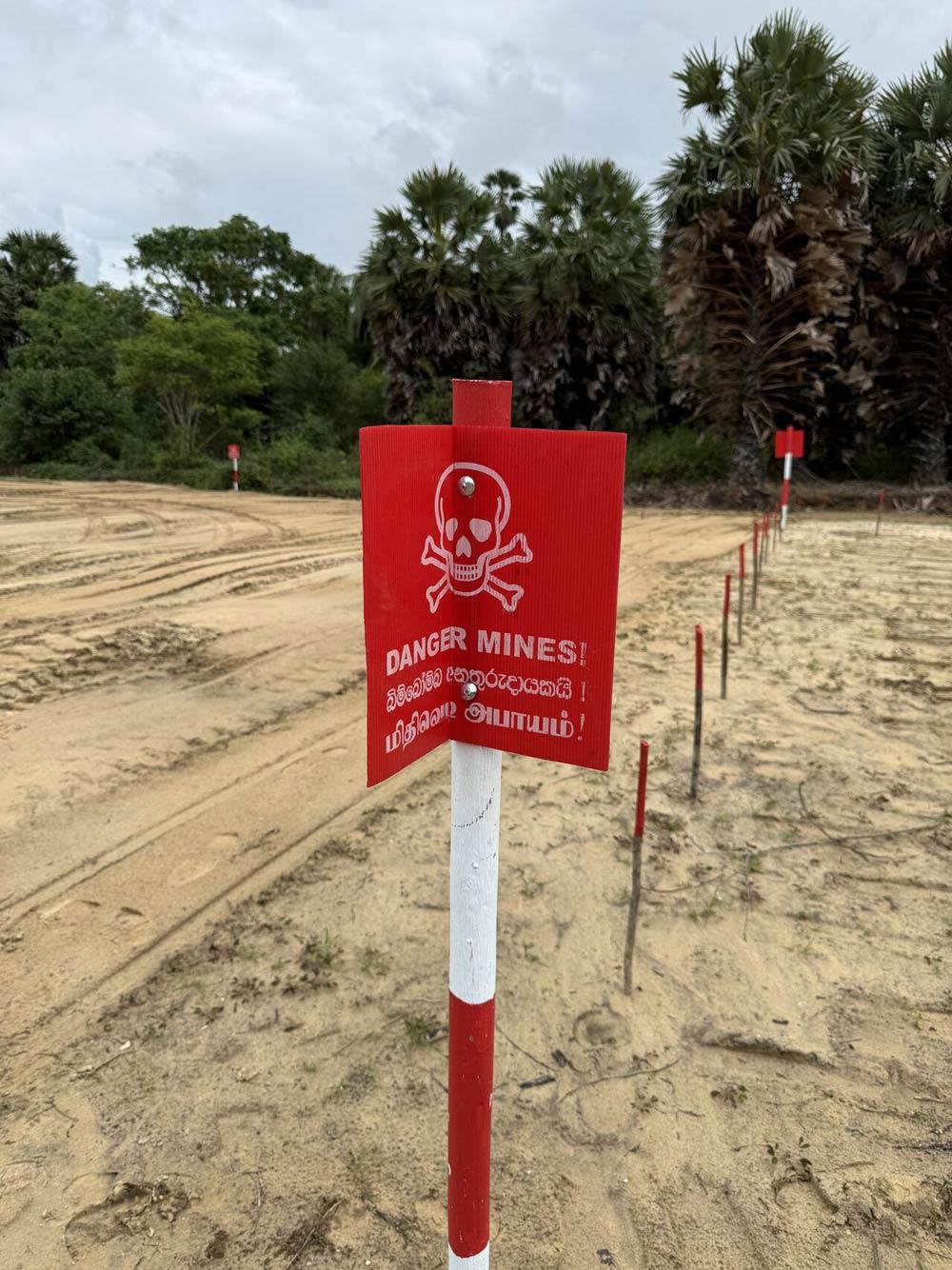
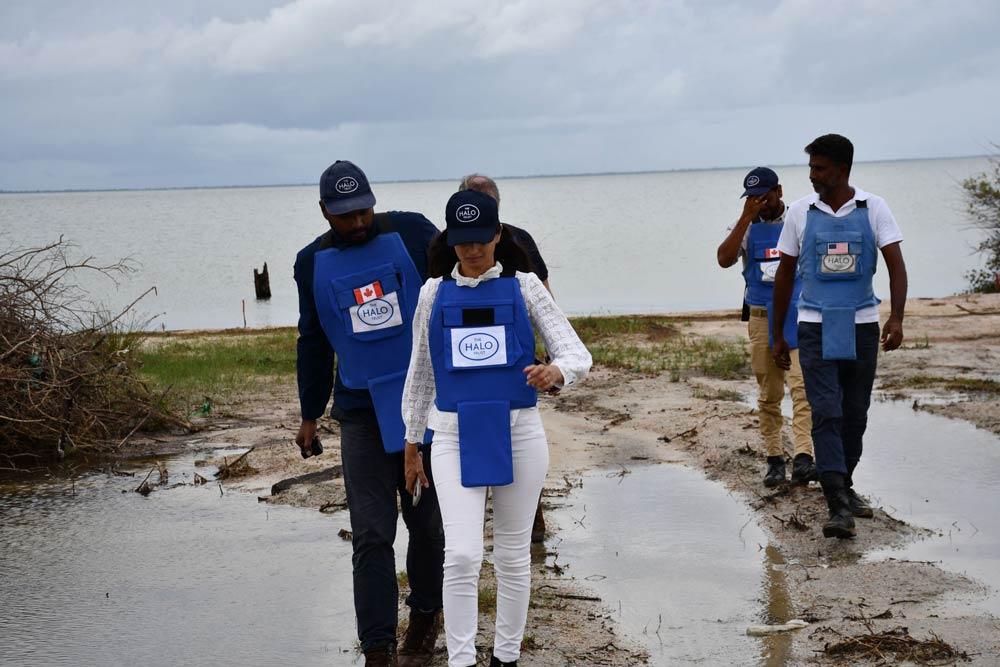
Minefields here are not confined to open ground. They are hidden in dense jungle, along shifting coastlines, on small islands, buried beneath old field fortifications and earthworks, and submerged in lagoons. Each environment demands a different approach, and often a new one altogether. During my visit, I saw specialist equipment being used to tackle waterlogged and submerged minefields, including a bespoke, first-of-its-kind amphibious excavator provided by the United States Government at the end of last year.
What struck me most was not just the technology, but the ingenuity behind it. The Sri Lankan teams have developed new standard operating procedures for clearing mines in these environments, adapting equipment and techniques to local conditions. Those procedures will now be shared across HALO’s global operations, including in Ukraine, where flooding caused by damaged and destroyed dams has created similar challenges. This is what locally led development looks like in practice. This is impact that goes far beyond headlines or photo opportunities.
 I met families who are finally able to return home after decades of displacement. I walked across land that had once been lethal, now cleared and ready for farming, building, living. I saw the quiet pride of people reclaiming something fundamental: safety, dignity, a future rooted in their own soil. I also learned that HALO is constantly investing in its people beyond the immediate task of demining, helping staff develop skills for life after clearance work ends, when the very last explosive hazard has been removed from Sri Lankan ground. That matters.
Demining is not just about removing weapons. It is about restoring choice. The choice to walk to school by the shortest route. The choice to farm without fear. The choice to rebuild a home where one once stood. None of the broader ambitions we speak about after conflict, stability, economic growth, reconciliation, can take hold if the ground itself remains unsafe. HALO is often remembered for one photograph from the 1990s. It deserves to be known for the thousands of lives it protects every single day.
If you care about stability, about rebuilding after conflict, about dignity and safety as the foundations for everything else, I urge you to learn more about The HALO Trust. Support can take many forms: funding, partnerships, advocacy, and even simple conversation.
- Some organisations change landscapes.
- Some organisations change lives.
HALO does both.
Online: www.halotrust.org
About The Writer
Farzana Baduel, President-elect (2026) of the Chartered Institute of Public Relations and CEO and Co-founder of Curzon PR (UK), is a leading specialist in global strategic communications. She advises entrepreneurs at the University of Oxford’s, Säid Business School, co-founded the Asian Communications Network (UK), and serves on the boards of the Halo Trust, and Soho Theatre. She is also a member of the English Law Promotion Panel, chaired by Deputy Prime Minister (UK), David Lammy, and has also been recognised on the PRWeek Power List and Provoke Media’s Innovator 25. She also co-hosts the podcast, Stories and Strategies. Farzana champions diversity, social mobility, and the power of storytelling to connect worlds.