Where Illusion Meets Faith: The Story Behind Rome’s Sant’Ignazio
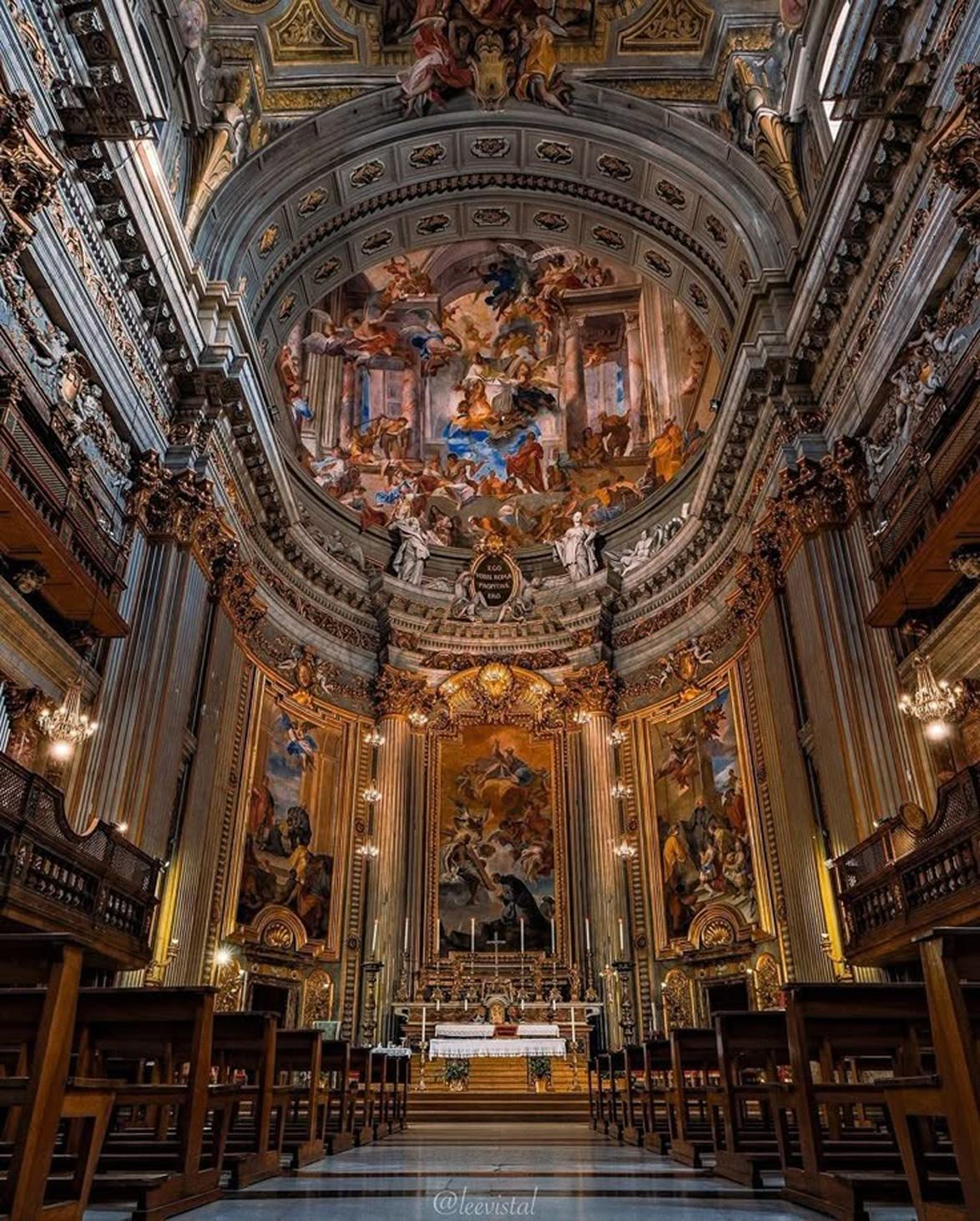
In the heart of Rome, only a short walk from the Pantheon, stands a church that quietly performs one of the most remarkable visual illusions in the world. At first glance, Sant’Ignazio di Loyola appears similar to many other Baroque churches scattered across Italy. Its elegant façade, tall columns, and solemn atmosphere create the sense of a traditional place of worship shaped by centuries of history. Visitors often step inside expecting another beautiful but familiar Roman church. But the moment they lift their eyes toward the ceiling, something extraordinary unfolds.
 The ceiling seems to dissolve into the heavens. Saints appear to rise upward into the sky. Light seems to stream through an immense architectural space above the nave. A magnificent dome appears to soar high overhead, supported by towering columns and surrounded by angels drifting through clouds. The scene feels vast, dramatic, and almost theatrical, as if the roof of the church has opened to reveal heaven itself. Yet the astonishing truth is that the entire spectacle is painted on a flat surface.
The Church of Sant’Ignazio was constructed between 1626 and 1650 for the Jesuit order, dedicated to Ignatius of Loyola, the founder of the Society of Jesus. The design of the church was largely overseen by Jesuit mathematician and architect Orazio Grassi. At the time, the Jesuits were one of the most influential religious orders in Europe. Their mission focused strongly on education, intellectual engagement, and the spreading of Catholic teachings during a period of intense religious transformation known as the Counter Reformation.
Architecture and art played an important role in this movement. The Baroque period, which flourished during the seventeenth century, embraced dramatic design, elaborate ornamentation, and emotional intensity. Churches built during this time were meant to inspire awe and devotion. They were spaces designed not only for prayer but also for experience. Through sweeping architectural forms, powerful imagery, and carefully controlled light, Baroque churches sought to move the heart as much as the mind. Sant’Ignazio was intended to embody these ideals. The original architectural plans included a grand dome that would rise above the crossing of the church, creating a powerful visual focal point. Such domes were common in major Baroque churches and often symbolized the heavens opening above the faithful.
However, like many ambitious projects in Rome, reality intervened. Financial limitations prevented the construction of the planned dome. As a result, the church stood incomplete for many years. The grand architectural centrepiece that was meant to crown the building simply did not exist. For some structures, this might have remained a permanent compromise. But Sant’Ignazio would eventually gain something even more remarkable than the original design. In the late seventeenth century, Jesuit brother Andrea Pozzo was invited to transform the church’s interior. Pozzo was not only a painter but also an architect, mathematician, and master of perspective. Between 1685 and 1694, he created what would become one of the most celebrated ceiling frescoes in the world.
Using extraordinary technical skill and mathematical precision, Pozzo painted a vast illusion that transformed the flat ceiling into what appears to be a monumental architectural space. His technique, known as quadratura, involved painting architectural features such as columns, arches, and domes in a way that created the illusion of three-dimensional depth. When viewed from a particular point on the floor, the perspective aligns perfectly, and the painted architecture appears completely real.
Standing at this precise location, visitors see the illusion at its most convincing. The painted columns appear to extend upward into the sky. The heavens seem to open above the church, filled with saints, angels, and radiant light. The entire scene celebrates the missionary work of the Jesuits, showing Saint Ignatius welcomed into glory while figures representing different continents gather below, symbolizing the spread of Christianity across the world. The illusion is so carefully constructed that many visitors initially believe they are looking at real architecture. Only when they move away from the marked viewing spot does the illusion begin to stretch and distort, revealing its painted nature. This deliberate use of perspective is the genius of Pozzo’s work. He understood that the human eye interprets depth based on angles, lines, and proportion. By carefully controlling these elements, he could convince the viewer that flat paint on plaster was actually a vast architectural space. In essence, he turned the ceiling into a visual puzzle that only resolves itself from the right point of view.
Another famous example of his illusion lies in the church’s painted dome. Since a real dome could not be built, Pozzo created one entirely through paint. From the correct position on the floor, the dome appears perfectly rounded and three dimensional. Yet when viewed from the side, it becomes obvious that the surface is completely flat. What began as a practical solution to financial constraints became one of the most extraordinary artistic achievements of the Baroque era. Sant’Ignazio therefore represents far more than a clever trick of the eye. It reflects a deeper Jesuit philosophy that blends faith with intellectual curiosity. The Jesuits were known for their emphasis on education, mathematics, and scientific thought. Andrea Pozzo’s work demonstrates how artistic creativity, and scientific understanding can work together to produce something truly extraordinary.
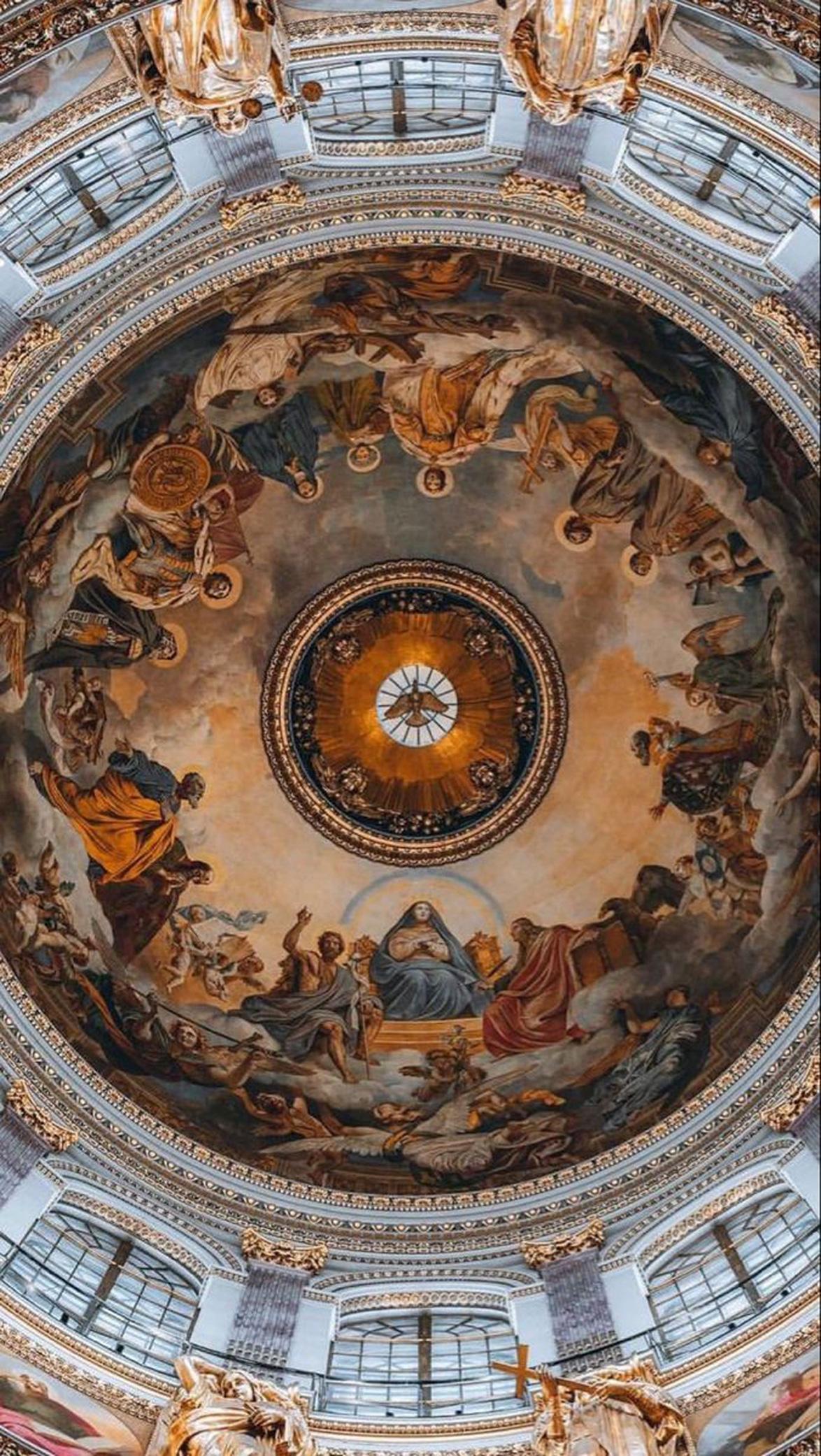 The church also embodies the emotional intensity that defined Baroque art. The dramatic movement of the figures, the sweeping clouds, and the powerful bursts of light all create a sense of energy and spiritual transformation. Visitors are not meant to simply observe the painting. They are meant to feel it. There is also something quietly poetic about the story behind Sant’Ignazio. The church’s most famous feature exists because of a limitation. Without enough money to build a real dome, the creators chose imagination over compromise. Instead of abandoning the vision, they transformed it into something even more memorable. In many ways, this makes the church feel surprisingly modern. Today’s world is filled with digital illusions, cinematic special effects, and virtual reality experiences that reshape how we perceive space and depth. Yet centuries before computer graphics existed, Andrea Pozzo was already experimenting with perception, light, and perspective.
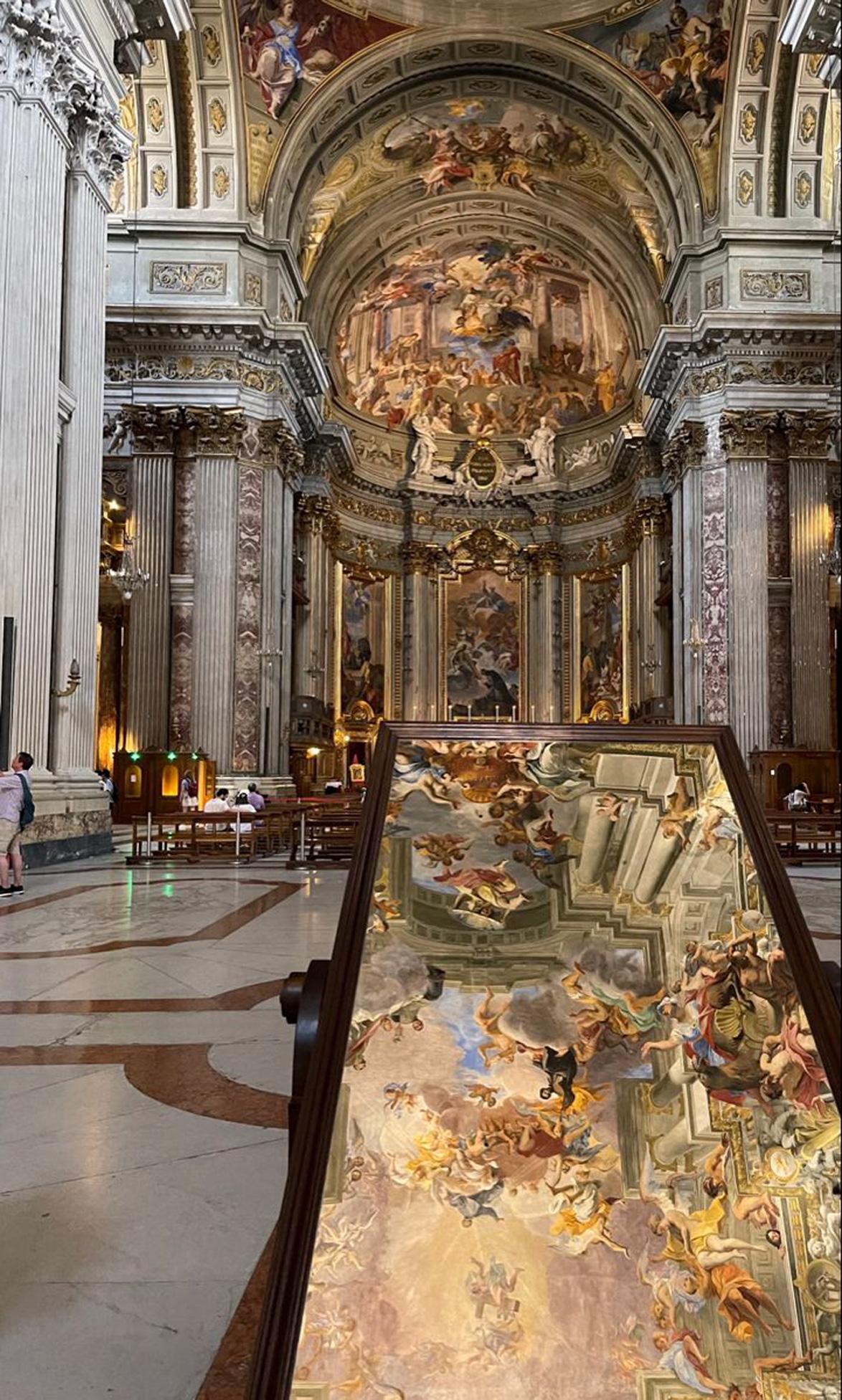
He understood something fundamental about human vision. Our brains interpret reality based on the information they receive. If lines, shadows, and angles are arranged in the right way, the mind will fill in the rest. What we believe to be solid architecture may simply be carefully arranged paint. Visitors to Sant’Ignazio today often gather around a small mirror placed beneath the painted dome. The mirror allows them to view the ceiling without straining their necks, reflecting the extraordinary fresco back toward them. It has become a popular moment for photographs and social media posts. But beyond the photographs lies a deeper experience.
Standing inside Sant’Ignazio is not only about admiring a masterpiece of Baroque art. It is about witnessing how architecture, mathematics, creativity, and faith intersect in a single space. Few places demonstrate this relationship so vividly. For travellers arriving from countries far beyond Europe, including places like Sri Lanka, the church offers something even more meaningful. It shows how imagination and craftsmanship can transcend geography and centuries. The artists who created Sant’Ignazio could not have imagined the global audience that would one day stand beneath their work, yet their vision continues to inspire visitors from every corner of the world.
Rome is often described as an open-air museum, a city where history surrounds you at every step. Ancient ruins, Renaissance palaces, and monumental basilicas create a landscape filled with grandeur. Yet Sant’Ignazio offers a slightly different experience. It feels less overwhelming than some of the city’s larger landmarks. Instead, it invites quiet discovery. From the outside, the church does not immediately reveal its secret. You must enter. You must pause. You must stand in the right place and look upward. In that moment, the illusion reveals itself, and the ceiling transforms into a sky. Perhaps this is the true brilliance of Sant’Ignazio. It reminds us that perspective changes everything. What appears ordinary from one angle may become extraordinary from another. There is also a symbolic lesson hidden within the experience. Travel itself often works in a similar way. The most meaningful moments are not always the grand monuments we expect to see, but the unexpected discoveries that shift our understanding of the world.
Sant’Ignazio turns a simple ceiling into a vast celestial vision. It transforms paint into architecture and limitation into lasting legacy. Long after visitors leave Rome and continue their journeys elsewhere, the memory of that illusion remains. Not just in photographs or travel stories, but in the mind. It lingers as a reminder that reality, like art, is often shaped by perspective. And sometimes, all it takes is standing in the right place and looking up to see the world differently.