The Room Where No One Talks
By Noeli Jesudas
Few places reveal human behaviour as strangely and as honestly as an elevator. It’s one of the smallest shared spaces we enter daily. A metal box. A few buttons. A journey that rarely lasts more than a minute. Yet step inside, and something fascinating happens. Conversations disappear. Eyes suddenly find the ceiling, the floor, or the glowing numbers. People who were confidently walking down the hallway seconds earlier become awkward statues. No one announces the rules. No one writes them down. Yet somehow, everyone seems to know exactly how to behave.
This tiny ritual plays out in offices, malls, hospitals, apartments, and hotels across the world, making the elevator one of the most common, yet not so widely discussed, social experiments of modern life. From a Sociology perspective, elevators are fascinating because they place strangers in a situation that quietly breaks many of our everyday social norms. Humans naturally maintain distance when interacting with people they don’t know. We read facial expressions, exchange brief acknowledgements, and keep physical boundaries.
Elevators remove those boundaries. Suddenly, several strangers are standing shoulder to shoulder in a space barely larger than a closet. The ride might only last thirty seconds, but during that time, everyone is negotiating invisible rules designed to make the situation feel less uncomfortable. One of the most obvious rules is where to stand.
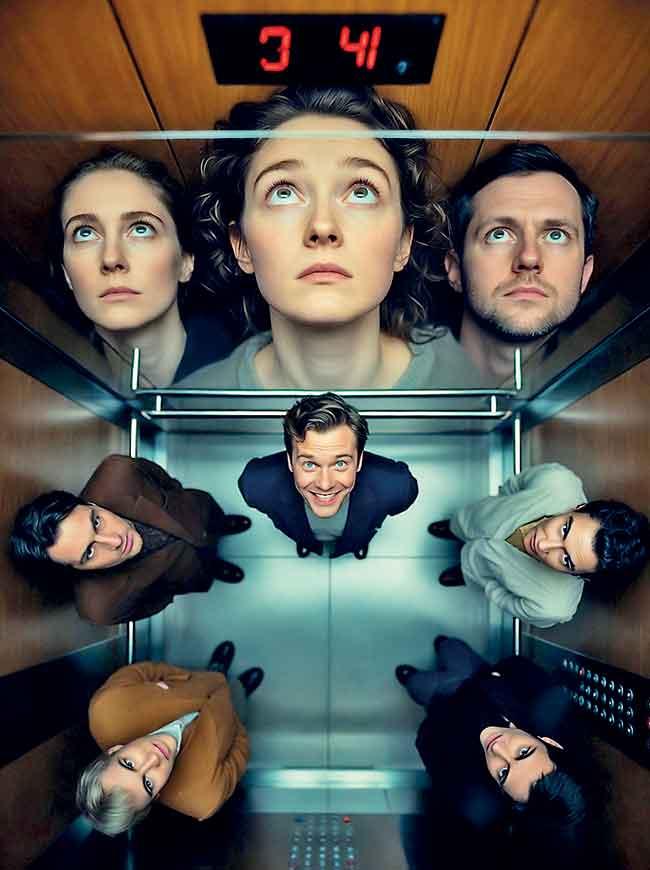
If an elevator is empty and one person walks in, they often stand near the panel. When a second person enters, they instinctively choose the opposite corner. A third might take the remaining corner. With each additional person, an almost mathematical pattern forms, maximizing distance wherever possible. This isn’t random. It reflects a concept known in Social Psychology as Proxemics; a theory developed by Edward T. Hall that studies how humans use physical space during interactions. Hall suggested that people operate within invisible zones, intimate, personal, social, and public spaces. Elevators compress all of those zones into one awkward moment.

Personal space disappears. Strangers suddenly occupy distances normally reserved for close acquaintances. Our brains recognize this boundary violation instantly, which is why elevators often feel uncomfortable even when nothing objectively bad is happening. To cope with this discomfort, humans create subtle behavioural strategies. The first strategy is silence. Elevators are strangely quiet spaces. Even talkative people tend to fall silent once the doors close. This silence isn’t accidental. It acts as a social agreement, a way of acknowledging the awkwardness without drawing attention to it. Speaking to strangers in such close proximity can feel intrusive, almost like breaking a temporary social truce. So, everyone waits.
The second strategy involves eye contact, or rather, the avoidance of it. In most social settings, brief eye contact signals politeness and awareness. In elevators, however, prolonged eye contact can feel strangely intense. Standing inches away from someone while maintaining eye contact for thirty seconds feels far more intimate than either person intended. So, people look elsewhere.
The floor indicator becomes fascinating. The door frame suddenly deserves close inspection. Phones emerge as safe distractions. These behaviours create psychological distance even when physical distance is impossible. Another fascinating elevator behaviour is the subtle formation of personal “bubbles.” Even in crowded elevators, people attempt to maintain tiny boundaries. Arms stay close to the body. Bags are held carefully. Movements become slower and more controlled. Everyone is quietly trying not to invade anyone else’s space further than necessary. Interestingly, these rules become most visible when someone breaks them.
Imagine someone entering an elevator and standing directly in front of another passenger despite plenty of space elsewhere or turning around to face everyone instead of facing the door. Or striking up an enthusiastic conversation with complete strangers. Suddenly, the entire elevator becomes aware of the social disruption. People shift their weight. They glance at each other briefly. Some smile awkwardly. The invisible rulebook has been broken, and the discomfort becomes noticeable instantly. What makes this even more interesting is how consistent these behaviours are across cultures. While cultural norms differ in many aspects of social interaction, elevator etiquette tends to follow remarkably similar patterns worldwide. Silence, distance maximization, limited eye contact, and facing the door appear again and again in different countries. The elevator, it seems, produces a universal human reaction. Part of the reason lies in the temporary nature of the interaction.

Elevator rides create what sociologists call “brief social encounters.” These interactions are too short to develop meaningful communication but too close for complete social disengagement. The result is a kind of behavioural middle ground where people acknowledge each other’s presence without actively interacting. It’s a social balancing act. We are aware of each other yet deliberately pretending not to be. And perhaps that’s why elevators feel so awkward. They expose a contradiction in human behaviour. Humans are deeply social creatures, but we are also protective of personal space and privacy. Elevators force those instincts into conflict. We share the space, but we minimise the connection.
Ironically, the elevator also highlights how adaptable human behaviour can be. Without formal instructions, millions of people across the world have developed a shared etiquette system that keeps these interactions smooth and predictable. It’s a tiny example of how societies create order through unspoken understanding. Yet despite how common elevators are in modern architecture, this everyday phenomenon is rarely discussed. People spend hours analysing social behaviour in meetings, relationships, and online interactions, but the micro-dramas happening in elevators remain largely unnoticed. Maybe that’s because the experience feels too ordinary. But ordinary spaces often reveal the most interesting truths about human nature. The elevator shows how quickly people adapt their behaviour to unfamiliar environments. It reveals our sensitivity to personal boundaries. It demonstrates how silence can function as a social agreement rather than an absence of communication. And perhaps most surprisingly, it shows how strangers can cooperate without speaking a single word.
Everyone knows where to stand. Everyone knows where not to look. Everyone understands that the shared goal is simple: survive the ride with minimal awkwardness. Then the doors open. People step out, return to their normal social selves, and continue their day as if nothing unusual happened. But for those brief thirty seconds inside that moving metal box, something quietly fascinating took place, a perfectly choreographed social dance that nobody planned, nobody practiced, and yet somehow everybody understands. And the next time you step into an elevator and notice everyone staring at the glowing floor numbers, remember this: You’re not just waiting to reach your floor. You’re participating in one of the smallest and most universal social experiments of modern life.