An Open Letter to H.E. David Lammy, The Deputy Prime Minister, United Kingdom Female Genital Mutilation in Sri Lanka

 Your Excellency, David Lammy,
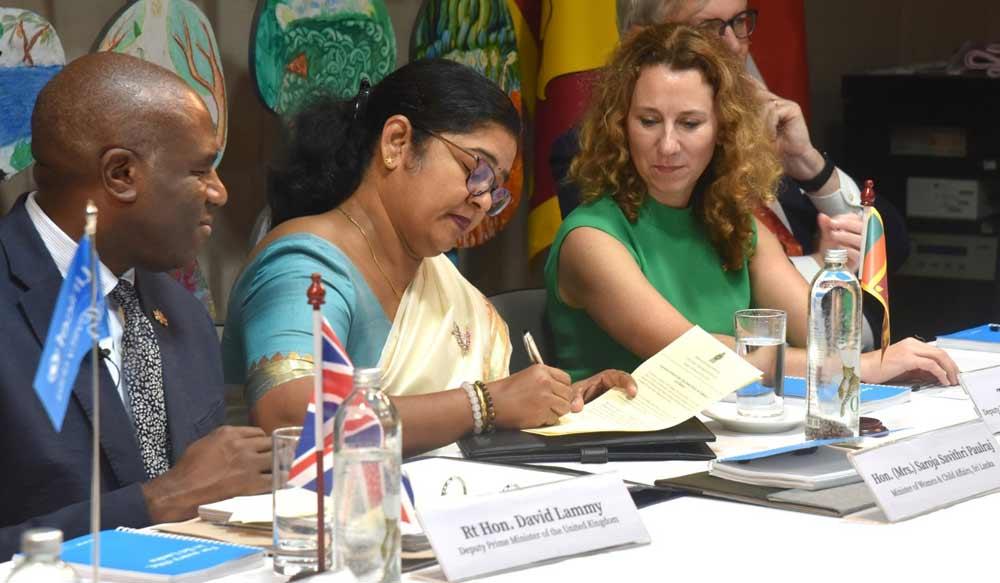
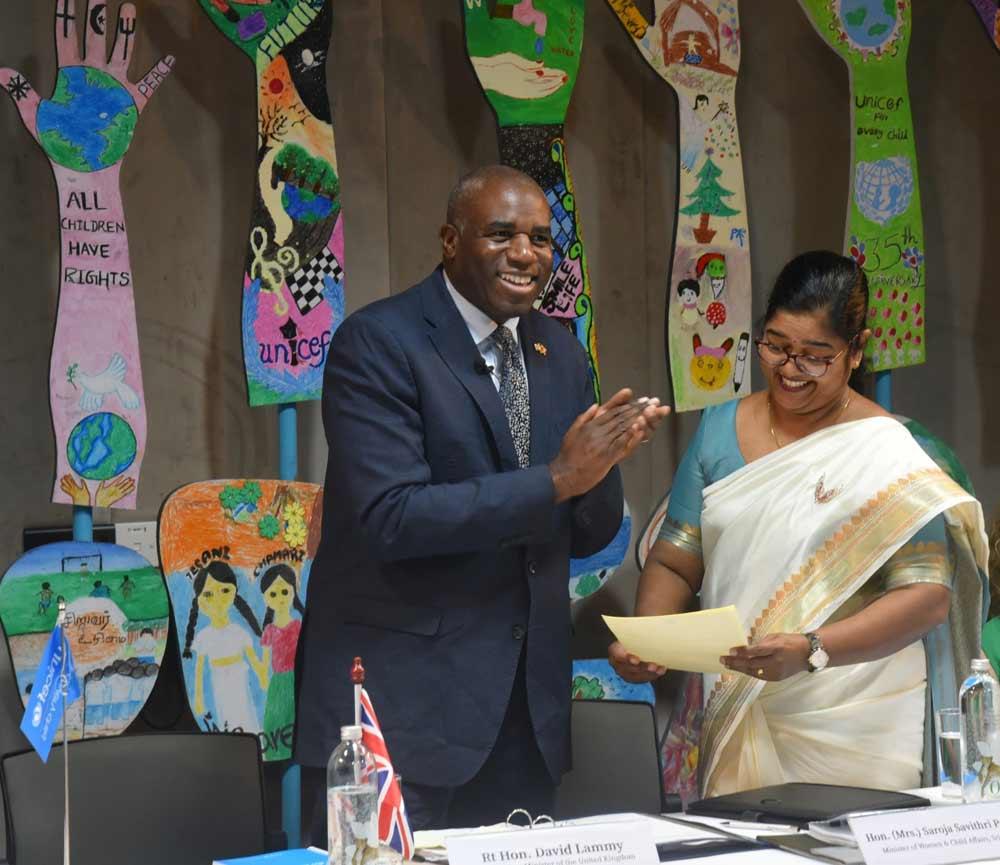
On the 17th of February 2026, you stood inside the United Nations compound on Bauddhaloka Mawatha in Colombo and witnessed Sri Lanka sign a letter of intent to join the Global Charter for Children's Care Reform, which is a charter you launched yourself in early 2025. The charter's purpose, in your own government's words, is to strengthen families, ensure safe care for children, and end the use of harmful practices against them. It was, by all diplomatic measures, a good day. I want to ask you about what happened in Sri Lanka that same day and every day before it, and every day since, that did not make it into any press statement, any briefing note, or any conversation at that UN compound. In Sri Lanka, girls are being subjected to female genital mutilation. Babies as young as 40 days old. Girls as young as six. In homes. Without anaesthesia. Without their consent. Without a single law to stop it.
There has never been a prosecution for FGM in Sri Lanka. Not one. Not ever.
The practice, known locally as khatna or sunnat, is carried out within Sri Lanka's Muslim communities, which together make up approximately 9.8 percent of the country's population of roughly 22 million. The cutting typically takes place on a girl's 40th day of life, performed by a traditional practitioner known as an Osthi Mami, a woman with no medical training, a blade, and a ritual to complete. Among some other minor Muslim communities, it is done to girls between the ages of six and eight. The most commonly documented form is Type IV, often described as a "nick," "scratch," "scrape," or "pinch" to the clitoris or surrounding tissue. Activists have spoken to survivors in Sri Lanka who have described pain during intercourse, menstrual complications, and a silence so total that many spent decades not having the language to describe what had been done to them. They were infants when it happened. They were children. They had no voice in the matter. They still largely have no legal recourse. That is what was happening in the country where you signed a child protection charter last week.
The Legal Vacuum Sri Lanka Has Chosen to Keep
Sri Lanka has no specific law criminalising female genital mutilation. This is not an oversight, it is a choice that has been made repeatedly, across successive governments, in the face of sustained advocacy by Sri Lankan women's rights activists. A November 2024 legal analysis by Orchid Project and A&O Shearman confirmed that while Sri Lanka's Penal Code contains provisions against cruelty to children and the causing of grievous hurt, there has not been a single reported prosecution for FGM under any of those sections. The US State Department's 2024 Human Rights Report on Sri Lanka states it plainly that the law does not prohibit FGM for women and girls.
In 2018, Sri Lanka's Ministry of Health issued a circular prohibiting medical practitioners from performing the procedure. It was immediately condemned by major Muslim organisations, including the All Ceylon Jamiyathul Ulema, the Centre for Islamic Studies, and the All-Ceylon YMMA Conference, who called for its withdrawal and, in some cases, pushed instead for medicalisation of the practice. Again, ‘real medicine’ does not encourage FGM.
Article 16 of Sri Lanka's Constitution shields discriminatory personal laws and cultural practices, including FGM, under the cover of custom. The girls have no shield.
Women's rights activist Shreen Abdul Saroor, a recipient of the Franco-German Prize for Human Rights and one of the most courageous voices on this issue in South Asia, has been raising the alarm at every platform available to her, including the UN Committee on the Rights of the Child. She and her colleagues at the Women's Action Network have brought FGM before Sri Lanka's Parliamentary Sectoral Oversight Committee on Women and Gender. A proposal to criminalise the practice was submitted to Sri Lanka's Minister of Justice in December 2017. That was eight years ago. The proposal sits unanswered.
The Silence That Followed You Into That Room
I have searched the public record carefully before writing this letter. There is no evidence that FGM was raised with you or your team in any form before, during, or after your visit to Sri Lanka. It does not appear in your office's briefing materials. It was not mentioned in any of the press statements issued by the British High Commission in Colombo. It does not feature in the parliamentary record of UK-Sri Lanka engagements. If it was raised privately, in a corridor, between handshakes, that conversation has left no trace, and a practice this serious cannot survive on whispers. It needs to be said out loud, on record, by people with the power to act on it. That is not a personal accusation, Deputy Prime Minister. It is a structural observation, and a damning one. The UK has had a specific law criminalising FGM since 2003, strengthened significantly in 2015. The UK government has directed millions of pounds toward ending FGM globally. The Foreign, Commonwealth and Development Office has standing; legal, diplomatic, and moral to raise this issue with a partner state. It did not. And Sri Lanka, for its part, signed a letter of intent to protect children on the same day that no one in authority acknowledged that children in that country are being cut. Sri Lanka ratified the UN Convention on the Rights of the Child. It voted at the 2012 UN General Assembly to ban all forms of FGM. It has committed to the Sustainable Development Goals, including Goal 5.3 which explicitly calls for the elimination of FGM. Fourteen years after that UN vote, there is still no law.
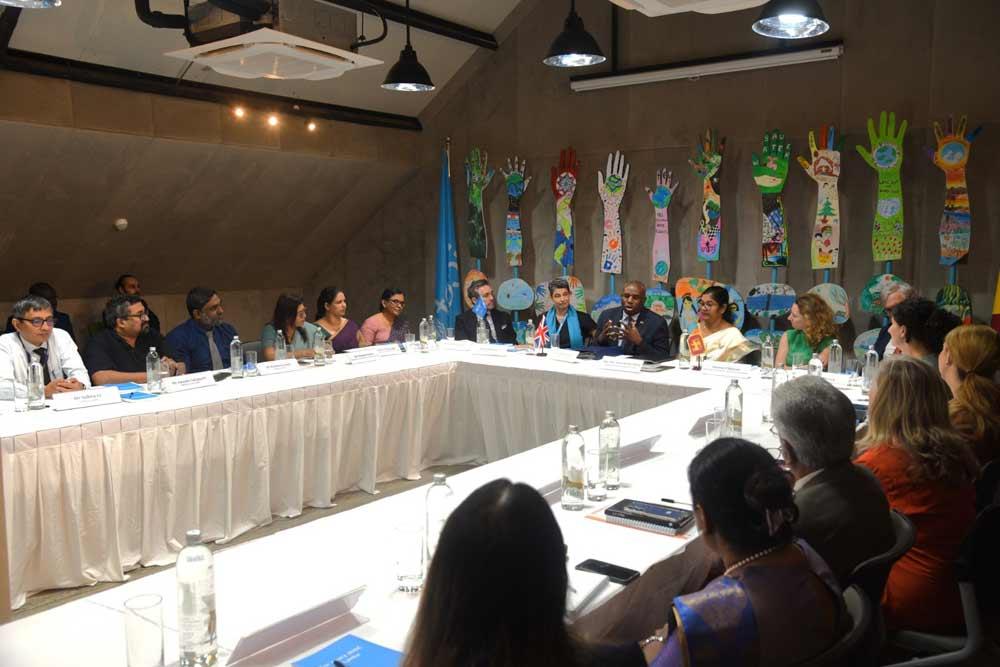
Commitments signed on paper mean nothing to a six-year-old girl who has no idea what is about to happen to her.
On Criminalization: Why It Matters, Why It Must Happen
I am not writing to debate the medical dimensions of FGM, its religious framing, or its cultural roots in Sri Lanka. Those conversations have their place, and they have been had. What I am writing about, specifically, directly, and without ambiguity, is law. Sri Lanka needs a law that criminalises this practice by name. Not a circular that doctors can technically ignore or a general provision about cruelty to children that has never been applied to FGM in any court. A named law. A clear law. One that says: performing female genital mutilation on a girl who cannot consent is a crime, and it will be prosecuted as one.
The argument against legislation, that a law will drive the practice underground, has been raised in every country where FGM criminalisation has been debated. It is raised in Sri Lanka too. It does not hold. Research across the African countries that have legislated against FGM shows that a law, backed by genuine community engagement, education, and survivor support, is the most effective long-term mechanism for reducing prevalence. It signals that a state takes the protection of girls seriously. It gives survivors legal standing. It shifts the terms of the conversation. Kenya legislated. Senegal legislated. Egypt legislated. Countries far more politically complex than Sri Lanka have done it. The Sri Lankan state has the legal framework, the international obligations, and the civil society pressure it needs. What it lacks is the political will.
What I Am Asking of You
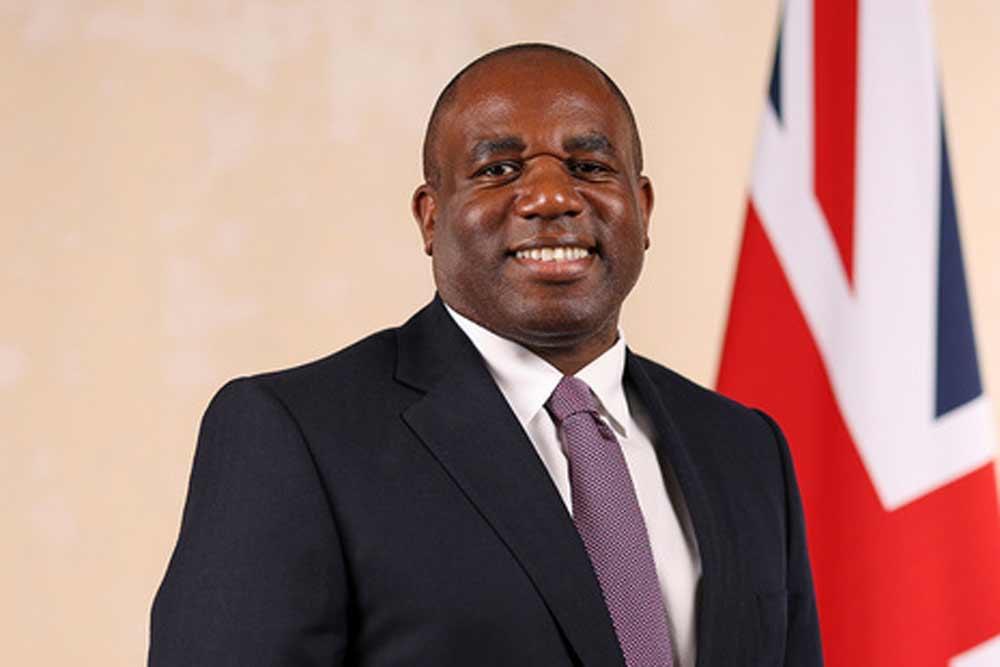
Deputy Prime Minister, David Lammy, you launched the Global Charter for Children's Care Reform. You chose Sri Lanka as a country to advance it. That choice carries weight, and I believe you meant it too. The visit has passed. The photographs have been taken. But the charter created an obligation, and diplomatic calendars do not dissolve obligations. I am asking three things from you, and through this letter, from the Sri Lankan government.
- First: name FGM explicitly in the UK's follow-through on this charter with Sri Lanka. General language about harmful practices is not enough. The practice has a name. Use it in diplomatic correspondence, in bilateral human rights dialogues, and in the UK's reporting on this partnership.
- Second: support the call for a dedicated FGM criminalisation law in Sri Lanka. The Women's Action Network and their allied organisations have been fighting for this for years. They deserve the backing of international partners who have standing and credibility in Colombo.
- Third: push for national prevalence data. Sri Lanka's Demographic Health Survey does not ask about FGM. Without data, the government can continue to treat it as too small to matter. The absence of data is being used as a reason for inaction. That must end.
The girls being cut in Sri Lanka cannot write to their government. They cannot file a petition. At 40 days old, they cannot even cry in a way that anyone in authority will hear.
We can hear them. The charter you signed says we must. The window of this visit may have closed. But the obligation it created has not. I am writing this publicly, in this column, because these girls deserve more than a conversation that happens and disappears behind closed doors. They deserve a law.