Healing Ground: The HALO Trust and the Resurrection of Puvarasanthivu

On the waters of Jaffna Lagoon, southeast of Jaffna city, lies Puvarasanthivu, a small island whose modest size conceals the weight of its history. Fringed by mangroves, its shallow waters shimmer in sunlight, yet for more than fifteen years, its soil held a silent menace: anti-personnel mines, unexploded ordnance, and improvised explosive devices, relics of the final years of Sri Lanka’s civil war. The land was still and perilous, a quiet reminder of conflict that shaped generations and kept the community at bay.
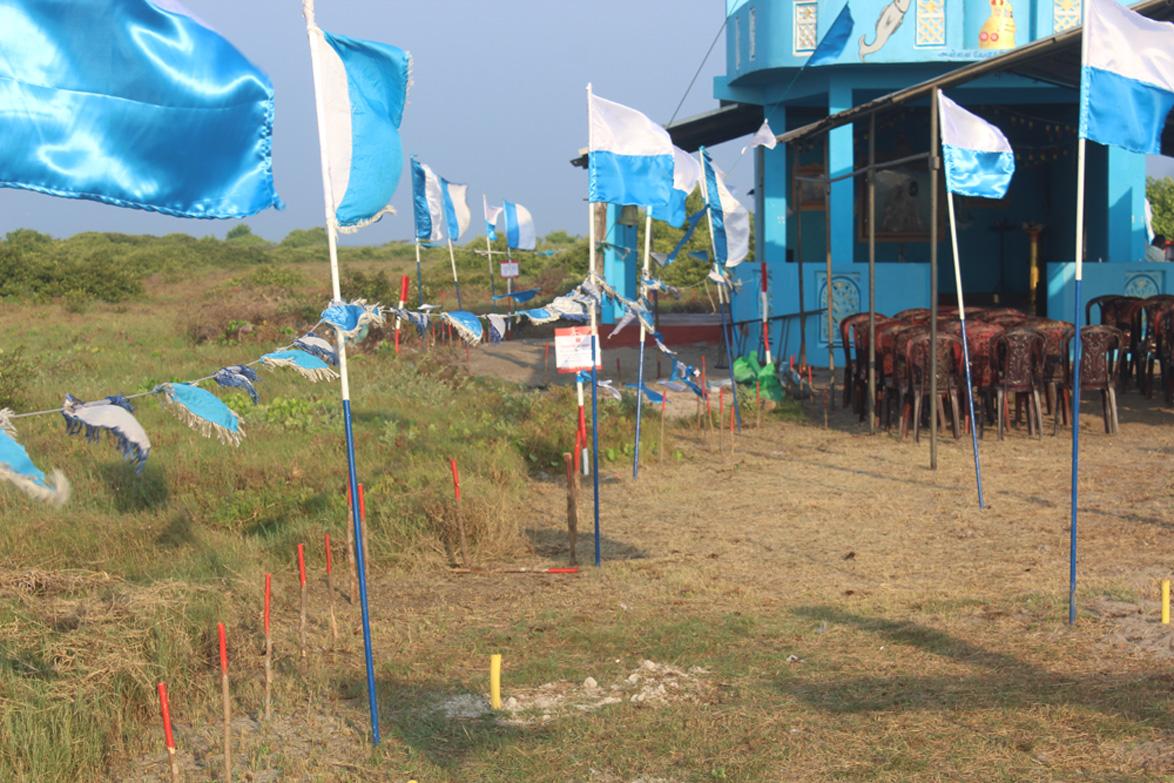
For the people of Gowtharymunai village and neighboring areas, Puvarasanthivu was never merely a geographic landmark. It was part of their identity, a place of belonging, the home of a Catholic church that had anchored their spiritual life for decades. Yet it was also forbidden ground. Even after the war ended in 2009, the specter of hidden explosives kept worshippers away, children from playing, and fishermen from tending their nets. The church could not open fully. Families could not celebrate festivals on sacred ground. Fear was constant, and the price paid for reclaiming what was theirs extended far beyond mere land.
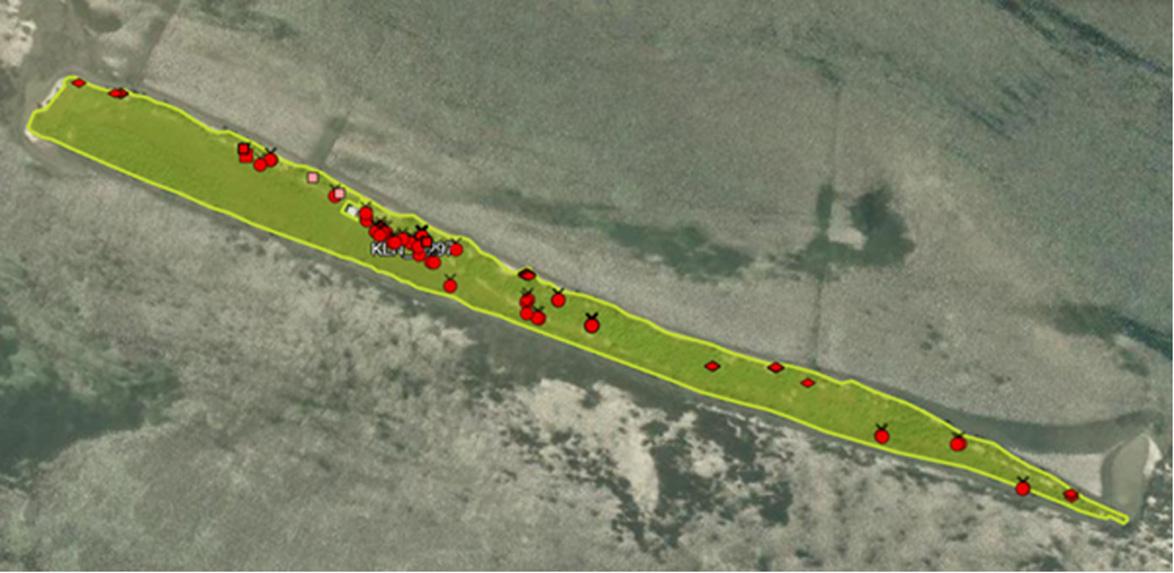
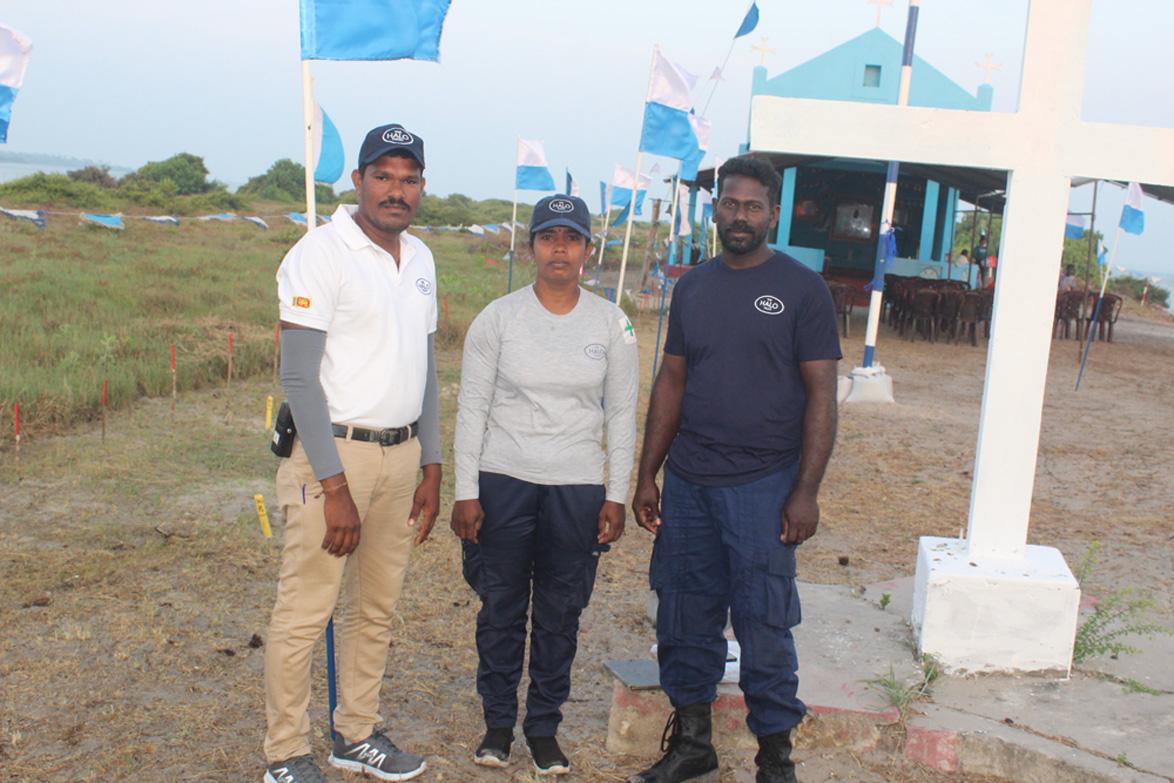
In October 2023, The HALO Trust, the world’s largest humanitarian mine-clearance organization, identified Puvarasanthivu as a confirmed hazardous area. By February 2024, three demining teams arrived, carrying tools, detectors, and a profound responsibility. Over the next twenty months, they would clear 41,951.5 square meters, nearly three cricket fields, of land that concealed 48 anti-personnel mines, 25 unexploded and abandoned ordnance items, and two improvised explosive devices. Each mine removed was not simply a technical achievement; it was the restoration of a community’s right to walk safely on its own land, to gather without fear, and to reclaim a sense of normalcy that had been denied for more than a decade.
The work was grueling and relentless. Seasonal floods swallowed paths, forcing operations to halt for days at a time. Minelab detectors, sensitive and precise, were thrown into confusion by salinization from seawater, producing false signals that could mislead even the most experienced deminers. Mangrove forests, particularly Excoecaria agallocha, exuded toxic sap that burned skin and eyes, necessitating careful handling and extra protective equipment. Jetty extensions had to be constantly adjusted to accommodate rising and falling waters, while sudden high tides occasionally destroyed them altogether. And all of this had to be managed in one of the most remote and logistically challenging locations in Sri Lanka, requiring daily travel by road and boat with heavy equipment under harsh conditions.
Yet, despite these obstacles, HALO’s teams pressed on. Clearance lanes were carefully planned to avoid mangrove roots, non-intrusive methods were employed, and the ecosystem remained untouched. No trees were cut. No delicate habitats were destroyed. By October 2025, the island was declared safe. The mangroves remained ecologically intact, and the ground around the church was finally secure.
The invisible threat that had defined the island for decades was gone, replaced with paths where children could walk freely, fishermen could navigate without fear, and families could gather in peace. It was, in every sense, a celebration of humanity and perseverance.
HALO’s work extended far beyond technical skill. Their community liaison team conducted Explosive Ordnance Risk Education (EORE) sessions, teaching villagers how to recognize and avoid dangerous remnants of war. Leaflets were distributed. Safety briefings were held. Even after the ground was cleared, ongoing education ensured that the community could reclaim the land safely and confidently. In this sense, HALO’s mission was as much about trust and empowerment as it was about clearing mines.
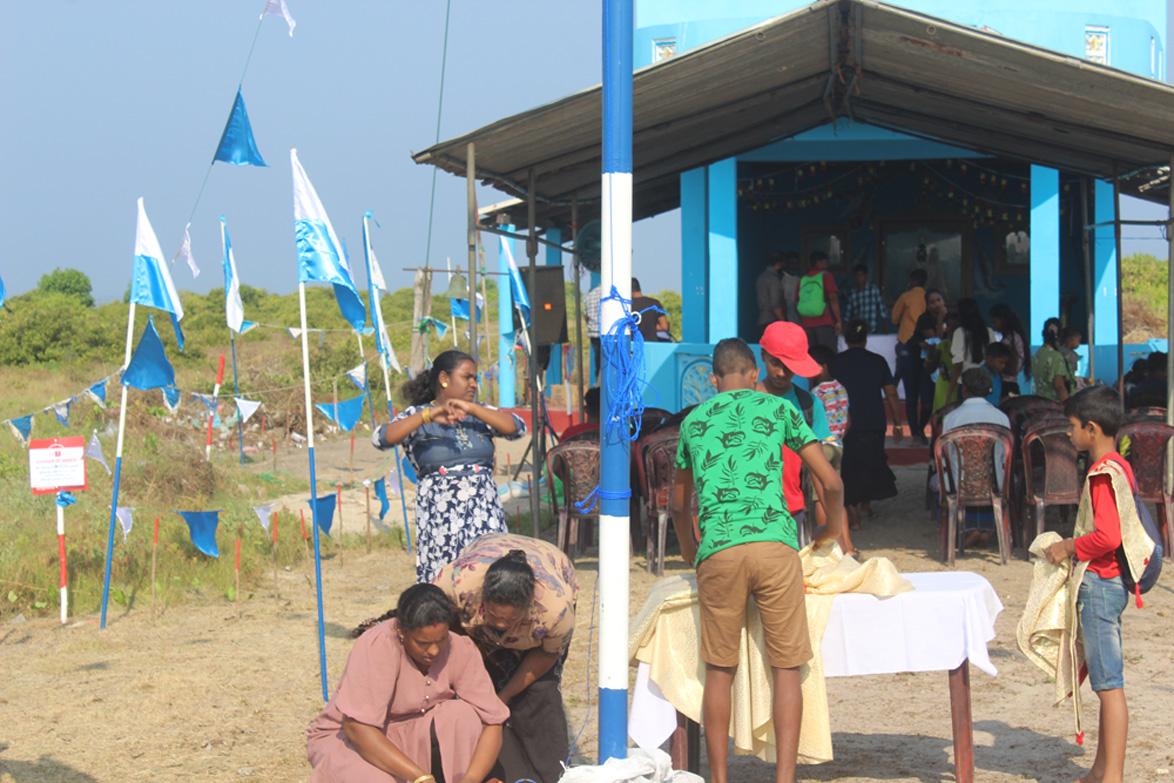
The first tangible reward came on the 9th of March 2024, when Puvarasanthivu Church held its inaugural festival after clearance. Around 150 worshippers attended under strict safety protocols. It was a tentative, cautious gathering, yet electric with hope. For the first time in years, the land was being used for celebration, for community, for faith. The church had reopened its doors to its people.
The significance of this event extends far beyond the island. The HALO Trust has operated in Sri Lanka since 2002, and since 2015 has combined mine clearance with safety training and education. By 2026, the organization had destroyed over 300,000 mines and trained nearly 60,000 people. Each operation tells a story of skill, courage, and patience, but the clearance of Puvarasanthivu is extraordinary for its combination of technical difficulty, ecological sensitivity, and emotional weight. Every step taken by the HALO deminers was a decision with consequences measured in lives. Each mine removed meant a child could walk safely. Each cleared path meant a family could gather for prayer, song, or celebration. Each careful maneuver in the mangroves preserved an ecosystem that sustains livelihoods.
The work demanded precision and imagination. Jetty extensions had to be redesigned, detection protocols adjusted, and protective measures tailored to chemical hazards. The land dictated the terms, and the teams responded with expertise, courage, and compassion.
Now, the Feast itself will serve as a living testament to HALO’s work. Alongside parishioners, the Mayor of Gowtharymunai Village and Rev. Fr. Jero Slvanayagam, the church’s parish priest, will oversee the event. HALO deminers will be present, a quiet but essential reminder of the labor that made this freedom possible. Boats will ferry worshippers across the shimmering waters, prayers will rise above the lagoon, and for the first time in over a decade, the community will celebrate without fear.
On the 14th of March, Puvarasanthivu will open its arms to the faithful as it has not in over a decade. Boats will ferry worshippers across the lagoon, and each hymn, shared meal, and smile will be a testament to renewal. The island, once a place of quiet menace, now pulses with life, devotion, and joy. Here, faith is tangible, hope is visible in every face, and the promise of tomorrow feels as real as the rising sun over the lagoon. Puvarasanthivu is no longer defined by the past; it is a place of life, laughter, and light.
It is a celebration of human courage, of collective care, and of the profound joy of belonging to a land that is finally, wholly theirs. It is the community stepping fully into a present and future they can call their own. It is a space of belonging, of continuity, and of hope. It is an island alive with devotion, laughter, and the pulse of a community restored. And on the 14th of March, the Feast will affirm that the most profound celebrations are those of life itself, reclaimed, renewed, and endlessly bright.