National Science Day: Honouring C. V. Raman and the Legacy of Scientific Discovery
Every year on February 28, India celebrates National Science Day to mark one of the most remarkable scientific achievements in the nation’s history, the discovery of the Raman Effect in 1928 by C. V. Raman. The day is not merely a tribute to a historic breakthrough in physics. It is also a celebration of curiosity, critical thinking, and the transformative power of scientific inquiry. Through nationwide events and educational initiatives, National Science Day encourages citizens, particularly young students, to cultivate a scientific temper and appreciate the role of science in shaping society.
On February 28, 1928, Raman announced a discovery that would change the understanding of light and matter. He demonstrated that when light passes through a transparent substance, most of it continues in the same direction, but a small portion is scattered. Among the scattered rays, some exhibit a change in wavelength. This shift revealed that light interacts with the molecules of the material it passes through, exchanging energy in the process. This phenomenon came to be known as the Raman Effect or Raman scattering. It provided direct evidence of the molecular structure of substances and opened new avenues in spectroscopy.
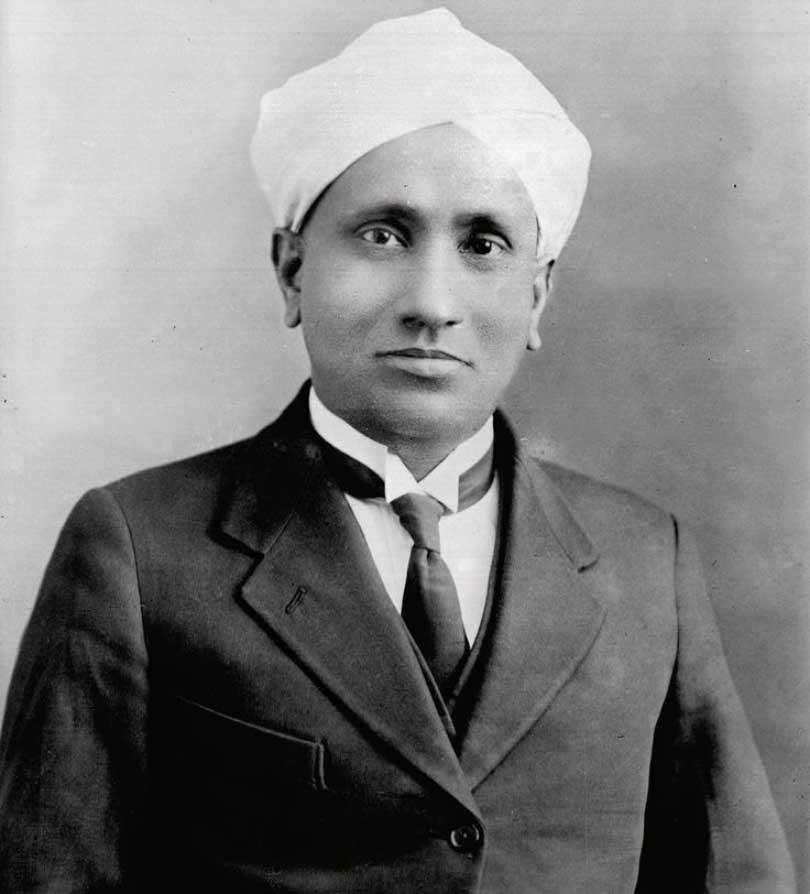
At the time of his discovery, Raman was serving as a professor at the University of Calcutta. His fascination with light had been sparked years earlier during his travels. In 1921, while returning from London after attending the International Universities Congress, he was captivated by the deep blue colour of the Mediterranean Sea. Rather than accepting conventional explanations, he began to question why the sea appeared blue and how light behaved when interacting with different substances. This simple yet profound curiosity led him to conduct meticulous experiments that eventually resulted in his groundbreaking discovery.
Raman’s achievement earned international acclaim. In 1930, he was awarded the Nobel Prize in Physics, becoming the first Asian scientist to receive a Nobel Prize in the sciences. This recognition not only honoured his individual brilliance but also placed India firmly on the global scientific map during a period when the country was still under colonial rule. His success inspired generations of Indian scientists to pursue research and innovation despite limited resources and challenging circumstances.
The idea of commemorating Raman’s discovery as a national observance emerged decades later. In 1986, the National Council for Science and Technology Communication proposed to the Government of India that February 28 be designated as National Science Day. The proposal was accepted, and since then, the day has been celebrated annually across the country. Each year, a specific theme is chosen to highlight contemporary scientific challenges and achievements, ensuring that the observance remains relevant and forward looking. National Science Day thus serves not only as a reminder of a historic milestone but also as a platform to promote awareness about modern scientific developments. Chandrasekhara Venkata Raman was born on November 7, 1888, in Tiruchirapalli in Tamil Nadu. From an early age, he displayed exceptional academic ability. He pursued higher studies in physics and initially joined the Indian Finance Service. However, his passion for scientific research proved stronger than the security of a government career, and he chose to dedicate his life to science. Despite working in an era with limited infrastructure and funding for research in India, Raman carried out pioneering work in optics and acoustics. His dedication laid a strong foundation for scientific research in the country.

Later in his career, Raman established the Raman Research Institute in Bengaluru, which continues to function as a prominent centre for advanced scientific study. Through his leadership and vision, he nurtured a culture of inquiry and excellence that extended far beyond his own laboratory. Raman passed away on November 21, 1970, in Bengaluru, leaving behind a legacy that continues to inspire scientists and students alike.
Across India, National Science Day is observed with enthusiasm in schools, colleges, universities, and research institutions. Science exhibitions, fairs, public lectures, seminars, essay competitions, quiz contests, laboratory open house sessions, and award ceremonies are commonly organized. These activities aim to make science accessible and engaging for the general public. They provide young learners with opportunities to showcase innovative projects and develop confidence in their scientific abilities. The celebration also reinforces the importance of rational thinking and evidence-based reasoning, values that are essential for societal progress.
In the modern world, science and technology influence nearly every aspect of life. Advances in healthcare, communication, environmental sustainability, and space exploration depend on continuous research and innovation. Observing National Science Day reminds citizens that scientific progress is central to national development and global competitiveness. It also encourages students to consider careers in science, technology, engineering, and mathematics, fields that are crucial for addressing future challenges.
The Raman Effect itself continues to hold immense practical significance. Techniques based on Raman scattering are widely used in chemistry, materials science, medicine, and forensic investigations. Raman spectroscopy enables scientists to identify substances, analyse molecular structures, and detect chemical compositions with remarkable precision. From pharmaceutical research to crime laboratories, the applications of Raman’s discovery remain vital even decades later.
National Science Day stands as a tribute not only to a historic scientific breakthrough but also to the enduring spirit of inquiry that drives human progress. By honouring the life and work of C. V. Raman, India reaffirms its commitment to scientific excellence and innovation. More importantly, the day conveys a powerful message to future generations that transformative discoveries begin with curiosity and perseverance. In celebrating this occasion each year, the nation ensures that the light of scientific exploration continues to illuminate minds and shape a brighter future.