WiM Concludes 2025 with High-Impact Breakfast Forum on Reframing Sri Lanka’s Global Narrative
Women in Management (WIM), in partnership with The Sun (Daily Mirror), Wijeya Newspapers Limited, concluded its 2025 calendar with a powerful and timely Morning Breakfast Networking Session titled “Reframing Sri Lanka’s Global Narrative,” held on 17 December 2025 at Port City, Colombo. The exclusive forum brought together 75 senior leaders from the corporate sector, business community, state institutions, and non-governmental organizations, underscoring WIM’s role as a convener of high-level, future-focused dialogue and marking its final flagship event of the year. Set against the backdrop of Sri Lanka’s ongoing economic recovery and renewed global engagement, the session examined how the country can reposition itself internationally through credible storytelling, policy coherence, leadership confidence, and coordinated national narratives. Moving beyond slogans and short-term messaging, the discussion emphasized the urgent need to build long-term trust with investors, global partners, and talent markets; trust that is increasingly shaped by perception, narrative, and reputation.
Reframing the Conversation: Beyond Messaging to Trust
At its core, the forum explored the idea that national reputation is no longer a soft concept but a measurable economic driver. Participants engaged in a candid discussion on how Sri Lanka can shift global perception from crisis to credibility, from volatility to value, and from uncertainty to opportunity. The emphasis was not on cosmetic rebranding, but on aligning communications with policy clarity, governance consistency, and leadership visibility. As the final event in WIM’s 2025 program, the breakfast session also reflected the organization’s broader mission: to empower women leaders, influence national discourse, and position Sri Lanka as a confident and credible player on the global stage.
Keynote Address: The Power of Storytelling - Shaping Nations, Brands, and Futures
 The keynote address was delivered by Farzana Baduel, President-elect of the Chartered Institute of Public Relations (CIPR, UK), and Co-Founder and CEO of London-based strategic communications consultancy Curzon PR. Her address, titled “The Power of Storytelling: Shaping Nations, Brands, and Futures,” offered a compelling, evidence-based examination of how strategic communication directly influences investment flows, talent attraction, and national resilience.
Baduel argued that Sri Lanka is no longer competing on cost, but on confidence. In today’s interconnected global economy, she explained, strategic communications is the mechanism through which confidence travels across borders. Perception often moves faster than facts, with investors pricing risk based on narrative, talent choosing destinations based on meaning and momentum, and international partners following trust and clarity.
“When perception declines, investment hesitates,” she noted. “When perception rises, opportunity accelerates.” In this context, reputation becomes a powerful economic force rather than a secondary consideration.
Drawing on data from the Brand Finance Global Soft Power Index, Baduel outlined the reputational impact of Sri Lanka’s 2022 economic crisis. The country’s ranking fell dramatically from 73rd globally in 2022 to 115th in 2023, the largest drop recorded by the index. By 2025, however, Sri Lanka has rebounded to 97th place, showing notable improvements in perceptions of inclusivity, lifestyle appeal, and sustainability.
This recovery, she stressed, was not merely about communications repair. The crisis represented a global shock to trust and stability, one that carried a tangible economic cost. Rebuilding reputation therefore requires consistency, proof, and credible leadership over time.
Momentum as a Signal to Investors
Importantly, the keynote highlighted why Sri Lanka’s story is once again investable. Investors, Baduel explained, follow trajectory as much as current position. Momentum itself sends a powerful signal of recovery and opportunity.
This was reinforced by foreign direct investment data, which showed a nearly 90 percent year-on-year increase in the first quarter of 2025. FDI rose from approximately US$107 million in Q1 2024 to around US$203 million in Q1 2025, demonstrating how renewed confidence can translate directly into capital inflows.
She also cautioned that talent is the real battleground for growth. Without a clear national vision and compelling narrative, countries risk accelerating brain drain rather than fostering development. Capital follows talent, and talent follows confidence. In this context, Sri Lanka’s global diaspora was positioned as a strategic asset, one that acts as a living bridge of trust, credibility, and access, often reducing perceived risk faster than institutions alone.
Managing Risk in the Age of Disinformation
Addressing emerging global challenges, Baduel highlighted the growing threat of commercial disinformation and declining media literacy. In such an environment, crisis response itself becomes brand behaviour. Investors and global partners closely observe how countries respond to disruption, assessing leadership visibility, transparency, coordination, and speed of response.
Concluding her address, she introduced a practical “5P Narrative Framework” - Proof, Policy, People, Partnerships, and Preparedness, as a roadmap for positioning Sri Lanka for investment and engagement. She cautioned against generic claims such as “Sri Lanka is open for business,” urging instead that credibility be demonstrated through data, policy consistency, trusted validators, and visible leadership.
Her closing message resonated strongly with the audience: strategy without communication fails, and communication without strategy becomes noise. To compete globally for trust, talent, and capital, the two must be integrated.
Panel Discussion: Reputation, Resilience, and Relevance
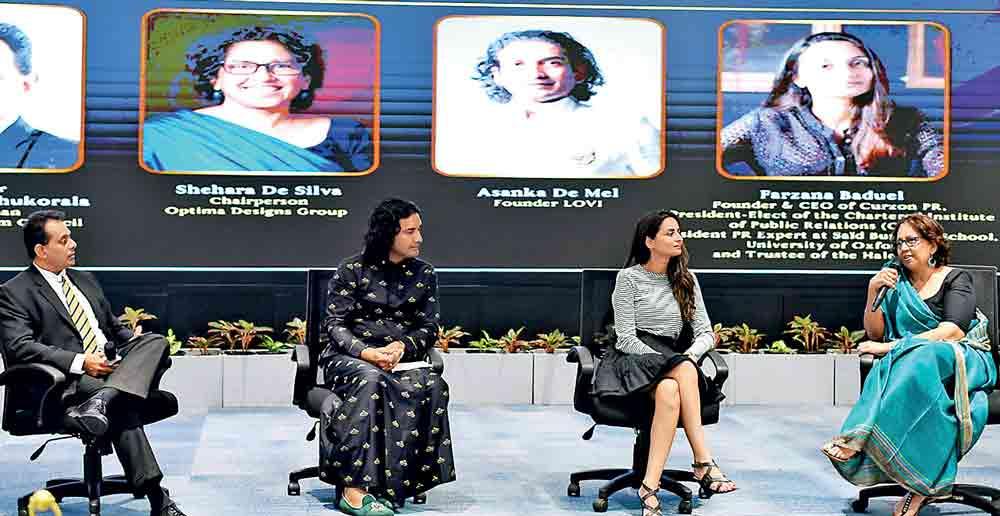
 Following the keynote, a high-level panel discussion delved deeper into the theme of “Reframing Sri Lanka’s Global Narrative.” The conversation explored how the country can rebuild its reputation, strengthen resilience amid compounding economic and geopolitical challenges, and remain relevant in highly competitive international markets.
The panel was chaired by Dr. Rohantha Athukorala of the Rural Tourism Council, who spoke on the critical role tourism can play in shaping Sri Lanka’s global perception. He called for a reimagined national tourism narrative anchored in sustainability, authenticity, and long-term value creation, rather than volume-driven growth.
 Panelist Shehara de Silva shared insights from her global experience as a Sri Lankan public relations professional, emphasizing the importance of aligning local storytelling with international credibility benchmarks. She noted that global audiences assess countries through familiar standards of governance, transparency, and consistency, making alignment essential.
Panelist Asanka de Mel, drawing on his international work and global brand associations, highlighted the resilience and work ethic of Sri Lanka’s people as a significantly underleveraged asset in the national narrative. He argued that the country’s human capital, its adaptability, creativity, and perseverance, should be positioned more prominently in global storytelling.
Contributing as a panelist, Farzana Baduel reinforced the need to move beyond positioning Sri Lanka as merely “open for business,” advocating instead for a narrative grounded in policy clarity, governance confidence, and investor-ready frameworks.
WIM’s Vision and Commitment
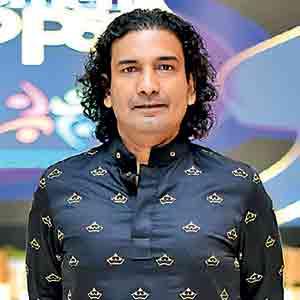 Delivering the welcome address, WIM Chairperson Waruni Algama emphasized the organization’s broader purpose and impact. “Women in Management is more than an organization,” she stated. “We are the heartbeat of women in careers, influencers of progressive corporate cultures, and champions of diversity and inclusivity.” She highlighted WIM’s work in empowering women-led micro, small, and medium enterprises; giving voice to the voiceless; creating pathways for youth and children; and collaborating with men to build a more inclusive and empowered economy. She also underscored WIM’s consistent role in representing Sri Lanka on the global stage through leadership, excellence, and collaboration. “This is who we are, and this is what we stand for,” she concluded.
Dr. Sulochana Segera, Chairperson, Women in Management, commented: “Reframing Sri Lanka’s global narrative requires more than optimism, it demands credibility, consistency, and collective leadership. At Women in Management, we believe that inclusive leadership and strategic collaboration are critical to building global trust. This forum reflects our commitment to convening meaningful dialogue that translates insight into action, positioning Sri Lanka not just as a nation in recovery, but as one ready to lead with confidence, integrity, and purpose on the world stage.”
Rishini Weeraratne, Editor, The Sun (Daily Mirror), commenting on the collaboration, said:
 “At The Sun (Daily Mirror), we believe media has a responsibility that goes beyond reporting events, it must help shape conversations that matter. Our partnership with Women in Management for this forum was driven by a shared commitment to elevating Sri Lanka’s global narrative through credibility, clarity, and leadership. Bringing together voices from business, policy, and communications to have this dialogue was both timely and necessary, and we are proud to collaborate with WIM on a platform that looks outward while remaining deeply rooted in national progress.”
Closing the Year with Purpose
As Women in Management’s final program for 2025, the Breakfast Networking Session concluded with a clear call to action. Business leaders, communications professionals, and policymakers were urged to work collaboratively to shape a credible, confident, and consistent global narrative for Sri Lanka, one that enables sustainable growth, attracts investment, retains talent, and restores trust on the world stage. The session reinforced that reframing Sri Lanka’s global narrative is not the responsibility of one sector alone, but a shared national endeavour, requiring alignment between policy, leadership, communication, and values.