Strengthening Mental Health Training: King’s College London Team Visits Sri Lanka.
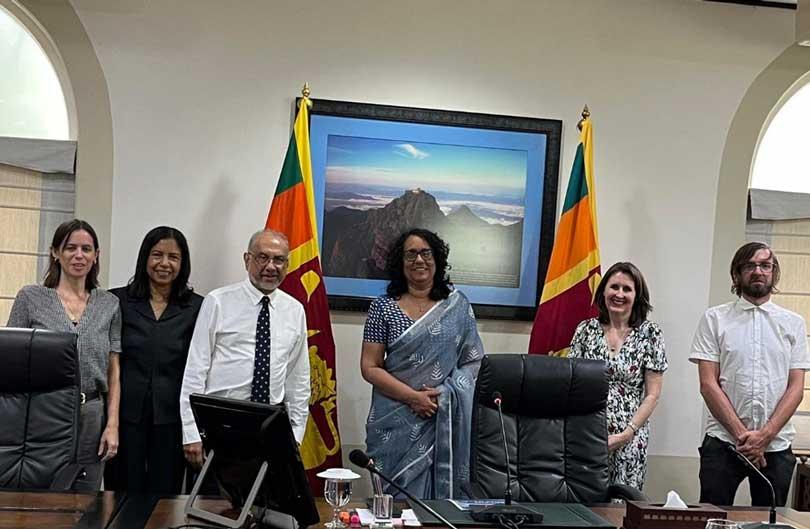
- Members of the Samutthāna and King’s College London teams with Dr Harini Amarasuriya, Prime Minister of Sri Lanka, during a discussion.
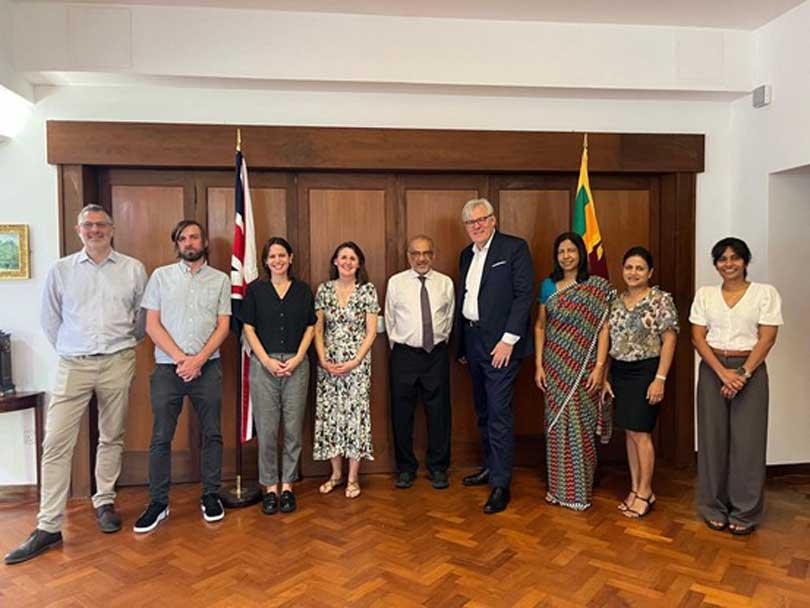
The Samutthāna and King’s College London teams with Andrew Patrick, British High Commissioner to Sri Lanka, at the British High Commission in Colombo.
Samutthāna, a Colombo-based non-profit organisation dedicated to strengthening mental health capacity in Sri Lanka, recently hosted a visiting delegation from King’s College London, comprising senior clinicians and academics involved in Clinical Psychology Doctoral Training. The visit marked another milestone in a partnership that has spanned nearly two decades, rooted in shared commitments to professional training, academic collaboration, and evidence-based mental health practice tailored to local needs.
Founded in 2006 as the King’s College London Resource Centre for Trauma, Displacement, and Mental Health, Samutthāna was co-established by Dr. Shamil Wanigaratne. Over the years, it has evolved into a nationally respected organisation working at the intersection of clinical practice, training, research, and policy engagement. Today, Samutthāna is led by Chief Executive Officer, Dr. Isuri Roche Dharmaratne, whose leadership continues to steer the organisation’s work towards responding to emerging mental health needs in Sri Lanka while fostering international academic partnerships.
As part of the visit, the King’s College London team met with Dr. Harini Amarasuriya, Prime Minister of Sri Lanka, at her office at Temple Trees. Discussions focused on the critical links between mental health and education, with particular emphasis on strengthening training pathways and expanding academic exchange between Sri Lanka and the United Kingdom. The meeting underscored the importance of long-term institutional partnerships that enable locally grounded, evidence-based practice. Key issues raised included the need for the Ministry of Health to formally employ clinical psychologists within government hospitals, with professional recognition and remuneration aligned with postgraduate qualifications, as is standard in many other countries. Broader strategies for promoting mental well-being and early prevention; especially among young people and within community settings, were also highlighted.
The delegation also met with H.E. Andrew Patrick, British High Commissioner to Sri Lanka, at the British High Commission in Colombo. The discussion revisited the enduring collaboration between King’s College London and Sri Lanka in the field of mental health, including contributions to the development of postgraduate clinical psychology training in the country. Opportunities for clinical placements in Sri Lanka for doctoral trainees from institutions such as King’s College London and the University of East Anglia were explored, alongside the potential for future joint initiatives supported through Samutthāna. Both sides emphasised the importance of sustaining meaningful academic engagement over time, beyond short-term projects or visits.
During their stay, the visiting team engaged with a range of healthcare and academic institutions across the country. These included government sector facilities such as Kandy and Peradeniya Hospitals, as well as voluntary sector organisations including Ayati and the Lanka Alzheimer Foundation. Meetings were also held with academics at the Universities of Colombo and Peradeniya to discuss future collaboration, technical exchanges, and opportunities for shared research and training initiatives. The visit reaffirmed a shared commitment to building on the long-standing relationship between King’s College London and Sri Lanka, with a collective focus on strengthening mental health training and services in ways that are sustainable, locally relevant, and globally informed.