Was Cyclone Ditwah a natural disaster or a failure of governance?
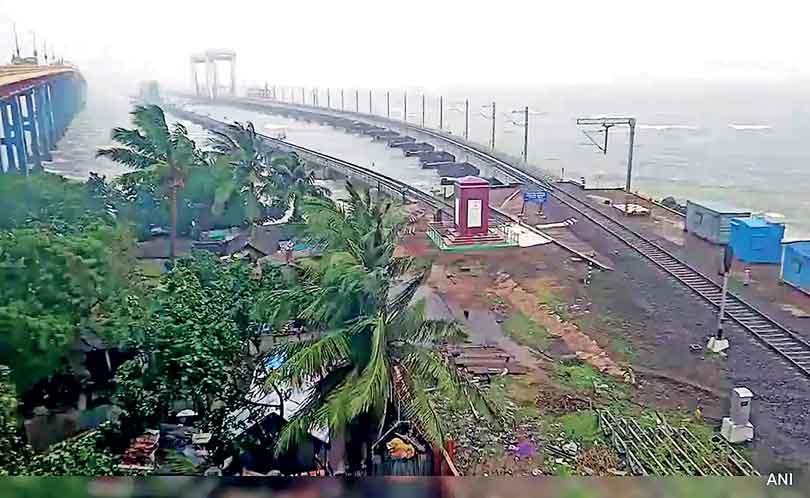
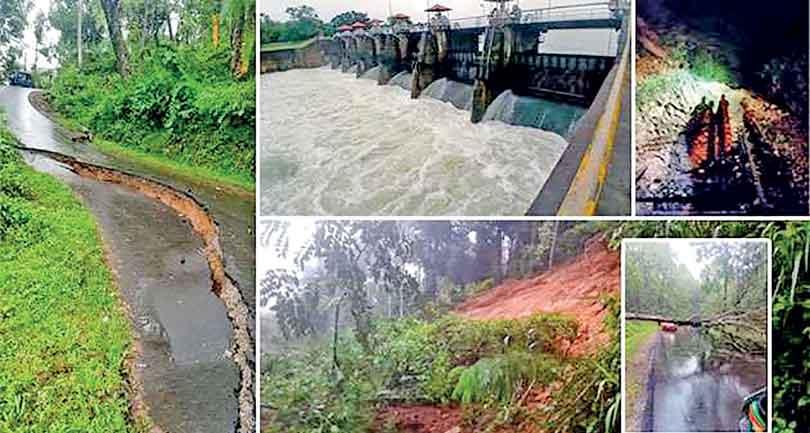
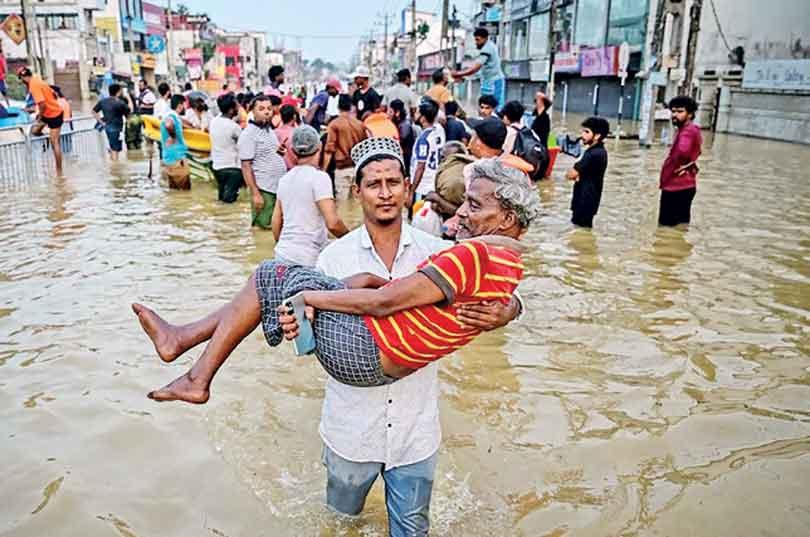
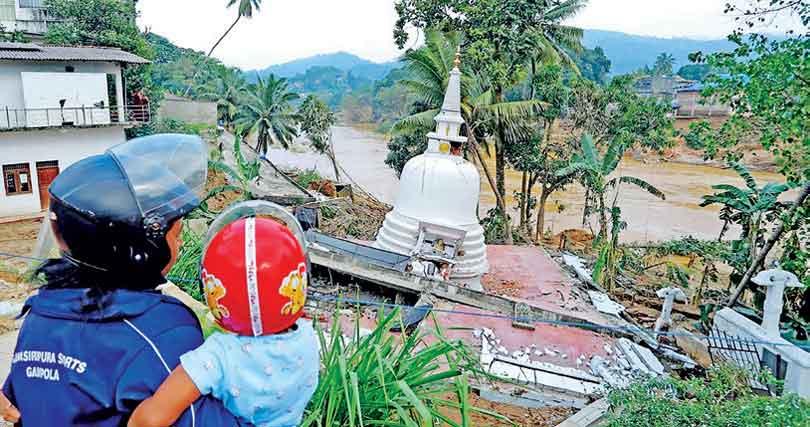
 The Cyclone Ditwah has once again confirmed that Sri Lanka remains far more comfortable with tragedy than with accountability.
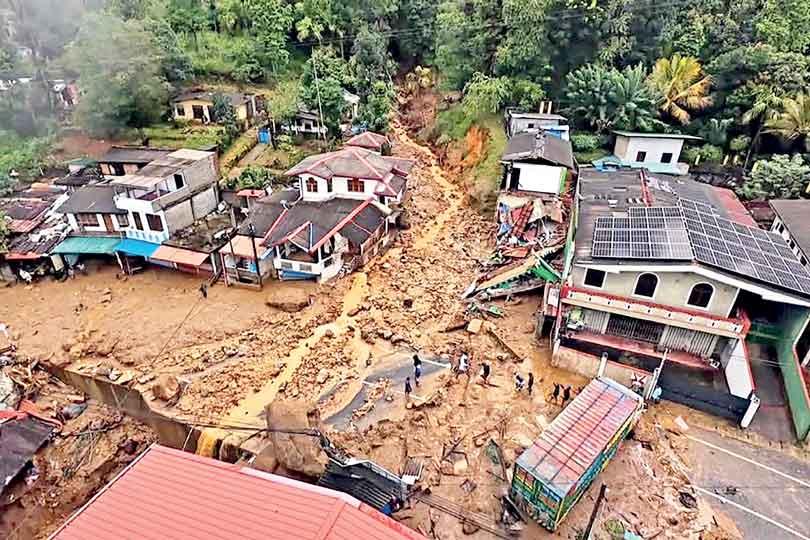
Even now, as rescue operations continue, as bodies are still recovered from collapsed slopes in Kandy and Nuwara Eliya, and as communities in Badulla mark their dead by counting who has not returned, there is a familiar pushback against public scrutiny. People are urged not to “politicize a disaster,” not to “undermine national unity,” and certainly not to question the decisions or preparedness of the government.
These calls for silence are not new. They surface after every catastrophe. The 2003 floods, the 2010 deluge, the 2011 disaster, the 2016 and 2017 floods, the landslides in Haldummulla, the COVID crisis, the economic collapse, even the Easter attacks. The instruction is the same: Rescue first; questions later.
I hesitated to write about this, because I understand that the immediate priority must be rescue, recovery, and stabilising the country. But the problem is that in Sri Lanka, “later” never comes. Questions expire long before answers arrive.
A disaster of this scale does not emerge from rainfall alone. It emerges from years of slow deterioration; in infrastructure, institutions, governance, and public trust. And it is the role of the citizens, not political loyalty, to examine those failures even while rescue work continues.
Predictable Unpreparedness
Cyclone Ditwah did not strike an unprepared country in the sense of ignorance. Sri Lanka has a well-documented history of climate vulnerability. Research spanning more than a decade, including work by the National Building Research Organisation (NBRO), the Disaster Management Centre (DMC), and the Asian Disaster Preparedness Centre, consistently identified Central and Sabaragamuwa Provinces as high-risk for landslides under extreme rainfall conditions.
Compound flood models developed between 2018–2022 clearly showed how tropical cyclone rainfall patterns intersect with river overflows, particularly in Batticaloa, Mullaitivu, Mannar, Kelani Basin zones, and multiple hill-country districts.
None of this knowledge was obscure. Much of it was funded through international grants and publicly available.
Yet when Ditwah arrived:
- Landslide warnings issued from November 17 onward did not trigger adequate pre-positioning of rescue teams.
- A-Level examinations continued until November 27 — the morning the cyclone made landfall in its most destructive form.
- Train operations persisted in known landslide corridors despite early fatalities reported as early as November 22.
- The government holiday was declared after the cyclone had already made landfall.
- The state of emergency was declared two days later.
This is not a failure of forecasting. The storm was tracked for days. It is a failure of institutional responsiveness. A functional system acts on early indicators. A dysfunctional system waits for loss.
Infrastructure Became an Amplifier of Damage
When a country repeatedly experiences floods, its infrastructure either evolves or deteriorates. Sri Lanka’s has done the latter.
1. Bridges and Roads
Several critical bridges, including those in Bentota and Moragahakanda, collapsed or sustained severe damage. These are not structures built a century ago; many are products of modern engineering periods and should withstand far more stress. Inadequate maintenance schedules, deferred repairs due to budget cuts, and structural fatigue accumulated over years all played a role.
2. Urban Flooding
Since 2013, Sri Lanka has spent approximately USD 321 million on the Metro Colombo Urban Development Project, aimed primarily at reducing urban flooding in the Colombo Water Basin. The project’s objectives included:
- Drainage modernization
- Canal rehabilitation
- Flood detention areas
- Wetland conservation
Yet in 2025:
- The Kelani River overflowed severely.
- Kolonnawa, already vulnerable due to its topography, saw over 100,000 people displaced.
- Several engineered drainage systems failed at their critical points.
- Urban encroachments into wetland buffer zones remained unresolved.
Without transparent audits, this project now stands not as a symbol of improvement, but the question is, how does a capital city flood catastrophically after twelve years of flood-mitigation investment?
3. Hospitals and Essential Services
Multiple hospitals, including those in severely affected districts, lost accessibility due to flooding or blocked routes, a known risk identified repeatedly in disaster-preparedness assessments.
When essential services become victims during a crisis, the system is not just overwhelmed; it is structurally misaligned.
The Disaster Response System
Sri Lanka’s disaster-management structure has long suffered from being reactive rather than proactive. The DMC, Ministry of Health, local authorities, and provincial councils operate in parallel rather than through integrated real-time communication channels.
During Ditwah:
- Water purification systems in several districts became submerged.
- Ambulances were unable to reach multiple communities for days.
- Early rescue efforts were heavily dependent on military units and community volunteers, not coordinated civilian response teams.
- Some local officials hesitated to procure supplies without formal approval out of fear of being questioned later during anti-corruption reviews.
This last point is significant. When public-sector officers operate under an atmosphere of fear rather than clarity, they default to inaction. Bureaucratic hesitance during disaster onset is not an isolated flaw, it is a systemic one.
In a functional disaster-management system, every hour of early response is planned and empowered. In ours, those hours were lost.
The Linguistic Inequity
Tamil has been an official language of Sri Lanka since 1987. Nearly 40% of the population relies on Tamil directly or indirectly. Yet between November 25–29, out of 68 public updates by the Disaster Management Centre, only a fraction were issued in Tamil. This is not a matter of political symbolism. It is a matter of life safety.
Linguistic barriers in disaster communication directly influence casualty rates, a fact established in disaster-risk research globally. In the hill country, where many of the victims were Malaiyaha Tamils, the consequences of inadequate communication were profound.
Early warnings must not only exist, they must be understood.
When certain communities receive information late, in incomplete form, or in non-accessible language, their margin for survival narrows.
The People vs the Systems Built to Protect Them
As in every major Sri Lankan disaster, the most efficient early responders were not state institutions but ordinary citizens:
- Volunteer groups established help registries and support portals within hours.
- Community kitchens operated continuously.
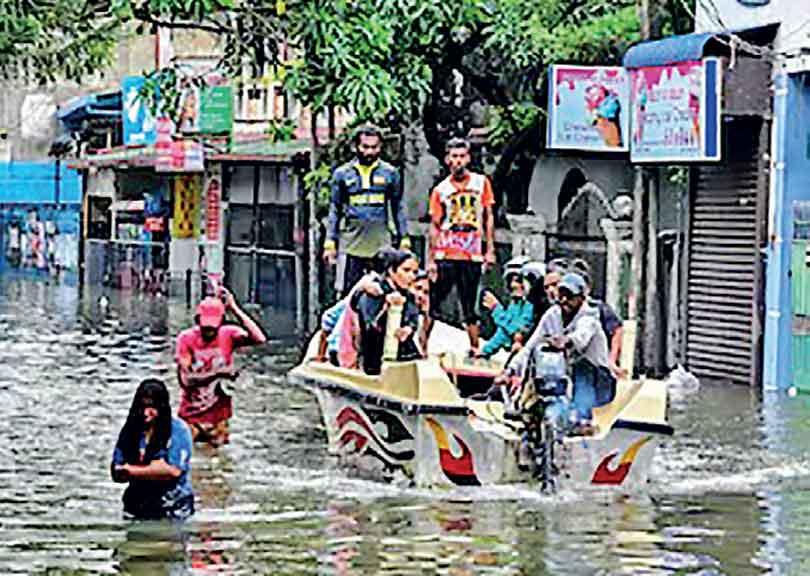
- Private fishing boats were mobilized across districts for rescue operations.
- Machinery was transported by civilians to reach blocked regions.
- The military, especially the Navy and Air Force, conducted high-risk rescues with limited equipment.
This level of civic mobilization is admirable, but it also reveals a chronic institutional vacuum. A resilient society is not one where victims depend on the goodwill of strangers; it is one where systems are reliable enough that such dependence is not necessary. Sri Lankans have proven their solidarity repeatedly. The state has not proven its stewardship with equal consistency.
The Debate Over “Not the Time to Question” Misses the Entire Point
During this disaster, significant energy was spent online policing public discourse, accusing those who questioned infrastructure failures, early warnings, or state response of being insensitive, political, opportunistic, or divisive.
This reflex to silence criticism has become deeply ingrained in our national psychology. But it is neither rational nor useful.
Rescue and accountability are not mutually exclusive. You can save a life today and ask how the next one can be saved tomorrow.
In fact, the most responsible time to question systems is while those systems are revealing their flaws.
A nation that waits for a crisis to end before seeking answers never receives any.
And sadly, we have never suffered because citizens asked too many questions. We have suffered because too few of those questions ever led to reform.
What Must Happen Now
Sri Lanka cannot afford another lost decade in disaster resilience. The cost of Cyclone Ditwah, estimated between USD 6–7 billion, is not just a financial disaster; it is a governance disaster. The reforms required are neither new nor complicated; they have been recommended repeatedly, yet consistently ignored.
They include:
1. Forensic audits of all flood-mitigation and infrastructure projects since 2013
Publicly accessible, independently verified.
2. A centralized, multilingual national early-warning system
Covering SMS, broadcast media, social media, and community-level networks.
3. A real-time integrated emergency coordination platform
Linking DMC, Health Ministry, local authorities, and rescue teams.
4. Legally binding climate-resilience planning spanning 25 years
Unaffected by election cycles.
5. Transparent accounting of all foreign-donated equipment
Where it is, whether it is functional, whether replacements are needed.
6. Community-specific vulnerability and relocation programs
Especially for long-neglected hill-country populations.
7. Annual disaster-preparedness audits presented to Parliament
With consequences for non-compliance.
These are not aspirational ideals. They are overdue responsibilities.
Stop Treating Avoidable Disasters as Acts of Nature
Sri Lanka is not uniquely cursed by climate events. It is uniquely unprepared for them.
Our floods are not merely caused by rainfall; they are escalated by:
- unregulated construction,
- neglected waterways,
- silted reservoirs,
- weakened institutions,
- political turnover,
- and underinvestment in core infrastructure.
Our landslides do not occur merely because of hills; they occur because those living on the steepest slopes are often the poorest, least politically represented communities.
Our losses do not accumulate because we lack knowledge; they accumulate because knowledge rarely turns into policy.
Cyclone Ditwah revealed once again that Sri Lanka does not suffer from unpredictability, it suffers from inconsistency, fragmentation, and the absence of long-term governance.
These weaknesses cannot be addressed through sympathy. They require scrutiny.
And scrutiny is not a threat to national unity; it is the only path to national safety.
The Obligation of Citizens
We have seen this country mourn too many times. Rebuild too many times. Forget too many times.
The cycle that must end is silence, the idea that questioning the state is somehow disloyal. Silence has cost us more than scrutiny ever has. And to be absolutely clear: this is not a commentary aimed at one president, one minister, or one political party. Sri Lanka’s disaster failures are cumulative. They belong to every administration that treated preparedness as optional. I have no interest in protecting any political group that cannot keep its promises or its people safe.
Families who lost everything deserve answers, not rehearsed talking points. Communities still searching for their missing deserve systems that will not collapse at the next sign of rain. Our children deserve a future where disasters are managed with planning, not prayers.
If accountability continues to be dismissed as antagonism, nothing will change. Sri Lanka will simply relive this tragedy; with new slogans, new leaders, and the same old failures.
We cannot stop the rain. But we can stop pretending that silence and partisan loyalty are solutions. The work begins with refusing to participate in blame games and demanding genuine accountability instead.