Grand Canyon National Park, USA
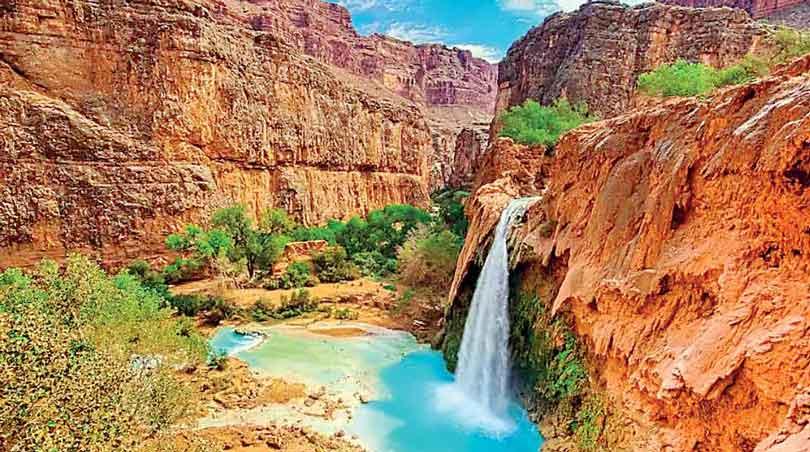
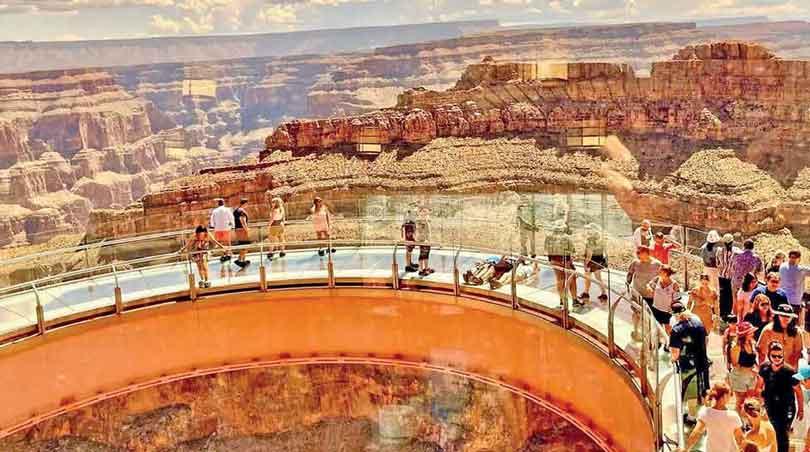
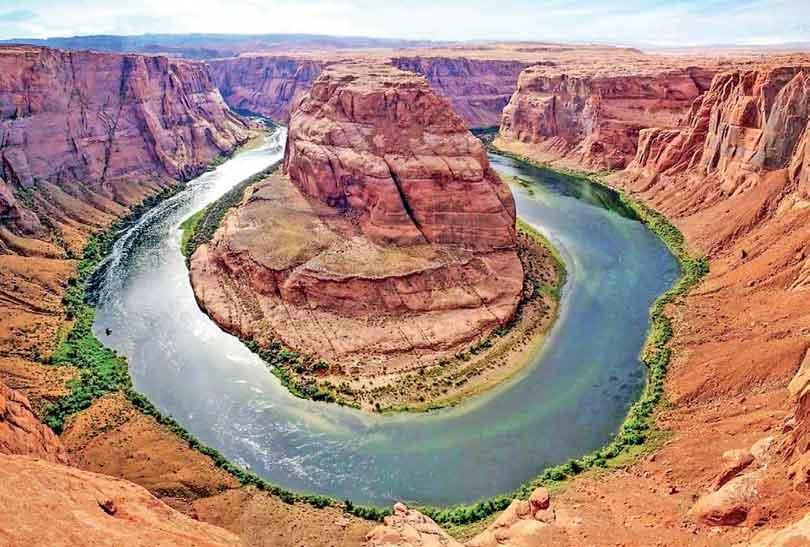
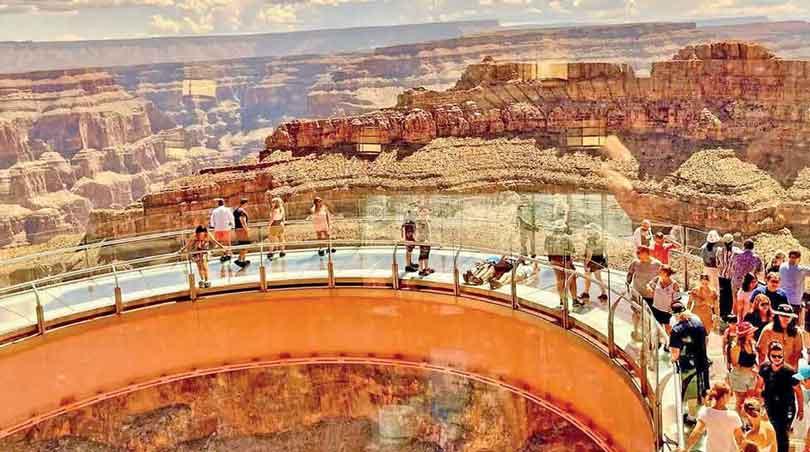
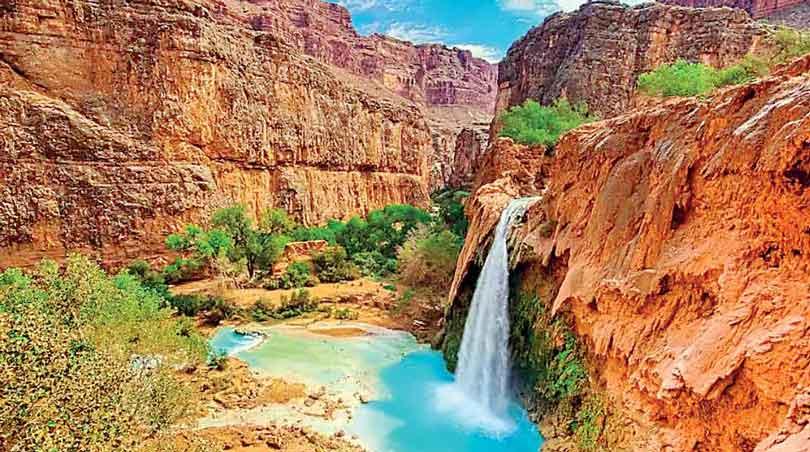
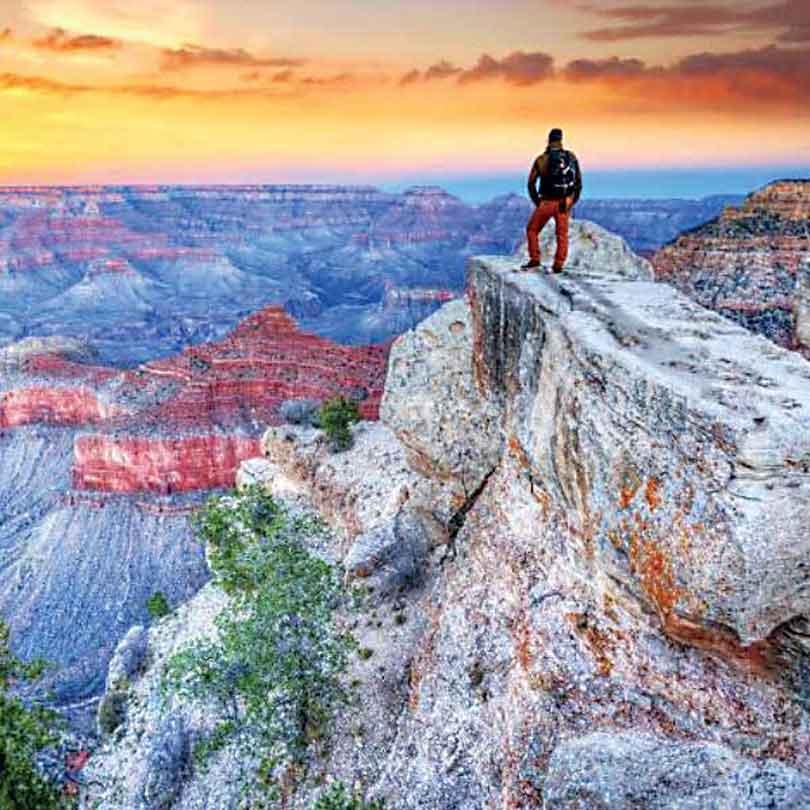
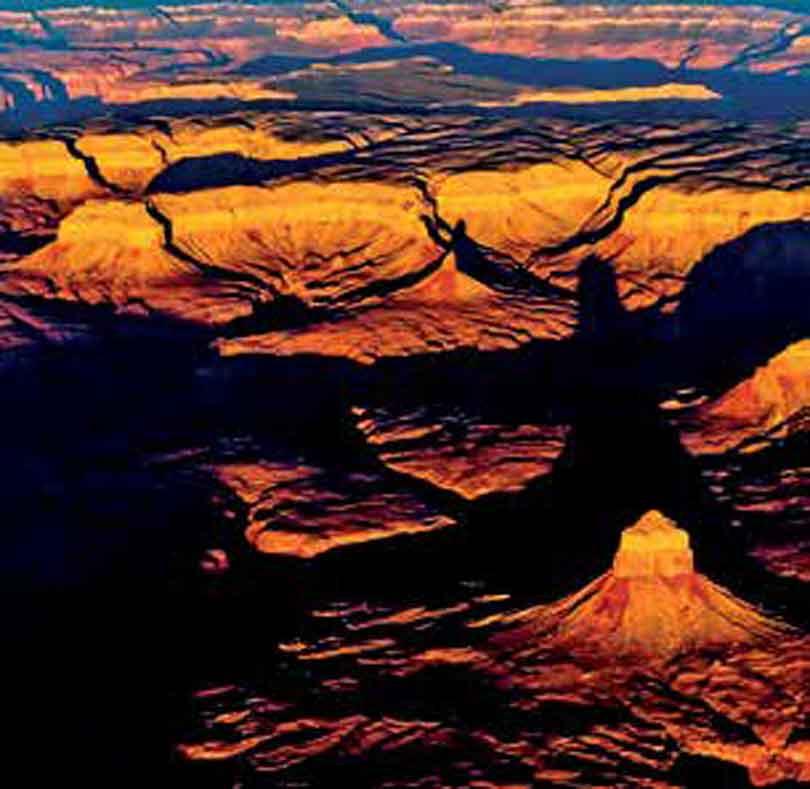
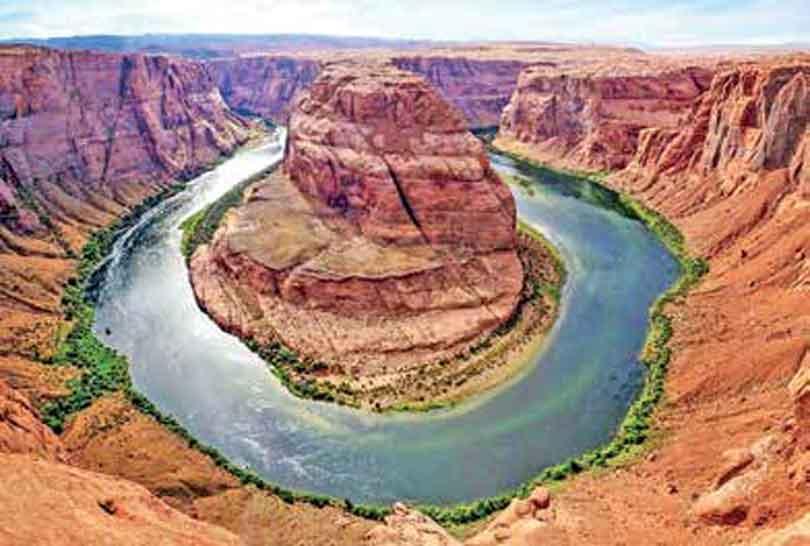
There are places on Earth that feel less like destinations and more like revelations. The Grand Canyon is one of them. It is not simply a landscape; it is a living manuscript, a silent epic carved by time, water, and the breath of the planet itself. To stand at its rim is to feel both infinitesimal and profoundly connected as if nature is whispering an ancient story only your soul can hear. The Grand Canyon National Park in Arizona, one of the Seven Natural Wonders of the World, stretches 277 miles long, up to 18 miles wide, and dives more than a mile deep. Yet numbers alone cannot capture its magnitude. What defines the Grand Canyon is not its measurement but its magic. Layers of crimson, amber, rose, and gold stacked like time capsules; a horizon that melts into infinity; silence so profound it feels sacred. This is not merely a place you visit it is a place that changes you.
The Grand Canyon is the closest thing we have to the Earth’s autobiography. Its walls form a stratified tapestry of geological eras from the ancient Vishnu Schist rock at the bottom, aged over 1.8 billion years, to the younger Kaibab limestone crust at the top.
Every layer tells a story:
- Deep purple schist whispering of volcanic fury
- Burnt red sandstone recalling ancient deserts
- Fossil rich limestone murmuring of lost oceans
- Shale and siltstone offering clues of rivers that once wandered by
What makes the canyon extraordinary is not just that it exists, but that it reveals its history openly. No excavation is needed. The walls stand like scrolls unrolled by time itself, offering a view into Earth’s deep memory.
And the artist behind this masterpiece? The Colorado River, a ribbon of emerald cutting slowly, persistently, through the plateau for five million years, shaping a cathedral of stone with the patience of eternity. For most visitors, the South Rim is the introduction to the canyon’s awe. Here, vast viewpoints stretch like windows into infinity.
Mather Point
A sweeping, cinematic balcony where the canyon seems to explode open beneath your feet. At sunrise, the cliffs ignite in hues of apricot and gold; at sunset, they deepen into rubies and shadows.
Yavapai Point
A geologist’s paradise home to the Yavapai Geology Museum, where rugged formations are framed like living exhibits through panoramic glass.
Designed by architect Mary Colter, this stone tower mimics ancestral Puebloan structures and offers a sweeping 360-degree view that feels like looking into both space and time. From the South Rim, the canyon is not just seen; it is felt. The wind rushing upward from the depths carries the coolness of stone and the warmth of sunlight. The silence is so immense that even a whisper seems to echo across eras.
While the South Rim is dramatic and accessible, the North Rim is its quieter, wilder sibling cooler in climate and visited by only a fraction of travelers. Dense forests of pine and aspen surround viewpoints, creating a profound contrast between lush green and sun-bleached canyon stone.
- Bright Angel Point, where the canyon’s walls fold into a breathtaking labyrinth
- Cape Royal, often considered the best sunset view in the entire park
- Point Imperial, the highest overlook, offering a vertical drama unmatched elsewhere
Standing at the North Rim feels like discovering a secret the world has forgotten. To truly feel the Grand Canyon, one must journey into its depths. Hiking here is not just about adventure it is a pilgrimage.
A legendary path carved into switchbacks that plunge deeper and deeper. Each step transforms your perspective. Cliffs that seemed distant become towering walls, the space that felt empty becomes alive with aroma and sound. Steeper, more exposed, but richer in vistas offering panoramic views unobstructed by trees or structures.
At the canyon’s floor, nestled by the river, lies this historic, rustic lodge reachable only by foot, mule, or rafting. Nights here are surreal, the sky opens into a dome of stars, the canyon walls turn charcoal blue, and the river hums like a lullaby written by the Earth.
The Colorado River
The Colorado River is the heartbeat of the Grand Canyon the artist, the sculptor, and the eternal force twisting through the rock.
Even today, its waters are untamed. Whitewater rafters tackle the river’s Class IV rapids with both fear and exhilaration. The calm stretches, meanwhile, provide meditative moments where sandstone cliffs rise like guardians on either side.
As you float, the canyon changes personality:
- Smooth, polished walls where water has carved elegant curves
- Massive vertical cliffs that rise like pillars of flame
- Side canyons hiding waterfalls, mossy grottos, and secret oases
The river reveals layers of life unseen from the rims wild bighorn sheep perched on impossible ledges, condors soaring overhead, and tiny lizards darting between sunlit rocks.
The Grand Canyon is more than stone and river. It is emotion. Standing on the rim evokes a sensation rare in modern life: humility.
You realize how brief human existence is compared to the eons recorded in these walls. And yet, paradoxically, you feel deeply connected as though being part of this moment in this place is meaningful beyond explanation.
This is the canyon’s greatest gift: a reminder of how vast the world is, and how precious our time within it can be. When night descends, the canyon transforms into a celestial auditorium.
The Grand Canyon is one of the world’s certified Dark Sky Parks, meaning the Milky Way appears like a river of diamonds poured across the heavens. The silence deepens. The air cools. Shadows stretch like ancient spirits across the stone. The entire universe feels close enough to touch. It is one of the purest, most humbling, most magical night skies you will ever witness.
Long after the dust settles on your hiking boots and the photographs are tucked away, the Grand Canyon lingers not as an image, but as a feeling.
It is the memory of standing at the edge of something immense. The memory of sunlight shifting across ancient walls. The memory of silence older than humanity. The Grand Canyon reminds us that the world is filled with wonder waiting to be seen and that some places change not only how we see the Earth, but how we see ourselves.